wayground logo

Free Printable Worksheets

Font size

S
M
L
XL
Worksheets

Science Spiral Review

Total questions: 107

Worksheet time: 1hrs 19mins

Name
Class
Date
1.
Which planet is closest to the sun?
a)
Earth
b)
Venus
c)
Mercury
d)
Mars
2.
The motion of a body orbiting another body in space is called _____.
a)
revolution 
b)
period of revolution
c)
rotation
d)
period of rotation
3.
All the inner planets are
a)
Jovian planets because they are made up of gases.
b)
Terrestrial planets because they are rocky.
4.
The inner planets are closer to the sun so
a)
they take longer to orbit the sun.
b)
they orbit the sun faster.
5.
What are the Inner Planets?
a)
Mercury, Mars, Earth, and Venus
b)
Earth, the Moon, Mars
c)
Neptune, Pluto, Earth
d)
:)
6.
Gas giants
a)
Inner planets
b)
Outer planets
c)
Both
d)
Venus
7.
Solid, rocky surface
a)
Inner planets
b)
Outer planets
c)
Both
d)
Saturn
8.
The order of the planets is:
a)
Mars,Venus,Earth,
Mercury,Saturn
Jupiter, Uranus, Neptune
b)
Earth,Venus,Mars
Jupiter, Neptune,
Mercury,Saturn,
Uranus
c)
Mercury,Venus,Earth
Mars,Jupiter,
Saturn,Uranus
Neptune
d)
Mercury, Earth, Venus, Mars, Saturn, Jupiter, Neptune, Uranus
9.
The spinning of an object on its axis is called______
a)
orbit
b)
rotation
c)
revolution
d)
tide
10.
1st planet from the sun 
a)
Mercury 
b)
Venus 
c)
Earth 
d)
Mars
11.
2nd  planet from the sun 
a)
Mercury 
b)
Venus 
c)
Earth 
d)
Mars 
12.
3rd  planet from the sun 
a)
Mercury 
b)
Venus 
c)
Earth 
d)
Mars 
13.
4th planet from the sun 
a)
Mercury 
b)
Venus 
c)
Earth 
d)
Mars
14.
5th planet from the sun 
a)
Jupiter 
b)
Saturn 
c)
Uranus 
d)
Neptune 
15.
6th planet from the sun 
a)
Jupiter
b)
Saturn 
c)
Uranus 
d)
Neptune 
16.
7th planet from the sun 
a)
Jupiter 
b)
Saturn 
c)
Uranus 
d)
Neptune 
17.
8th  planet from the sun 
a)
Jupiter 
b)
Saturn 
c)
Uranus 
d)
Neptune 
18.

What is at the center of our solar system?

a)

asteroid belt

b)

Earth

c)

sun

d)

moon

19.

How many planets are in our solar system?

a)

6

b)

7

c)

8

d)

9

20.
Saturn's rings are made of chunks of 
a)
volcanoes
b)
ice and rock
c)
nitrogen and helium 
d)
ice and 
21.

What are the four inner planets?

a)

Earth, Uranus, Mercury, Venus

b)

Mercury Venus Earth Saturn

c)

Mars, Earth , Mercury, Venus

d)

Mars, Earth, Neptune, Mercury

22.
The earth orbits around...
a)
the sun.
b)
the moon
c)
other planets
d)
the Milky Way
23.

Revolves in 365 days.

a)

Mercury

b)

Venus

c)

Earth

d)

Mars

24.
Which of the following is NOT true of all the inner planets?
a)
They are made of solid rock.
b)
They are called gas giants.
c)
They do not have rings.
d)
They have impact craters.
25.
Mars’s volcanoes are larger than those of Earth because Mars
a)
is so close to the sun.
b)
is a much older planet.
c)
has a thicker lava flow.
d)
has no moving tectonic plates.
26.

What is a constellation?

a)

A group of patterns that form a star

b)

A group of stars that form a pattern

c)

Fine Italian cuisine

d)

A star

27.
A constellation is a group of visible ____ that form a pattern when viewed from Earth.  
a)
planets
b)
stars
c)
patterns
d)
creatures
28.
What are the three important constellations?
 
a)
Ursa Major, Ursa Minor, Orion  
b)
Ursa Major, Big Dipper, Orion  
c)
Ursa big, Ursa small, Orion 
d)
Polaris, Ursa Minor, Orion  
29.
Ursa Major is also called “Great Bear” and is one of the largest constellations.  
a)
True
b)
False
30.
Ursa Minor means “Little Bear” in Latin and is commonly known as the Big Dipper.
a)
True
b)
False
31.
Polaris always points
a)
East 
b)
West
c)
North
d)
South
32.
Which constellation is best known because it contains the “big dipper,” which looks like a ladle.
a)
Ursa Major
b)
Ursa Minor
c)
Orion
d)
Polaris
33.

What are patterns in the night sky called?

a)

planets

b)

galaxies

c)

constellations

34.

How were constellations originally named and identified?

a)

by their brightness

b)

by their distance from the Earth

c)

Longitude and latitude

d)

By the patterns they form in the sky

35.

What is the name of a person who observes stars is called an ___?

a)

artist

b)

astronomer

c)

constellation

36.

The sun, a hot ball of gas, is not a star.

a)

True

b)

False

37.

The star constellation Orion appears during the winter or summer?

a)

winter

b)

summer

c)

fall

38.

Is the Earth moving, or are the stars in the sky moving?

a)

The Earth is moving

b)

The stars move

39.
A star is a 
a)
ball of gas and point in the sky
b)
a five pointed shape
c)
a figure in the sky
d)
a mixture 
40.
Changes in the moon's appearance are
a)
phases
b)
eclipses
c)
stages
d)
cycle
41.
What causes the moon's phases
a)
Where you are standing on Earth
b)
the amt of sunlight reflected onto the moon from the sun
c)
The tilt of Earth
d)
how fast the moon is moving
42.
Define Waxing
a)
Moon is increasing and light part appears to be growing
b)
Completely illuminated
c)
dark side is facing earth
d)
Moon is decreasing and light part appears to be shrinking
43.
Define Gibbous
a)
Less than half of moon visible
b)
More than half of moon visible
c)
All of moon visible
d)
None of moon visible
44.
Define Full Moon
a)
None of moon is visible
b)
Half moon phase is visible
c)
Complete moon face is visible
d)
Less Than half of moon is visible
45.
Define New Moon
a)
None of moon is visible from Earth
b)
All of moon visible from Earth
c)
Moon is 1/2 visible from Earth
d)
Moon is more than Half Visible from Earth
46.
Define New Moon
a)
None of moon is visible from Earth
b)
All of moon visible from Earth
c)
Moon is 1/2 visible from Earth
d)
Moon is more than Half Visible from Earth
47.
Define Quarter Moon
a)
None of moon visible
b)
Less than Half the moon is visible
c)
More than half of moon is visible
d)
Half of the moon is visible
48.
Define Quarter Moon
a)
None of moon visible
b)
Less than Half the moon is visible
c)
More than half of moon is visible
d)
Half of the moon is visible
49.
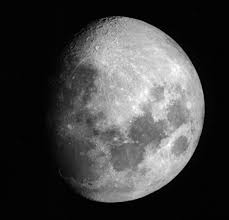
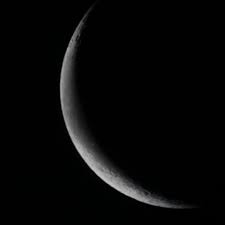
Name this moon phase
a)
Waxing Gibbous
b)
Waxing Crescent
c)
Waning Crescent
d)
Waning Gibbous
50.
Name this moon phase
a)
Waning Crescent
b)
Waxing Crescent
c)
Waning Gibbous
d)
Waxing Gibbous
51.
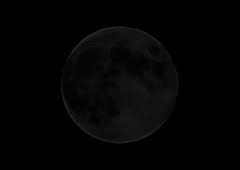
The phase of the moon that occurs between the sun and Earth
a)
Full moon
b)
Waxing crescent
c)
Waning Crescent
d)
New Moon
52.
In which moon phase, can the moon not be seen at all?
a)
Waning crescent
b)
Full moon
c)
Waxing gibbous
d)
New moon
53.
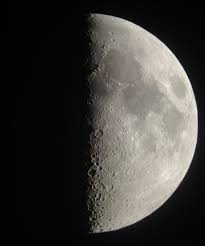
The 1st Quarter moon is lit on the:
a)
Left Side
b)
Right Side
54.
Name this moon phase
a)
waning crescent
b)
waxing crescent
c)
waning gibbous
d)
waxing gibbous
55.
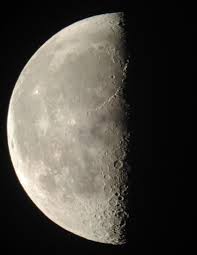
Name this moon phase
a)
First Quarter
b)
Last Quarter
c)
New Moon
d)
Full Moon
56.
Name this moon phase
a)
First Quarter
b)
Last Quarter
c)
New Moon
d)
Full Moon
57.
Name this moon phase
a)
First Quarter
b)
Last Quarter
c)
New Moon
d)
Full Moon
58.
What are the reasons for the season?
a)
Earth's tilt & rotation
b)
Earth's tilt & revolution
c)
Earth's rotation & revolution
d)
Earth's tilt & resolution
59.
Name the moon phase
a)
waning crescent
b)
waxing crescent
c)
waning gibbous
d)
waxing gibbous
60.

Name the moon phase

a)

First Quarter

b)

Third Quarter

c)

New Moon

d)

Full Moon

61.

Name the moon phase

a)

First Quarter

b)

Third Quarter

c)

New Moon

d)

Full Moon

62.
Name the moon phase that would come AFTER this moon.
a)
waning crescent
b)
waxing crescent
c)
waning gibbous
d)
waxing gibbous
63.
Name the moon phase
a)
waning crescent
b)
waxing crescent
c)
waning gibbous
d)
waxing gibbous
64.
Name the phase of the moon for letter a
a)
First Quarter
b)
Last Quarter
c)
Waxing Gibbous
d)
Waning Gibbous
65.
Name the phase of the moon for letter f
a)
Waning Gibbous
b)
Waxing Gibbous
c)
Waning Crescent
d)
Waxing Crescent
66.
What is illuminating the Moon?
a)
Nuclear Fusion
b)
Sunlight
c)
Mirrors
d)
Flood Lights
67.
Name the moon phase
a)
waning crescent
b)
waxing crescent
c)
waning gibbous
d)
waxing gibbous
68.
Which moon phase is when you can't see the moon at all?
a)
Waning crescent
b)
Full moon
c)
Waxing gibbous
d)
New moon
69.
The cycle of the moon lasts about a _.
a)
day
b)
year
c)
week
d)
month
70.
Which of the following words describe the phases of the moon?
a)
none, quarter, half, three quarters, full
b)
new, crescent, quarter, gibbous, full
c)
dark, light, half, quarter, blue
d)
first quarter, second quarter, third quarter, fourth quarter
71.
What is the difference between a gibbous moon and a crescent moon?
a)
The gibbous shows more than half of the bright side of the moon.
b)
The crescent shows more than half of the bright side of the moon.
c)
The gibbous shows less than half of the bright side of the moon. 
72.

An imaginary line that a space object spins on is...

a)

Rotation

b)

Revolution

c)

Axis

73.

What is the missing phase?

a)
b)
c)
d)
74.

What is the missing phase?

a)
b)
c)
d)
75.

What is the missing phase?

a)
b)
c)
d)
76.
Waxing means...
a)
Growing
b)
Dying
c)
Losing light
d)
Moving
77.
"Waning" means
a)
Growing
b)
Shrinking
78.
This tool shows the cardinal directions 
a)
astrolabe
b)
compass
c)
sextant
d)
telescope
79.
This navigational tool measure the height of the horizon to an object in space to help explorers plot their location. 
a)
astrolabe
b)
compass
c)
sextant
d)
telescope
80.
This tool is used by astronomers to make faint, faraway objects appear brighter and closer. 
a)
astrolabe
b)
compass
c)
sextant
d)
telescope
81.
This navigational tool measure the height of the horizon to an object in space to help explorers plot their location. 
a)
astrolabe
b)
compass
c)
sextant
d)
telescope
82.
When would an astronomer most likely use a telescope? 
a)
to view the types of clouds in the sky
b)
to study the characteristics of a planet in our solar system
c)
to measure the amount of sunlight Earth receives
d)
to view objects across the ocean
83.
Which description correctly describes constellations? 
a)
the group of planets that are found within our solar system
b)
all of the stars in our galaxy 
c)
a collection, or group, of stars that create a pattern or image
d)
a person who studies astronomy
84.
Why do constellations appear to "move" throughout the year? 
a)
stars rotate in the sky
b)
Earth's rotation 
85.

What is the name of a space tool that orbits in space around a certain object like Earth?

a)

Space Probe

b)

Satellite

c)

Radio Telescope

d)

Spectroscope

86.

What is the name of our galaxy?

a)

Milky Way

b)

Andromeda

c)

Elliptical

d)

Supernova

87.
Spinning of the Earth on its axis is called...
a)
rotation
b)
revolution
c)
orbit
d)
double axis
88.
The EARTH REVOLVES around the:
a)
Sun
b)
Moon
c)
The Earth doesn't revolve
d)
The sun rotates
89.
What does ROTATION mean?
a)
To SPIN
b)
To ORBIT or GO AROUND
90.
Day and night is caused by the _____________ of earth on its axis.
a)
revolution
b)
orbit
c)
rotation
d)
space
91.
What motion of the Earth takes 365 days?
a)
Rotation
b)
Tilting 
c)
Revolution
d)
Spinning
92.
Rotation of the earth takes
a)
One day
b)
One year
c)
One summer
d)
One winter
93.
The Earth spins on a tilted angle called a (an) 
a)
Axis
b)
Invert
c)
Revolution
d)
Bounce
94.
Earth's rotation on its axis is what causes ______________________________.
a)
seasons
b)
moon phases
c)
day and night
d)
weather
95.
What does REVOLUTION mean?
a)
To SPIN
b)
To ORBIT or GO AROUND
96.
The MOON REVOLVES around the:
a)
Sun
b)
Earth
c)
The Moon doesn't revolve
d)
The Earth and Sun 
97.
What does ROTATION mean?
a)
To SPIN
b)
To ORBIT or GO AROUND
98.
Which happens in one year’s time?
a)
The moon makes one complete revolution around Earth.
b)
Earth makes one complete revolution around the sun.
c)
Earth makes one complete spin on its axis.
d)
The sun makes one complete spin on its axis.
99.
What motion of the Earth takes 365 days?
a)
Rotation
b)
Tilting 
c)
Revolution
d)
Spinning
100.
A spinning motion on an axis
a)
rotation
b)
revolution
101.
This, along with the tilt of the Earth, is the reason we experience different seasons
a)
rotation
b)
revolution
102.
The motion is in the counterclockwise direction and west to east on Earth
a)
rotation
b)
revolution
103.
When one side of the Earth is having daytime, the other side is having nighttime
a)
rotation
b)
revolution
104.
The Earth orbits around the sun
a)
rotation
b)
revolution
105.
The seasons change as the Earth orbits around the sun
a)
rotation
b)
revolution
106.
The Earth spins at a constant speed, always in the same direction
a)
rotation
b)
revolution
107.
Completed in one year
a)
rotation
b)
revolution