
 Worksheets
1st year November assessment Revision
Total questions: 110
Worksheet time: 4hrs 40mins
Using one or more of your senses to gather information is called...
Infering
Predicting
Observing
Hypothesizing
A testable prediction is a...
Theory
Hypothesis
Law
Conclusion
A statement that describes the most logical explanation based on an experiment is a...
Theory
Hypothesis
Law
Observations that deal with a number or amount are called
Qualitative
Quantitative
The Skittles are yellow, red and green is an example of _____________.
Qualitative observations
Hypothesis
Quantitative observations
The statement that correctly lists the steps of the scientific method in order is _______________.
Conclusion, research, hypothesis, ask a question.
Hypothesis, ask a question, research, experiment.
Ask a question, hypothesis, experiment, collect data and analyze.
The variable that is changed by the scientist to test a hypothesis is called the ________________.
Dependent variable
Control
Independent variable
Which is the best description of the dependent variable?
The variable that is changed by the scientists
The variable that does not change
The measurable variable
A prediction about a problem that can be tested is __________.
Variable
Theory
Hypothesis
Law
One way to analyze data from a study is to ____________.
Make a graph
Recognize a problem
Develop a hypothesis
Catherine is testing which soil will help grow grass the tallest. The height of the grown grass is the ____________ variable.
Constant (stays the same)
Independent (it's what you change)
Dependent (it's what you measure)
What would the independent variable be in an experiment testing which paper airplane design goes furthest?
The paper used
The paper airplane design
The distance of each plane's flight
How hard the plane is thrown
The plant has grown 4 cm since yesterday.
This is an example of what kind of data?
Qualitative
Quantitative
Both
Neither
Which of the following represents ethical behavior in scientific investigation?
Accurate reporting of results
Not allowing test subjects to be exposed to unnecessary risks in medical trials
Allowing others to review your work
All of these choices


If you don't understand a direction of a lab experiment, you should:
Figure it out as you do the lab.
Try several methods until something works.
Ask the teacher before proceeding
Skip it and go on to the next part.
If you hurt yourself in the lab, you should:
visit the school nurse after class.
see a doctor after school
tell the teacher at once.
apply first aid yourself.
Long hair must be
should be cut short.
held away from the experiment with one hand.
always neatly groomed
tied back/kept out of the way.
Which of the following should NOT be worn during a lab?
loose clothing
dangling jewerly
sandals
all of the above
When you finish working with substances in the lab, always
treat your hands with skin lotion.
wash your hands thoroughly with soap and water.
wipe your hands on a towel.
wipe your hands on your clothes.
The following is permitted in the lab:
chewing gum
eating
drinking
none of the above
When using a razor blade or scalpel, always cut material
away from you
toward you
in your hand
perpendicular
Before you leave the science room, you should
clean your work area and equipment.
return all equipment to the proper storage area.
wash your hands with soap and water.
all of the above.


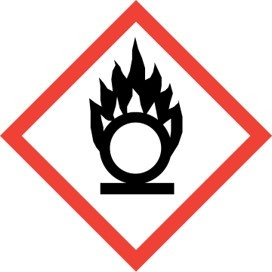
What does this symbol stand for?
Flammable
Oxidising
Non-flammable
Explosive
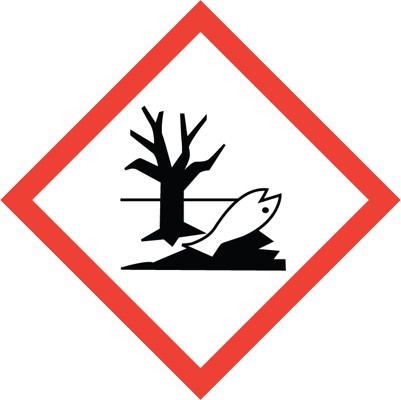
This symbol tell us the chemical it is labelling is:
Harmful to the environment
Dangerous
Toxic
Poisonous
Which of these pieces of equipment is beaker?


What tool is this??
Spring Scale
Thermometer
Temperature
Heater
Which piece of equipment should you use to measure out liquids?


Name this tool.
yard stick
ruler
meter stick

Name this tool.
test tube
graduated cylinder
vile

What is this piece of equipment?
florence flask
test tube
beaker
graduated cylinder

What is this piece of equipment?
mortar and pestle
evaporating dish
erlenmeyer flask
beaker
What are the four quantities measured in the METRIC SYSTEM?
meters, liters, grams and degrees celsius
inches, pounds and cups
cups, ounces, pounds, and tons
weight, liters, meters, and angles

Use the METRIC RULER shown in the picture to find the length.
13.9cm
14cm
14.2cm

What is the measurement in celsius?
70 C
20C
15C

Use the graduated cylinder shown in the picture to find the volume
31
32
33

A table is 392 millimeters = ____ meters (basic unit)
.392 m
39.2 m
392,000

What is the volume? (length x width x height)
180 in
15 in
60 in
20 in
The Basic unit for measuring length in the Metric system
Meter
Liter
inches
yards

What is mass?
How much SPACE something takes up.
How big something is.
How much of something there is.

1000 millimeters = ______ meters?
100000
10
1
.1

What is the formula for the volume of a rectangle?
Length + Width + Height
Length / Width / Height
Length x Width x Height
Length - Width - Height
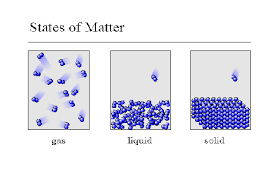
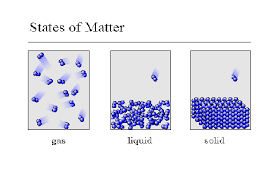

Freezing
Solid to gas
Liquid to solid
Gas to solid

Boiling
liquid to gas
gas to solid
gas to liquid

What is happening when my ice cream changes from a solid to a liquid?
freezing
melting
burning

The state of matter that has no definite size or shape is
Solid
Liquid
Gas

Particles in a ______________________ move quickly and are far apart.
gas
solid
liquid

Particles of a liquid
are tightly packed together and stay in a fixed position.
are free to move around one another but still touch.
Solid to Gas
Deposition
Sublimation
Evaporation
What is condensation?
gas to solid
gas to liquid
liquid to solid
The slower the particles in a substance move,
the colder it is.
the warmer it is.
the more energy it has.

Definite shape and definite volume
Solid
Liquid
Gas

Has a definite volume but not a definite shape
Solid
Liquid
Gas
Liquid to Gas
Condensation
Evaporation
Sublimation

Identify the state of matter
Solid
Liquid
Gas

Identify the state of matter
Solid
Liquid
Gas

Identify the state of matter
Solid
Liquid
Gas
Which of the following states have a fixed volume?
Solid
Liquid
Gas
Which of the following states flow?
Solid
Liquid
Gas
Which of the following states can be easily compressed?
Solid
Liquid
Gas

What process is being shown here?
Osmosis
Active Transport
Diffusion
Photosynthesis
Biology is the study of ________
Bacteria
Cells
Living things
Animals
What is a cell?
Smallest working unit of a living organisms
Tiny things
Humans
Biggest unit in a human
What is an example of an animal cell?
Plant cells
Muscle cell
prison cell
Nerve cell
What is the function of the cell membrane
Brain of the cell
Powerhouse of the cell
Organelles swim around in the cell membrane
allows substances to pass in and out
What is the function of the mitochondria?
Brain of the cell
Stops some substances from entering the cell
Provides energy to the cell
Makes proteins

What is no. 2 pointing to?
Cell membrane
Mitochondria
Cytoplasm
Nucleus

What is no. 4 pointing to?
Ribosome
Mitochondria
Nucleus
Cytoplasm
This organelle creates the energy for the cell
mitochondria
cell membrane
ribosome
nucleus
The ____________ regulates what enters and leaves the cell.
mitochondria
cell membrane
ribosome
cytoplasm
The _________ holds the DNA for the cell
vacuole
cell membrane
cell wall
nucleus
Jelly-like fluid material that makes up most of the cell
nucleus
cytoplasm
ribosome
cell wall
The individual parts of a cell are called _____________.
organ
organism
organelle
tissues
Which organelles do plants have that animals don't have? Hint: There are 2
cell membrane
cell wall
mitochondria
chloroplast

I provide plant cells their rigid shape. I am the...
nucleus
Cytoplasm
Cell Membrane
Cell Wall
Who first described cells in 1665 ?
Antonie van Leeuwenhoek
Louis Pasteur
Robert Hooke
Theodor Schwann
Chloroplasts...
are where plant cells do photosynthesis and make food
are where plant cells produce energy
are where both plant and animal cells make food (photosynthesis)
True or false: ALL living things are made of cells.
True
False: Some living things are made of cells, and others aren't.
A celestial body that revolves around a planet.
Moon
Star
Comet
Meteor
Something that orbits around another object.
Satellite
Sun
Galaxy
Remains of meteoroids that strike the surface of Earth or the Moon.
Meteor
Meteorites
Meteoid
What is the region between the inner and outer planets where most asteroids orbit around the Sun called?
Asteroid Belt
Solar System
Inner Planet
Outer Planet
Name given to any of the planets - Jupiter, Saturn, Uranus and Neptune - whose orbits lie beyond the asteroid belt.
Asteroid Belt
Solar System
Inner Planets
Outer Planets
Name given to any of the rocky, terrestrial planets - Mercury, Venus, Earth and Mars - whose orbits are inside the asteroid belt.
Asteroid Belt
Solar System
Inner Planets
Outer Planets
Name given to the large celestial bodies that revolve around the Sun in the solar system.
Satellite
Planet
Solar
Rocky
Name given to a ball of gas in space that produces its own light and heat.
Satellite
Planet
Solar
Star
Name given to the luminous celestial body around which the Earth and other planets revolve and from which they receive heat and light.
Satellite
Planet
Sun
Star
Between which 2 planets do we find the asteroid belt?
Mercury and Jupiter
Earth and Mars
Mars and Jupiter
Jupiter and Saturn
Objects made of ice, gas and dust that orbit our sun are called ________________
Asteroids
Comets
Meteroids
Meteors
When objects strike the surface of a planet or moon, they leave a deep impression on the surface called a _________
Pothole
Crater
Canyon
Plateau
What is a piece of rock that burns up as it passes through the Earth's atmosphere called? Also known as a shooting star.
Asteroid
Meteoroid
Comet
Meteor
What keeps the Earth and other planets in orbit?
The sun
Gravity
Earth's magnetic field
Planets with the longest revolution are called ______________
Gas Giants
Terrestrial Planets
Which planets do not have rings?
Gas Giants
Terrestrial Planets
Which planets are made primarily of rock?
Gas Giants
Terrestrial
Which two gases make up stars?
Hydrogen
Oxygen
Calcium
Helium

