Wayground logo

Free Printable Worksheets

Font size

S
M
L
XL
Worksheets

Atomic Stucture and Isotopes

Total questions: 59

Worksheet time: 1hrs 3mins

Name
Class
Date
1.
Which particle has a positive charge?
a)
electron
b)
orbital
c)
proton
d)
neutron
2.
Choose the particle that has no charge.
a)
nucleus
b)
neutron
c)
proton
d)
electron
3.
This particle determines what element you have - the elements identity.
a)
electron
b)
proton
c)
neutron
d)
valence shell
4.
An electron has a _____ charge.
a)
negative
b)
positive
c)
neutral
5.
Which particles make up the nucleus of an atom?
a)
protons and neutrons
b)
electrons and protons
c)
electrons, protons, and neutrons
d)
electrons and neutrons
6.

The particles of the atom you can find by knowing the atomic number.

a)

neutrons

b)

protons

c)

electrons

d)

atomic mass

7.
What charge does the nucleus have and why?
a)
positive - the neutrons do not have a charge
b)
positive - the neutrons and protons are positively charged particles
c)
neutral - the neutral charge dominates the positive charge
d)
neutral - electrons cancel out the positive charge of the atom
8.
The subatomic particles in green are...
a)
Protons
b)
Neutrons
c)
Electrons
9.

The smallest subatomic particle is the

a)

proton

b)

neutron

c)

electron

d)

decepticon

10.

The number 16 for the atomic element sulfur is the

a)

ionic number

b)

isotope

c)

atomic mass

d)

atomic number

11.

How many protons does sulfur have?

a)

32

b)

16

c)

48

d)

12

12.
What are the 3 subatomic particles?
a)
elements, compounds, mixtures
b)
neutrons, isotopes, and electrons
c)
positives, negatives, and neutrals
d)
protons, neutrons, and electrons
13.
All matter is made up of: 
a)
energy 
b)
atoms 
c)
electrons 
d)
compounds 
14.
the central region of an atom where its neutrons and protons are is its 
a)
nucleus 
b)
electron cloud
c)
core 
d)
center 
15.
an atom with atomic number 6 would have how many protons 
a)
6
b)
12
c)
3
d)
cannot be determined 
16.
True or False? Neutrons have a negative charge
a)
True
b)
False
17.
What is the atomic number for an element with three protons?
a)
2
b)
1
c)
3
d)
6
18.
In the modern periodic table elements are arranged by:
a)
atomic mass
b)
atomic number
c)
valence electrons
d)
number of isotopes
19.
How many neutrons in C-14?
a)
6
b)
7
c)
14
d)
8
20.
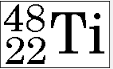
How many protons does this isotope of titanium have?
a)
48
b)
22
c)
26
d)
70
21.
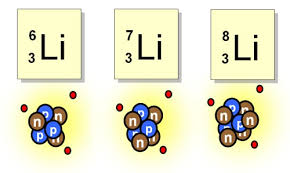
How many neutrons does the isotope of lithium have?
a)
8
b)
3
c)
4
d)
5
22.
In a correctly written symbol what would be located in the "A" position?
a)
number of neutrons
b)
atomic number
c)
number of electrons 
d)
mass number
23.
What quantities vary between isotopes of an element?
a)
protons, electrons, and atomic mass
b)
protons, electrons, and atomic number
c)
neutrons and electrons
d)
neutrons and atomic mass
24.

What is an isotope?

a)

A charged atom

b)

Two atoms of the same element with different amounts of neutrons

c)

Two atoms of the same element with different amounts of protons

d)

A neutral atom

25.

What is the mass of an electron?

a)

1 amu

b)

negligible

26.

how many electrons does a neutral atom of Neon have?

a)

8

b)

9

c)

10

d)

11

27.

How many electrons does an atom of Li have if it has a charge of +1

a)

1

b)

2

c)

3

d)

4

28.

How many protons does an atom of Sodium (Na) have if the charge is +2

a)

9

b)

10

c)

11

d)

12

29.

How many electrons does an atom of bromine (Br) if it has a charge of -1

a)

30

b)

32

c)

35

d)

36

30.

Which two components of an atom contribute to the mass?

a)

Protons and neutrons

b)

Protons and electrons

c)

neutrons and electrons

31.
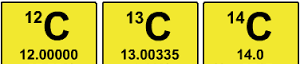
What do these isotopes of carbon all have in common?
a)
neutrons & mass number
b)
atomic number and neutrons
c)
atomic number and electrons
d)
protons, atomic number, and mass number
32.
What quantities vary between isotopes of an element?
a)
protons, electrons, and atomic mass
b)
protons, electrons, and atomic number
c)
neutrons and electrons
d)
neutrons and atomic mass
33.
which atom has  4 neutrons?
a)
Li-6
b)
Li-7
c)
Li-8
d)
they have the same # of neutrons
34.
How many neutrons in C-14?
a)
6
b)
7
c)
14
d)
8
35.
Isotopes are atoms of the same element with different #’s of __________ & therefore different __________.
a)
n0 ;  atomic #’s
b)
p+ ; atomic #’s
c)
e- ; atomic masses
d)
n0 ; atomic masses
36.
How many neutrons does the isotope below have?     89 36Kr
a)
53
b)
36
c)
89
d)
125
37.
If X is the symbol for an element, which of the following two symbols represent    isotopes of the same element?     I. 7735X  II. 7733X  III. 8137X  IV. 8135 X
a)
I and II
b)
III and IV
c)
I and IV
d)
I and III
38.
How many neutrons does an atom of the isotope Neon-22 have?
a)
12
b)
10
c)
22
d)
20
39.
Four isotopes of lead include lead-204, lead-206, lead-207, and lead-208.  The average atomic mass of lead is 207.2.  Which isotope of lead is likely to be the most abundant.
a)
204
b)
206
c)
207
d)
208
40.
An atom is electrically neutral when
a)
protons and neutrons are the same
b)
protons and electrons are the same
c)
neutrons and electrons are the same
d)
neutrons balance the protons and electrons
41.
Two isotopes of carbon are carbon-12 and carbon-14.  These isotopes differ from one another by two protons.
a)
true
b)
false
42.
If the number of electrons in an atom changes you make a(n) __________________.
a)
ion
b)
isotope
c)
new element
d)
isomer
43.
Ions are: 
a)
atoms with a positive or negative charge
b)
atoms with no charge
c)
atoms with ONLY a positive charge
d)
atoms with ONLY a negative charge
44.
How many electrons are in an atom that has an atomic number of 34, an atomic mass of 74 and a charge of -2?
a)
34
b)
36
c)
2
d)
40
45.

What is the formula to solve for the neutron?

a)

Mass + Atomic Number= Neutrons

b)

Mass x Atomic Number = Neutrons

c)

Mass - Atomic Number = Neutrons

d)

Mass + Number of Protons = Neutron

46.
How many neutrons does oxygen have?
a)
16
b)
15.99
c)
8
d)
Doesn't contain any neutrons
47.
How many neutrons does a Hydrogen atom have?
a)
1
b)
2
c)
3
d)
0
48.
What is the number highlighted?
a)
Atomic number
b)
Atomic mass
c)
Number of protons
d)
Number of electons
49.
Which letter represents a proton?
a)
A
b)
B
c)
C
d)
D
50.
Which letter represents a neutron?
a)
A
b)
B
c)
C
d)
D
51.
Which letter represents an electron?
a)
A
b)
B
c)
C
d)
D
52.
Which letter represents the nucleus?
a)
A
b)
B
c)
D
d)
E
53.

How many neutrons does platinum have?

a)

78

b)

117

c)

195

d)

196

54.
In order for me to find the number of neutrons, I must round the atomic mass and then do what?
a)
atomic number-atomic mass
b)
atomic number x atomic mass
c)
atomic mass + atomic number
d)
atomic mass - atomic number
55.

How many neutrons in Lithium?

a)

3

b)

4

c)

7

56.

How many neutrons does Helium have?

a)

2

b)

4

c)

6

57.

Which subatomic particles have the least mass?

a)

Neutrons

b)

Protons

c)

Electrons

d)

Atoms

58.

What is the mass of a neutron?

a)

1 amu

b)

0 amu

c)

2 amu

d)

-1 amu

59.

What is the mass of a proton?

a)

1 amu

b)

0 amu

c)

2 amu

d)

-1 amu