
 Worksheets
Grade 7 SA-1 Quiz
Total questions: 227
Worksheet time: 2hrs 4mins
The Mode pf nutrition in which organism make food themselves from simple substance are
Saprotrophic
Heterotrophic
Autotrophic
Parasitic
The cell is enclosed by thin outer body known as
Nucleus
Cell membrane
Stomata
Cytoplasm
Cuscutta is the example of-
Parasite
Insectivorous Plants
Saprotrophs
Host
The process of Photosynthesis produces
Carbon Dioxide
Nitrogen
Oxygen
Hydrogen
Ultimate source of energy for all living organisms is
Plants
Atmosphere
Earth
Sun
Foods synthesized in the process of Photosynthesis by plants is stored as
Starch
Protein
Vitamins
Fats
Which of the following is not necessary for photosynthesis
Chlorophyll
Carbon dioxide gas
Oxygen
Water
insectivorous plant is


Leaves absorb CO2 through...
mouth.
stomata.
nose.
What protects Stomata and helps it in opening and closing?
Guard Cells
Leaf
Stem
Carbon Dioxide
Organisms other than plants which contain Chlorophyll are
Algae
Protozoa
Virus
Fungi
Which of the following component of food contains Nitrogen
Carbohydrate
Protein
Fat
Minerals
Organisms which produce their own food are called
Autotrophs
Heterotrophs
Saprotrophs
Parasites
Which of the following statements is/are correct?
(i) All green plants can prepare their own food.
(ii) Most animals are autotrophs.
(iii) Carbon dioxide is not required for photosynthesis.
(iv) Oxygen is liberated during photosynthesis.
Choose the correct answer from the options below:
( i) and (iv)
(ii) only
(ii) and (iii)
(i) and (iii)
Living organisms obtain energy from
Carbon Dioxide
Food
Water
Oxygen

carbon dioxide is released during photosynthesis .
T
F
In photosynthesis solar energy is absorbed by the pigment called (a) .
Which of the following pigments is found in green plants?
Haemoglobin
Myoglobin
Xanthophyll
Chlorophyll
An organism that can make its own food from simple, non - living substances is known as a heterotroph.
True
False
A plant was kept in a dark room for a week. When its leaves were tested with iodine solution, it did not show the presence of starch. From this experiment we can conclude that ____ is essential for photosynthesis.
sunlight
water
carbon Dioxide
oxygen
what is the role of stomata?
openings in the leaf that allows gas in and out of the plant
transport water and supports the plant
transport sugars
site of photosynthesis
Carbohydrate consists of ______________ (You can select multiple options)
Sulphur
Carbon
Hydrogen
Oxygen
Algae are green in colour because they contain (a)
Chlorophyll is present in an animal cell.
True
False
Cells are called building block of a body.
True
False
If iodine is dropped on the boiled leaf it gives blue-black colour due to the presence of
vitamin
fat
protein
starch
Choose the correct equation of photosynthesis
CO2 + H2O --> C6H12O6 + O2
O2 + H2O (in presence of sunlight and chlorophyll) --> C6H12O6 + CO2
6CO2 + 6H2O (in presence of sunlight and chlorophyll) --> C6H2O6 + 6O2
6CO2 + 6H2O (in presence of sunlight and chlorophyll) --> C6H12O6 + 6O2
(a) are slimy green patches in ponds or stagnant water bodies.
___________________ is present in abundance in gaseous form in the air.
Carbon
Oxygen
Hydrogen
Nitrogen
The plant on which Cuscuta climbs is called the
host
parasite
saptrotroph
lichen
_______ is an example of saprotroph.
Algae
Pitcher plant
Fungi
Cuscuta
Bacterium which converts atmospheric nitrogen into usable form for plants is:
E. coli
Lactobacillus
Mycobacterium
Rhizobium
In organisms called lichens, a chlorophyll containing partner _____ and a _______ live together.
alga, fungus
fungus, bacterium
bacterium, alga
fungus, alga
The relationship in which organisms live together and share both shelter and nutrients is called (a) .
During photosynthesis, plants take in __________ and release ______ gas.
nitrogen, oxygen
oxygen, carbon dioxide
carbon dioxide, oxygen
oxygen, nitrogen
Algae is a
Parasite
Saprophyte
Autotroph
None of the above
__________ are required in large amounts by plants.
Nutrients
Macro nutrients
Micro nutrients
None of the above
__________ are required in small amounts by plants.
Nutrients
Macro nutrients
Micro nutrients
None of the above
Symbiosis or symbiotic relationship (You can select multiple options)
Cuscuta and Banyan tree
Fungi and Bread
Alga and Fungi
Rhizobium and leguminous plants
Insectivorous plants are also known as partial heterotrophs because
they do not have chlorophyll
they uptake their nutrients from insects and other small animals
they can carry out the process of photosynthesis but soil does not have much nutrients and depends on other organisms for their nutritional requirement
None of the above
Which of the following correctly describes the purpose of digestion?
To break down complex food molecules into simple soluble molecules
To make complex food molecules from simple soluble molecules
To make use of simple soluble food molecules
To remove complex food molecules from the body
Which statement is NOT true about proteins?
Protein digestion begins in the mouth.
Proteins are used for cell growth and repair.
Proteins are broken down to form amino acids.
Some complex proteins function as enzymes in the body.
Where is the digestion of food completed?
liver
large intestine
stomach
small intestine
Where does carbohydrate digestion begins?
liver
mouth
oesophagus
stomach
Where does protein digestion begins?
large intestine
mouth
small intestine
stomach
Where does fat digestion begins?
colon
liver
small intestine
stomach
Which of the following kills bacteria in the human alimentary canal?
hydrochloric acid (HCl)
mucus
pancreatic juice
saliva
Name the enzyme that acts on starch.
(a)
What colour will starch turn brown iodine solution into?
blue-black
colourless
red
yellow
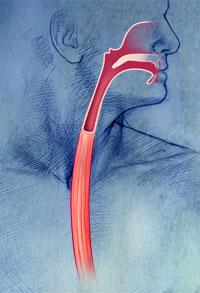
This is an image of the
stomach
small intestine
oesophagus
large intestine
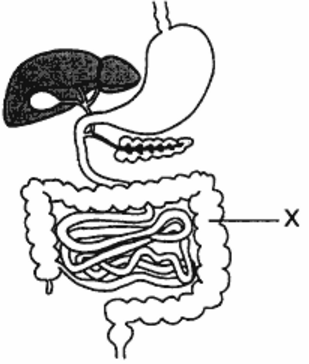
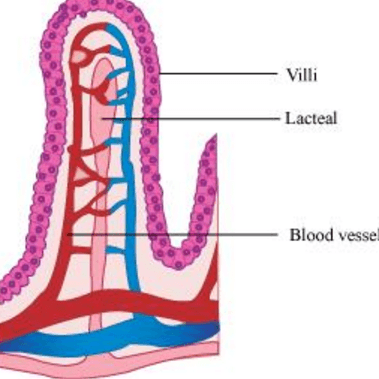
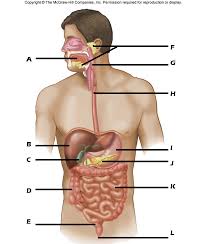
Which digestive organ is represented by the letter B
Pancreas
Liver
Mouth
small intestine
What is the function of a liver?
To call Raegan a gweeb
to transfer foods
to produce enzymes
to produce bile
What is the function of a small intestine
to crunch the food
To add enzymes
Contains hydrochloric acid
To absorb nutrients
Passageway between the mouth and the stomach
oesophagus
mouth
stomach
small intestine
Which organ stores bile?
stomach
gallbladder
pancreas
liver

What part of the digestive system is highlighted? (the end)
Anus
Rectum
Colon
Appendix

What part of the digestive system is highlighted?
Stomach
Pancreas
Liver
Gall bladder

What part of the digestive system is highlighted?
Esophagus
Stomach
Salivary glands
Mouth

What part of the digestive system is highlighted?
Anus
Rectum
Large Intestine
Small intestine

What part of the digestive system is highlighted?
Large intestine
Small intestine
Stomach
Appendix
What are the main parts of the digestive system
stomach, small and large intestine
mouth,stomach,oesophagus,large and small intestine, liver, pancreas, large intestine, rectum and anus
stomach, lungs, trachea, rectum
large and small intestine, trachea, stomach, mouth
Place the following events in sequence:
A) Food enters your large intestines
B) Food enters your small intestines
C) Food enters your esophagus
A, B, C
C, B, A
C, A, B
B, A, C
Place the following events in sequence:
A) Food enters your large intestines
B) Food enters your small intestines
C) Food enters your esophagus
A, B, C
C, B, A
C, A, B
B, A, C

The partly-digested food in the stomach leaves to enter
The gullet
The appendix
The small intestine
The large intestine
What does the salivary glands do for the digestive system?
It produce saliva, which keeps the mouth and other parts of the digestive system moist.
It produce moist, which keeps the mouth and other parts of the digestive system saliva.
It produces ptyalin to make saliva for the mouth, so the system can start.
Choose the correct sequence
Digestion, egestion, ingestion, absorption, assimilation
absorption, assimilation, ingestion, digestion, egestion
egestion, digestion, absorption, assimilation, ingestion
ingestion, digestion, absorption, assimilation, egestion
None of the above
Alimentary canal includes (You can tick multiple options)
Buccal cavity
Oesophagus
Stomach
Liver
Small intestine and large intestine
Mouth is also called as (a)
Which of the following shows parasitic mode of nutrition ?
Human beings
Cow
Virus
Dog
Organisms which are made up of only single cell are known as _______________
Multicellular
Unicellular
Both
None
Select types of heterotrophic mode of nutrition (You can select Multiple options)
Parasitic
Saprotrophic
Autotrophic
Symbiotic
Holozoic
(a) is the largest gland in the human body.
Cells utilise glucose along with oxygen to produce (You can select multiple options)
Water
Carbon dioxide
Energy
Nutrients
Inner lining of stomach produces
Mucous, hydrochloric acid, digestive juices
Bile, saliva, pancreatic juice
Bile and saliva
None of the above
1) Glucose combines with oxygen and produces _________.
Gas
Energy
Liquid
Carbon
______ takes in food by the use of pseudopodia.
Goat
Tiger
Amoeba
Human
The inner walls of the stomach secrete _________.
Mucus & hydrochloric acid
Bile
Lime
Salt
Amoeba digests its food in the ____.
Food vacuole
Stomach
Liver
Intestine
Mostly grass eating animals are called____.
Carnivore
Omnivore
Ruminants
Scavenger
Identify ruminant from the following.
Cat
Cow
Ant
Tiger
In amoeba,ingestion of food takes place with the help of false feet called................
Vacuole
Lysosome
Arms
Pseudopodia
These are examples of ruminants:
horses, humans and chickens
sheep, goats, cattle, deer, giraffes
pigs, sheep, cattle, chickens and humans
What is the plant cell carbohydrate called that cows can digest and humans can't?
carotene
chlorophyl
cellulose
GRASS IS RICH IN_________ ,WHICH IS A TYPE OF____________ .
CELLULOSE,CAPBOHYDRATES
CELLUOLSE,CARBOHYDRATES
CELLULOES,CAPBOHIDRATES
CELLULOSE,CARBOHYDRATES
______ IS A MICROSCOPIC SINGLE-CELLED ORGANISM
AMOEBA
AMOBEA
VACUOLE
VACOULE
The mode of nutrition in which organisms take food and then the food is broken down to provide the required nutrition to the body.
Holozoic nutrition
Autotrophic nutrition
Saprotrophic nutrition
All
_______ is the process in which, the absorbed food is utilised by the body, for growth and formation, of body parts.
Assimilation
Digestion
Egestion
Ingestion
THE PARTIALLY DIGESTED FOOD IN RUMINANTS IS CALLED
CELLULOSE
CUD
PSEUDOPODIA
VILLI
What is rumination?
Chewing of food
Ingestion of food
Chewing of cud
All of the above
The Atmospheric condition on a particular day, at a place with respect to the temperature,humidity,etc is called ..........................
Climate
Weather
Season
All of these
Which of the following is not an element of weather
Temperature
Humidty
Latitude
Wind Speed
Weather reports are prepared by
Geologists
Meteorologists
Germinologists
Physicians
The maximum temperature for a particular day is recorded in the ..............................
Evening
Night
Morning
Afternoon
All changes in the weather are caused by the
Moon
Sun
Earth
Altitude
Penguins are found in ............................ regions
Tropical
Polar
Sub Tropical
Desert
Humidity is the measure of
Temperature
Pressure
Moisture
Wind
Which of the following has a long colourful beak
Arctic Tern
Toucan
Penguin
Siberian Crane
A Monkey is found to have silver-white mane surrounding the head. it is called
Gorilla
Lion-tailed mcaque
Chimpanzee
Bandar
The Elephant uses it's trunk as a sense organ for detecting ..........................
Sound
Taste
Sight
Smell
Sansthita went to a wildlife sanctuary where she saw dense vegetation of trees, shrubs, herbs and also a variety of animals like monkeys, birds, elephants, snakes, frogs, etc. The most likely location of this sanctuary is in the
temperate region
tropical region
polar region
coastal region.
Given below are some adaptive features of animals.
(i) Layer of fat under the skin
(ii) Long, curved and sharp claws
(iii) Slippery body
(iv) Thick white fur
Which of them are the adaptive features of a polar bear?
(i) only
(i) and (ii) only
(i), (ii) and (iii) only
(i), (ii) and (iv)
Which of the following statements is incorrect for penguins? –
They huddle together.
They cannot swim.
They have webbed feet.
They have streamlined body.
Read the following environmental conditions of tropical rainforests.
(i) Hot and humid climate
(ii) Unequal lengths of day and night
(iii) Abundant rainfall
(iv) Abundant light and moisture
Identify the conditions from the above list that are responsible for the presence of large number of plants and animals in tropical rain forests.
(i)and(ii)
(i) and (iii)
(i), (iii) and (iv)
(ii) and (iv)


What type of information does a weather report provide?
About recent released movies
About textbooks and how do we use it
About weather
About our own friends
The department which prepare weather report is
telecom
meteorological
electrical
civil
Climate is the average weather conditions recorded over a span of--
days
weeks
years
Out of the given definitions, which is the most appropriate definition of climate?
Changes in weather conditions in a year
Average weather pattern of many years
Change in weather pattern in a few years
Weather conditions during summer
The coldest region on earth is the
polar region
tropical region
temperate region
coastal region
There is a colourful bird that has a long and large beak, and lives in the tropical rainforest. Which bird is this?
(a)
Elements of weather (You can select multiple options)
Temperature
Humidity
Climate
Sunshine
Precipitation
Device used to measure temperature
(a)

identify the picture
(a)
__________________ is any product of the condensation of atmospheric water vapour that falls under gravitational pull from clouds.
Humidity
Temperature
Precipitation
None of the above
Out of the given definitions, which is the most appropriate definition of climate?
Average weather pattern of many years
Changes in weather conditions in a year
Change in weather pattern in a few years
Weather conditions during summer
The seasonal journey taken by the animals to escape extreme climatic conditions is called ………………..
(a)
which one is not an indicator of a chemical change
formation of gas
formation of a solid
formation of liquid
change of colour
change in temperature
Which of the following is a example of physical change ?
burning of wood
photosynthesis
melting of ice-cream
ripening of fruit


Burning wood is a
chemical change
physical change
Name the gas which turns lime water milky.
oxygen
nitrogen
carbon dioxide
none of the above
When something burns, it reacts with the __________ in the air.
Nitrogen
Oxygen
Carbon dioxide
Neon
When magnesium is burnt, a white substance is formed. This substance is ____________________.
Oxygen Magnetite
Magnesium sulfide
Magnesium oxide
Magnesium chloride
Magnesium burns with a bright _________ flame.
white
red
blue
green
What is the brown powdery substance formed on iron articles? (Give only one word answer and no two word answer)
(a)
Complete the equation
2Mg + O2 --------> _______________
MgO
2MgO
MgO2
Mg2O2
Complete the equation:
Magnesium+ Oxygen ----->______
Carbon dioxide
Magnesium
Magnesium oxide
Magnesium hydroxide
For rusting, presence of ________ and ________ is essential.
Water only
Carbon dioxide and water
Oxygen and water
Nitrogen and oxygen
In addition to new products, the following may accompany a chemical change:
Production of sound
Change in temperature
Release of a gas
All of the above
What is the chemical name of baking soda?
Acetic acid
Copper sulphate
Calcium carbonate
Sodium hydrogen carbonate
Name the product that formed when copper sulphate solution reacts with iron nail.
Iron
Iron sulphate
Iron oxide
Iron hydroxide
Complete the given equation:
Carbon dioxide+ __________ ------> Calcium carbonate + Water
Iron
Sodium chloride
Copper sulphate
Lime water
The process by which we can obtain large crystals of pure substances from their solutions
Galvanisation
Rusting
Crystallisation
Photosynthesis
We can prevent rusting of iron to apply a coat of
Paint
Grease
Zinc
All of the above
Iron and rust are the same substances.
True
False
Stainless steel is made by mixing iron with carbon and metals like ______
Chromium
Nickel
Manganese
All of the above
When carbondioxide is passed through lime water, ________ is formed which makes lime water milky.
Calcium Hydroxide
Calcium Carbonate
Sodium Bicarbonate
Sodium Acetate
when we add iron to copper sulphate solution, the colour of the solution changes from blue to __________
Green
Red
Colourless
No colour change
The _________ is the female reproductive part of a flower.
stamen
carpel
pedicel
pistil
the ovary of pistil contains one or more _________
male gametes
ovules
pollen grains
female gametes
In sexual reproduction, a ____________ is formed when a male gamete and female gamete fuse together
pollen grain
male gamete
ovule
zygote
the pollen grains are formed in the ___________
anther
filament
stigma
ovary
the fusion of the male and female gamete to form a zygote is called________
pollination
seed dispersal
fertilization
fragmentation
what is the male reproductive part of a flower called?
stamen
stigma
zygote
ovule


We have all seen bees fly around flowers. When a bee drinks nectar from one flower they sometimes brush up against the stamen. When they go to another flower, they can drop some pollen on the pistil. What process are the bees helping with?
pollination
germination
fertilization
seed dispersal

Which of the following lists the processes in the order they need to occur, even though there is no start and no end.
pollination, fertilization, seed dispersal, germination
fertilization, pollination, seed dispersal, germination
germination, fertilization, pollination, seed dispersal
germination, seed dispersal, pollination, fertilization
Which of the following describes Self-Pollination?
Pollen grains are transferred from anther to stigma of another flower.
Pollen grains are transferred from filament to stigma of the same flower.
Pollen grains are transferred from anther to stigma of the same flower.
Pollen grains are transferred from stigma to anther of the same flower.
Sexual Reproduction involves ______ parents.
zero
one
two
three
Cutting the roots from a carrot and allowing it to grow into a newly formed daughter carrot is called __________.
Vegetative Reproduction
Cloning
Binary Fission
Plants vs. Zombies
Bryophyllum reproduce through_______
Buds
stem
root
Vegetative propagation in potato takes place by
leaves
stem
roots
seed
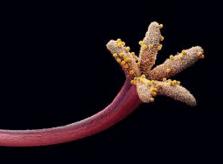
Which of the following consists of only parts of the female parts of the flower?
style, ovary, anther, pollen grain
anther. style, ovary, stigma, egg cell
egg cell, male reproductive cell, ovule
ovule, ovary, style, stigma, egg cell
Asexual reproduction does not involve gametes
True
False
The stamen is made of the
Anther & filament
Anther & petal
Fliament & ovary
Ovary & style
The carpel is made of the
Stigma & petals
Stigma, style & ovary
Filament & anther
Petals
The transfer of pollen from anther of 1 plant to stigma of another is called
Fertilisation
Pollination
Germination
Dispersal
Pollination happens by wind and insects
False
True
Staminate flowers and pistillate flowers are ___________ flowers
Unisexual
Bisexual
Hermaphrodite
All of the above
Staminate flowers and pistillate flowers are ___________ flowers
Unisexual
Bisexual
Hermaphrodite
All of the above
Pistil is also known as (a)
Gametes are also called as _______
Sex cells
Reproductive cells
Both of the above
None of the above
After fertilization, ______ turns into a fruit and _______ turns into seeds.
Ovlues, ovary
Flower, ovules
Flower, petals
Ovary, ovules
After fertilization, ______ turns into a fruit and _______ turns into seeds.
Ovlues, ovary
Flower, ovules
Flower, petals
Ovary, ovules
Plants with staminate and pistillate flowers are known as ___________
Monoecious plants
Dioecious plants
Hermaphrodite plants
None of the above
In ______________ type of reproduction plants can give rise to new plants without seeds.
Sexual
Asexual
Both of the above
None of the above
In ______________ type of reproduction plants can give rise to new plants without seeds.
Sexual
Asexual
Both of the above
None of the above
Asexual reproduction (You can select multiple options)
Budding
Spore formation
Fertilisation
Vegetative propagation
Fragmentation
(a) grows and multiplies every few hours if sufficient nutrients are made available to them by the process of budding.
Spirogyra is a/ an _______________
Fungus
Bacteria
Lichen
Algae
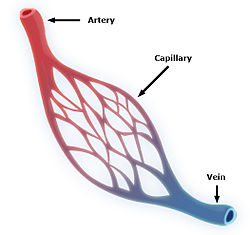
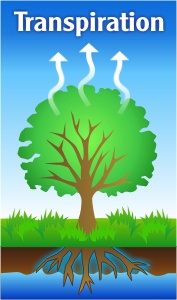
Which part of the blood has haemoglobin?
WBCs
RBCs
Blood platelets
Plasma
_____ is the muscular wall that divides the heart length wise-
Septa
Ventricle
Atrium
None
In plants, food prepared by the leaves is transported to all the other parts of the plants by-
Stomata
Phloem
Root hair
Xylem
________ help in the clotting of blood.
WBCs
RBCs
Platelets
Blood Plasma
Urine gets collected in the _______.
Ureter
Kidney
Urethra
Urinary bladder
________ is the blood vessels which carry oxygen rich blood, from the heart, to all parts of the body.
Arteries
Veins
Systole
Xylem
Which of the following is not a function of blood?
Blood cells, especially the WBCs, help fight infections.
Blood helps to distribute the digested food to all parts of the body.
Circulation of blood helps to maintain the body temperature
Blood removes the carbon dioxide, produced during respiration.
The blood vessels, having thick elastic walls are called-
Arteries
Veins
Capillaries
Atria
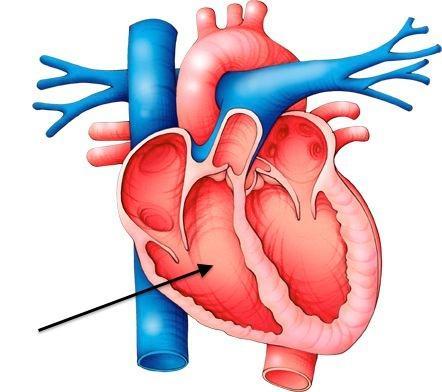
Xylem tubes transport substances..
From the roots to the stem and leaves
From the leaves to the rest of the plant
Xylem tubes transport substances..
From the roots to the stem and leaves
From the leaves to the rest of the plant
Cellular components of blood includes (You can tick on multiple options)
RBC
WBC
Plasma
Platelets
(a) is yellow liquid and is responsible for transport of water, minerals and waste products.
Blood get its red colour because of the presence of __________
plasma
platelets
RBC
haemoglobin
____________ are known as cells of immune system
RBC
WBC
Platelets
All of the above
___________________ carries deoxygenated blood from heart to lungs.
Arteries
Veins
Pulmonary arteries
Pulmonary veins
___________________ carries oxygenated blood from lungs to heart.
Arteries
Veins
Pulmonary arteries
Pulmonary veins
___________________ carries oxygenated blood from heart to different parts of body.
Arteries
Veins
Pulmonary arteries
Pulmonary veins
___________________ carries deoxygenated blood from different parts of body to heart.
Arteries
Veins
Pulmonary arteries
Pulmonary veins
Heart has four chambers
Top: Right atrium, Left atrium Bottom: Right ventricle, Left ventricle
Top: Right atrium, Left ventricle Bottom: Right ventricle, Left atrium
Both
None of the above
Kidneys, ureters, urethra, urinary bladder forms our __________
digestive system
circulatory system
excretory system
none of the above
Heart, blood and blood vessels forms our __________
digestive system
circulatory system
excretory system
none of the above
(a) are bean shaped structures that carry out the process of blood filtration.

