
 Worksheets
Ecosystem Dynamics Part 1 Review
Total questions: 50
Worksheet time: 38mins

Biome with plants and grasses, but few trees.
grassland
desert
forest
arctic tundra
Which biome contains large populations of grazing herbivores, few species of birds, and deep, rich soil?
tropical rain forest
desert
deciduous forest
grassland
Which biome is characterized by very little precipitation?
Desert
Tundra
Taiga
Rainforest
Which biome is characterized by having permafrost soil, mostly small shrubs and grasses, and warm-blooded animals with very short summers and very long winters?
desert
grassland
tundra
tropical rainforest
Which biome is located south of the tundra, has evergreen/cone-bearing trees, mammals, and short, wet summers with long, cold winters?
tundra
taiga
grassland
marine
If I was suddenly transported away to some strange land and saw a squirrel in a magnolia tree, a woodpecker on an oak tree, and a raccoon digging through the garbage, which biome am I mostly likely in?
tropical rainforest
taiga
grassland
deciduous forest
Which biome has the great amount of biodiversity with about half of the known species living in it?
deciduous forest
taiga
tropical rainforest
freshwater
On the savannah one might find a lion preying on an antelope while a rhinoceros is wallowing in a mud puddle. Savannah is another name for which biome?
desert
grassland
marine
forest
True or False:
There are such things as cold deserts.
True
False
Which biome is best being described by the following:
water lilies, algae, catfish, bass, frogs, less than 1% salt concentration
freshwater
marine
rainforest
tundra
Which biome is best being described by the following:
kelp, plankton, coral, anemone, shark, greater than 1% salt concentration
freshwater
marine
rainforest
tundra
The Study of the relations of organisms to one another and their physical environment.
Biology
Sociology
Psychology
Ecology
The Biosphere contains all ecosystems
True
False
An Ecosystem is a community and it's living and non living surroundings.
True
False
What does Biotic mean?
Living
Non Living
What does abiotic mean?
Living
Non Living
Which of the following is not an example of a population?
a herd of buffalo
a school of fish
all the people in a town
the people, plants, and animals of Pittsburg
Select the answer that has the levels of ecology from broadest to narrowest. (biggest to smallest)
Biosphere, Ecosystem, Community, Population, Organism
Community, Organism, Population, Ecosystem, Biosphere
Organism, Population, Community, Ecosystem, Biosphere
Which shoes are better?
Vans
Converse
Nike
Adidas
What is the best pizza topping?
Pure Pepperoni
Cheese Please
Poppin' Pineapple
Pizza is TRASH!
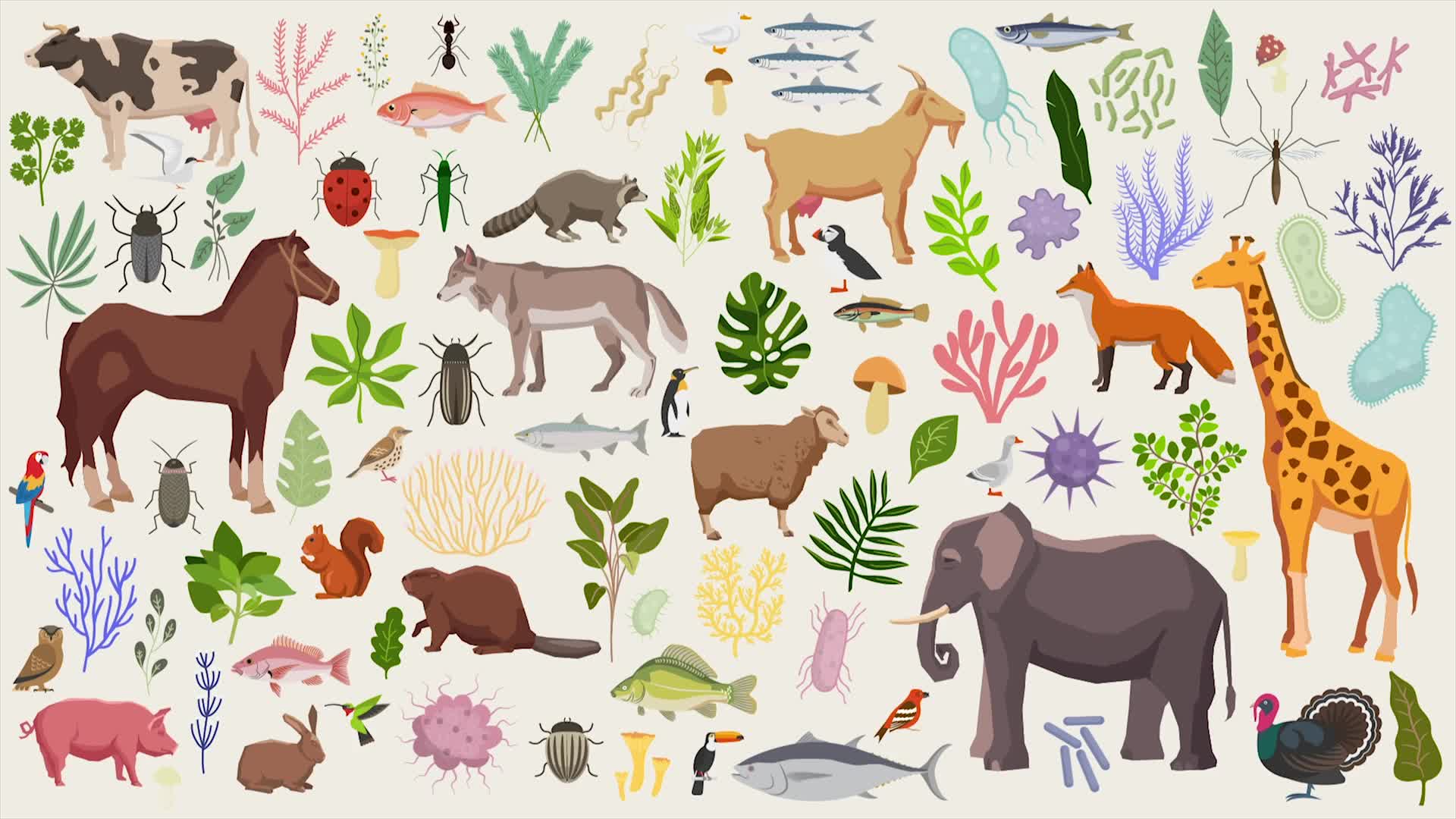


The two-name naming system used in modern classification of living organisms is called...
cladogram
binomial nomenclature
genetics
phylogeny

The most specific level of biological classification is...
kingdom
genus
phylum
species

The order of the levels of classification is:
kingdom, phylum, class, order, genus, family, species
class, kingdom, phylum, order, genus, family, species
class, kingdom, phylum, order, genus, species, family
kingdom, phylum, class, order, family, genus, species

The modern Biological classification system is based on the pioneering work of:
Carl Linnaeus
Isaac Newton
Charles Darwin
John Meritus
Animals that have backbones.
vertebrates
invertebrates
insects
jellyfish
Mammals are one of the classifications. Mammals are known for:
Having feathers.
Having fur and feeding their young milk.
Laying eggs.
Having no spine.
Reptiles are known for:
Having fur.
Having feathers.
Having scales and laying eggs.
Feeding their young with milk.
Birds are known for:
Having scales.
Having fur.
Living partly in water and partly on land.
Having feathers and laying eggs.

