
Font size
 Worksheets
bảng tuần hoàn
Total questions: 64
Worksheet time: 28mins
Phát biểu nào sau đây không đúng về nguyên tắc sắp xếp các nguyên tố trong bảng tuần hoàn?
Các nguyên tố được sắp xếp theo chiều tăng dần của khối lượng nguyên tử.
Các nguyên tố được sắp xếp theo chiều tăng dần của điện tích hạt nhân.
Các nguyên tố có cùng số lớp electron trong nguyên tử được xếp thành một hàng.
Các nguyên tố có cùng số electron hóa trị trong nguyên tử được xếp thành một cột.
Trong bảng hệ thống tuần hoàn, số chu kì nhỏ và số chu kì lớn lần lượt là:
3, 3.
3, 4.
4, 3.
4, 4.
Nguyên tử các nguyên tố xếp ở chu kì 4 có số lớp electron trong nguyên tử là
1
2
3
4
Cho nguyên tử X có cấu hình electron lớp ngoài cùng là 3s23p6. Vị trí nguyên tử X trong bảng tuần hoàn là vị trí nào sau đây?
Ô 18, chu kì 4, nhóm VIA.
Ô 12, chu kì 3, nhóm VIIIA
Ô 17, chu kì 3, nhóm VA
Ô 18, chu kì 3, nhóm VIIIA
Nguyên tử của một nguyên tố R có lớp ngoài cùng là lớp M, trên lớp M có chứa 2e. Cấu hình electron của R và tính chất là:
1s22s22p63s2, R là kim loại
1s22s22p63s23p2, R là phi kim
1s22s22p63s23p6, R là khí hiếm
1s22s22p63s2, R là phi kim
Câu 7. Nguyên tố có cấu hình electron 1s22s22p63s23p64s1 thuộc chu kì
A. 15.
B. 4.
C. 19.
D. 1.
Nguyên tố X thuộc chu kì 3 nhóm IVA trong bảng tuần hoàn. Số hiệu nguyên tử của X là
14
33
16
35
Số proton và nơtron có trong một nguyên tử nhôm ( 27 13Al) lần lượt là
A. 13 và 14
B. 14 và 13
C. 12 và 14
D. 13 và 15

Cho nguyên tử X có cấu hình electron lớp ngoài cùng là ......3s23p5. Vị trí nguyên tử X trong bảng tuần hoàn là vị trí nào sau đây?
Ô 18, chu kì 4, nhóm VIA.
Ô 12, chu kì 3, nhóm VIIIA
Ô 17, chu kì 3, nhóm VA
Ô 17, chu kì 3, nhóm VIIA

Nguyên tố X có Z = 16, vị trí của X trong bảng tuần hoàn là
ô số 16, chu kì 3, phân nhóm VIB.
ô số 16, chu kì 3, phân nhóm VIA.
ô số 16, chu kì 2, phân nhóm VIIA.
ô số 16, chu kì 2, phân nhóm VIIIB.
Nguyên tử Oxi có cấu hình electron nguyên tử : 1s22s22p4 . Oxi thuộc nhóm .................?
VIA
IVA
VIIIA
IIA

Các nguyên tố nhóm A trong bảng tuần hoàn là
các nguyên tố f
các nguyên tố d và f
các nguyên tố d
các nguyên tố s và p
Nguyên tử của một nguyên tố R có tổng số các loại hạt proton, electron, nơtron bằng 82, trong đó số hạt mang điện nhiều hơn số hạt không mang điện là 22 hạt. Số proton của R
20.
22.
24.
26.
Các hạt cấu tạo nên hạt nhân của hầu hết nguyên tử là:
electron và nơtron
electron và proton
proton và nơtron
electron, proton và nơtron
Trong nguyên tử, loại hạt nào có khối lượng không đáng kể so với các hạt còn lại ?
proton
nơtron
electron
nơtron và electron
Những phát biểu nào sau đây đúng?
Nguyên tử được cấu tạo từ các hạt cơ bản là p, n, e
Nguyên tử có cấu trúc đặc khít, gồm vỏ nguyên tử và hạt nhân nguyên tử
Hạt nhân nguyên tử cấu tạo bởi các hạt proton và hạt nơtron
Vỏ nguyên tử được cấu tạo từ các hạt electron
Cation M+ có cấu hình electron lớp ngoài cùng là 2p6. Vị trí của M ( chu kì, nhóm) trong bảng tuần hoàn là
chu kì 3, nhóm IIIA.
chu kì 2, nhóm VIIA.
chu kì 3, nhóm IIA.
chu kì 3, nhóm IA.
X ở chu kì 3, Y ở chu kì 2. Tổng số electron lớp ngoải cùng của X và Y là 12. Ở trạng thái cơ bản số electron p của X nhiều hơn của Y là 8. Vậy X và Y thuộc nhóm nào?
X thuộc nhóm VA; Y thuộc nhóm VIIB
X thuộc nhóm VIIA; Y thuộc nhóm VA
X thuộc nhóm VA; Y thuộc nhóm VIIA
X thuộc nhóm VIIB; Y thuộc nhóm VA
Nguyên tố nào sau đây thuộc nhóm B?
A. [Ar]3d104s24p6.
B. [Ar]4s2.
C. [Ne]3s23p6.
D. [Ar]3d84s2.

What are the vertical columns on the periodic called?
groups
periods
nonmetals
metals
metalloids
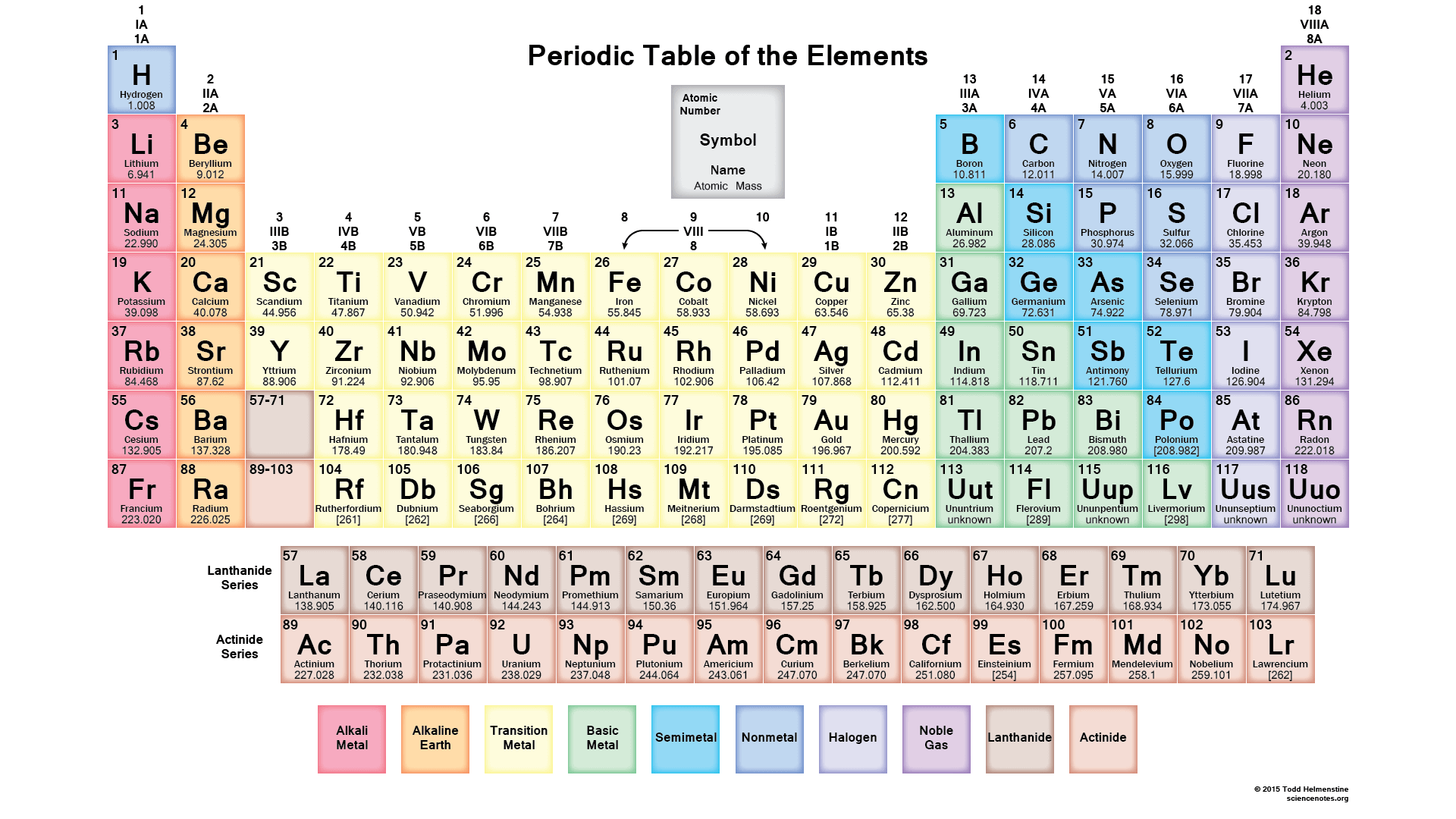

Which elements have 1 valence electron?
period 1
group 1
group 4
The electrons in the outermost shell (main energy level) of an atom; these are the electrons involved in forming bonds
alkali metals (group 1)
Halogens (Group 17)
atomic number
valence electrons
A subatomic particle that has a negative charge
nobles gases
protons
electrons
neutrons
neutron
A subatomic particle that has a positive charge and that is found in the nucleus of an atom
not able to conduct heat or electricity, little to no metallic luster
A subatomic particle that has a negative charge
A small particle in the nucleus of the atom, with no electrical charge

noble gases


Which is the best description of an element?
A substance that cannot be broken down into simpler substances
A collection of atoms that have different abilities when joined together
A man-made mineral
A mixture of substances

In an element box, the number at top is the
atomic number
atomic name
atomic mass
atomic symbol
A substance that consists of 2 or more different elements is a
element
data table
symbol
compound
What is the difference between Co and CO?
CO is an element but Co is a compound
Nothing is different. They are the same thing.
CO is two elements and Co is only one element
Co is not a pure substance
Which one is a compound?
Ni
F
Re
NaCl

"Na" is the element's
Chemical Formula
Compound
Name
Chemical Symbol
One way to tell how many elements a compound has is to..
the the square root of the total number of lettersThis is a wrong answer the the square root of the total number of letters
count the capital letters
add up all the numbers
count the letters

