Worksheets
Major Test: Momentum, Impulse, and Collisions
Total questions: 100
Worksheet time: 3hrs 59mins
The units for Impulse are
N/s
N·s
N
m/s
A boy kicks a football with a force of 20 N, the time the force acts for is 0.3 s.
Calculate the impulse on the ball.
1 N·s
6 N·s
66 N·s
None of these
The momentum of an object depends upon the object's ___________&_____________.
size and shape
mass and speed
mass and veloctiy
mass and energy
Determine the momentum of 1,000-kg car moving northward at 20 m/s.
20,000 N
20,000 Joules
20,000 Kg * m/s
20,000 kg * m/s north
When the speed of an object is doubled, its momentum...
remains unchanged in accord with the conservation of momentum.
doubles.
quadruples.
decreases.
Collisions where objects BOUNCE apart.
inelastic collisions
elastic collisions
explosions
none of these

Two Pool Balls collide and then go separate directions.
inelastic collision
elastic collision
explosion
none of these
Collision where objects collide, and stick together.
inelastic collision
elastic collision
explosion
none of these
For every action, there is an equal and opposite reaction.
Newton's 1st Law
Newton's 2nd Law
Newton's 3rd Law
none of these
Action: Your foot applies a downward force onto the floor.
Reactiion?
Your foot pushes through the floor.
Your foot bounces off of the floor.
The floor applies an equal and opposite force upward on your foot.
The floor collapses.
An insect applies 1.5 N of force to a windshield of a moving car. How much force does the windshield apply to the insect?
15,000 N
1.5 N
0.5 N
Not enough information

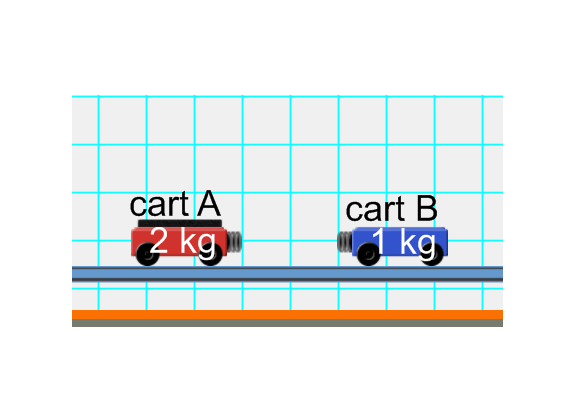
What is the TOTAL MOMENTUM for the system BEFORE COLLISION?
14 Kg x m/s
10 Kg x m/s
24 Kg x m/s
-24 Kg x m/s

What will the TOTAL MOMENTUM be AFTER COLLISION?
12 Kg x m/s
10 Kg x m/s
24 Kg x m/s
-24 Kg x m/s

If the cars collided INELASTICALLY, how would they move afterward (if at all)?
They would BOUNCE OFF and move LEFT
They would BOUNCE OFF and move RIGHT
They would STICK TOGETHER and move LEFT
They would STICK TOGETHER and move RIGHT

During an INELASTIC COLLISION what would happen to the velocity of the cars since they are now stuck together?
Velocity INCREASES
Velocity DECREASES
Velocity remains the SAME

Which cart applies a GREATER FORCE during the collision (according to Newton's 3rd Law)?
Red Cart
Blue Cart
Forces are EQUAL for BOTH carts
When comparing the momentum of two moving objects, which of the following is correct?
the object with the higher velocity will have less momentum if the masses are equal
the more massive object will have less momentum if its velocity is greater
the less massive object will have less momentum if the velocities are the same
the more massive object will have less momentum if the velocities are the same
A roller coaster climbs up a hill at 4 m/s and then zips down the hill at 30 m/s. The momentum of the roller coaster
is greater up the hill than down the hill
is greater down the hill than up the hill
remains the same throughout the ride
is zero throughout the ride
A child with a mass of 23 kg rides a bike with a mass of 5.5 kg at a velocity of 4.5 m/s to the south. Compare the momentum of the child with the momentum of the bike.
Both the child and the bike have the same momentum
the bike has a greater momentum than the child
the child has a greater momentum than the bike
neither the child nor the bike has momentum
The impulse experienced by a body is equivalent to the body's change in
velocity
kinetic energy
momentum
force
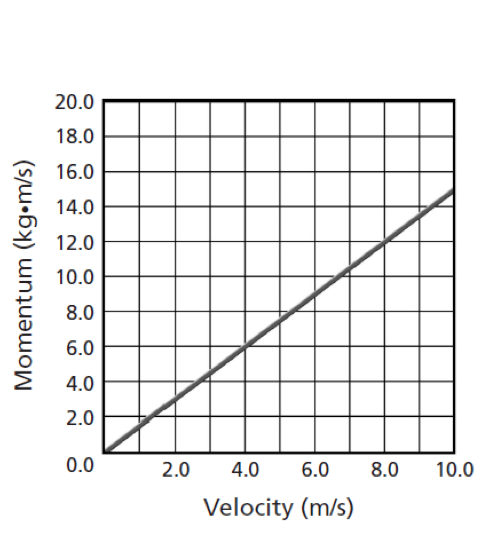
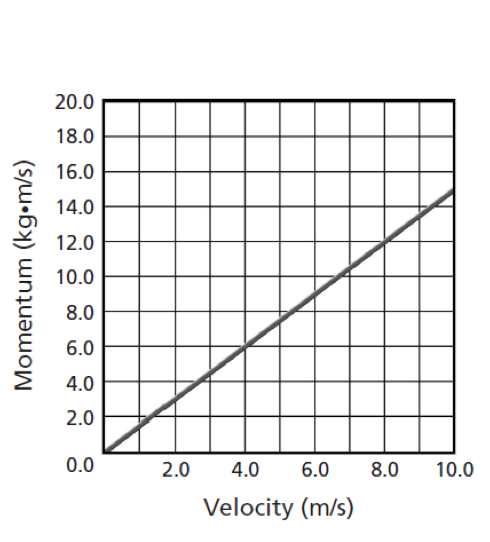
How fast are you going?
Depends on the frame of reference
0
10
What?
How fast do you want me to me going?
the tendency of an object to resist a change in its motion
acceleration
inertia
mass
frame of reference
Inertia is a force
True
False
Inertia is Newton's _______ Law of Motion.
First
Second
Third
Inertia tells us that we need ____________ to get an object moving or to make it stop.
a force
gravity
friction
strength

How many times does the object change the direction is it going in, based on this graph?
0
1
2
3

How many times is this object at rest?
0
1
2
3
Between which time intervals does the object speed up/increase velocity?(velocity moves away from 0 m/s point)
0-10 sec and 40-55 sec
15-30 sec and 40-55 sec
0-10 sec and 30-40 sec
15-30 sec and 30-40 sec
How many times does this object have no acceleration?(no acceleration means velocity doesn't change so acceleration = 0 m/s2)
0
1
2
3
What is the rate of acceleration during the 3rd line segment? (slope between 15 - 40 sec)
0 m/s2
2.7 m/s2
6 m/s2
- 4 m/s2


Calculate the net force.
0 N
5 N
25 N
15 N
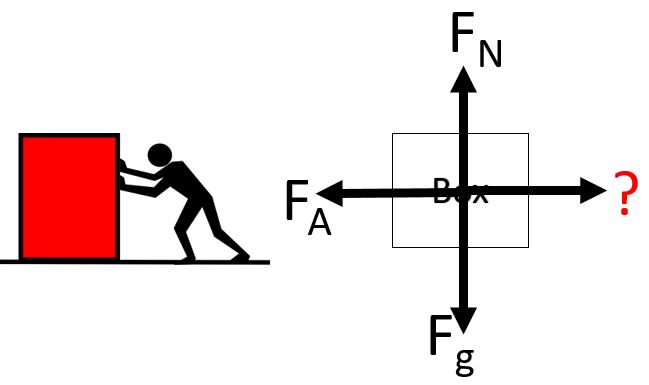

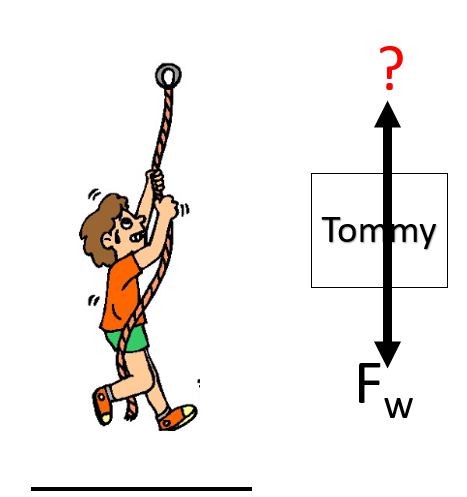
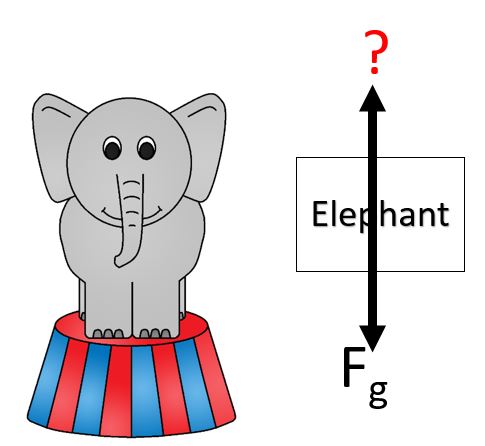


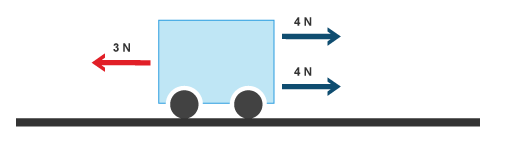


Calculate the net force.
0 N
5 N
25 N
15 N
How many times does the object change the direction is it going in, based on this graph?
0
1
2
3
How many times is this object at rest?
0
1
2
3
Between which time intervals does the object speed up/increase velocity?(velocity moves away from 0 m/s point)
0-10 sec and 40-55 sec
15-30 sec and 40-55 sec
0-10 sec and 30-40 sec
15-30 sec and 30-40 sec
Between which time intervals does the object slow down/decrease velocity?(velocity move towards 0 m/s point)
0-10 sec and 40-55 sec
15-30 sec and 40-55 sec
0-10 sec and 30-40 sec
15-30 sec and 30-40 sec
How many times does this object have no acceleration?(no acceleration means velocity doesn't change so acceleration = 0 m/s2)
0
1
2
3
What is the rate of acceleration during the first line segment? (slope between 0 - 10 sec)
0 m/s2
2.7 m/s2
6 m/s2
- 4 m/s2
What is the rate of acceleration during the 2nd line segment? (slope between 10 - 15 sec)
0 m/s2
2.7 m/s2
6 m/s2
- 4 m/s2
What is the rate of acceleration during the 3rd line segment? (slope between 15 - 40 sec)
0 m/s2
2.7 m/s2
6 m/s2
- 4 m/s2
What is the slope of the 3rd line segment?
0 m/s2
2 m/s2
4 m/s2
- 3 m/s2

An object moves at a constant velocity and then stops
An object speeds up and then moves with constant velocity
An object slows down and then stops
An object speeds up and then stops

An object moves with constant velocity and the speeds up
An object slows down, stops, and then moves at a constant velocity
An object slows down, stops turns around, and then speeds up
An object slows down, stops, and then speeds up without turning around

An object moves with constant velocity and the speeds up
An object slows down, stops, and then moves at a constant velocity
An object slows down, stops turns around, and then speeds up
An object slows down, stops, and then speeds up without turning around

An object is at rest initially and then slows down
An object is at rest initially and then speeds up
An object moves at a constant velocity and then slows down
An object moves at a constant velocity and then speeds up

Describe the velocity in this graph.
constant and positive
constant and negative
decreasing
increasing
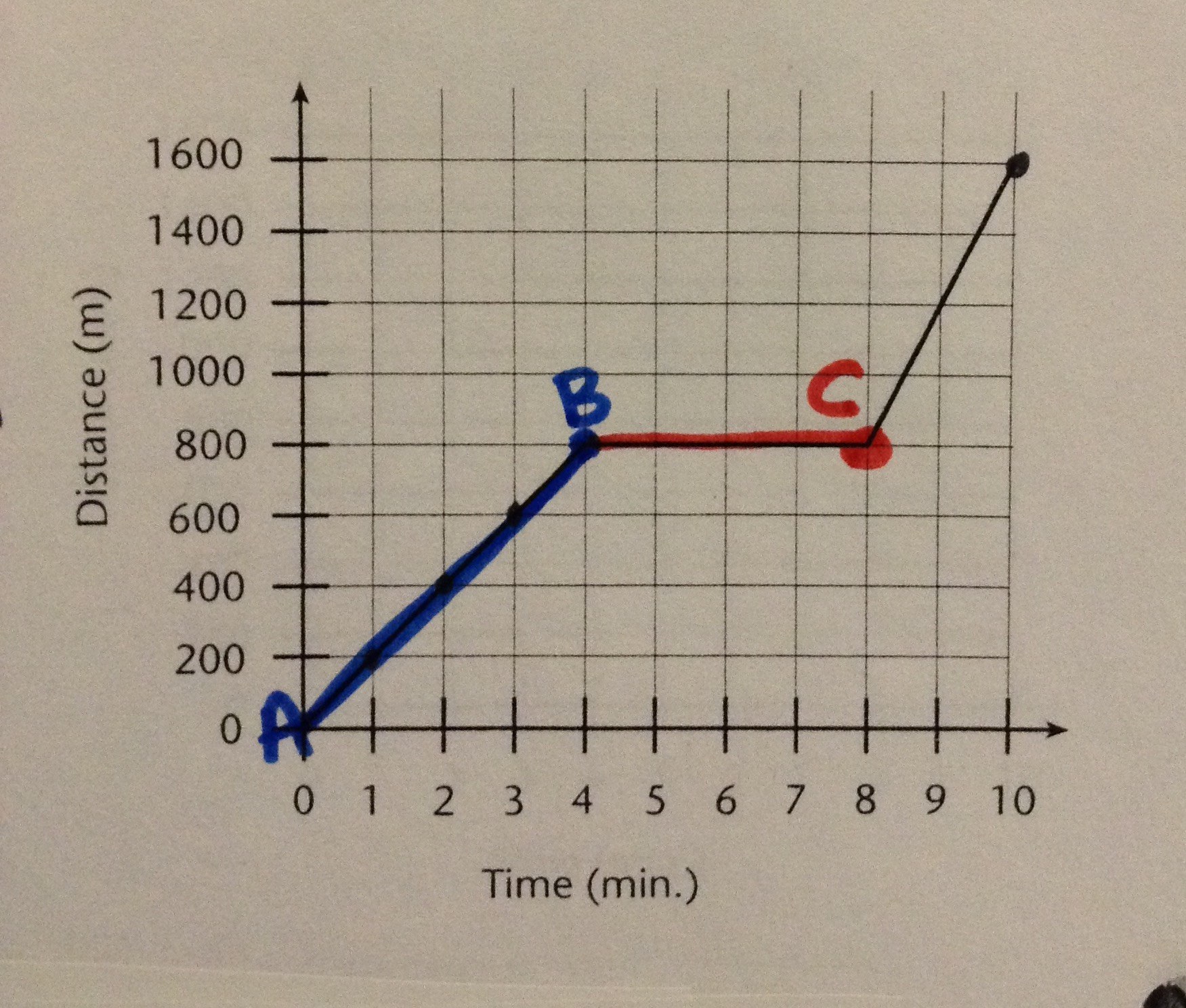
The graph shows Ashley riding her bike to Maria's house.
What was occurring from point B to point C?
She was increasing her speed.
She stopped for 4 minutes
She was decreasing in speed
She was moving forward at a steady 800 m/s


During which time interval is this object moving forward?
0 s to 4 s
1 s to 6 s
1 s to 4 s
4 s to 6 s

During which time interval does this object has positive acceleration?
0 s to 4 s
1 s to 4 s
4 s to 6 s
0 s to 6 s

What acceleration does this object have from 1 s to 4 s?
3 m/s2
15 m/s
5 m/s2
4 m/s2

The president’s airplane, Air Force One, flies at 250 m/s to the east (compared to the ground). The president visits the pilots in the cockpit. Then he walks to the back of the plane at 1 m/s. What is his speed relative to the ground?
249 m/s
251 m/s
253 m/s
248 m/s


which of the following is a vector?
velocity
discance
position
speed
How do scalars and vectors differ?
scalers have units
scalers have direction
vectors have units
vectors have direction