wayground logo

Free Printable Worksheets

Font size

S
M
L
XL
Worksheets

Integrated Physics and Chemistry Final Exam Practice

Total questions: 96

Worksheet time: 4hrs 39mins

Name
Class
Date
1.
Energy of a rock perched on a cliff is an example of...
a)
gravitational
b)
elastic
c)
chemical
d)
kinetic
2.
How do you calculate power?
a)
P = W/t
b)
P = E/t
c)
P = w * t
d)
P = bbq/chicken
3.
How much work is done by a motor that lifts a train car on El Toro to the top of a 70-meter hill using a force of 15,000 N?
a)
1,000,000 J
b)
214.29 J
c)
1,050,000 J
d)
105,000 J
4.
Which combination of fundamental units can be used to express energy? 
a)
kg * m^2/s 
b)
kg * m^2/s^2
c)
kg * m/s
d)
kg * m/s^2 
5.
A car travels at a constant speed v up a hill from point A to point B. As the car travels from A to B, its gravitational potential energy
a)
increases and its kinetic energy remains the same
b)
remains the same and its kinetic energy decreases
c)
increases and its kinetic energy decreases
d)
remaines the same and its kinetic energy remains the same. 
6.
While riding a chairlife, a 55 kg skier is raised a vertical distance of 370 m. What is the total change in the skier's gravitational potential energy? 
a)
5.4 x 10^1 J 
b)
5.4 X 10^2 J
c)
2.0 X 10^4 J 
d)
2.0 X 10^5 J 
7.
 The table below lists the mass and speed of four objects. Which two objects have the same KE? 
Objects    |   Mass   | Speed
A              | 1.0 kg    | 4.0 m/s 
B              | 2.0 kg    | 2 .0 m/s 
C              | 0.5 kg    | 4.0 m/s 
D              | 4.0 kg    | 1.0 m/s 
a)
A and C
b)
B and C
c)
A and D
d)
B and D 
8.
Which graph best represents the relationship b/w gravitational PE and its height above the earth?
a)
1
b)
2
c)
3
d)
4
9.
Student A lifts a 50. N box from the floor to a height of .40 meter in 2.0 seconds. Student B lifts a 40. N box from the floor to a height of .50 meter in 1.0 second. Compared to student A, student B does
a)
more work but develops less power
b)
the same work but develops more power 
c)
less work but develops more power
d)
the same work but develops less power 
10.
A 60. kilogram student climbs a ladder a vertical distance of 4.0 meters in 8.0 seconds. Approximately how much total work is done against gravity by the student during the climb?
a)
2.4 x 10^3 J
b)
3.0 x 10^3 J
c)
2.9 x 10^2 J
d)
2.4 x 10^2 J
11.
Energy from a compressed spring would be an example of...
a)
kinetic
b)
elastic
c)
gravitational
d)
chemical
12.
What is the formula for work?
a)
Force = work x distance
b)
Distance = force x work
c)
Work = force x distance
d)
Work = force x mass
13.

A light plastic cart and a heavy steel cart are both pushed with the same force for a distance of 1.0 m, starting from rest. After the force is removed, the kinetic energy of the light plastic cart is ________ that of the heavy steel cart.

a)

greater than

b)

equal to

c)

less than

d)

can't say unless we know how big the force is

14.

Rank in order, from largest to smallest, the gravitational potential energies of the balls.

a)

1 > 2 = 4 > 3

b)

1 > 2 > 3 > 4

c)

3 > 2 = 4 > 1

d)

3 > 2 > 4 > 1

15.

Four students run up the stairs in the time shown. Which student has the largest power output?

a)

A

b)

B

c)

C

d)

D

16.
If Nellie Newton pushes an object with twice the force for twice the distance, she does:
a)
The same work
b)
Twice the work
c)
Four times the work
d)
Eight times the work
17.
A toy cart moves with kinetic energy of 40 J. What is its kinetic energy if the speed is doubled?
a)
100 J
b)
160 J
c)
400 J
d)
80 J
18.
A car that travels twice as fast as another when braking to a stop will skid:
a)
Twice as far
b)
Four times as far
c)
Depends on the mass of the cars
19.

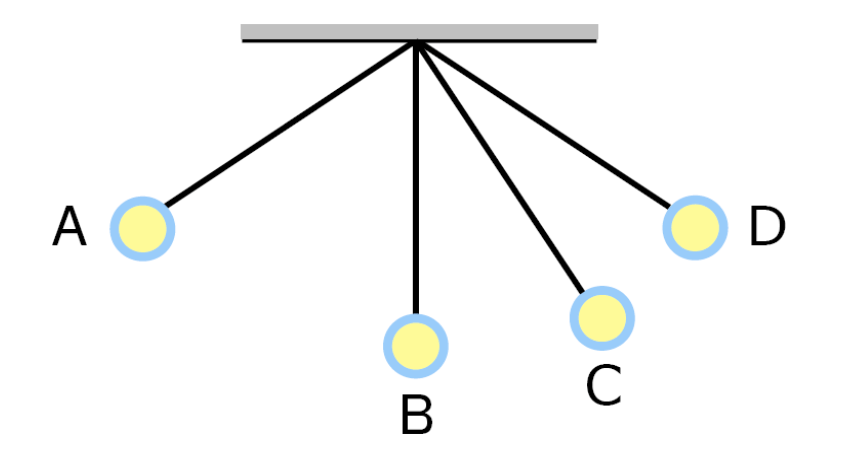
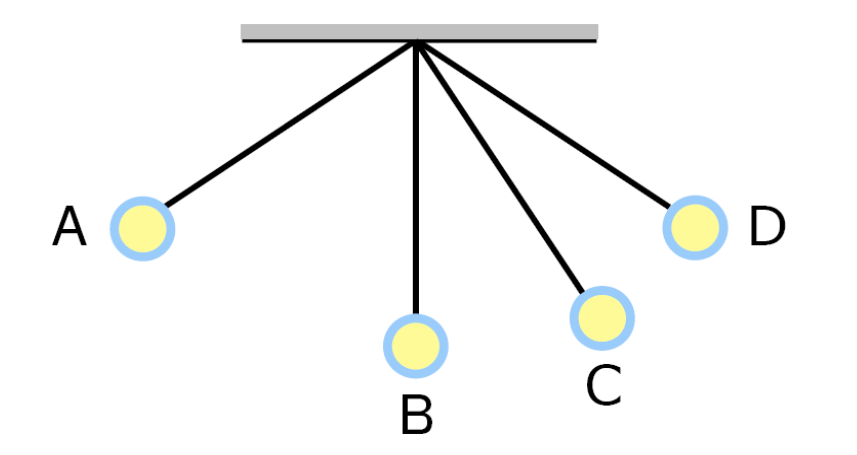
Maximum gravitational potential energy (choose all that apply)

a)

A

b)

B

c)

C

d)

D

20.

Maximum kinetic energy (choose all that apply)

a)

A

b)

B

c)

C

d)

D

21.

Two movers applied a total force of 350 N to push chest up a ramp into a truck. If the work that they did 1,400 J, calculate the height of the ramp?

a)

4 m

b)

3 m

c)

2 m

d)

1 m

22.

If this person supplies 81.2 W of power and does 637 J of work to do 5 reps, how much time does he take to do 5 reps?

a)

7.8 s

b)

8.0 s

c)

9.0 s

d)

5.8 s

23.

What are valence electrons?

a)

The total number of electrons in an atom

b)

The number of electrons in the outermost shell

c)

The number of electrons in the second shell

d)

The number of protons in the outermost shell

24.

Which of the following is false about covalent bonds?

a)

Forms by sharing electrons

b)

Forms between 2 nonmetals

c)

Represented by a line between atoms

d)

Forms by transferring electrons

25.

Which list of elements contains a metal, a metalloid, and a nonmetal?

a)

Ag, Si, I2

b)

Ge, As, Ne

c)

K, Cu, Br2

d)

S, Cl2 , Ar

26.

Which diagram below shows the correct Lewis electron-dot diagram for a molecule PCl3?

a)
b)
c)
d)
27.

Which statement is FALSE about the Lewis dot diagram in the picture?

a)

Each line represents 2 shared electrons

b)

Each line represents the bond between atoms

c)

Nitrogen requires 3 covalent bonds

d)

There are 14 valence electrons total being shared

28.

What are the elements (Be, Mg, Ca,...) in group 2 called?

a)

Alkali metals

b)

Alkaline earth metals

c)

Halogens

d)

Nobel Gases

29.

Which elements have the most similar chemical properties?

a)

boron and carbon

b)

oxygen and sulfur

c)

aluminum and bromine

d)

argon and silicon

30.

How many pairs of electrons are shared between the nitrogen atoms in a molecule of N2?

a)

1

b)

2

c)

3

d)

6

31.
In CO2, how many UNSHARED pairs of electrons does each oxygen have?
a)
2
b)
1
c)
4
d)
6
32.
How many electrons should Carbon have around its Lewis dot model?
a)
1
b)
3
c)
4
d)
5
33.
This is a correct dot diagram for oxygen (O)
a)
true
b)
false
34.
Which of the following is the correct Lewis dot structure for the molecule fluorine (F2)?
a)
A
b)
B
c)
C
d)
D
35.
What is the correct formula for this molecule?
a)
Si4F
b)
SiF4
c)
SiF
d)
Si4F4
36.
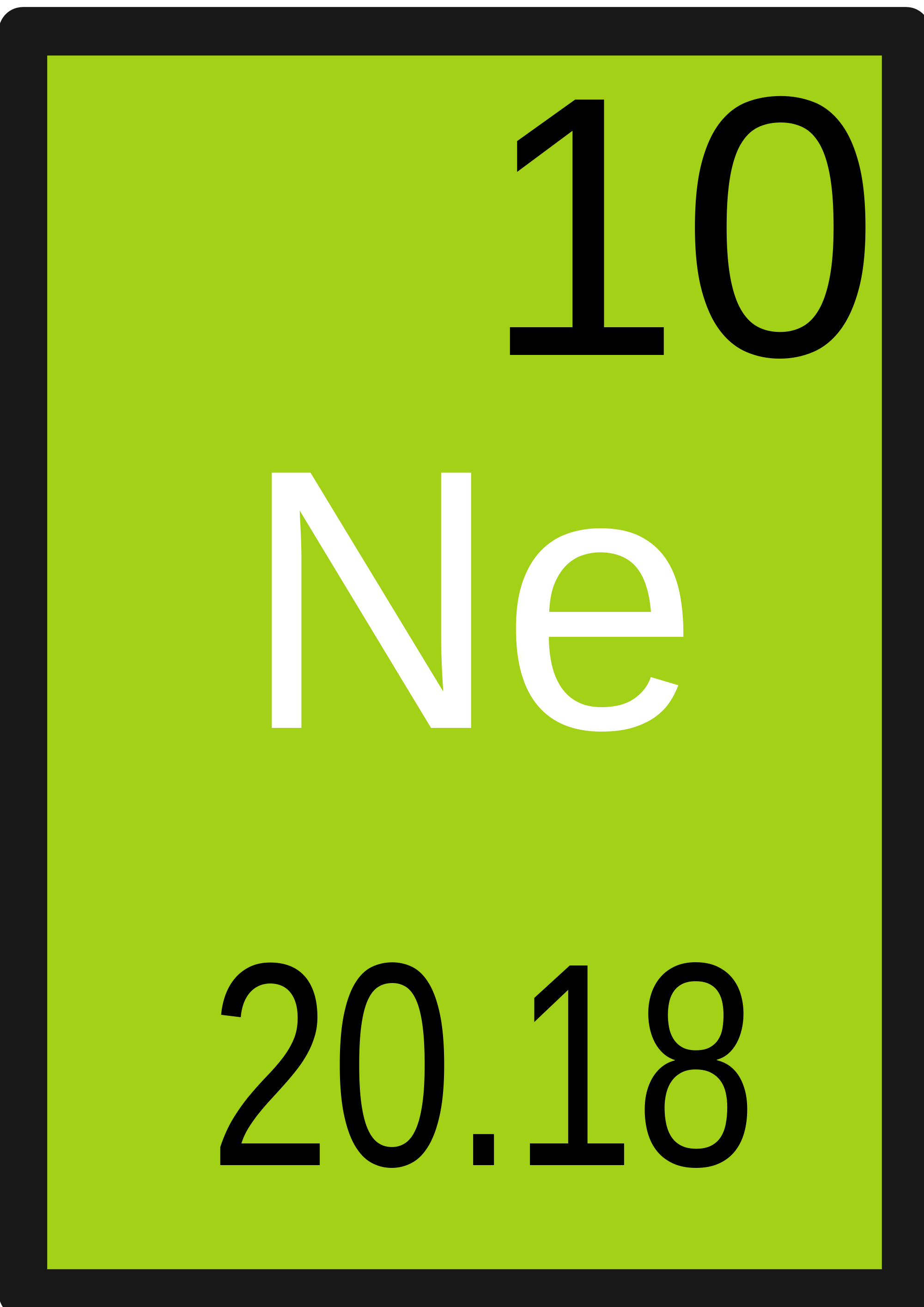
What is the atomic mass of Neon?
a)
10
b)
20.18
c)
10.18
d)
30.18
37.
Which of the subatomic particles is the lightest
a)
all have the same mass
b)
protons 
c)
neutrons 
d)
electrons
38.
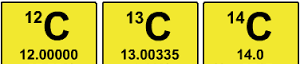
What do these isotopes of carbon all have in common?
a)
neutrons & mass number
b)
atomic number and neutrons
c)
atomic number and electrons
d)
protons, atomic number, and mass number
39.
What quantities vary between isotopes of an element?
a)
protons, electrons, and atomic mass
b)
protons, electrons, and atomic number
c)
neutrons and electrons
d)
neutrons and atomic mass
40.

A proton has a _________ charge.

a)

Negative

b)

Neutral

c)

Positive

d)

Positive & Neutral

41.

A subscript is a

a)

number below and to the right of a chemical symbol

b)

number in front of a chemical symbol

c)

a shorthand way to represent a compound

d)

force that holds atoms together

42.
Is this a correct representation of the Bohr Model for Sodium (Na)?
a)
no
b)
yes
43.
What is the standard unit of mass at the atomic level?
a)
centimeters
b)
millimeters
c)
amu
d)
milligrams
44.
As atoms of elements in group 16 are considered in order from top to bottom, the electronegativity of each successive element....
a)
decreases
b)
increases
c)
remains the same
d)
none of the above
45.
Which is larger:
Ca or Ca2+
a)
Ca
b)
Ca+2
c)
both are same size
d)
impossible to determine
46.
Which of the following elements has the GREATEST electronegativity?
a)
Cl
b)
As
c)
Zn
d)
Na
47.
As you move across the periodic table atoms tend to get smaller because, ______________.
a)
the atoms have more mass.
b)
the atoms have less mass
c)
the atoms have more protons.
d)
the atoms have less electrons.
48.
Atoms that have a high electronegativity, _______________.
a)
give up their electrons more easily.
b)
hold on to their electrons more tightly.
c)
have more electron shells.
49.
Ionization energy is...
a)
the energy required to add an electron to a specific atom
b)
how much energy it takes to remove an electron from an atom
c)
the energy required to shield the outer electrons from the nucleus
d)
a measure of the ability of an atom to attract electrons
50.
Electronegativity __________ from left to right within a period and __________ from top to bottom within a group.
a)
decreases, increases 
b)
increases, increases
c)
increases, decreases 
d)
stays the same, increases
51.
Which metal on the periodic table is the most reactive?
a)
Cu
b)
Fe
c)
Rb
d)
Fr
52.
Fluorine is the most reactive nonmetal.
a)
true
b)
false
53.
Which of the following sets of elements are arranged in order of INCREASING metallic radii?
a)
Cs < Ba < La < Hf < Ta
b)
Al < Si < P < S < Cl
c)
Be < Mg < Ca < Sr < Ba
d)
Rb < K < Na < Li < H
54.
Which of the following have properties of both metals and nonmetals?
a)
C, Si, Ge, Sn, Pb
b)
Na, Mg, Al, Si, P
c)
Al, B, N, S, P
d)
Si, Ge, B, As, Sb
55.
Group 13 (3A) elements tend to most often acquire which charge when they form ions?
a)
-3
b)
+5
c)
+3
d)
-5
56.
In which pair is the one on the left larger than the one on the right?
a)
Na, Rb
b)
S, Mg
c)
Br, Br-
d)
K, K+
57.
The more protons there are, the  ____ .
a)
Weaker the pull
b)
Smaller the electrons
c)
Stronger the pull
d)
The bigger the electrons
58.

Which of these has the greatest ionic radius?

a)

potassium

b)

aluminum

c)

carbon

d)

oxygen

59.
The simplest substance is..?
a)
Carbon
b)
An element
c)
Water
d)
A simple compound 
60.
What does the atomic mass tell you? 
a)
Basically,the number of electrons and protons
b)
The number of neutrons
c)
Basically, the number of protons and neutrons
d)
The number of protons.
61.
Does an increase in LDF's (London Dispersion Forces) make it more or less difficult to separate noble gases and does it increase or decrease their boiling points?
a)
more; increase
b)
less; increase
c)
less; decrease
d)
more; decrease
62.
The occurrence of hydrogen bonds has two important consequences...
a)
(1) It gives substances containing them unusually high boiling points (2) Hydrogen bonds can only be formed with K, O, B, C, and N atoms.
b)
(1) It gives substances containing them unusually low boiling points (2) substances containing them tend to be less viscous
c)
(1) It gies substances containing them unusually low boiling points (2) Hydrogen bonds can only be formed with K, O, B, C, and N atoms.
d)
(1) It gives substances containing them unusually high boiling points (2) Substances containing them tend to be more viscous.
63.
Which type of force is this?
a)
Hydrogen
b)
Intramolecular
c)
Intermolecular
d)
Oxygen
64.
What type of interaction does this represent?
a)
non-polar covalent
b)
dipole
c)
dipole-dipole
d)
none that I know of
65.

What type of interaction does this represent?

a)

dipole-dipole

b)

none that I know of

c)

non-polar covalent

d)

dipole of a hydrogen bond

66.
What are intermolecular forces?
a)
forces of attraction or repulsion which act between neighboring particles
b)
forces which keep a molecule together.
c)
forces which keep electrons together
d)
forces of attraction or repulsion which act between neighboring electrons
67.
Is interbonding generally stronger or weaker than intrabonding
a)
Stronger
b)
Weaker
68.
H2S has what kind of intermolecular force?
a)
dipole dipole
b)
dispersion
c)
H-bond
d)
ionic
69.
Intermolecular force present in HCl?
a)
dipole dipole
b)
dispersion
c)
H-bond
d)
ionic
70.
Which type of bond has an unequal sharing of electrons?
a)
Polar Covalent 
b)
Non Polar Covalent
c)
Ionic
d)
Metallic
71.
Which type of bond has an equal sharing of electrons?
a)
Polar Covalent 
b)
Non Polar Covalent
c)
Ionic
d)
Metallic
72.

Which type of bond creates a "sea" of electrons between atoms?

a)

Ionic Bonds

b)

Covalent Bonds

c)

Metallic Bonds

d)

Saving Bonds

73.
What information do we look for on the periodic table if we  want to examine intermolecular forces?
a)
atomic mass
b)
atomic number
c)
electronegativity
d)
ionization 
74.

Which substance would have the weakest intermolecular forces of attraction?

a)

CH4

b)

NaCl

c)

H2O

d)

MgF2

75.
Which formula represents a nonpolar molecule?
a)
HBr
b)
H2S
c)
CBr4
d)
PCl3
76.

Polarity of a molecule is determined by (Hint: EN = Electronegativity)

a)

shape and charge

b)

symmetry/asymmetry of molecule and difference in EN value

c)

difference in EN value and size

d)

difference in EN value and charges

77.
The transfer of thermal energy between objects of different temperatures is called...
a)
temperature
b)
heat
c)
internal energy
d)
none of these
78.
Thermal energy always moves:
a)
From a high temperature object to a lower temperature object.
b)
From a lower temperature object to a higher temperature object.
c)
From an object with lower kinetic energy to an object with higher kinetic energy.
d)
From an object of higher mass to an object of lower mass.
79.

Heat is measured in

a)

joules

b)

grams

c)

degrees Celsius

d)

degrees Farenheit

80.
The specific heat(c) of copper is 0.39 J/g °C. What is the temperature change(∆t) when 100 Joules of heat(Q) is added to 20 grams?
a)
12.82 °C
b)
24.12°C
c)
351 °C
81.
H2 + 2 C + N+ 270.3 kJ --> 2 HCN
Is this reaction endothermic or exothermic?
a)
Endothermic 
b)
Exothermic
82.

What is the definition of temperature?

a)

Sum of all the kinetic energies of the particles within a substance

b)

Average of all the kinetic energies of the particles within a substance

c)

Sum of all the potential energies of the particles within a substance

d)

Average of all the potential energies of the particles within a substance

83.
For the formula:
 Q= m c ∆T
The  units for specific heat are:
a)
g /J C
b)
°C/g J
c)
kJ/g
d)
J/g°C
84.

The specific heat of water is 4.18 J/g°C.

If 980. J of energy is added to 6.20 g of water at 18.0 °C, what is the final temperature of the water?

a)

37.8 °C

b)

-19.8 °C

c)

19.8 °C

d)

55.8 °C

85.
N2 +  3H2 −->  2NH3 
How many moles of ammonium are produced when 3 moles of nitrogen react with hydrogen?
a)
6 moles Ammonium
b)
1.5 moles ammonium
c)
9 moles ammonium
d)
9 moles hydrogen
86.
C+ O2 --> CO2 + 60kJ, what is the value for ΔH for the reaction?
a)
+60
b)
-60
c)
there is no way to know
87.
Water has a specific heat of 4184 J/KgºC.  Wood has a specific heat of 1760 J/KgºC.  What material needs more energy to raise the temperature 1ºC
a)
Wood
b)
Water
c)
Both are the same
88.
When ammonium nitrate dissolves in water, the solution gets cold. Which is true?
a)
Reaction is ENDOTHERMIC with positive ΔH
b)
Reaction is ENDOTHERMIC with -ΔH
c)
Reaction is EXOTHERMIC with a -ΔH
d)
Reaction is EXOTHERMIC with +ΔH
89.

A student conducts an experiment to determine the specific heat of a substance. The student uses a water bath to increase the temperature of a metal by 250C. He then placed the metal in a cup with 100 mL of water and the temperature of the water rose by 100C. If the metal had a mass of 29 grams, what is the specific heat of the metal?

a)

2.535 J/g0C

b)

4184 J/g0C

c)

1.650 J/g0C

d)

5.77 J/g0C

90.
Specific heat capacity is
a)
heat energy needed to raise temp by 1C
b)
heat energy needed to raise temp of 1g of substance by 1C
c)
heat energy absorb to raise 1g of substance to higher temp
d)
heat energy need to raise temp for 1g of substance
91.
Which statement is true regarding endothermic reactions?
a)
a) Temperature change is positive and enthalpy change is positive
b)
b) Temperature change is positive and enthalpy change is negative
c)
c) Temperature change is negative and enthalpy change is positive
d)
d) Temperature change is negative and enthalpy change is negative
92.
Define 'Enthalpy'
a)
a) Energy stored in the movement of molecules in a substance
b)
b) The opposite of temperature
c)
c) The temperature of a molecule
d)
d) Energy stored in the chemical bonds in a substance
93.
Describe the energy change that takes place when bonds are broken. 
a)
a) Energy is given out 
b)
b) Energy is taken in 
c)
c) Energy is taken in and then given out 
d)
d) Energy is given out and then taken in
94.

Which is an example of an endothermic physical change?

a)

a) Ice melting

b)

b) Combustion

c)

c) Steam condensing

d)

d) Photosynthesis

95.
Do reactants in an endothermic reaction have a higher or lower energy than the products? 
a)
Higher
b)
Lower
96.
If ΔH is positive, heat would be shown on the _____ side of the thermochemical equation.
a)
Reactant
b)
Product