
 Worksheets
second Periodical Test review
Total questions: 100
Worksheet time: 22mins
In physics, what is impulse ?
The change in velocity of an object over time
The change in momentum of an object over time
The force applied to an object over distance
The acceleration of an object over a given interval
Which of the following is a vector quantity related to impulse?
Force
Energy
Power
Work
Which between the two has greater momentum: sleeping lion or walking ant?


Which of the following imparts the greatest impulse on the crate in each of their turn to move it?
Jon who pushes it with a force of 150 N for 5 seconds
Jaime who pushes it using one hand with a force of 100 N within 6 seconds
Gregor who pushes it with a force of 300 N for 3 seconds
The momentum of an object depends upon the object's ___________&_____________.
mass and energy
mass and veloctiy
mass and speed
size and shape
The impulse-momentum theorem states that
Athe impulse on an object is less than the change in momentum it causes
the impulse on an object is greater than the change in momentum it causes
the impulse on an object is equal to the change in momentum it causes
the force on a moving object is equal to the magnitude of the impulse.
A runner has a momentum of 670 kg m/s and is travelling at a velocity of 9 m/s. What is his mass?
6030 kg
0.0134 kg
74.4 kg
80 kg
A boy kicks a football with a force of 20 N, the time the force acts for is 0.3 s.
Calculate the impulse on the ball.
1 N·s
6 N·s
None of these
66 N·s
Which takes more force to catch, a bowling ball or a ping pong ball?
bowling ball because it has more momentum
bowling ball because it has less momentum
both require the same amount of force when catching
ping pong ball because it has more momentum
How can a tennis ball and a bowling ball have the same momentum?
one is moving backwards
have the same speed
they can't
have different speeds
A 2 kg cart has a momentum of 16 kg m/s. What is its velocity?
32 m/s
8 m/s
0.125 m/s
18 m/s
Which of the following situations shows that work is done?
teacher sitting on a chair
book resting on a table
key chain hanging from a bag
a ball being rolled on the floor
In which of the following situations is work NOT done?
pushing a cart in a store
shooting a basketball
holding a 20 pound box above the floor
running a mile
If you push a cart with a force of 60 N for 2 m. How much work have you done?
120 J
30 J
120 N
30 N

It took 500 Newtons of force to push a car 4 meters. How much work was done?
2000 J
125 J
0.008 J
500 J
If 68 Joules were necessary to move a 4 Newton crate, how far was the crate moved?
272 m
17 m
4.05 m
272 cm
Two people push on a wall with 100 N. The wall doesn’t move. How much work is done?
100 J
100 N
0 J
0 N
We can only say that there is work done when,
There is a displacement and the force causes that displacement.
There is no displacement but there is force existing.
There is neither displacement nor force.
There is displacement even with or without force.
What is the formula for work?
W= Fd
W=F/d
W= md
W=d/f
What is the unit of work?
Newton
Joule
Watt
meter
Which picture shows more power?


In physics, power is the rate at which _________ is used.
Current
Speed
Energy
Force
To solve for power, we use the formula: Power = Work divided by _________.
Velocity
Force
Distance
Time
Standard unit for Power
Ampere
Newton
Joule
Watt
How much power is expended if it takes 10 J of work to climb up the stairs in 5 seconds
2 W
5 W
150 W
200 W
Watt is equal to one ____________
joule per second
meter per second
ampere per second
farad per second

A crane lifts an 8-m long steel girder weighing 2600 N up 15 m off the ground. The crane did ___ of work.
0 J
39000 J
20800 J
2600 J
Which requires more power – a person walking up stairs or a person running up stairs?
walking
running
they require equal power output
no power is required at all
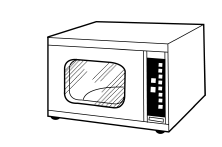


___________________ stops the transfer of heat.
Insulation
Air conditioners
Heating systems
Windows

Energy is:
The ability to do work
The amount of power
Movement
Causing things to happen
Potential energy is:
A type of kinetic energy
A fuel
Associated with movement
Stored energy
Kinetic energy is equal to:
0.5 x newtons x height
0.5 x mass x velocity(squared)
0.5 x mass x velocity
0.5 x mass x acceleration(squared)
Potential energy is equal to:
mass(squared) x gravity x height
mass x gravity x height
mass x pressure x gravity
mass x weight x energy
Work is:
The amount of energy used in creating a force
The amount of energy used in moving an object
The amount of energy used in creating power
Annoying

The following scenario relates to a rollercoaster:
When at the top of a hill, a cart has _________ energy, as it travels down the track, it has _______ energy.
Kinetic, potential
potential, generational
potential, kinetic
kinetic, exhilirating
Which of the following possesses sound energy?
Guitar strings being plucked
Mr Broadway talking about sound energy
Solar panels generating electricity
A machine in an assembly line
What kind of wave are sound waves?
transverse
longitudinal
latitudinal
parallel

What do you call a series of rarefactions and compressions
amplitude
sound wave
decibel
pitch
Which of the following is related to the pitch of the sound?
Refraction
Speed
Loudness
Frequency
What type of sound characterized as a very low sound, almost cannot be heard, but whose vibration can be felt?
Infrasonic
Sonic
Audio
Ultrasonic
What type of sound is described as beyond human capabilities.
Infrasonic
Ultrasonic
Sonic
Audio
Which of the following can be used to magnify sound?
Decibels (dB)
Frequency Range
Amplifier
Range
Which of the following depends on the medium by which sound is being transferred.
Speed
Frequency
Loudness
Refraction
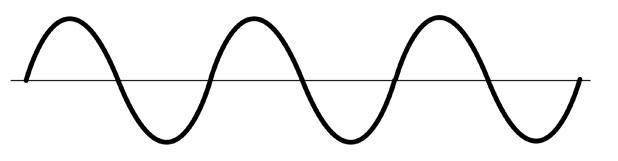
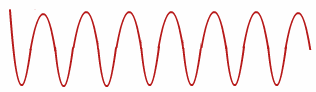
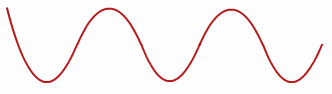
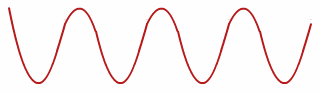
Which of these sound waves has the highest frequency?
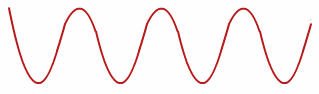
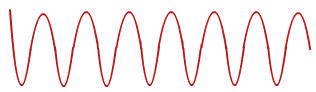
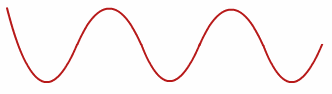
Which sound wave has the lowest pitch?

What part of the wave are the arrows pointing to?
Crest
Trough
Amplitude
Origin
4. Why do we see a flash of lightning first before we hear the roaring of thunder?
Sound travels at a speed of 300,000,000 m/s. while light travels at a speed of 330 m/s.
Sound travels at a speed of 330 m/s while light travels at a speed of 3,000,000 m/s.
Sound travels at a speed of 330 m/s while light travels at a speed of 300,000,000 m/s.
Because imagine dragons thunder, feel the thunder.
Which electromagnetic radiation has the highest penetrating ability and is emitted only during high-energy nuclear reaction?
gamma rays
microwave radiation
radio waves
x-rays
Which is true about electromagnetic waves?
All travel at the same speed.
All have the same frequency.
All have the same wavelength
All transport energy but not momentum
Which of the following do EM waves transport?
electric charge
energy
frequency
wavelength
The waves with the longest wavelengths in the electromagnetic spectrum
Infrared rays
gamma rays
radio waves
X-rays
What makes electromagnetic waves different from mechanical waves?
no medium required
medium needed
light -catalyzed
space exclusive
Which type of EM waves has the shortest wavelength?
radio wave
visible light
gamma ray
ultraviolet
what happens to the frequency of a wave as wavelength increases?
increases
decreases
remains constant
diminishes to zero
EM waves used in checking the authenticity of bank notes
microwave
infrared
ultraviolet
X-ray
Utilized in treating cancer, the radiotherapy
gamma ray
x-ray
visible light
microwave
Helpful in military night vision goggles
radio wave
microwave
infrared
light
Used in medical technology specifically in generating images of lungs and bone fractures
infrared
visible light
ultraviolet
x-ray
EM waves in which our eyes are sensitive to
infrared
visible light
ultraviolet
gamma ray

Which is the most energetic among the electromagnetic waves?
gamma rays
microwaves
radio waves
x-rays

In radio broadcasting, AM stands for ___________.
after morning
amplitude modeling
amplitude modulation
ante meridian

Which of the following ranges of frequency in radio waves is used by FM radios?
low frequency
medium frequency
ultra-high frequency
very high frequency

Which does not belong to the group?
infrared wave
microwaves
sound waves
x-rays

Which of the following is an ionizing radiation?
microwave
radio wave
visible light
x-ray

Which of the following electromagnetic waves is used to check baggage in airports as part of security measures?
gamma rays
microwaves
radio waves
x-rays
What is the speed of light in a vacuum?
3×10⁸ m/s
3×10⁻⁸ m/s
6.63×1034 J s
6.63×10⁻³⁴ J s
What is the frequency of green light that has a wavelength of 500 nm?
6×10⁻³ Hz
6×10⁵ Hz
6×10¹⁴ Hz
6×10⁻¹⁶ HZ
What is the wavelength of a microwave transmission at 1,575.42 MHz?
1.9×10⁻¹⁴ m
1.9×10⁻⁹ m
0.19 m
1900 m
How does an electric field and magnetic field oscillate with each other?
Perpendicular with each other.
Parallel with each other.
Align with each other.
Back and forth with each other.
A material that can transmit light waves.
opaque
transparent
translucent
The bending of light as it travels from one medium to another medium of different densities.
reflection
refraction
interference
diffraction
The spreading of light as it enters the opening of a barrier.
reflection
refraction
interference
diffraction
The process of separating the colors of white light using a prism.
reflection
interference
dispersion
diffraction
The third color of white light if they are arranged from longest to shortest wavelength.
blue
green
yellow
indigo
What does the law of reflection say?
The angle of incidence equals the angle of reflection.
All waves incident on a mirror are reflected.
Waves incident on a mirror are partially reflected.
The angle a ray is reflected from a mirror is random.

These objects emit light from within
Luminous
Transparent
opaque
Illuminated
This type of object when hit by light, absorbed light and the rest reflects off.
Opaque
Transparent
Translucent
Intensity
It is the line at a right angle to the reflecting surface to the point of incident
incident ray
reflected ray
normal
angle of incidence
This image is usually formed when we use a plane mirror.
Real image
Virtual Image
Opposite
Inverted
It is an object or device that reflects light.
Mirror
Lens
Diverging
converging
It is the horizontal axis points in ray diagramming
Principal axis
focal point
focal length
center of curvature

Name the mirror that curves inwards
plane mirror
convex mirror
concave mirror
spherical mirror

