wayground logo

Free Printable Worksheets

Font size

S
M
L
XL
Worksheets

PS Wave-B

Total questions: 97

Worksheet time: 2hrs 51mins

Name
Class
Date
1.

Which image represents a transverse wave?

a)

A

b)

B

c)

neither

d)

both

2.

Which wave has the greatest wavelength?

a)

1

b)

2

c)

3

d)

4

3.

What is the approximate amplitude of this wave?

a)

1.0 cm

b)

1.5 cm

c)

3.0 cm

d)

9 cm

4.

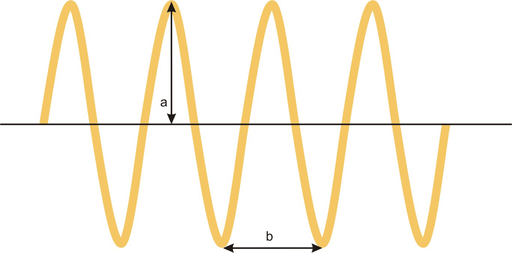
What is the approximate amplitude of the wave in the image?

a)

1.5 cm

b)

2 cm

c)

3 cm

d)

9 cm

5.

What is the approximate wavelength of the wave in the image?

a)

1.5 cm

b)

2 cm

c)

3 cm

d)

9 cm

6.

What is the approximate wavelength of this wave?

a)

1.0 cm

b)

1.5 cm

c)

3.0 cm

d)

9 cm

7.

What is the approximate wavelength of the wave in the image?

a)

1.5 cm

b)

2 cm

c)

3 cm

d)

9 cm

8.

A wave has a frequency of 4 Hz. What is the period of the wave?

a)

0.25 seconds

b)

0.5 second

c)

1 seconds

d)

4 seconds

9.
What kind of wave can travel through space?
a)
electromagnetic waves
b)
compressional waves
c)
transverse waves
d)
longitudinal waves
10.
If the frequency gets higher, the wavelength gets 
a)
longer
b)
shorter
11.
If the wavelength gets longer, the frequency gets 
a)
higher
b)
lower
12.
The lowest point on a wave is the:
a)
Amplitude
b)
Crest
c)
Trough
d)
Wavelength
13.
a)

reflection

b)

absorption

c)

transmission

d)

diffraction

14.

The passage of a wave through a medium.

a)

reflection

b)

absorption

c)

transmission

d)

diffraction

15.

The ​ (a)   is a measure of the number of waves that pass a point in a given amount of time.

Choose from the below words
frequency
period
amplitude
wave height
wavelength
16.

F​ ​ (a)  

G​ ​ (b)  

H ​ (c)  

dotted line ​ (d)  

J​ ​ ​ (e)  

Choose from the below words
crest
amplitude
trough
rest position
wavelength
frequency
period
time and distance
wave height
17.

Which is a longitudinal wave?

a)

b)

18.

Which is a transverse wave?

a)
b)
19.

A-​ (a)  

B- ​ (b)  

C- ​ (c)  

Choose from the below words
compression
rarefaction
wavelength
amplitude
frequency
20.

Examine the picture. What is the period of the wave?

a)

8 seconds

b)

1/8 sec

c)

1/8 Hz

d)

8 Hz

21.
All waves carry
a)
energy
b)
light 
c)
matter
d)
particles
22.

The period of a wave is 4 seconds. What is the frequency?

a)

1/4 Hz

b)

1/4 sec

c)

4 Hz

d)

2 Hz

23.
The time needed for an object to complete one full cycle of simple harmonic motion is the ____ .
a)
period
b)
frequency
c)
harmonic
d)
amplitude
24.
A wave has a frequency of 8 Hz.  What is the period of the wave?
a)
16 sec
b)
2 m
c)
0.5 sec
d)
0.125 sec
25.

A boy notices that 45 complete waves travel past him in 90 seconds. What is the frequency of these water waves?

a)

100 m

b)

1 Hz

c)

0.5 Hz

d)

1m/s

26.
A pendulum makes 33 complete back and forth cycles of vibration in 11 seconds.  It's frequency is:
a)
3.0 s
b)
3.0 Hz
c)
0.33 s
d)
0.33 Hz
27.
What is the unit for frequency?
a)
Hz
b)
m
c)
J
d)
m/s
28.
The number of waves per second is called ________
a)
amplitude
b)
frequency
c)
wavelength
d)
oscillation
29.

The period of a pendulum is 10 s. What is its frequency?

a)

10 Hz

b)

1 Hz

c)

0.5 Hz

d)

0.1 Hz

30.
Wave that has a frequency of 2 Hz has a period of...
a)
2 seconds
b)
0.5 seconds
c)
more info please
31.

The lowest part of a transverse wave are the

a)

crests

b)

troughs

c)

wave points

d)

low nodules

32.

The height of the wave from its resting point is called its

a)

wavelength

b)

amplitude

c)

velocity

d)

frequency

33.

A wave that needs a medium to travel is called a(n)

a)

electromagnetic wave

b)

mechanical wave

c)

ocean wave

d)

any way can do this

34.

A wave that can travel with or without a medium is called a(n)

a)

electromagnetic wave

b)

mechanical wave

c)

surface wave

d)

all waves can travel in any way

35.

What is the wavelength of this wave?

a)

3

b)

10

c)

4

d)

8

36.

What is the amplitude of this wave?

a)

3

b)

-3

c)

6

d)

4

37.
How many waves are in this wave chain?
a)
6
b)
3
c)
4
d)
5
38.
 A wave has frequency of 50 Hz and a wavelength of 10 m. What is the speed of the wave?
a)
500 m/s
b)
50 m/s
c)
5 m/s
d)
0.5 m/s
39.
 A wave has frequency of 5 Hz and a speed of 25 m/s. What is the wavelength of the wave?
a)
25 m
b)
125 m
c)
5 m
d)
25 m/s
40.

A child sitting at the top of a slide.

a)

kinetic

b)

potential

41.

A rubber band flying through the air...

a)

kinetic

b)

potential

42.

A rubber band stretched back...

a)

kinetic

b)

potential

43.

What energy transformation occurs when a crock pot is plugged into an outlet and then the control knob is turned "on"?

a)

thermal to electrical

b)

mechanical to thermal

c)

electrical to thermal

d)

electrical to sound

44.

What type of energy is electrons flowing through a wire?

a)

Electrical energy

b)

Chemical energy

c)

Kinetic energy

d)

Mechanical energy

45.

What type of energy is stored in batteries or food?

a)

Potential energy

b)

Thermal energy

c)

Chemical energy

d)

Mechanical energy

46.
According to the Law of Conservation of Energy, energy cannot be _________ or ____________. 
a)
destroyed, destroyed
b)
created, saved
c)
created, destroyed
d)
lost, found
47.

Which of the following are the two types of mechanical energy:

a)

Potential

b)

Kinetic

c)

Thermal

d)

Electrical

e)

Nuclear

48.

What happens to the to the KINETIC energy as the ball falls from point A to point C?

a)

It decreases

b)

It increases

c)

It doesn't change

49.

What happens to the to the TOTAL MECHANICAL energy as the ball falls from point A to point C?

a)

It decreases

b)

It increases

c)

It doesn't change

50.

What happens to the to the POTENTIAL energy as the ball falls from point A to point C?

a)

It decreases

b)

It increases

c)

It doesn't change

51.
What is the total energy of the system or the TME?
a)
10 J
b)
30 J
c)
20 J
d)
50 J
52.
the equation for gravitational potential energy is 
a)
PEg = mgh
b)
PEg= 1/2kx2
c)
PEg= Fd
d)
PEg = 1/2mv2
53.
The equation to find kinetic energy is
a)
KE=1/2mv2
b)
KE=mgh
c)
KE=1/2kx2
d)
KE=Fd
54.
You drop a 5 kg ball from a height of 2 m. Just before it reaches the ground, what type of energy does it have?
a)
Potential Energy
b)
Kinetic Energy
c)
Nuclear Energy
d)
Chemical Energy
55.

What are the units for energy?

a)

Watts

b)

Joules

c)

Newtons

d)

meters

56.

What are the units for energy?

a)

Watts

b)

Joules

c)

Newtons

d)

meters

57.

An object with kinetic energy must be

a)

at rest.

b)

stopped

c)

in motion.

d)

at an elevated position.

58.

What is energy?

a)

moving energy

b)

stored energy

c)

renewable energy

d)

The ability to do work.

59.

What is the total mechanical energy for the position of the ball indicated by the blue circle?

a)

0 J

b)

50 J

c)

100 J

60.
You do 90 joules of work in 30 seconds. How much power have you generated?
a)

30 watts

b)

3 watts

c)

120 watts

d)

270 watts

61.
If 68 W of power is produced in 18 seconds, how much work is done?
a)

1,224 J

b)

0.264 J

c)

3.77 J

d)

12.24 J

62.

You exert a force of 20 Newtons to pick up your backpack and put it on your shoulders (approximately) 2 meters from the ground. How much work did you do

a)

2 Joules

b)

20 Joules

c)

10 Joules

d)

40 Joules

63.
The formula for work is:
a)
d = r x t
b)
p = m x v
c)
f = m x a
d)
w = d x f
64.
A force exerted over a distance to move an object is ______________________.
a)
power
b)
work
c)
momentum
d)
Watt
65.
The unit used to measure power is the 
a)
Watt
b)
Newton
c)
Joule
d)
Newton*meter
66.
Which of the following is the best example of work being done. 
a)
doing homework
b)
lifting a box
c)
pushing a wall
d)
holding a box
67.
A 50N block is lifted 10 m. How much work was done?
a)
50000 J
b)
5000 J
c)
500 J
d)
50 J
68.
 Work done = Force x _________
a)
distance
b)
acceleration
c)
velocity
d)
speed
69.

What is the unit for force?

a)

Kilogram (Kg)

b)

Newton (N)

c)

Joule (J)

d)

Watt (W)

70.
____________ is work divided by time.
a)
Work
b)
Distance
c)
Power
d)
Force
71.
A kid throws a ball with a force of 70N over 1.1 meters. How much work did he do?
a)
77 joules
b)
70 joules
c)
7.7 joules
d)
11 joules
72.

A weightlifter lifts two 300 newton weights 1.5 meters off the ground. How much work has she done?

a)

600 J

b)

450 J

c)

900 J

d)

1200 J

73.
What type of simple machine is shown here?
a)
Pulley
b)
Wheel and Axle
c)
Lever
d)
Wedge
74.
How much work is produced when 350 N is used to move a car 5 m (W=Fd)?
a)
70 J
b)
1750 J
c)
355 J
d)
175 J
75.
What is the mechanical advantage if you lift a load of 300 newtons and you only push down with 50 newtons?
a)
250
b)
50
c)
60
d)
6
76.

A wedge has an output force of 25 N when given an input force of 5 N. What's the wedge's mechanical advantage?

a)

0.2

b)

5

c)

20

d)

30

77.

What is the formula for work?

a)

work=force x distance

b)

work = distance ÷\div  time

c)

work = time ÷\div  distance

d)

work = output force ÷\div  input force

78.

What law is best described

a)

1st

b)

2nd

c)

3rd

d)

law of motion

79.

What law is best described

Equal and Opposite

a)

1st

b)

2nd

c)

3rd

d)

speed

80.
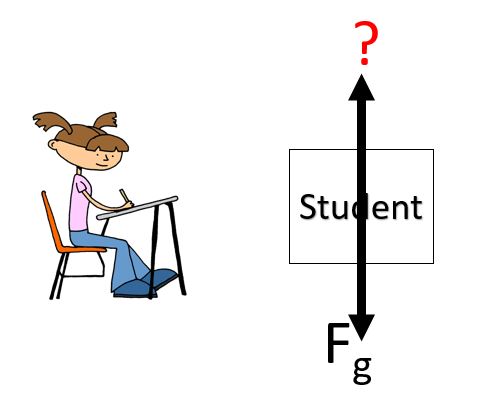
Name the missing force....
a)
weight force
b)
normal force
c)
frictional force
d)
tension force
81.
Name the missing force...
a)
spring force
b)
weight force
c)
normal force
d)
buoyant force
82.
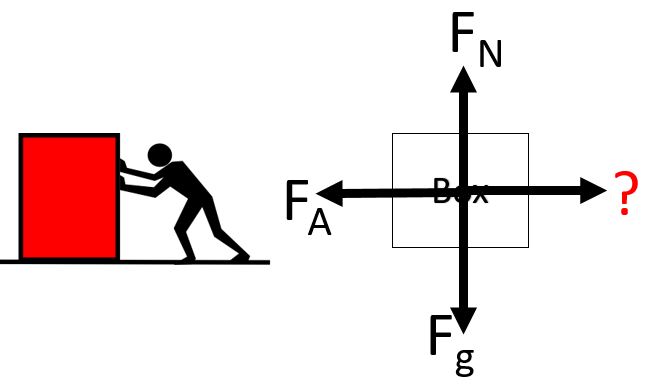
Name the missing force...
a)
tension force
b)
frictional force
c)
normal force
d)
spring force
83.
Name the missing force...
a)
frictional force
b)
weight force
c)
thrust
d)
buoyant force
84.

The force that keeps objects on top of surfaces instead of letting them sink into the surface is known as:

a)

normal

b)

abnormal

c)

static

d)

inertia

85.

The force exerted by ropes and chains is called

a)

tension

b)

normal

c)

elastic

d)

mechanical

86.

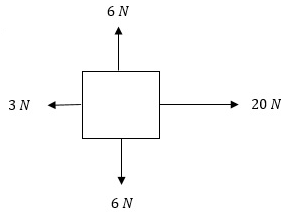
What is the NET FORCE of this diagram?

a)

17 N, right

b)

17 N, left

c)

23 N, right

d)

12 N, up

87.

What type of interference is represented in this diagram?

a)

Constructive

b)

Destructive

88.

What type of interference is represented in this diagram?

a)

Constructive

b)

Destructive

89.

What type of interference is represented in the diagram?

a)

Constructive

b)

Destructive

90.

What type of interference is represented in the diagram?

a)

Constructive

b)

Destructive

91.

When a wave bounces off of something and moves in a different direction

a)

reflection

b)

refraction

c)

absorption

d)

propagation

92.

What type of interference is represented in the diagram?

a)

Constructive

b)

Destructive

93.
What type of wave behavior is pictured above?
a)
Refraction
b)
Reflection
c)
Absorption
d)
Diffraction
94.
What type of wave behavior is pictured above?
a)
Refraction
b)
Reflection
c)
Absorption
d)
Diffraction
95.
What type of wave behavior is pictured above?
a)
Refraction
b)
Reflection
c)
Absorption
d)
Diffraction
96.
This is an example of which type of wave behavior?
a)
Reflection
b)
Refraction
c)
Diffraction
d)
Interference
97.
This is an example of which type of wave behavior?
a)
Reflection
b)
Refraction
c)
Diffraction
d)
Interference