wayground logo

Free Printable Worksheets

NEW

Font size

S
M
L
XL
Worksheets

Gravity (Donachie)

Total questions: 57

Worksheet time: 37mins

Name
Class
Date
1.

Gravitational force is smaller between

a)

Larger objects

b)

Smaller objects

2.

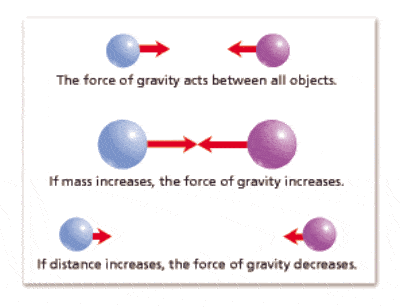
As distance increases, gravitational forces:

a)

Decrease

b)

increase

c)

Disappear

d)

Stay the same

3.

As mass increases, gravitational forces:

a)

Increase

b)

decrease

c)

stay the same

d)

disappear

4.

What is gravity?

a)

The force that pulls objects together

b)

The force that pushes objects apart

5.

Who developed the Laws of Motion and the Law of Universal Gravitation?

a)

Alexander Graham Bell

b)

Thomas Edison

c)

Issac Newton

d)

Leonardo Da Vinci

e)

Albert Einstein

6.

Where is the strongest gravitational pull on Earth?

a)

Near Mercury

b)

Near Saturn

c)

At the surface of the Earth

d)

60 Km above the Earth's surface

e)

Near Asgard

7.
When the distance from an object is doubled, the force of gravity drops by a factor of _____
a)
2
b)
4
c)
10
d)
16
8.
Go 3 times farther away and the force of gravity drops by _____
a)
3 times
b)
6 times
c)
9 times
d)
12 times
9.
If there are no other forces acting on them, two objects with mass will _____
a)
repel
b)
stay where they are
c)
move uniformly toward each other
d)
accelerate toward each other
10.
An object with mass has gravity.
a)
True
b)
False 
11.
The amount of matter in an object.
a)
force 
b)
mass
c)
weight 
d)
pressure 
12.
As mass increases, what happens to gravitational force?
a)
increases
b)
decreases
c)
stays the same
d)
i don't know
13.

More mass equals:

a)

less gravity

b)

less distance

c)

more gravity

d)

more distance

14.

When will the forces of gravity between two objects be the GREATEST?

a)

when the masses of both objects are small and the objects are far apart

b)

when the masses of both objects are large and the objects are close together

c)

when the masses of both objects are small and the objects are close together

d)

when the masses of both objects are large and the objects are far apart

15.

When will the gravity between two objects be the LEAST?

a)

when the masses of both objects is small and the objects are close together

b)

when the masses of both objects is small and the objects are far apart

c)

when the masses of both objects is large and the objects are close together

d)

when the masses of both objects is large and the objects are far apart

16.

Which statement about gravity is true?

a)

gravity causes objects to pull towards one another

b)

gravity causes objects to push away from each other

c)

gravity only takes place between planets

d)

the moon doesn't have any gravity

17.
The force of gravity acting on an object is the object's ______.
a)
mass
b)
matter
c)
weight 
d)
terminal velocity 
18.
An object is falling but is not accelerating. What do you know?
a)
Gravity is stronger than air resistance
b)
Air resistance is stronger than gravity
c)
Air resistance is equal to gravity
d)
Forces are unbalanced
19.
Where would you have to travel to reduce your weight but not lose any mass?
a)
The moon
b)
The Sun
c)
Jupiter
d)
Saturn
20.
Gravity on Mars’ surface is much lower than it is here on Earth. This is because the mass of mars is ______ than Earth.
a)
less
b)
more
c)
the same
21.
An example of a gravitational interaction is that the Earth... 
a)
orbits the sun
b)
orbits the moon
c)
orbits other planets 
d)
None of the above 
22.
Gravity attracts all objects towards one another. 
a)
True
b)
False 
23.
An object with mass has gravity.
a)
True
b)
False 
24.
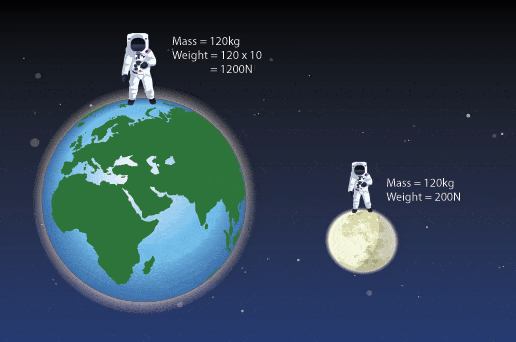
A person would weigh less on the moon than on the Earth because...
a)
the moon has less mass, and therefore less gravity
b)
the moon has more mass, and therefore less gravity
c)
the moon has less mass, and therefore more gravity
d)
the moon has more mass, and therefor more gravity
25.
An example of a gravitational interaction is that the Earth... 
a)
orbits the sun
b)
orbits the moon
c)
orbits other planets 
d)
None of the above 
26.
A person would weigh more on Jupiter than on the Earth because---
a)
Jupiter has less mass, and therefore less gravity
b)
Jupiter has more mass, and therefore less gravity.
c)
Jupiter has less mass, and therefore more gravity.
d)
Jupiter has more mass, and therefore more gravity
27.
__________holds all of the planets in orbit around the sun.
a)
Force
b)
Motion
c)
Weight
d)
Gravity
28.

Which statement about gravity is true?

a)

gravity causes objects to pull towards one another

b)

gravity causes objects to push away from each other

c)

gravity only takes place between planets

d)

the moon doesn't have any gravity

29.
Which of the following will not change in different gravitational fields?
a)
weight
b)
force
c)
mass
d)
pounds
30.

A brick and a pencil are dropped at the same time from the same height. Which one would hit the ground first?

a)

brick

b)

pencil

c)

both would hit at the same time

31.

When you drop a hammer and a feather, why does the feather fall slower?

a)

air resistance causes the feather to slow down

b)

gravity pulls harder on the hammer than the feather

c)

gravity pulls harder on the feather than the hammer

d)

air resistance causes the hammer to fall slower

32.

The law that says every object in the universe attracts every other object, and that the force is affected by mass and distance: the greater the mass of an object,

the greater the attraction; the farther apart the objects, the weaker the attraction.

a)

Newton's First Law of Motion

b)

Newton's 2nd Law of Motion

c)

Newton's 3rd Law of Motion

d)

Newton's Law of Universal Gravitation

33.

The amount of matter in an object.

a)

Weight

b)

Volume

c)

Mass

d)

Capacity

34.
The Earth’s gravitational field is stronger on an object closer to its surface.
a)
True
b)
False
35.
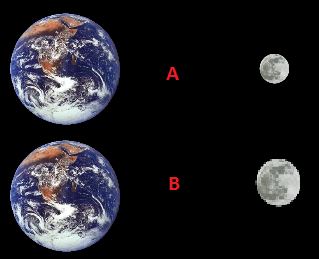
Which model has greater gravitational attraction (if any)
a)
Model A
b)
Model B
c)
Both Model A and Model B (same gravity)
36.
Which system has the greater gravitational attraction between the two objects (if any)?
a)
System A
b)
System B
c)
Same gravitational attraction fro System A and System B
37.

Two factors effecting the magnitude of the force of gravity between 2 objects are _?_.

a)

mass and distance

b)

mass and matter

c)

distance and weight

d)

weight and mass

38.

As distance between two objects increase the pull of gravity _?_.

a)

increases

b)

decreases

c)

stays the same

39.

Two objects with a greater mass have _?_.

a)

less gravitational force

b)

stronger gravitational force

c)

no clue

d)

a way to break apart

40.

The closer two objects are to each other, _?_.

a)

the harder they will collide

b)

the less gravitational force there is between them

c)

the more gravitational force there is between them

d)

there is no change in the gravitational force there is between them

41.

A person would weigh more on Jupiter than on the Earth because _?_.

a)

Jupiter has more mass, and therefore more gravity

b)

Jupiter has less mass, and therefore more gravity

c)

Jupiter has more mass, and therefore less gravity

d)

Jupiter has less mass and therefore less gravity

42.

What best describes the mass and weight of a person as they move around the universe?

a)

Mass and weight changes.

b)

Mass and weight stays constant.

c)

Weight remains constant and mass changes.

d)

Mass stays constant and weight changes.
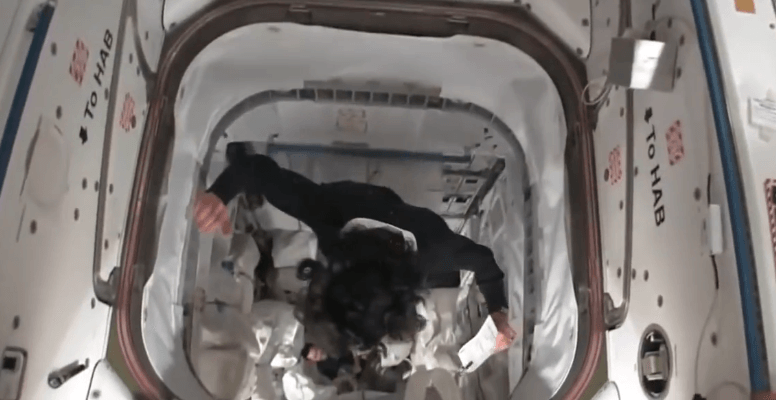
43.
If there are no other forces acting on them, two objects with mass will _____
a)
repel
b)
stay where they are
c)
move uniformly toward each other
d)
accelerate toward each other
44.
In space you have the same mass as you do on Earth, but no _____
a)
microgravity
b)
weight
c)
density
d)
pressure
45.
An object moving along a path controlled by gravity is said to be _____
a)
in orbit
b)
in constant motion
c)
in uniform motion
d)
massless
46.
A measure of the amount of matter in an object
a)
mass
b)
weight
c)
gravity
d)
pounds
47.
When an object is falling, and it reaches it's maximum speed because air resistance is equal to the force of gravity, the object has reached __________________________.
a)
Free Fall
b)
Terminal Velocity
c)
Projectile Motion
d)
Orbit
48.
What force causes objects falling near Earth's surface to slow down?
a)
Gravity
b)
Air Resistance
c)
Centripetal Force
d)
Newtons
49.

What natural phenomena occurs on Earth due to the gravity of the Moon?

a)

Earthquakes

b)

Hurricanes

c)

Volcanic Eruptions

d)

Ocean Tides

50.
If Earth's mass was cut in half, what would happen to your mass?
a)
increase because gravitational force increases
b)
decrease because gravitational force decreases
c)
decrease because gravitational force increases
d)
nothing, mass is not affected by gravitational force
51.
If a bowling ball and a feather were dropped at the same time, in a room with no air resistance (vacuum), which object will hit the ground first?
a)
Bowling Ball
b)
Feather
c)
Both would hit at the same time
d)
Neither one would hit the ground because air is what pushing things down.
52.
Force of gravity is directly proportional to
a)
Mass
b)
Weight
c)
Distance
d)
Time
53.
What happens to Gravitational force if I double both of the masses but don't change their distance?
a)
doubles
b)
half as big
c)
4x bigger
d)
4x smaller
54.
The law of universal gravitation is credited to whom?
a)
Einstein
b)
Galileo
c)
Darwin
d)
Newton
55.

The reason why ocean tides happen is

a)

Electrical forces between the sun and the moon

b)

gravitational forces between the Earth and the moon.

c)

Magnetic forces between the Earth and the moon

d)

Motion of the moon around the earth

56.

What is mass?

a)

How much matter or stuff something has

b)

How much space something takes up

c)

How big something is

d)

How long something is

57.
What is a force?
a)
A force is a push or pull.
b)
A force is anything that acting on another object.
c)
A force can be balanced or unbalanced.
d)
all of the above