
 Worksheets
Unit 3 Review - Preamble and Articles of the Constitution
Total questions: 50
Worksheet time: 25mins
The introduction to the Constitution is called the ___.
Articles of Confederation
Declaration of Independence
Bill of Rights
Preamble
According to the Preamble, the authority of the federal government comes from the ___.
electoral college
states
people
President
The promise from the Preamble that describes our military is ___.
provide for the common defense
insure domestic tranquility
form a more perfect union
secure the blessings of liberty
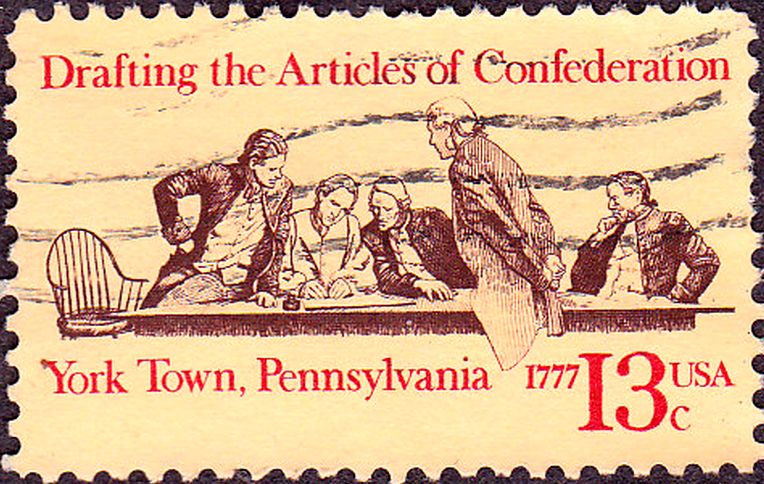
Before the Constitution, the Articles of Confederation created a ______central government.
weak
strong
stable
big

Food stamps or vouchers, which allows economically challenged individuals and families to buy groceries, is an example of which goal on the Preamble?
Provide for the common defense
Promote the general welfare
Establish justice
Ensure domestic tranquility
“We the People of the United States, in Order to form a more perfect Union, establish Justice, insure domestic Tranquility, provide for the common defence, promote the general Welfare, and secure the Blessings of Liberty to ourselves and our Posterity, do ordain and establish this Constitution for the United States of America.”
What do the words, "We the People" at the beginning of the Preamble refer to?
Popular sovereignty, the idea that the people rule this nation, and all the power of government comes from them.
Checks and Balances, the idea that each branch of government has the power to check or control the other 2, so that no one branch can become too powerful.
Limited government, the idea that all governments should be limited by law.
Federalism, the idea that the powers of government should be divided between the national government and the states.
Article 1 of the Constitution is concerned with the duties of the law-making, or _____, branch of government.
federal
executive
legislative
judicial
Congress is made up of two houses: the _____ and the House of Representatives.
Chamber
Congress
Executive
Senate
Government officials can be _____, or charged with a crime, by the House of Representatives.
indicted
filibustered
impeached
jailed
The "Elastic Clause allows Congress to establish laws that are ________ & _______ to carry out vested duties.
constitutional and rational
necessary and proper
proper and rational
constitutional and proper
The official power to declare war belongs to _____.
The President
Congress
the people
The military
Powers of Congress include which of the following EXCEPT
Establishing post offices
Coining Money
Suspending Habeas Corpus
Regulating Commerce
The number of representatives proportioned to each state is decided by the ____________.
Amendments
Census
Emoluments
Enactment
What are powers not specifically mentioned in the constitution?
enumerated powers
implied powers
legislative powers
concurrent powers
What are the powers given only to the national government?
implied powers
enumerated powers
reserved powers
concurrent powers

Which is correct?
The House begins impeachment through an investigation; the Senate tries the impeached person
The Senate begins impeachment through an investigation; the House tries the impeached person
Either house of Congress can begin and try impeachments
Neither house of Congress has the authority to impeach
In the U.S., this branch, led by the President, CARRIES out the laws made by the legislative branch.
Legislative
Judicial
Executive
Presidential
Which of the following is the role of the Electoral College?
to appoint justices to the Supreme Court.
to choose the President of the United States.
to nominate candidates for vice-president.
to decide on the number of Senators from each state.
The power of courts to decide the constitutionality of laws is the power of
limited government
judicial review
checks and balance
constitutionalism
Who has the power to appoint a Supreme Court Judge, when there is an open spot on the court?
Legislature
Citizens
President
Congress
What is the length of term of office for a judge on the Supreme Court?
4 years
8 years
15 years
for life
What does Article IV (4) establish?
The Constitution is Supreme
How to amend the Constitution
How to ratify the Constitution
Relationships between the states
Article V requires a ____________ vote in both chambers of Congress or a National Convention before an amendment can be ___________ to the states.
Article V requires _____ of state legislatures or state conventions before an amendment can be __________ to the Constitution.
Article VII calls for _____________ of the State Governments to approve the constitution before it can be ____________.
3/4, Amended
3/4, Ratified
2/3, Amended
2/3 Ratified
What important religious guarantee is found in Article VI?
freedom to worship the way you want
freedom from having religious qualifications to run for office
separation of church and state
protection against state sponsored prayer
What is the subject of Article VII?
states' rights
amendments procedures
ratification of the Constitution
supremacy of the Constitution
Which article of the Constitution states that the Constitution "...shall be the supreme law of the land..."?
II
IV
V
VI
What is the main idea of Article 4?
Ratification
Relations between states
Supreme law of the land
Changing the constitution
In order for a proposed amendment to be added to the Constitution, ____ of 50 states to ratify the new addition to the Constitution.
38
45
9
50
Amendments to the Constitution must be proposed on a national level and ratified on the state level. This is an example of what key Constitutional principle?
federalism
checks and balances
separation of powers
rule of law

