wayground logo

Free Printable Worksheets

Font size

S
M
L
XL
Worksheets

MICROBIOLOGY LEC FINALS

Total questions: 102

Worksheet time: 2hrs 42mins

Name
Class
Date
1.

A village has an outbreak of cholera. Which would be the easiest way for a neighboring village to prevent the cholera epidemic from spreading to their village?

a)

Develop a cholera vaccination.

b)

Quarantine all individuals infected with cholera.

c)

Avoid contaminated water, or treat contaminated water before drinking it.

d)

Restrict travel to other villages that are farther away.

2.
Which product would be most effective in preventing the spread of a cold virus?
a)
Hand soap
b)
Mouth Wash
c)
Cough Drops
d)
Antibiotic cream
3.
Which situation would most favor the spread of infectious disease?
a)
Overcrowding
b)
Use of vaccines
c)
Small populations
d)
Sanitary conditions
4.
A doctor prescribed an antibiotic to treat an illness.Which type of illness did the doctor most likely treat?
a)
Cancer
b)
Viral Infection
c)
Bacterial Infection
d)
Heart Disease
5.
Which was most likely classified as a pandemic?
a)
People in eleven states were sickened after eating beef contaminated with the E. Coli bacteria. The tainted beef was traced to a meat-packing plant.
b)
Two camps, in close proximity to each other, experienced an outbreak of cholera. The infection was traced to contaminated drinking water.
c)
A measles outbreak in Indiana was attributed to children whose parents did not have them vaccinated for measles.
d)
During 1918 to 1919, an estimated 20-40% of the world's population suffered from the Spanish flu.
6.

Pasture developed a vaccine for what virus ?

a)

Chicken pox

b)

Rabies

c)

measles

d)

TLS

7.

protein shells are also known as

a)

Capsid

b)

Nuclei

c)

Cell Envelope

d)

Chemical Machinery

8.

Who invented the microscope

a)

Louis Pasteur

b)

Lister

c)

Robert Koch

d)

Leeuwenhoek

9.

Counter stain used in Gram's Staining is

a)

Crystal Violet

b)

Ethanol

c)

Safranin

d)

Malachite green

10.

Microorganisms are measured in ________

a)

Micron

b)

mm

c)

Meter

d)

cm

11.

Which type of bacterium is shaped like a sphere?

a)

Coccus

b)

Bacillus

c)

Spirochete

12.

Which type of bacterium is shaped like a rod?

a)

Coccus

b)

bacillus

c)

Spirochete

13.

Which type of bacterium is shaped like a rod?

a)

Coccus

b)

bacillus

c)

Spirochete

14.

Which of the follwoing is a special state/form of bacteria that is dormant and highly resistant to heat and chemicals?

a)

Vegetative cell

b)

Virus

c)

Rickettsia

d)

Spore

15.

Which type of bacteria requires oxygen to survive?

a)

aerobic

b)

anaerobic

c)

formatative

d)

acidogenic

16.

CLUSTERS of bacteria named after their arrangement

a)

Strepto

b)

Staphlo

c)

Diplo

17.

Gram negative or gram positive?

a)

Gram negative

b)

Gram positive

c)

Neither

d)

both

18.

Mycology is the study of

a)

Bacteria

b)

Viruses

c)

Protozoa

d)

Fungi

19.

Pasteurization is achieved by which of the following processes?

a)

Cleaning surfaces with a disinfectant

b)

Heating a fluid to 63 degrees Celsius for thirty minutes

c)

Sterilizing instruments at 49.4 degrees Celsius for twenty minutes

d)

Using an alcohol-based hand rub

20.
What do all viruses need to reproduce?
a)
They need host genetic material
b)
They need a host cell
c)
They need bacteria
d)
They need insulin
21.
What do viruses have in common with living cells? They both
a)
store genetic information
b)
have chloroplasts
c)
use glucose for cellular respiration
d)
have endoplasmic reticula
22.
Antibiotics kill viruses
a)
True
b)
False
23.
How does a virus cause a person to develop the common cold?
a)
invades the host cell to reproduce
b)
removes energy from the host cell
c)
produces toxins in the host cell
d)
protects the host cell from bacteria
24.
What helps prevent viral diseases?
a)
Vaccines
b)
Antibiotics
c)
Herbal tea
d)
Gene Therapy
25.
Bacteria is what type of cell?
a)
prokaryote
b)
eukaryote
26.
Bacteria is frequently used in the ____________system to break down food.
a)
integumentary
b)
digestive
c)
reproductive
d)
muscular
27.
Binary fisssion is a type of __________ reproduction   ?
a)
asexual 
b)
sexual
28.
All bacteria are harmful to humans
a)
True
b)
False
29.
The flu is caused by
a)
bacteria
b)
virus
30.
Bacteria are smaller then viruses.
a)
True
b)
False
31.
Viruses can be cured with antibiotics.
a)
True
b)
False
32.
Antibiotics kill bacteria.
a)
True
b)
False
33.
Which of the following is not a fungus? 
a)
Yeast 
b)
Mould 
c)
Mushroom 
d)
Algae
34.
Which of the following is not a fungus? 
a)
Yeast 
b)
Mould 
c)
Mushroom 
d)
Algae
35.
Mushroom and mould are not plants.
a)
True
True
b)
False
36.
Mushroom grows from spores.
a)
True
b)
False
37.
Which are examples of fungi?
a)
mold
b)
yeast
c)
mushrooms
d)
all of the above
38.
What are some bad effects of fungi?
a)
Athletes Foot
b)
Ringworm
c)
Mushroom's produce deadly poison
d)
All of the above
39.
The bacteria that causes Bubonic Plague is transmitted to humans by fleas. Which term best describes the role of the fleas in transmitting Bubonic Plague?
a)
Decomposer
b)
Pathogen
c)
Parasite
d)
Vector
40.
Many diseases transmitted by vectors lead to the death of millions of people in the world. Which best explains why African countries are harder hit than other regions of the world?
a)
increased number of insects
b)
increased climatic variations
c)
increased ecosystem changes
d)
increased pressure from human activities
41.
Which best contrasts an epidemic and a pandemic?
a)
An epidemic is caused by bacteria, while a pandemic is caused by viruses.
b)
A pandemic is spread by humans, while an epidemic is spread by insects and rodents.
c)
A pandemic occurs in a small region, while an epidemic occurs in a much larger region.
d)
An epidemic affects a small population of humans, while a pandemic affects a large population of humans.
42.
What parasite is most often responsible for the spread of Lyme disease?
a)
Amoeba
b)
Deer tick
c)
Crane Fly
d)
Mosquito
43.
Which is the best method for preventing a parasitic disease?
a)
Vaccination
b)
wearing a mask
c)
Limiting physical contact with others
d)
Avoiding contaminated food and water
44.
Vaccines trigger the production of _____. 
a)
pathogens
b)
immunity
c)
proteins 
d)
antibodies 
45.
Which aspect of modern life could most likely cause an epidemic to turn into a pandemic?
a)
vaccination
b)
communication
c)
transportation
d)
sanitation
46.
How are viruses different from most other microbes?
a)
They can cause disease
b)
Only seen with a microscope
c)
They contain genetic material
d)
They are nonliving
47.
A parasite needs a host.
a)
True
b)
False
c)
I don't Know
48.
A Pandemic is...
a)
a sudden worldwide burst in disease.
b)
a sudden cultural or local burst in disease.
49.
Two examples of pathogens are  
a)
bacteria and protests.
b)
smoking and no exercise.
c)
clotting and heart problems.
d)
poor diet and heredity.
50.
Which of these is the unregulated growth of cells?
a)
a noninfectious disease
b)
an allergy 
c)
an infectious disease
d)
cancer
51.
When your normal body processes are disrupted, you have a(n)
a)
disease.
b)
pathogen.
c)
enzyme.
d)
immunity.
52.
What kind of disease cannot spread from one person to another? 
a)
a pathogenic disease
b)
an infectious disease
c)
 a noninfectious disease
d)
a contamination disease
53.
What kind of disease is spread from one person to another?
a)
a contamination disease
b)
an infectious disease
c)
 a pathogenic disease
d)
a noninfectious disease
54.
What is the system that attacks pathogens called?
a)
immune system
b)
attack system
c)
vaccine system
d)
antibiotic system
55.

I am a unicellular prokaryote with a peptidoglycan cell wall. What am I?

a)

Virus

b)

Bacteria

c)

Archaea

d)

Protist

56.

I have proteins and nucleic acids (like DNA or RNA), but I am not actually a living thing. What am I?

a)

Virus

b)

Bacteria

c)

Archaea

d)

Protist

57.

Known as the Father of Microbiology due to his work with "animacules" found on his own teeth is:

a)

Jonas Salk

b)

Robert Koch

c)

Semmelweiss

d)

Anton Van Leeuwenhoek

58.

His "postulates" disproved the thought of spontaneous generation. He experimented with fruit flies in jars first.

a)

Robert Koch

b)

Joseph Lister

c)

Edward Jenner

d)

Anton Van Leeuwenhoek

59.

Known for his work with the maternity ward patients. They had babies, which he delivered, but they and the mothers got very sick from childbed fever.

a)

Edward Jenner

b)

Ignaz Semmelweiss

c)

Robert Koch

d)

Jonas Salk

60.

What do we call a cell with a nucleus and organelles?

a)

Eukaryote

b)

Prokaryote

c)

Tacoyote

d)

Coyote

61.
Which organisms require a host cell to reproduce?
a)
protozoans
b)
bacteria
c)
viruses
62.
Which best compares bacteria and viruses?
a)
Bacteria are smaller than viruses.
b)
Bacteria cause disease, but viruses do not.
c)
Bacteria are living organisms, but viruses are not.
d)
Bacteria have genetic material, but viruses do not.
63.
Bacteria are 
a)
single celled, living organisms 
b)
Multicellular non-living organisms
c)
Unicellular eukaryotes
d)
Multicellular eukaryotes
64.
Which is true about bacteria cells ?
a)
they lack lipids
b)
they lack a nucleus
c)
they lack proteins 
d)
they lack DNA
65.

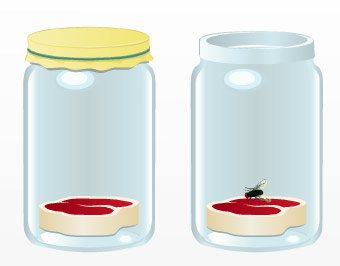
This scientist experimented with raw meat: one was sealed and the other was left to be exposed to flies; maggot growth was observed ONLY in meat that was exposed.

a)

Antonie van Leeuwenhoek

b)

Francesco Redi

c)

Louis Pasteur

d)

Robert Hooke

66.

Known as the Father of Microbiology due to his work with "animacules" found on his own teeth is:

a)

Jonas Salk

b)

Robert Koch

c)

Semmelweiss

d)

Anton Van Leeuwenhoek

67.
A large group of one-celled microorganisms that are capable of causing disease are _________. 
a)
pathogens
b)
bacteria
c)
viruses
d)
all of the above
68.
This scientist is known for the first vaccine created in a laboratory and is known for pasteurization and proving that germs cause disease.
a)
Alexander Fleming
b)
Albert Einstein
c)
Louis Pasteur
d)
Joseph Lister
69.
This scientist is best known for his Nobel Prize-winning discovery of the antibiotic penicillin in 1928.
a)
Alexander Fleming
b)
Albert Einstein
c)
Louis Pasteur
d)
Joseph Lister
70.
This scientist, known for his “Germ Theory,” showed that airborne microbes were the cause of disease
a)
Alexander Fleming
b)
Albert Einstein
c)
Louis Pasteur
d)
Joseph Lister
71.
Which scientist came back from a vacation and found that a bluish-green mold had killed bacteria?
a)
Alexander Fleming
b)
Albert Einstein
c)
Louis Pasteur
d)
Joseph Lister
72.
The practice of heating liquids to kill bacteria is called
a)
fermentation
b)
pasteurization
c)
vaccination
d)
microbiology
73.
A prominent difference between prokaryotic and eukaryotc cells is the..
a)
larger size of the prokaryotes
b)
lack of pigmentation in eukaryotes
c)
presence of a nucleus in eukaryotes
d)
presence of a cell wall in prokaryotes
74.
Which early microbiologist was most responsible for developing standard microbiology laboratory techniques?
a)
Louis Pasteur
b)
Robert Koch
c)
Carl von Linne
d)
John Tyndall
75.
Which scientist is most responsible for finally laying the theory of sponaneous generation to rest?
a)
Joseph Lister
b)
Robert Koch
c)
Francesco Redi
d)
Louis Pasteur
76.

Which of the following are prokaryotic

a)

bacteria

b)

archaea

c)

protists

d)

archaea and bacteria

77.

John Snow is best know for what based on his work with cholera

a)

Father of Microbiology

b)

Father of Bateriology

c)

Father of Epidemiology

d)

Father of Immunology

78.

Robert Koch began his work with the Germ Theory of Disease with what agent

a)

cholera

b)

syphilis

c)

anthrax

d)

Tuberculosis

79.

MIcrobiology is the study of

a)

animals

b)

Microorganisms

c)

plants

d)

fishes

80.

The plant body of algae is called as _________

a)

Stem

b)

Thallus

c)

Leaf

d)

Root

81.

Disease causing microorganisms are called_______

a)

Pathogens

b)

Virus

c)

Bacteria

d)

Protozoa

82.

Antibiotic Penicillin obtained from___________.

a)

Agaricus

b)

Fusarium

c)

Penicillium notatum

d)

Pyricularia

83.

Expand MMR

a)

Measles Mumps Rubella

b)

Malaria malaria rhehasus

c)

Monkey Month Resists

d)

Mango mangi red

84.

What was one of Louis Pasteur's achievements?

a)

Developed vaccinations for anthrax and rabies

b)

Monitored the cholera outbreak in London during the 1850s

c)

Developed a process to kill bacteria in wine

d)

Discovered microscopic organisms called "animalcules"

85.
What is one of Louis Pasteur's achievements?
a)
Developed a treatment for smallpox
b)
Discovered that human disease is caused by germs (micro-organisms)
c)
Studied a cholera outbreak in London during the 1850s
d)
Studied diabetes in rats
86.
Dr John Snow was famous for investigating a __________ outbreak in London during the 1950s.
a)
smallpox
b)
cowpox
c)
chickenpox
d)
cholera
87.
Louis Pasteur also showed that micro-organisms ('germs') did not _____________ generate.
a)
swimmingly
b)
sadly
c)
spontaneously
d)
specifically
88.

Which sentence best summarizes the point of view about doctors and scientists in the mid-1800s?

a)

They were very similar to modern doctors and scientists.

b)

They introduced many exciting and new ideas.

c)

They could not help their patients

d)

They knew very little about bacteria.

89.

Who is known as the father of Epidemiology?

a)

Dr. Meredith Gray

b)

Dr. John Snow

c)

Albert Einstein

d)

Dr. Jonas Salk

90.

The source of the 1854 outbreak of Cholera in London was determined to be...

a)

contaminated beer from the brewery

b)

a bad crop of lettuce

c)

a cloud of bad air over the town

d)

a contaminated water pump

91.

He recognized the bacterial cause of anthrax and developed a vaccine for it -1880s

a)

Louis Pasteur

b)

Edward Jenner

c)

James Lind

d)

Robert Koch

92.

He formulated a set of postulates or standards to identify organisms that cause infectious diseases - 1843-1910

a)

Edward Jenner

b)

Robert Koch

c)

William Farr

d)

James Lind

93.
Why do we use yeast to bake bread? 
a)
Their waste gas - CO2 helps bread rise
b)
The alcohol that they form makes bread dangerous
c)
They consume all the oxygen which would ruin the bread
94.

The purpose of heating milk to 165F is

a)

to let the good bacteria grow

b)

to make the product thicker

c)

to pasteurize it

d)

to break down the proteins

95.

How does Pasteurization work?

a)

Kill germs through heating

b)

Kill germs through germicidal spray

c)

Kill germs through vaccination

d)

Kill germs through fermentation

96.

Who was the "scientist" that observed pond water and teeth scrapings using his microscope?

a)

Julius Petri

b)

Anton Van Leeuwenhoek

c)

Robert Snow

d)

Louis Pasteur

97.

In pasteurization, what is applied to kill microorganisms?

a)

water

b)

oxygen

c)

heat

d)

sunlight

98.

What is the PPE sequence?

a)

lab coat, mask, gloves, eye protection

b)

eye protection, lab coat, mask, gloves

c)

lab coat, mask, eye protection, gloves

d)

gloves, lab coat, mask, eye protection

99.

What are some of the symptoms of anthrax? Click all that apply.

a)

sore throat

b)

vomiting

c)

itchy scalp

d)

shortness of breath

e)

fever

100.

What is a petri dish?

a)

glass or plastic dish used to culture cells or microorganisms

b)

glass dish used to isolate anthrax

c)

plastic dish used for fermentation

d)

discovered by John Snow in 1884

101.

What is the first step in infection control?

a)

use PPE

b)

wash hands

c)

wipe areas with disinfectants

d)

use sterilizer

102.

What are the symptoms of cholera? Check all that apply.

a)

diarrhea

b)

constipation

c)

abdominal cramps

d)

vomiting

e)

coughing