Wayground logo

Free Printable Worksheets

Font size

S
M
L
XL
Worksheets

Unit 4 Nuclear Chem Review

Total questions: 35

Worksheet time: 2hrs 56mins
Name
Class
Date
1.
Which process involves the joining of small nuclei?
a)
Beta decay
b)
Alpha decay
c)
Nuclear fission
d)
Nuclear fusion
2.
Which process involves the splitting of large nuclei?
a)
Beta decay
b)
Alpha decay
c)
Nuclear fission
d)
Nuclear fusion
3.
The time taken for half of an amount of radioactive atoms to decay.
a)
Nuclear fusion
b)
Full-life
c)
Dead time
d)
Half-life
4.
Scientist involved with discovery of radioactivity.
a)
Albert Einstein
b)
Ernest Rutherford
c)
Marie Curie
d)
Isaac Newton
5.
The nuclear process occurring at a nuclear power plant.
a)
Nuclear fusion
b)
Nuclear fission
c)
Combustion
d)
Multiplication
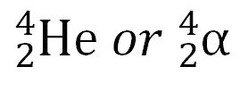
6.
What do these symbols represent?
a)
alpha particle
b)
beta particle
c)
neutron
d)
gamma ray
7.
What is one problem with using nuclear fission as an energy source?
a)
finding radioactive elements that have longer half-lives
b)
finding ways of storing radioactive wastes
c)
finding compounds to cool heated water
d)
finding non-radioactive elements for reactors
8.
What sort of shield will block gamma rays?
a)
skin
b)
paper
c)
aluminum
d)
thick lead
9.
The technetium-99 isotope has a half-life of 6.0 hours. If 100.0 mg were injected into a patient how much remains after 18 hours?
a)
33.0 mg
b)
12.5 mg
c)
.33 mg
d)
15.8 mg
10.
What happens to the atomic number during alpha decay?
a)
The atomic number decreases by 4
b)
The atomic number increases by 1
c)
The atomic number decreases by 2.
d)
The atomic number stays the same.
11.
Balance the following equation:
146C --> 0-1e + ________
a)
145B
b)
146C
c)
147N
d)
42He
12.
If Thorium-234 undergoes a beta decay, What element will be left in its place?
a)
Actinium-234
b)
Thorium-233
c)
Protactinium-234
d)
Radium-230
13.
What happens when the number of protons in an atom changes? 
a)
The number of electrons changes too 
b)
Usually nothing happens, unless the atom is radioactive 
c)
The atomic nucleus explodes
d)
It becomes a completely different atom, with different properties 
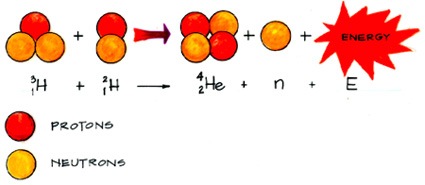
14.
What type of reaction is this?
a)
alpha
b)
beta
c)
gamma
d)
quiet
15.

Complete the nuclear reaction

85209At = ___ + 24He

a)

83205Bi

b)

86209Rn

c)

81207Tl

d)

85208At

16.

Complete the nuclear reaction

2760Co = ___ + -10e

a)

2556Mn

b)

2860Ni

c)

2358V

d)

2759Co

17.

Gamma rays have

a)

no mass

b)

a huge mass

c)

a small mass

d)

an average mass

18.

The nucleus is held together by the ___________________________force.

a)

The Strong Nuclear Force

b)

The Weak Nuclear Force

c)

Electromagnetism

d)

Gravity

19.
Radioactive materials have unstable...
a)
electrons
b)
protons
c)
nuclei
d)
neutrons
20.

What percentage of Rubidium-87 will remain after 4 half-lives?

a)

25%

b)

12.5%

c)

6.25%

d)

3.125%

21.

What type of radiation is the most penetrating?

a)

Alpha

b)

Beta

c)

Gamma

22.
What is the term used for describing when an element changes into a new element through radioactive decay?
a)
mutation
b)
transmutation
c)
alchemy
23.

An isotope of cesium (cesium-137) has a half-life of 30 years. If 1.0 mg of cesium-137 disintegrates over a period of 90 years, how many mg of cesium-137 would remain?

a)

0.5 mg

b)

0.25 mg

c)

0.125 mg

d)

0.0625 mg

24.

A high temperature is required for which to occur?

a)

alpha decay

b)

beta decay

c)

nuclear fission

d)

nuclear fusion

25.

What is the term for an ongoing series of nuclear reactions?

a)

fission

b)

chain reaction

c)

fusion

d)

nuclear

26.

In the Sun, hydrogen atoms fuse together to form _________.

a)

helium

b)

mercury

c)

oxygen

d)

nitrogen

27.

Nuclear fission of uranium-235 can start a chain reaction by

a)

releasing enough thermal energy to start nuclear fission in neighboring atoms

b)

producing two smaller atoms that can then strike and split neighboring atoms

c)

producing neutrons that can then strike and split neighboring atoms

d)

combining two atoms with low mass to form one large atom

28.

Which reaction occurs in stars like our sun?

a)

chemical

b)

fission

c)

fusion

d)

radioactive decay

29.
The three types of nuclear radiation in increasing order of penetrating power are ____.  
a)
  alpha, beta, gamma 
b)
X ray, beta, gamma
c)
alpha, gamma, beta 
d)
X ray, gamma, beta 
30.

When protons and neutrons combine to form a nucleus , mass of the nucleus will be

a)

Equal to the mass of protons and neutrons before combining
b)

Greater than mass of protons and neutrons before combining

c)

less than mass of protons and neutrons before combining

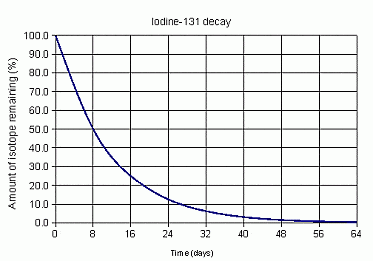
31.
What is the half-life of iodine-131?
a)
32 days
b)
8 days
c)
16 days
d)
24 days
32.
You have 100 grams of radioactive C-14. The half life of C-14 is 5730 years. 
How many grams are left after 1 half life? 
a)
100 grams
b)
25 grams
c)
2 grams
d)
50 grams
33.

A 50.0 g sample of a radioactive element has a half-life of 40 years. How much mass will be left after 80 years?

a)

50

b)

25

c)

12.5

d)

6.25

34.

Barium-122 has a half-life of 2 minutes. If after 10 minutes a sample of 15.0 g is left, what mass must have been initially present?

a)

30 g

b)

480 g

c)

240 g

d)

120 g

35.
The half-life of strontium-90 is 25 years. How much strontium-90 will remain after 100 years if the initial amount is 4.0 g?
a)
3.0g
b)
0.25mg
c)
0.3g
d)
0.25g