
 Worksheets
Psychology: Brain and Behavior
Total questions: 75
Worksheet time: 2hrs 20mins
Which structure in neural communication passes messages through its branches?
Neuron
Dendrite
Axon
Myelin
Anna recently hit her head while rock climbing. Since the accident, her memory of the past has been limited and she has had trouble forming new memories. Based on this information she most likely damaged which brain component?
amygdala
hippocampus
hypothalamus
thalamus
Peter was diagnosed with a disorder of the nervous system. His doctor explained that his brain is releasing neurotransmitters, the neurotransmitters are not being received. This means that his neurons most likely have which of the following malfunctioning?
myelin sheath
axon
terminal buttons
dendrites
In a neuron, the _____ conducts information to other neurons, and the _____ receives information from other neurons?
axon/dendrite
dendrite/axon
axon/soma
soma/axon
Heart rate, digestion, pupil dilation are involuntary processes controlled by the ____ nervous system
autonomic
automatic
peripheral
somatic
Which part of the brain controls balance and coordination?
cerebellum
cerebrum
reticular formation
pons
The _________ helps control voluntary movements.
autonomic nervous system
somatic nervous system
endocrine system
The fatty layer of cells that is wrapped around many axons is called the
terminal button
synapse
nodes of Ranvier
myelin sheath
Which of the following is NOT a lobe of the cerebrum.
Frontal
Temporal
Thalamus
Occipital
Which part of the brain is involved in our ability to speak?
Cerebellum
Broca's Area
Somatic Sensory Area
Brain Stem

Which color represents the temporal lobe?
Blue
Yellow
Pink
Green
Which brain part helps regulate body temp., controls water balance, and regulates metabolism?
Cerebellum
Thalamus
Occipital Lobe
Hypothalamus

Which color represents the parietal lobe?
Blue
Pink
Yellow
Green
Which area of the brain is involved with movement?
Primary motor area
Broca's area
Midbrain
Hypothalamus

Which color represents the occipital lobe?
Yellow
Blue
Pink
Green
Which part of the brain controls heart rate, regulates blood pressures, and is involved in breathing, swallowing, and vomiting?
Medulla Oblongata
Thalamus
Midbrain
Cerebellum

Which color represents the cerebellum?
Blue
Pink
Yellow
Red

Which color represents the frontal lobe?
Yellow
Pink
Red
Blue
Which structure connects the brain and the spinal cord?
Cerebellum
Brain stem
Diencephalon
Cerebrum


The parietal lobe controls __________.
Vision
Problem Solving
Memory
Sensations
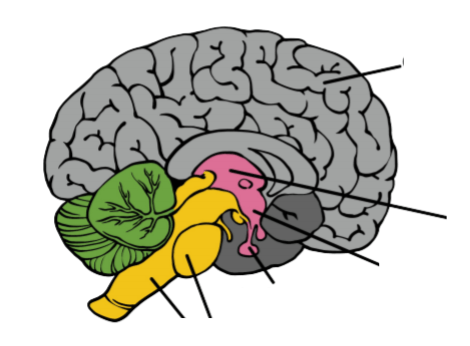
What structure is grey in this picture?
Cerebrum
Cerebellum
Brain Stem
The function of the thalamus is ______.
a balance center
a thermostat
a relay station to other brain parts
to regulate sleep
This structure allows the left and right hemisphere of the brain to communicate.
thalamus
cerebral cortex
hypothalamus
corpus callosum
The part of the brain that is most associated with sleep.
thalamus
medulla oblongata
reticular formation
pons
What are the three parts of the Brainstem?
Medulla Oblongata, Frontal Lobe, Spinal cord
Medulla Oblongata, Cerebellum, Cerebrum
Medulla Oblongata, Pons, Midbrain
medulla oblongata, spinal cord, thalamus
The Amygdala helps...
you dance and sing.
you make plans and decisions.
you control your emotions.
keep you balanced while you are doing your favorite activities.
The lower brain structure that controls arousal.
cerebellum
reticular formation
medulla
thalamus
A playful kitty would likely become a vicious beast if this part of the brain was to be stimulated.
medulla
thalamus
hippocampus
amygdala
If a neurosurgeon were to stimulate your left motor cortex, what would likely happen?
you would move your right leg
you would feel tingling on the right side of your body
you would not be able to speak
you would lose your memory
Language is most associated with the
left hemisphere
right hemisphere
temporal lobe
parietal lobe

What is a neuron?
A nerve cell that is wired to send signals to the different parts of the brain.
A brain cell that does not work.
A scared cell that is wired to make you go crazy.
That funny looking thing you taught us about.
The brain and spinal cord are part of
The Nervous System
The Digestive System
The Circulatory System
The Muscular System
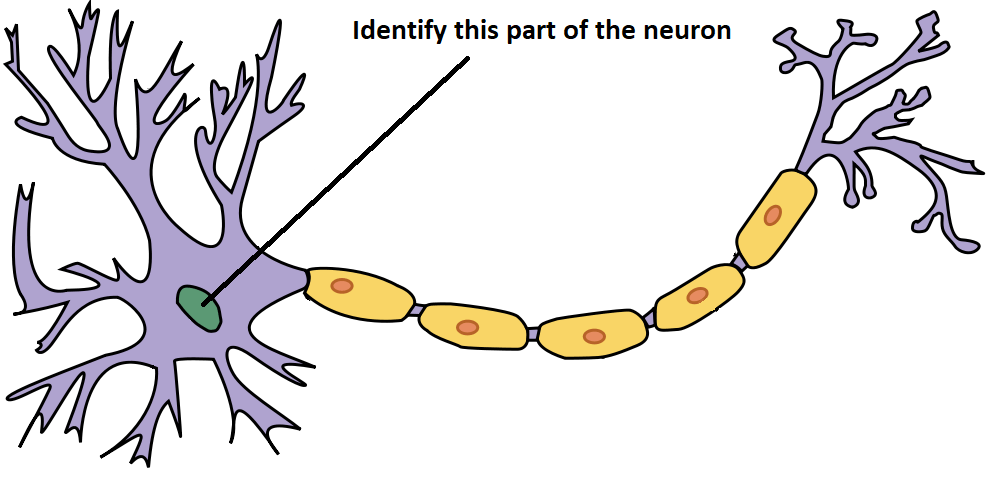
Nucleus
Cell Body
Axon
Node of Ranvier
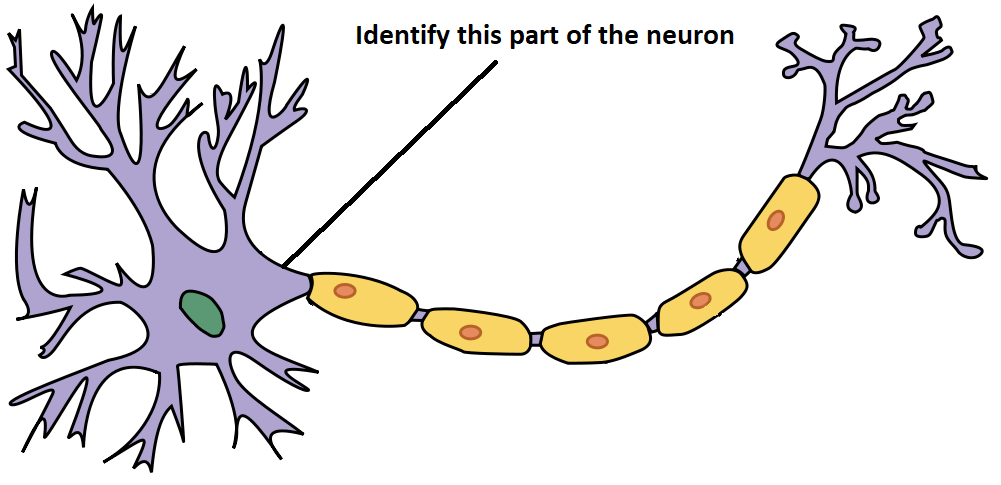
Nucleus
Cell Body
Axon
Node of Ranvier
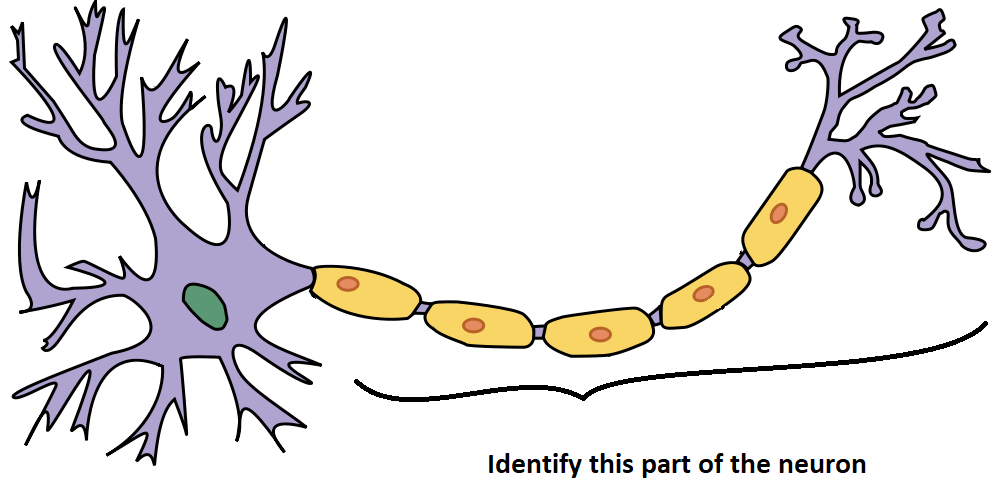
Nucleus
Cell Body
Axon
Node of Ranvier
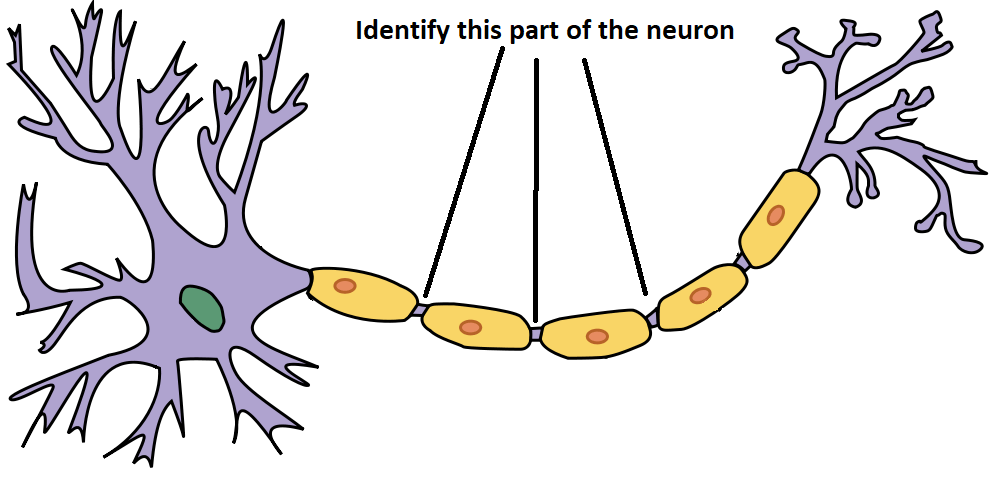
Nucleus
Cell Body
Axon
Node of Ranvier
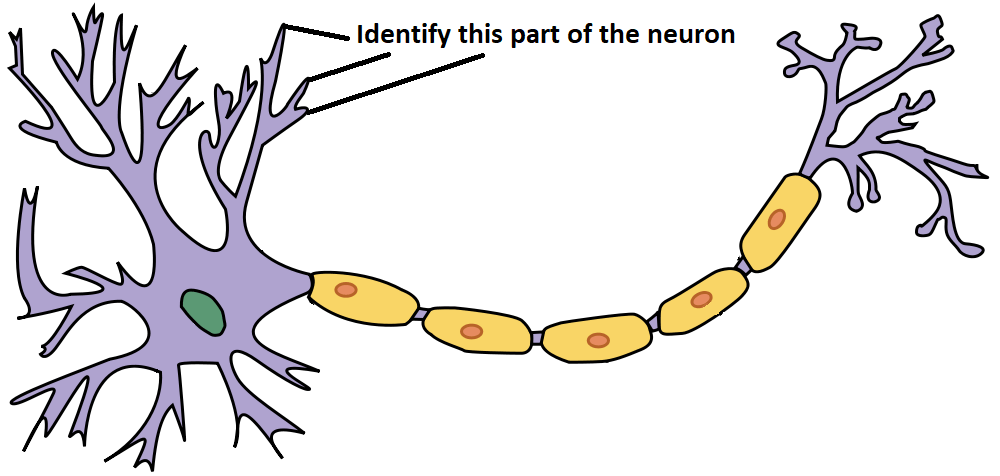
Dendrites
Axon Terminals
Myelin Sheath
Schwann Cells
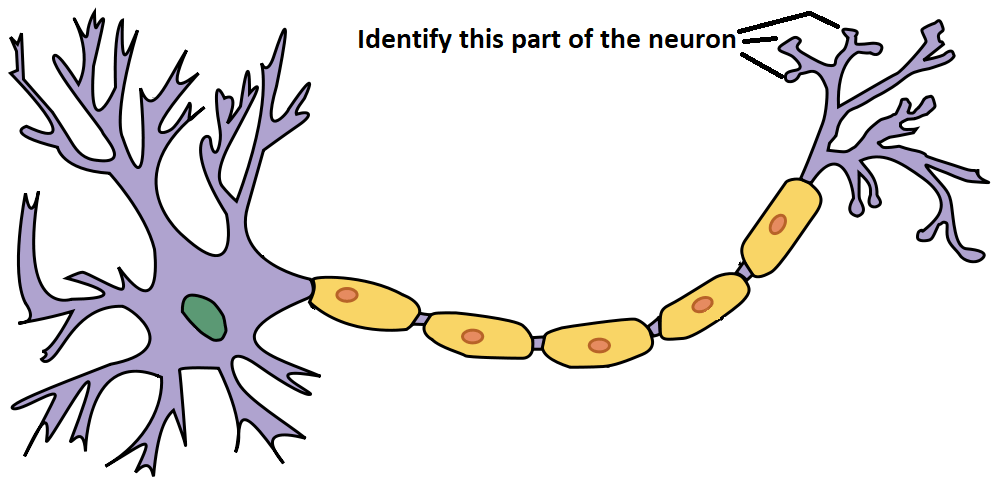
Dendrites
Axon Terminals
Myelin Sheath
Schwann Cells
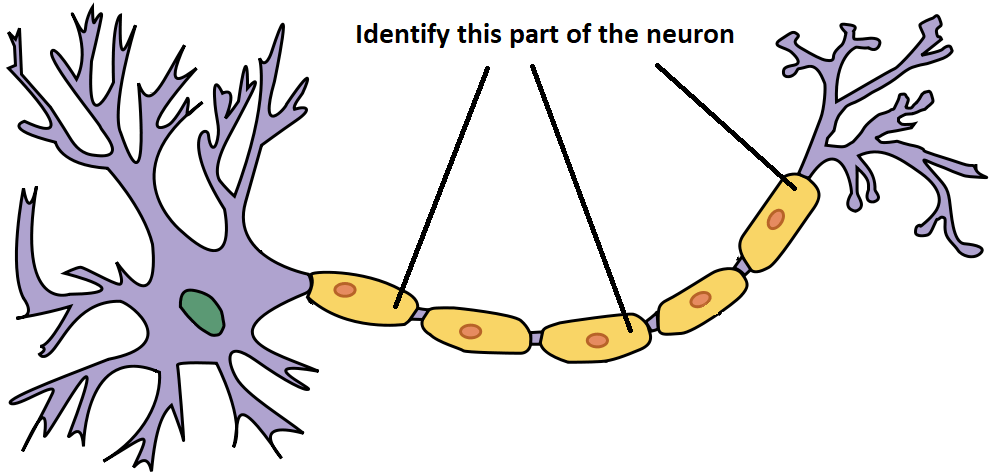
Dendrites
Axon Terminals
Myelin Sheath
Schwann Cells
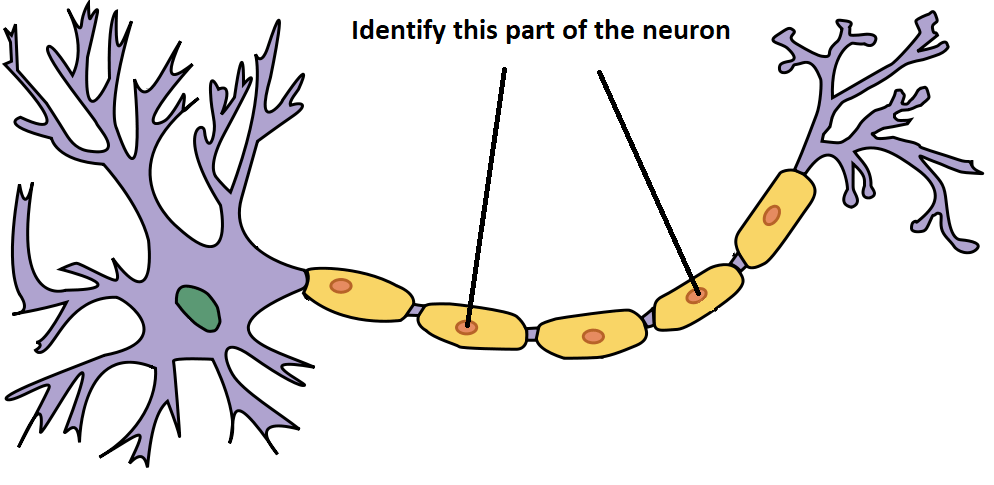
Dendrites
Axon Terminals
Myelin Sheath
Schwann Cells
What direction foes the electrical signal travel through the neuron?
From dendrites, down the Axon, and out Axon terminalsThis is a correct answer
From Axon terminals, down the Axon, & out of the dendrites
Any direction up or down the cell
From the Axon, to the Dendrites, and out the Axon terminals
What does the neuron's Cell Body do?
Controls the actions of the neuron
Produces food for the neuron
Carries information from the cell body to other neuronsThis is a wrong answer
Controls speed of electrical signal through the axon
What does the neuron's Axon do?
Controls the actions of the neuron
Produces food for the neuron
Carries information from the cell body to other neuronsThis is a wrong answer
Controls speed of electrical signal through the axon
What does the neuron's Myelin Sheath do?
Controls the actions of the neuron
Produces food for the neuron
Carries information from the cell body to other neuronsThis is a wrong answer
Surrounds and insulates the axon
What do Dendrites do?
Intakes information from other neurons
Produces fatty tissue for the Myelin Sheath
Sends information to the next cell
Controls the speed of electrical signal through the axon
What do Nodes of Ranvier do?
Intakes information from other neurons
Produces fatty tissue for the Myelin Sheath
Sends information to the next cell
Controls the speed of electrical signal through the axon
What do Schwann Cells do?
Intakes information from other neurons
Produces fatty tissue for the Myelin Sheath
Sends information to the next cell
Controls the speed of electrical signal through the axon
What do Axon Terminals do?
Intakes information from other neurons
Produces fatty tissue for the Myelin Sheath
Sends information to the next cell
Controls the speed of electrical signal through the axon
Type of neuron that perceive information about your environment.
Motor Neuron
Interneuron
Sensory Neuron
Type of neuron located only in the brain and spinal cord that pass impulses from one neuron to another.
Motor Neuron
Interneuron
Sensory Neuron
Type of neuron that sends nerve impulses to muscles and gland, by the command of other neurons.
Motor Neurons
Interneurons
Sensory Neurons
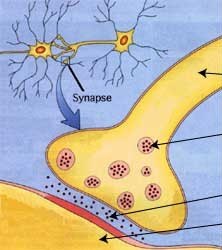
The location of neurotransmitters
axon terminals
dendrites
Schwann cells
cell body

