wayground logo

Free Printable Worksheets

Font size

S
M
L
XL
Worksheets

Waves 1

Total questions: 70

Worksheet time: 35mins
Name
Class
Date
1.
Hearing your brother's music playing from down the hall is an example of what type of wave interaction?
a)
reflection
b)
interference
c)
refraction
d)
diffraction
2.
You and your father inspect an empty house with the hopes of buying it. You walk through the rooms talking to one another, and you notice that your voices and footsteps are echoing in the big, empty house. What causes the echo?
a)
sound waves reflecting off smooth, flat surfaces throughout the house
b)
sound waves moving around the large rooms
c)
sound waves moving slowly through air
d)
sound waves refracting around corners in the empty rooms
3.
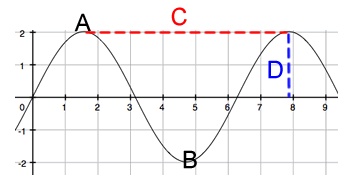
If distance C on the diagram increased, what would happen to the pitch? 
a)
The pitch would be louder. 
b)
The pitch would be softer. 
c)
The pitch would be higher. 
d)
The pitch would be lower. 
4.
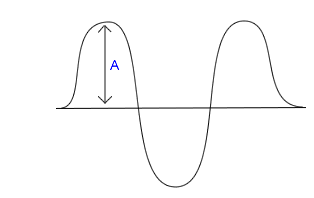
If the distance represented by the letter A were increased, how would it change the way the sound was heard?
a)
The sound would be higher. 
b)
The sound would be lower. 
c)
The sound would be softer. 
d)
The sound would be louder. 
5.
______ is how high or low a sound is; depends on the frequency.
a)
pitch
b)
frequency
c)
sound
d)
medium
6.
A wave in which the particles vibrate in the same direction as that in which the wave is traveling; sound waves
a)
longitudinal wave
b)
ocean wave
c)
transverse wave
d)
mechanical wave
7.
A soft, low pitch sound would have which of the following....
a)
low frequency 
high amplitude 
b)
high frequency 
high amplitude 
c)
low frequency 
low wavelength  
d)
low frequency
low amplitude 
8.
A reflected sound wave is know as a/an ___________.
a)
frequency
b)
pitch
c)
echo
d)
rarefaction
9.
______ is how loud or soft a sound is; depends on the amplitude.
a)
pitch
b)
frequency
c)
loudness
d)
medium
10.
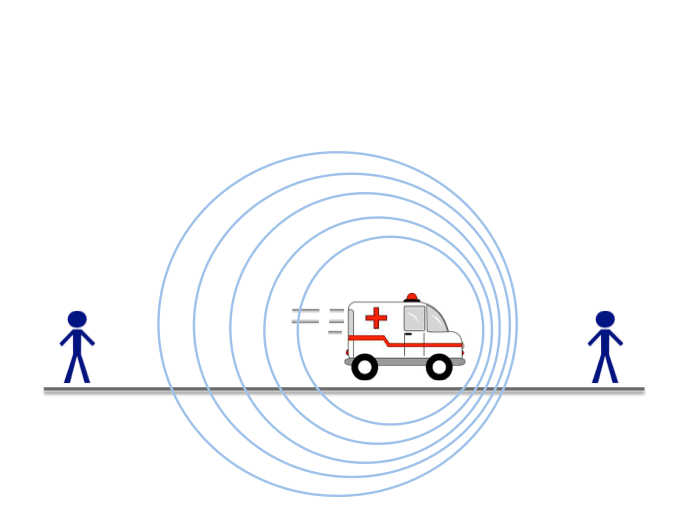
When an ambulance move TOWARD you it sounds ________ pitched. 
a)
high
b)
low
c)
medium
11.
When the car moves AWAY from you, its horn seems...
a)
Low pitched
b)
High pitched
c)
Normal
12.
Sound is a form of? 
a)
energy
b)
pitch
c)
volume
13.

Sound travels fastest in...

a)

solids

b)

liquids

c)

gases

d)

air

14.
An object that does not vibrate cannot produce
a)
sound
b)
light
c)
heat
d)
electricity
15.

A place where no sound exists is...

a)

in the air

b)

under water

c)

space

d)

all of the above

16.
__________ means to move back and forth quickly.
a)
Pitch
b)
Amplitude
c)
Vibration
d)
Echo
17.
Sound is a form of energy produced by ______________.
a)
vibrations
b)
distances
c)
prisms
d)
Ms. Crews
18.
Sound waves travel the SLOWEST through _____________.
a)
gases
b)
solids
c)
liquids
19.
The volume of a sound is measured in units called ________
a)
decibels
b)
liters
c)
sound waves
d)
inches per minute
20.
Why is sound able to travel faster through a solid than a gas?
a)
Gas molecules are packed tightly.
b)
Sound does not travel faster through a solid than a gas.
c)
Solid molecules are packed tightly.
d)
Gas molecules move slowly.
21.
Sound does not travel in space because
a)
Space is too far away.
b)
There is no matter in space.
c)
Space is the final frontier
d)
Space has planets.
22.
You stand outside a room that has the doors and windows closed. Why can you still hear sounds made inside the room?
a)
Vibrations are absorbed in the doors and windows
b)
Vibrations are reflected inside the room
c)
Vibrations travel through the door and the window
d)
Vibrations echo in the room
23.
Why do we see lightning before we hear the thunder?
a)
Our eyes trick us
b)
Light travels faster than sound
c)
they're two separate things
24.

Which sentence BEST describes how sound moves?

a)

Sound can move through solids, liquids, or gases.

b)

Sound can move through empty space or through matter.

c)

Sound can move through solids and liquids but not through gases.

d)

Sound can move through liquids and gases but not through solids.

25.
What is light?
a)
Is all around us, and we need it to see.
b)
Is a force that we need.
26.
Light is a KIND of ENERGY.
a)
True
b)
False
27.
All light has a SOURCE, or something it comes from. 
a)
True
b)
False
28.
How does light travel/move?
a)
In ONE direction, VERY fast
b)
In ALL directions, VERY fast
29.
What happens when light hits an object?
a)
Some of the light jumps in different directions
(bounces)
b)
Some of the light gets absorbed by the object.
c)
Some of the light bounces back to your eye
d)
ALL of them.
30.
_______ is when light hits and object and it BOUNCES off.
a)
Reflection
b)
Refraction
31.
Which objects REFLECT more light?
a)
Shiny objects
b)
Dull objects (not shiny)
32.
Light can pass through objects.
a)
TRUE
b)
FALSE
33.
Through which objects does light pass MORE?
a)
Transparent objects, like glass windows
b)
Opaque objects (not transparent), like a plant
34.
Things make shadows because they ______ light.
a)
BLOCK
b)
PASS
35.
When light passes through things it ________. 
a)
BENDS
b)
STAYS in the SAME direction.
36.
___________ is when light BENDS or CHANGES direction.
a)
Reflection
b)
Refraction
37.

The ear functions for ___________.

a)

balance

b)

hearing

c)

both balance and hearing

38.

What is the importance of ear wax?

a)

Collects dust and dirt

b)

Help the sound travel

c)

Collect dust, dirt and fight infection

d)

Fight infection

39.

What is the ear drum?

a)

A thin piece of skin

b)

A thin Tendon

c)

A bone

d)

Part of the inner ear

40.
The opening in the center of the iris is the:
a)
PUPIL
b)
RETINA
c)
LENS
d)
CONJUNCTIVA
41.
Which of the following structures focuses incoming light rays onto the retina?
a)
IRIS
b)
LENS
c)
PUPIL
d)
CILIARY BODY
42.
Which layer of the eye contains the sensory receptors for sight?
a)
RETINA
b)
CHOROID
c)
SCLERA
d)
LENS
43.
When sound waves cause the eardrum to vibrate, these vibrations are immediately passed on to the_________.
a)
outer ear and ear canal
b)
inner ear
c)
tiny hairs
d)
three small bones in the middle ear
44.
Which part of the ear acts as the sound collector?
a)
outer ear
b)
ear canal
c)
middle ear
d)
inner ear
45.
How does increasing the amplitude of a sound wave affect the sound?
a)
it makes the sound louder
b)
it makes the sound travel faster
c)
it increases the wavelength of the sound
d)
it increases the frequency of the sound
46.
Where is a place a person would hear no sound?
a)
in a cave
b)
in a forest
c)
in space
d)
in water
47.
What happens in the inner ear? 
a)
Sound waves are captured.
b)
Sound waves move deeper into the ear. 
c)
Sound waves are reflected.
d)
Sound waves are converted into nerve impulses.
48.
Where does HEARING (interpreting the nerve impulses) take place?
a)
outer ear
b)
middle ear
c)
inner ear
d)
brain
49.
What colours is white light made from?
a)
Orange, Green, Pink, Magenta, Peach, Rose, Lemon
b)
Red, Orange Yellow, Green, Black, Indigo, Violet
c)
Red, Orange, Yellow, Green, Blue, Indigo, Violet
d)
Red, Orange, Yellow, Grey, Blue, Indigo, Violet
50.
Why does this the t-shirt appear red and the shorts appear blue?
a)
The t-shirt reflects red light, the shorts reflect green light, other colours are absorbed.
b)
The t-shirt reflects blue light, the shorts reflect red light, other colours are absorbed.
c)
The t-shirt reflects red light, the shorts absorb yellow light, all other colours are reflected
d)
The t-shirt reflects red light, the shorts reflect blue light, other colours are absorbed.
51.
Red objects appear 'red' because:
a)
red objects are made from red materials
b)
red objects absorb red light
c)
red objects absorb all other colour except red light
d)
red objects don't reflect any light
52.
Which color reflects all light?
a)
White
b)
Black
c)
Orange 
d)
Green
53.
How is a rainbow formed?
a)
A poptart cat flies across the sky
b)
A leprechaun places a pot of gold at the bottom of a pond
c)
Light refracts off the water droplets to create a rainbow of color
d)
Rainbows are a myth
54.
Which color absorbs all light?
a)
White
b)
Black
c)
Orange
d)
Green
55.

True or False: White light has no colour

a)

True

b)

False

56.

Which of the following is not a primary colour of light?

a)

Red

b)

Yellow

c)

Green

d)

Blue

57.

Check all the PRIMARY COLOURS.

a)

Red

b)

Magenta

c)

Green

d)

Yellow

e)

Blue

58.

Check all the SECONDARY COLOURS.

a)

Red

b)

Magenta

c)

Cyan

d)

Yellow

e)

Blue

59.

Which colour of light has the most energy?

a)

Blue

b)

Green

c)

Red

d)

Yellow

60.
If you are using a green color filter, what color will you only see?
a)
blue
b)
green
c)
white
d)
red
61.

When only 2 primary colours overlap, you get a _________________

a)

Visible specturm

b)

Secondary colour

c)

Absorbed colour

d)

Refracted colour

62.

Which colour light is being reflected?

a)

Magenta

b)

Red + Blue

c)

Orange

d)

All colours except for orange

63.

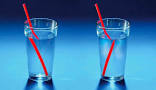
A student placed a pencil in a cup of water. The pencil appears broken because light

a)

always travels in a straight line.

b)

bends when it passes through water.

c)

makes the water in the glass evaporate.

d)

reflects the pencil on the water's surface.

64.

When light passes at an angle to the normal from one medium into another in which its speed is higher

a)

it is bent toward the normal.

b)

it always lies along the normal.

c)

it is unaffected.

d)

it is bent away from the normal.

65.

When light passes at an angle to the normal from one medium into another in which its speed is lower

a)

it is bent towards the normal.

b)

it always lies along the normal.

c)

it is unaffected.

d)

it is bent away from the normal.

66.
How does light behave as it enters these mediums?
a)
continue its path as straight line.
b)
bends toward the normal
c)
bends away from the normal
d)
reflects
67.
Swimming pools and the ocean look shallower than they really are due to:
a)
reflection 
b)
dispersion
c)
refraction
d)
total internal reflection
68.
What is this called?
a)
refraction
b)
reflection
c)
reconstroction
d)
retraction
69.
According to the Law of reflection, a light ray striking a mirror
a)
continues moving through the mirror in the same direction
b)
moves into the mirror at a slightly different angle
c)
bounces off the mirror toward the direction it came from
d)
bounces off the mirror at the same angle it hits.
70.
The fact the two angles are the same is an example of....
a)
Refraction
b)
Angle of Incidence
c)
Law of reflection
d)
Magnification