
 Worksheets
Properties of Chemical bonds
Total questions: 41
Worksheet time: 25mins
An atom shares an electron with another atom in a
covalent bond
ionic bond
hydrogen bond
If a molecule is said to be "polar," that means it
has a charge (positive end and negative end)
has no charge
is a white bear
Chemical bond is ...
the physical mixing of two different atoms.
the force that holds two atoms together
the energy used up when two atoms combined.
the temperature that changes the phase of matter.

Which is not true of the chemical bond shown on the diagram?
An electron from Na is transferred to Cl.
The bond is ionic since electron is shared by the two atoms.
A metal and a non-metal are involved in the bonding.
Na will become positively charged and Cl will be negatively charged.

Which two statements are correct about the figure shown?
It is a covalent bond.
Hydrogen atoms loss electrons and Carbon gains the atoms.
It happens on metal and on another non-metal.
The valence electrons are shared by both atoms.
Why does an atom tend to chemically bond with another atom?
To become more stable
To remain on its present state
To maintain its energy
To decrease its stability
Which two are ionic compounds?
NaCl
HCl
CH4
CaO
Check two general properties of a molecular compound.
Hard
Soft
Low melting point
poor conductor of electricity when in solid state.
Which two are molecular compounds?
MgO
Al2O3
CO2
H2O
Covalent bonds are formed between
metals
non-metals
metal and non-metal
metalloids

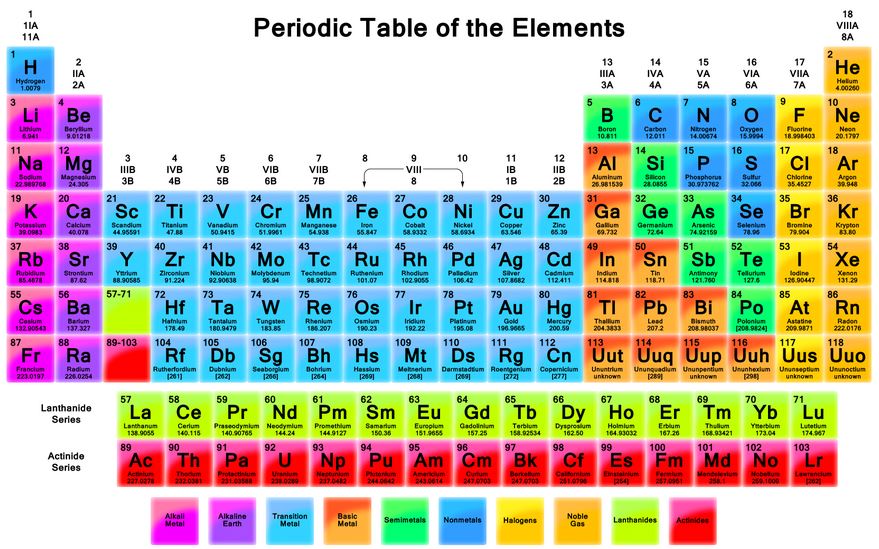
Which of the following atoms is most likely to bond with another atom?


Atom A has seven electrons in its outer shell. Atom B has one electron in its outer shell. They react and bond. Now both atoms have eight electrons in their outer shells. What kind of bond has formed?
Covalent
Ionic
Metallic
Electron

Molten compound conducts electricity.
ionic compound
molecular compound
Some are solids, some are liquids, and some are gases at room temperature.
ionic compounds
molecular compounds
When dissolved in water, the solution is a good conductor of electricity.
ionic compounds
molecular compounds
When dissolved in water, the solution does NOT conduct electricity.
ionic compounds
molecular compounds
usually hard but brittle
ionic compounds
molecular compounds
Which of the following is TRUE about ionic compounds?
They have low melting and boiling points.
They can conduct electricity in the solid state.
They are stronger than covalent bonds.
They are usually formed from 2 metals.

The following properties are all characteristics of ionic compounds EXCEPT
high melting and boiling points
soft
crystal lattice structure
conduct electricity when dissolved in water
What type of forces hold on an ionic lattice together?
Electrostatic attraction forces
Covalent bond
Metallic bond
Van der Waals forces
What properties does an ionic compound have?
A low boiling point and it conducts electricity when dissolved in water
A high melting and it conducts electricity when liquid
A high boiling point and it conducts electricity when solid
Ionic compounds conduct electricity when dissolved in water. Which statement below best explains the property?
Ions are free to move.
Electrons are free to move.
Bonds are strong.
There are weak intermolecular forces of attraction.

True or false? Ionic compounds have low boiling points.
true
false

Why do ionic compounds NOT conduct electricity when they are in their solid state?
Their ions are free to move.
Their ions are held in fixed positions.
Their electrons are free to move
Their electrons are held in a fixed state
Why do ionic compounds conduct electricity when they are molten or dissolved?
Their ions are free to move.
Their ions are held in fixed positions.
Their electrons are free to move
Their electrons are held in a fixed state
Magnesium oxide is insoluble in water. Can magnesium oxide conduct electricity?
Select yes or no and a reason.
Yes
No
Magnesium oxide can be heated so that it melts and conducts electricity.
Magnesium oxide doesn't dissolve, so it stays in its solid state and doesn't conduct electricity.
Compounds composed of a ______________ and _____________ like the compound CaCl2 , are ionic compounds.
metal ... metal
nonmetal ... nonmetal
metal ... nonmetal

