
 Worksheets
Periodic Table Review
Total questions: 38
Worksheet time: 21mins

Which color on the image of the periodic table corresponds with the alkaline earth metals.
yellow
dark yellow
blue/green
teal
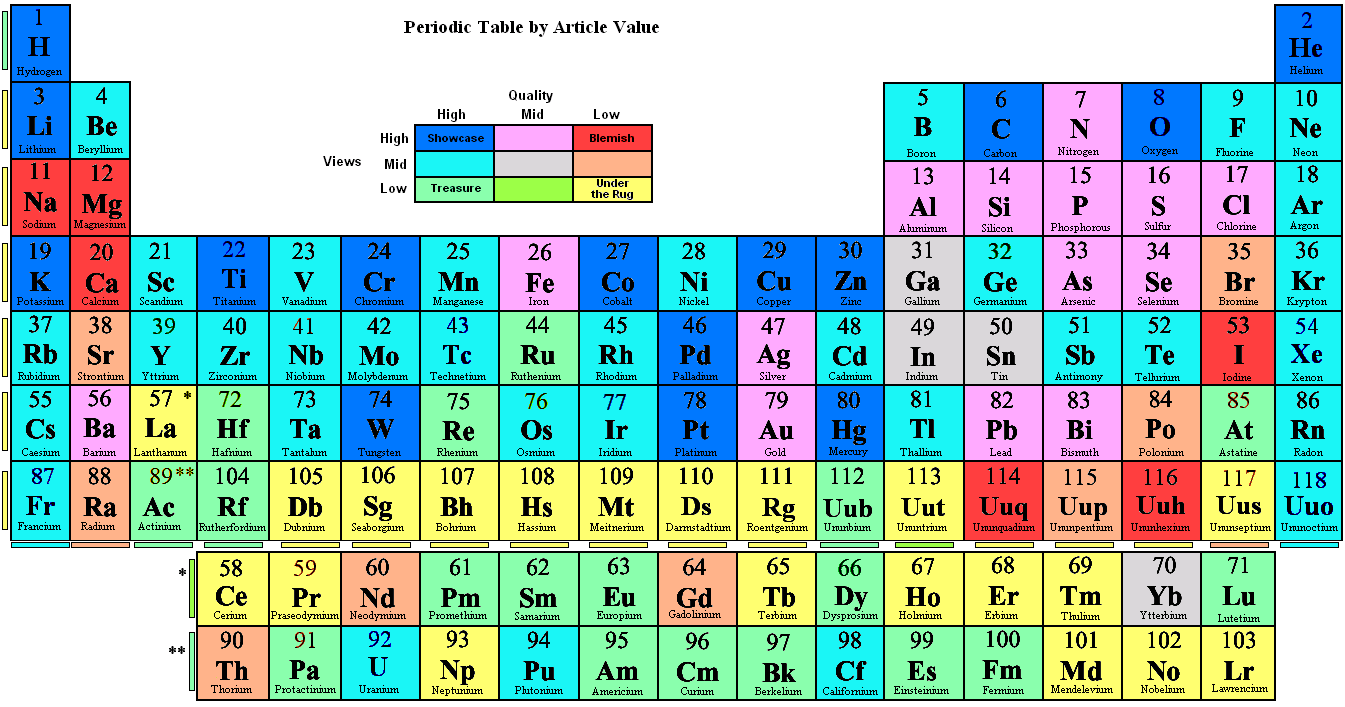
Sodium (Na) is found in period
3
2
4
1
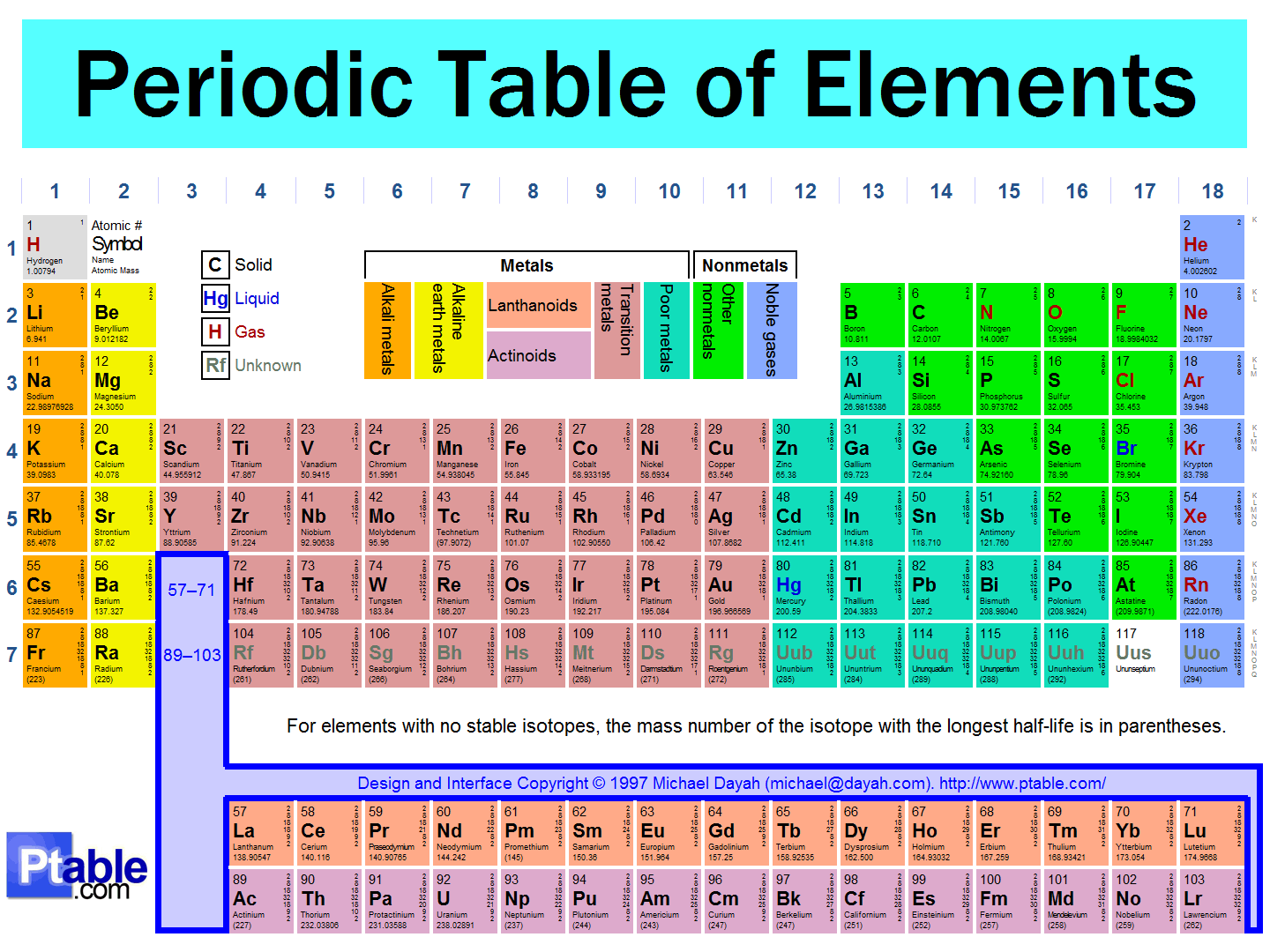
The vertical (up and down) columns in the Periodic Table are called
groups
towers
periods
atomic numbers

a negatively charged subatomic particle that orbits the nucleus of an atom
proton
neutron
electron
matter
The vertical (up and down) columns in the Periodic Table are called
groups
towers
periods
atomic numbers
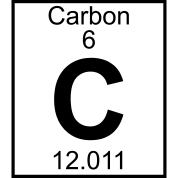
What does the 6 represent?
atomic mass
atomic number
element name
chemical symbol
The vertical (up and down) columns in the Periodic Table are called
groups
towers
periods
atomic numbers

The atomic number of this pictured element is
28
58.6934
Ni
Nickel

What period is Lead (Pb) in?
6
4
Metals
4A
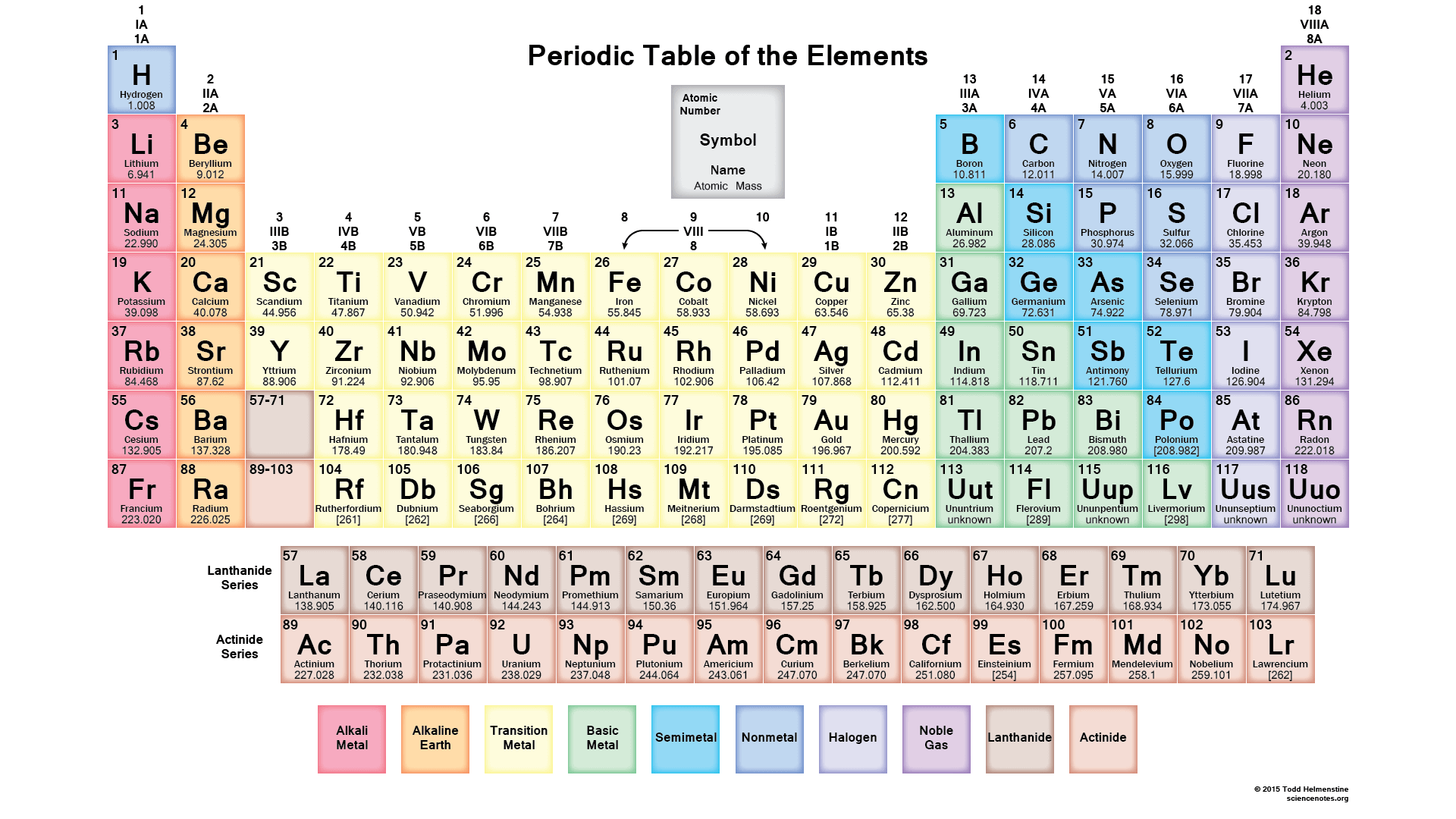
Sodium (Na) is found in group
1
2
3
4
Which color on the image of the periodic table corresponds with the halogens.
red
black
blue
orange

Most of the elements on the periodic table are classified as _____.
Metals
Nonmetals
Metalloids
Periods
Most of the elements on the periodic table are classified as _____.
Metals
Nonmetals
Metalloids
Periods
Metals are found on the ______________ side of the periodic table.
nonmetals
left
right
metals
This group of elements have properties that are opposite those of metals. ______________________
luster
nonmetals
metalloids
metals
This group of elements sit along a stair step line on the periodic table and have properties of both metals and nonmetals. _________________________
luster
metals
nonmetals
metalloids
In 1869, Dmitri Mendeleev developed the first periodic table, organizing the elements according to atomic weight. When he ordered the elements, he noticed that there were patterns of repeating properties. The modern periodic table sequences elements from left to right by atomic number.
This was the first person to organize a periodic table.
Neils Bohr
Dmitri Mendeleev
Democritus
Ernest Rutherford
In the periodic table, similar elements are arranged in vertical columns called groups. Some of the major groups include Group 1: alkali metals; Group 2: alkaline earth metals; Group 17: halogens; and Group 18: noble gases. Elements within each group have similar properties and characteristic behaviors because of their similar numbers of valence electrons.
In what direction are groups arranged in the periodic table?
Side to side
Up and down.
Diagonally
In sections.
The periodic table is a chart that organizes the elements based on their atomic properties. Elements in the periodic table are organized according to the periodic law. The periodic law states that chemical and physical properties of elements are periodic functions of their atomic numbers (the number of protons in the nucleus). As the atomic number of elements increases, different elements display similar characteristics at regular intervals.
Periodic law states that elements are arranged _______________________________________________________________.
in alphabetical order.
from largest to smallest.
as periodic functions of their atomic numbers.
there is no rhyme or reason.
The elements in groups 3-12 are called the transition metals. These are similar to the metals in that they are flexible and good conductors but different in that they have unique valence electron structure. They typically form coordinate complexes in which one atom is surrounded by several more in a large complex. Iron, gold, and copper are examples of transition metals.
Which group are the transition metals most like?
Metals, they are flexible and good conductors.
Non metals, they a unique valence electron structure.
Noble gases, they don't want to bond with anything else.
They are like both metals and non metals in some ways.

What is Sodium's element symbol?
Ne
Na
Al
P
The groups of a periodic table are located where?
The horizontal rows
The vertical columns
The rows on the periodic table are called __________?
Columns
Alleys
Periods
Groups
Most element on the periodic table are _______?
Metals
Nonmetals
Metalloids
Gases
Where are most metals on the periodic table?
On the left side of the periodic table
On the right side of the periodic table

What does A represent on an element box?
Element name
Element symbol
Atomic Number
Atomic Mass or Mass Number
What does B represent on an element box?
Element name
Element symbol
Atomic Number
Atomic Mass or Mass Number
What does C represent on an element box?
Element name
Element symbol
Atomic Number
Atomic Mass or Mass Number
What does D represent on an element box?
Element name
Element symbol
Atomic Number
Atomic Mass or Mass Number
The number of ____________ in the atom determines its identity.
Electrons
Protons
Neutrons
Elements

What are the shaded elements in the picture categorized as?
Metals
Nonmetals
Metalloids
Gases
Using the periodic table as a reference, which group of elements has similar chemical properties?
C, N, O, F
Mg, Ca, Sr, Ba
B, Si, As, Te
He, Ne, Ar, Xe

The diagram shows a model of an atom of a particular element. Which element is represented by the model?


The diagram shows a model of an atom of a particular element. Which element is represented by the model?


What is Sodium's element symbol?
Ne
Na
Al
P

Using the periodic table, determine the classification of Oxygen (O).
Metal
Nonmetal
Metalloid
Gas
Using the periodic table, determine the classification of Boron (B).
Metal
Nonmetal
Metalloid
Gas
Using the periodic table, determine the classification of Iron (Fe).
Metal
Nonmetal
Metalloid
Gas

