
NEW
Font size
 Worksheets
Properties of Water Review
Total questions: 52
Worksheet time: 43mins
What is the chemical formula for water?
HO
2HO
H2O
HO2
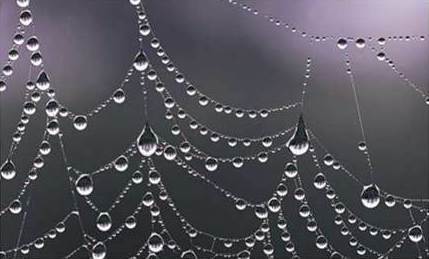
Refer to the picture; the water is sticking to the spider web because of:
Adhesion
Cohesion
Describe COHESION.
Water molecules attracted to other substances.
Water molecules climbing upwards against the force of gravity.
Water molecules dissolving many substances because of its polarity.
Water molecules attracted to other water molecules.
Describe ADHESION.
Water molecules attracted to other substances.
Water molecules climbing upwards against the force of gravity.
Water molecules dissolving many substances because of its polarity.
Water molecules attracted to other water molecules.


Attractions between water molecules are called
Covalent bonds
Ionic bonds
Polar bonds
Hydrogen bonds
Why does ice float?
As water freezes, the molecules move farther apart and its density decreases.
As water freezes, it takes up more hydrogen from the atmosphere
As water freezes, air becomes trapped between the water molecules.
As water freezes, it takes up more oxygen from the atmosphere
How many hydrogens are in THREE molecule of H2O?
2
3
4
6
Why can water striders walk across the surface of water without falling through?
They are light enough so they don't break the hydrogen bonds holding the water molecules together
The insects actually use their wings to hover slightly above the water’s surface
The insect’s feet are non-polar, so they are repelled by the polar water molecules and are pushed away from the water’s surface.
The insects are small enough to see the individual water molecules, so they are able to step carefully from one molecule to the next
Which end of the water molecule has a slightly positive charge?
the oxygen end
the hydrogen end
both ends are slightly positive
neither end is positive
Which term refers to water having a slightly positive and a slighty negative charge on its ends?
cohesion
surface tension
polar
adhesion
Why does water moderate temperature so well?
It does not allow heat in between the hydrogen bonds.
More energy is needed to break all the hydrogen bonds, or rebuild them, between water molecules.
Water has high energy all the time, so it can't heat up any more.
The polarity of the water molecule resists the added energy, causing water to stay the same temperature.
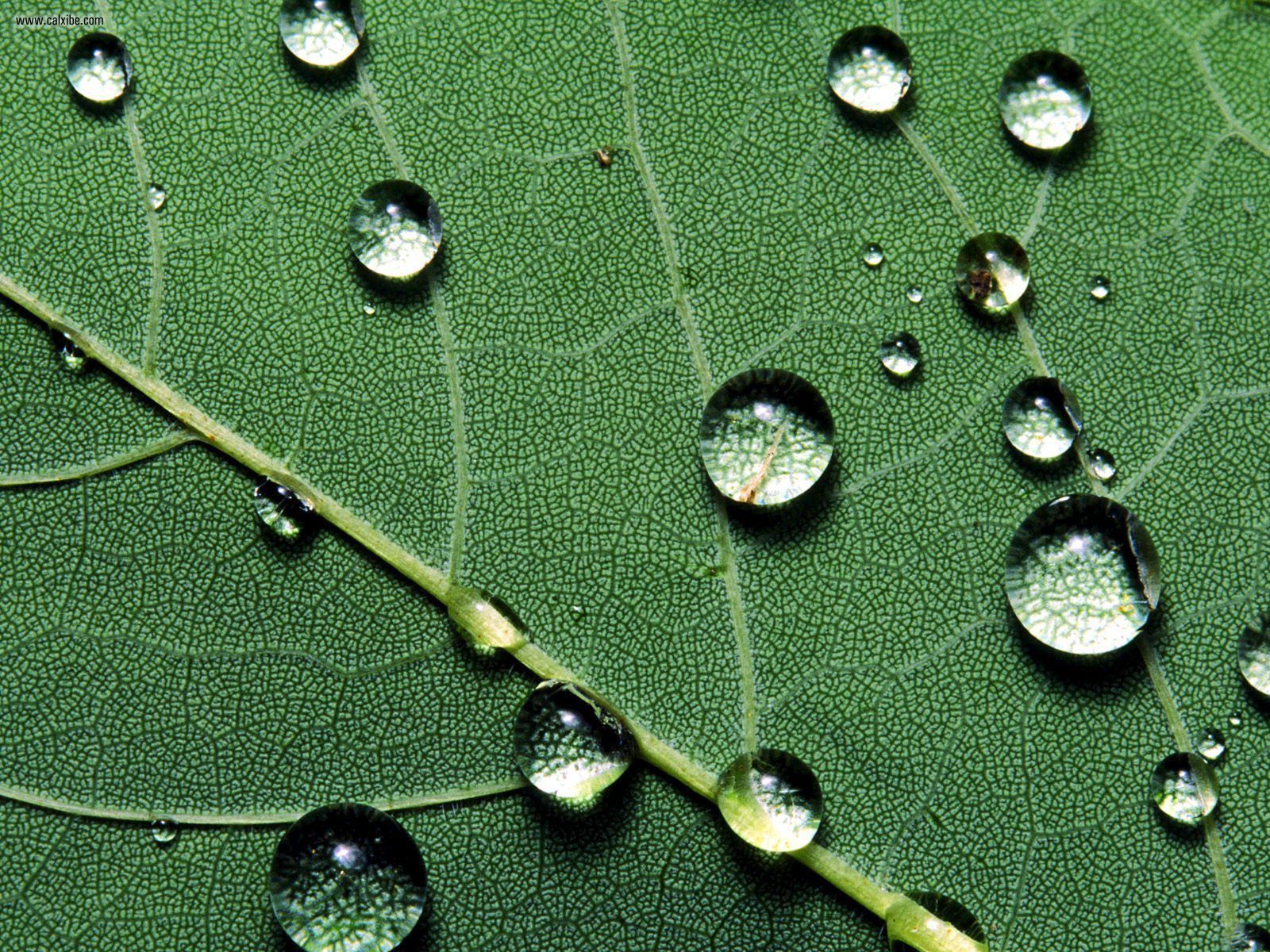
Refer to the picture; the water droplets are sticking to the leaf because of:
Adhesion
Cohesion
Which end of the water molecule has a slightly negative charge?
the oxygen end
the hydrogen end
both ends are slightly negative
neither end is negative
Why is water so good at dissolving so many substances?
it is polar
it is less dense as a solid
cohesion
adhesion


Why can fish survive winters in a pond?
ice is less dense than liquid water so it will be on the top of a lake or pond allowing fish to swim beneath it
water is available in all 3 phases so ice will be on the top of a lake or pond allowing fish to swim beneath it
water is polar so ice will be on the top of a lake or pond allowing fish to swim beneath it
Adhesion so ice will be on the top of a lake or pond allowing fish to swim beneath it
Earth's temperatures change depending on location. Because of this, we know that on Earth...
water is found in all 3 phases
water is only ever a liquid
water cannot be a solid
water is polar
How close or far you are from an ocean affects...
climate
polarity
cohesion
adhesion
Water has a high specific heat which means it can hold a great deal of thermal energy without rapidly increasing in temperature. What will this affect?
Cities that are close to Oceans and large lakes
Cities that are near ponds or rivers
Deserts far from oceans
Water can hold a great deal of heat and help moderate the climate of a nearby landmass because of which property?
specific heat
cohesion
adhesion
polarity
A liquid that dissolves another substance
Solvent
Solute
Solution
A substance that has been dissolved in a solvent
Solvent
Solute
Solution
A substance with a pH lower than 7
Acid
Base
Buffer
Neutral
A substance with a pH higher than 7
Acid
Base
Buffer
Neutral
A substance with a pH of 7
Acid
Base
Buffer
Neutral

Which letter represents hydrogen?
A
B
C
D
Which of the following images shows a singular water molecule?


Why does water heat heat up and cool down VERY SLOWLY?
High Specific Heat
Low Specific Heat
It's solid
It's always cold

Which of the following would have a pH of 7?
Pure Water
A substance that is more basic has a _____ pH than a substance that is acidic.
A base is a substance
That releases OH- ions when dissolved in water
That releases H+ ions when dissolved in water
Does not release any ions when dissolved in water
None of the above
A pH of 3 is how many times more acidic than a pH of 5?
2
20
10
100
An acid
is a substance that releases H+ ions when dissolved in water
is a substance that does not release any ions when dissolved in water
is a substance that releases OH- when dissolved in water
releases an equal amount of OH- and H+ ions when dissolved in water
Water has a neutral because
it has more H+ ions than OH-
it has more OH- ions than H+
it does not produce any ions
it has an equal amount of H+ and OH- in solution


A solution has a pH of 7.0. What would happen to the pH if hydrogen ions (H+) were added?
A solution has a pH of 7.0. What would happen to the pH if hydroxide (-OH) ions were added?

