
 Worksheets
Chapter 6-7 Review
Total questions: 65
Worksheet time: 1hrs 5mins


Who wrote the Declaration of Independence?
George Washington
Sam Adams
John Adams
Thomas Jefferson

Which (original) Enlightenment thinker influenced the writing of the Dec of Independence?
Carl Marx
John Locke
Thomas Paine
Thomas Jefferson

"Unalienable rights" are similar to which of the following ideas?
right to rebel
natural rights
popular sovereignty

The idea that the power to rule comes from the people is known as
right to rebel
natural rights
popular sovereignty
Which of the following was NOT involved in the French and Indian War?
France
Britain
Native Americans
Italy
What was a main reason(s) for the fight over the land west of the Appalachian Mountains?
Both France and Britain wanted control over the Ohio River Valley and France wanted to stop the British from going further.
Spain wanted to ally with France to gain more land.
Spain felt that Florida was too small for their trade routes.
They did not want any more Native American tribes to have any land, so France and Britain joined together to fight the Native Americans.
Why was the Albany Plan rejected?
It gave too much land to the French.
The colonies did not want to give up their individual power.
It gave the colonist no control over their government.
The colonist did not want to work with the Native Americans.
In the Treaty of Paris, after the French and Indian War, who gained control of all the land East of the Mississippi (except New Orleans)?
Britain
France
Spain
In the Treaty of Paris, after the French and Indian War, who gained control of Florida?
Britain
France
Spain
Whose side did Most Native Americans take during the French and Indian War?
British
Europeans
French
Dutch
Who won the French and Indian War
French
Native Americans
British
Dutch
A system in which the king tried to increase his nation's wealth by having colonies only trade with the mother country.
triangular trade
cash crop
joint stock company
mercantilsim
3 sided trade route between the 13 Colonies, the West Indies, and Africa; included the slave trade
mercantilism
charter
triangular trade
cash crop

Who is the Father of the Constitution?
George Washington
Thomas Jefferson
James Madison
Squanto
What was one of the main causes of Shay's Rebellion?
Farmers taking on too much debt
Farmers not owning land
Not growing enough crops
Washington being elected President
Why was George Washington unanimously chosen to act as the president of the Constitutional Convention in 1787?
His experience as a foreign diplomat
His reputation among the delegates
His previous political writings
He was handsome
Patrick Henry was a leading Anti-Federalist who was against the adoption of the U.S. Constitution. He believed the new federal government would be too powerful. Patrick Henry was influential in the adoption of which of these pieces of legislation?
The Universal Declaration of Human Rights
The Bill of Rights
The Virginia and Kentucky Resolutions
The Alien and Sedition Acts
How is the principle of federalism reflected in the U.S. Constitution?
The Constitution sets minimum age requirements for serving as a representative in Congress
The Constitution includes provisions regarding the amendment process, acknowledging that there would be changes
The Constitution acknowledges state governments, which must share power with the federal government
The Constitution includes a necessary and proper clause, which allows for a broad reading of the powers of Congress


define term "ratification"
exterminating rats from a building
official approval
to deny passage of a law
the process of turning into a rat

this law set up a system for mapping and dividing western lands.
Land Ordinance of 1785
Northwest Ordinance of 1787
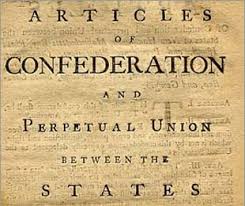
The Articles of Confederation
The Declaration of Independence

This law set up a system for bringing new states into the Union.
Northwest Ordinance of 1787
Land Ordinance of 1785
The Lottery of 1789

Check the rivers that border the Northwest Territory.
Mississippi River
Ohio River
Missouri River
Delaware River
Hudson River
John Jay and John Adams were part of this political party
Federalists
Anti-federalists
Patrick Henry and George Mason were part of this political party
Federalists
Anti-federalists
Which party would believe this statement : "A strong central government is essential to the survival of our nation"
Federalists
Anti-Federalists
Which party would believe this statement : "A strong central government would becoming just like a king, taking away people's individual rights"
Federalists
Anti-Federalists
Believed in a strong national government
Federalists
Anti-Federalists
Believed in strong state governments
Federalists
Anti-Federalists
Why did Antifederalists want a bill of rights in the Constitution?
to list their rights
to protect their rights
to prevent ratification of the Constitution
to argue with Federalists
Federalism is best defined as a principle of government that
Divides power between the central government and state governments
Includes a system of checks and balances
Allows the states to nullify national laws
Places the most power in the hand of the legislative branch

The facts above are all examples of the ____________ principle in the U.S. Constitution.
Popular sovereignty
Separation of Powers
Limited government
Democratic
The Supreme Court is one example of how the U.S. government
Establishes justice
Provides for the common defense
Ensures domestic tranquility
Promotes the general welfare

What can we infer was added from the two plans to the Great Compromise?
There would be a two-house legislature, with the House of Representatives based on Population Totals and each state would have two Senators in the Senate.
There would be a bicameral legislature, with both houses having two representatives in the House of Representatives and two Senators in the Senate.
That the Legislative Branch would have one house in the Congress.
There would be a two-house legislature, with each state having two representatives in the House of Representatives and the Senate based on Population Totals.

Which of these compromises gave states practicing slavery the ability to count a portion of their enslaved people into account towards the overall state population?
Great Compromise
3/5 Compromise
Fugitive Slave Clause

