
 Worksheets
Skeletal System Quick Check
Total questions: 22
Worksheet time: 13mins
During bony callus formation, what is fibrocartilaginous callus converted into?
Compact Bone
Bone Marrow
Spongy Bone
Red Blood Cells
During bone remodeling, what is the bony callus remodeled by?
Osteoclasts and Osteoblasts
Collagen Fibres
Osteoclasts
Osteoblasts
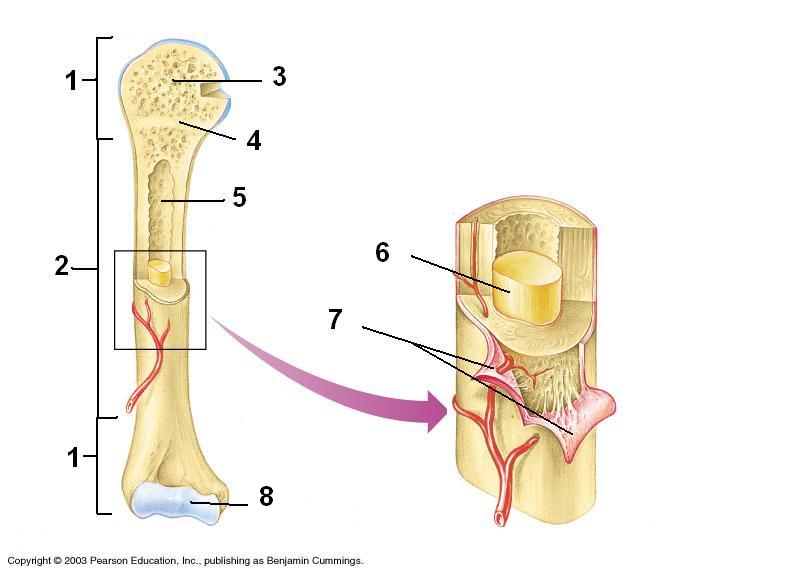
During Hematoma Formation, What happens at the site of the break?
Blood Clot or a Hematoma
Fibroblasts Produce Collagen Fibres
Osteoblasts Form Spongy Bone
Air gets to it and everything is fine
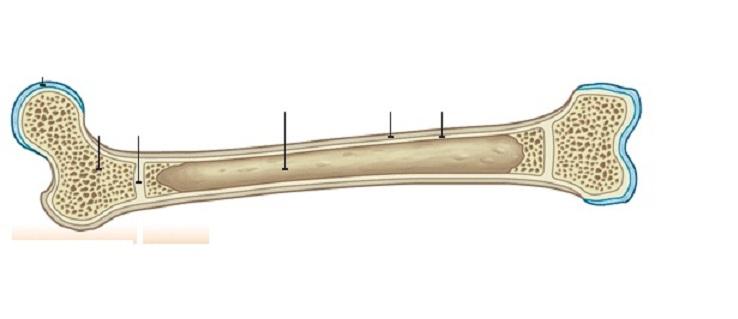
Where is spongy bone primarily found in long bones?
Diaphysis
Epiphysis
Periosteum
Endosteum
Which of the following is not one of the five functions of the skeletal system?
Immunity
Protection
Movement
Storage
Blood cell formation
The shaft or middle section of a long bone is called the _____.
epiphysis
diaphysis
periosteum
endosteum
Specialized bone cells that clear away weakened or damaged bone cells are ______.
osteoclasts
osteoblasts
osteocytes
ossiferous cells
Specialized bone cells that that build new bone are ______.
osteoclasts
osteoblasts
osteocytes
ossiferous cells
What are functions of the skelton?
Protection
Movement
All of them

Where are new blood cells created?
Periosteum
Compact Bone
Yellow Marrow
Red Marrow
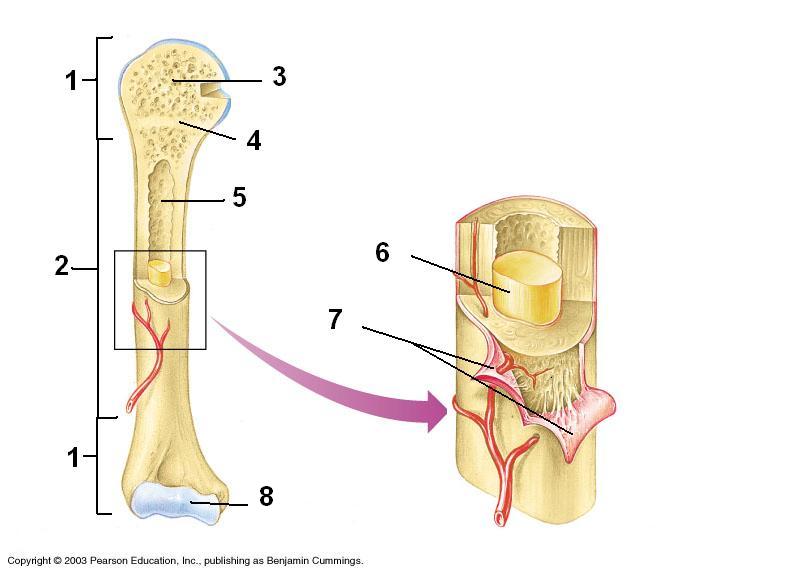

Identify 1:
Proximal Epiphysis
Diaphysis
Distal Epiphysis
Epiphyseal Line

Identify 5
Spongy Bone
Compact Bone
Articular Cartilage
Epiphyseal Line
Identify 6
Spongy Bone
Compact Bone
Articular Cartilage
Epiphyseal Plate
Comminuted Fracture
When the bone is broken into more than two pieces
Green Stick Fracture
An incomplete break that is common in children
Impacted Fracture
When bone ends are forced into each other
Spiral Fracture
Twisting forces that cause the bone to fracture
Compression Fracture
When the bone crushes under its normal weight
Reorder the following stages of bone repair.
Hematoma
Fibrocartilage Callus
Bony Callus
Bone remodeling
The hollow cavity of the bone is called the ____________ cavity.
Marrow
Medullary
Osteo
Canal
Skeletal remains are found of an unidentified person. The remains show evidence of epiphyseal plates, and a broad shaped pelvis. Which is true about the remains
Young male
Young female
Older male
Older female
Skeletal remains are found of an unidentified person. The remains show an absence of epiphyseal plates, narrow pelvis, and signs of osteoporosis. Which is true about the remains
Young male
Young female
Older male
Older female

