wayground logo

Free Printable Worksheets

NEW

Font size

S
M
L
XL
Worksheets

passive and active transport in organism

Total questions: 15

Worksheet time: 3mins

Name
Class
Date
1.

The method of transport that allows molecules to move into and out of the cell without energy from areas of high concentration to areas of low concentration is called...

a)

passive transport

b)

osmosis

c)

active transport

d)

pump

2.

The movement of WATER across the cell membrane or any semi-permeable membrane through the use of aquaporins is described as _______.

a)

osmosis

b)

active transport

c)

diffusion

d)

neuron relay

3.

In ________________, a substance is being moved from areas of low concentration to high concentration.

a)

active transport

b)

passive transport

c)

osmosis

d)

diffusion

4.

The ___ is the fundamental unit of life that specializes and joins others like it to form tissues in an organism, providing it with structure and giving it function

a)

atom

b)

cell

c)

matter

d)

all other answers are correct

5.
What is the difference between active and passive transport?
a)
Active does not need energy and passive uses ATP (energy)
b)
Active uses ATP (energy) and passive does not need energy
c)
Active stores transport proteins and passive releases 
d)
Active uses hormones and passive does not 
6.
What does semi-permeable mean?
a)
Only some things can move through membrane
b)
Nothing can move through membrane
c)
Reagan can move through membrane
d)
Membrane connot be moved through
7.
Diffusion is the movement of molecules from an area of higher concentration to an area of lower concentration.
a)
True
b)
False
8.
In passive transport, molecules move from an area of __________ concentration to an area of __________ concentraiton
a)
high, low
b)
low, high
c)
water, salt
d)
active, passive
9.
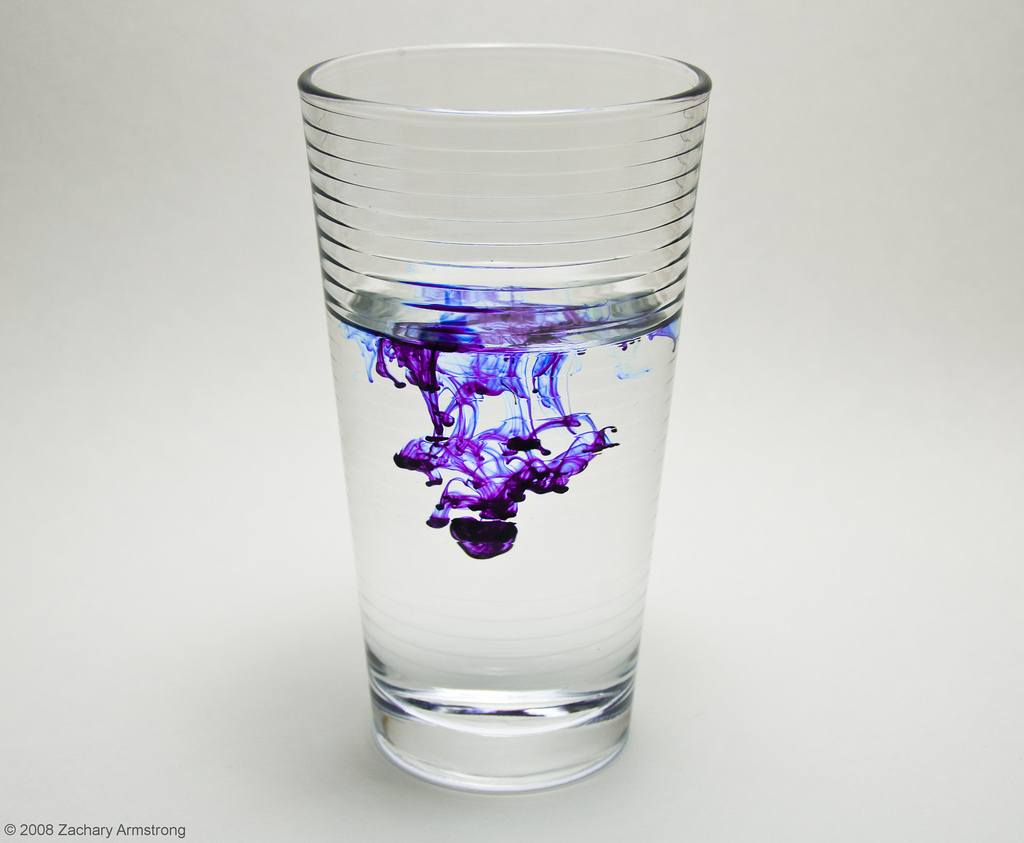
Where is there a low concentration of dye?
a)
at the bottom of cup
b)
in the color
c)
at the top of cup 
d)
no concentration gradient
10.
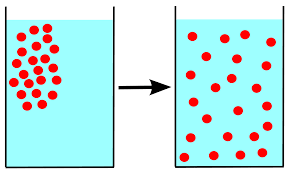
The picture below is an example of _________________.
a)
osmosis
b)
isotonic
c)
diffusion
d)
active transport
11.
Osmosis is the movement of _____ across a membrane.
a)
food
b)
energy
c)
oxygen
d)
water
12.
Passive transport requires no
a)
concentration gradients
b)
osmosis
c)
motion
d)
energy
13.
What is diffusion?
a)
when molecules move 
b)
when molecules move from a high concentration to a low.
c)
no movement 
d)
molecules move everywhere
14.
Which type of transport requires an input of energy?
a)
Passive Transport
b)
Osmosis
c)
Simple Diffusion
d)
Active Transport
15.
Someone sprays air freshener.  The scent fills the room.  This is an example of
a)
active transport
b)
osmosis
c)
diffusion
d)
cellular respiration