
 Worksheets
AP Human Geography Unit 2 Review
Total questions: 70
Worksheet time: 35mins
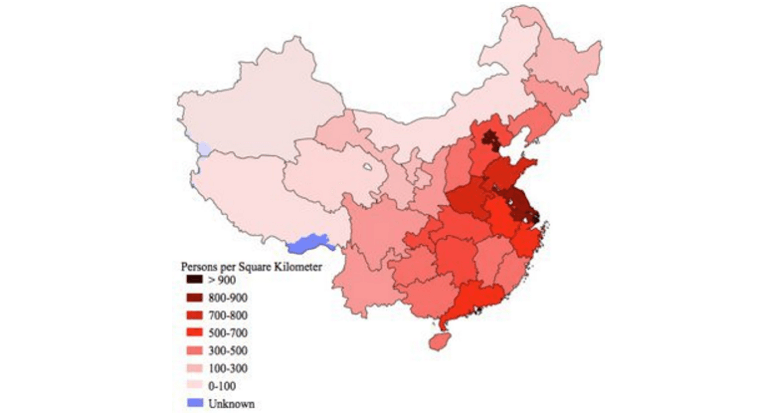
the pattern or spread of people in a given area
census
death rate
population distribution
demographics


Sparely populated areas have ____ people living in it, while densely populated areas have ____.
many; few
few; few
few; many
many; many
What is the difference between physiological and arithmetic density?
The rate at which women have enough babies on average to replace the older generation
Total number of objects
Arithmetic density is the number of people supported by an area of arable land while physiological density is the number of people in an area.
Physiological density is the number of people supported by an area of arable land while arithmetic density is the total number of objects in an area.
Define overpopulation
Human beings in general
A measurement of people for a specific area
Number of people in an area is more than capacity of the environment to support life at a decent standard of living
All inhabitants of a particular area
If the number of births in a population is the same as the number of deaths (little change), what will happen to the growth of the population?
It will increase
It will stay the same
It will decrease
It fluctuate

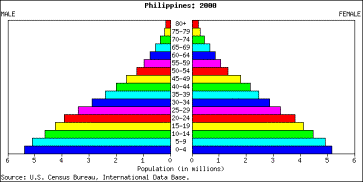
What is the population trend in this country based on this population pyramid
Population is increasing
There is no change occurring the population
Population is going to stay the same
Population is decreasing
Stage 1 countries have a _____ CDR & ______ CBR
High CBR & High CDR
High CBR & Low CDR
Low CBR & High CDR
Low CBR & Low CDR

The population pyramid shown is most likely which country?
Nigeria
China
Germany
Japan

The Population Pyramid shown is most likely which country?
Canada
Japan
Zimbabwea
Algeria
How many countries today are in Stage one of the Demographic transition model?
53 (some countries in Asia and Sub Saharan Africa)
22 (some countries in Asia and Sub Saharan Africa)
3 (Somalia, Bangladesh, and Afghanistan)
0
Which country is the best example of a country in stage 5 of the demographic transition model?
Japan
North Korea
China
Vietnam
What did Thomas Malthus believe?
The World population would be limited by the amount of food we can produce
The World population would be limited by total land resources
The World population would be limited by technological high marks
The World population would be limited by cultural appropriation
What is the #1 reason for migration?
Better Economic opportunity
Escaping violence
Reunion with family
desire to expand business networks
Which country should consider anti natalist policies?
India
Japan
Latvia
USA
Which of the following is NOT a Pronatalist policy?
Free Birth Control
Free child care
Free College tuition
Free parenting classes
Which of the following BEST fits an example of Chain Migration?
John moves from London to New York and moves in with his best friend
Steve moves from California to Nevada and moves in with his girlfriend
Laura moves from China to Chicago and lives with her sister
Julie moves from China to New York and lives with four of her old high school friends
Which country has the highest Physiological density?
USA
Russia
Argentina
Egypt
What is the amount of average children needed for a population to achieve ZPG?
2.1 per woman
1 per woman
3 per woman
2.5 per woman
Which country in the world today has the most Internally Displaced people?
China
Syria
Greece
India
Total # of deaths in a year for every 1,000 people alive in a society
Crude Death Rate
Crude Birth Rate
Doubling Time
Life Expectancy
When the people of an area exceed the capability of their environment to support them
Carrying Capacity
Armageddon
Climate Change
Overpopulation
% of population growth in a year, computed as CBR minus CDR
Dependency Ratio
Total Fertility Rate
Natural Increase Rate
Crude Birth Rate
Total # of deaths in a year of infants under 1 year of age for every 1,000 live births in a society
Crude Death Rate
Infant Mortality Rate
Crude Birth Date
Dependency Ratio
Average # of children a woman will have in her lifetime
Total Fertility Rate
Crude Birth Rate
Maternal Birth Rate
Ecumene
Bar graph that shows age and sex of population
population hexagon
population pyramid
population pentagon
population graph
Country that will surpass China's population
India
Japan
USA
Mexico
Which two hemispheres are people most concentrated at?
North West
North East
South West
South East
Major cause of the world's overpopulation.
increase in births in North America
Poor sanitation, education, and healthcare in less developed countries.
Improved sanitation in less developed countries.
Longer life expectancy.
Events that can change population.
war
famine
natural disasters
all are correct
There is a preference for boys over girls in countries like China and India.
True
False
The Earth area of permanent human settlement is called the ...
hot zone.
civilized world
ecumene
subpolar region
geophenom
Land suited for agriculture is called...
popuolation density
agricultural density
physiological land
arid land
arable land
It may sound strange to hear that the ________ is generally lower for less developed countries than for more developed countries, but the difference is correlated to the average age of each population.
crude birth rate
crude death rate
infant mortality rate
natural increase rate
total growth rate
Country A has a crude birth rate of 60 and a crude death rate of 15, while Country B has a CBR of 27 and a CDR of 9. Which country has a higher natural increase rate?
Country A
Country B
The NIR is the same in both countries
The rate depends on total population, so it can't be computed from this information.
The CDR has no direct correlation to the CBR, so it cannot help determine the NIR
Japan is dealing with economic concerns about an aging population by...
increasing the birth rate
encouraging women and older people to work
encouraging intermarriage between Japanese and non-Japanese workers
increasing its longstanding policy of moving polluting industries to China
encouraging immigration
One demographic feature with the most significant future implications is that...
the natural increase rate is larger every year
there are fewer people in the world now than at the peak in the middle of the twentieth century
the most rapid growth is occurring in the less developed countries
people are uniformly distributed across Earth
the less developed countries have the highest combined crude death rate
The highest natural increase rates are found in countries in which stage of the demographic transition?
stage 1
stage 2
stage 3
stage 4
stage 5
The highest crude death rates are found in countries in which stage of the demographic transition?
stage 1
stage 2
stage 3
stage 4
stage 5
Stages 1 and 4 of the Demographic Transition are similar in that...
both have low growth rates
both have high dependency ratios
both have low dependency ratios
both have low life expectancies
both have low death rates
Thomas Malthus concluded that...
population increased arithmetically while food production increased linguistically
the world's rate of population increase was higher than the development of food supplies
so-called "moral restraint" was producing lower crude birth rates
population growth was outpacing available resources in every country, according to algebraic calculations
crude birth rates must balance crude death rates
A country has net in-migration if immigration ________ emigration.
equals
exceeds
is closer to net migration than
is less than
varies more than
Wilbur Zelinsky's model of migration predicted...
women are more likely to migrate than men
long migration distances are more likely than short
migration characteristics vary with the demographic transition
intraregional migration is more important than interregional migration in terms of political and economic resources
migrants move most frequently for economic reasons
Most of the migrants in a country once moved from its eastern provinces to its western provinces, but after economic conditions changed, more people began migrating from rural to urban areas. This can be judged to be an example of a migration ________.
transition
chain
counterurbanization
economy
force
A boy migrated from Honduras through Guatemala and Mexico, then entered the United States without immigration documents, because members of his ethnic group were being targeted for torture or assassination in his home country. Although the U.S. government does not grant the boy refugee status, his case is an example of international and ________ migration.
forced
human rights
voluntary
economic
transitional
Which of the following people would you predict to be most likely to engage in voluntary migration in the near future?
A teenaged girl whose family's home has just been destroyed by a volcanic eruption, which has also rendered the entire valley uninhabitable
A youth whose village has been identified by the central government as harboring and providing material support to an armed rebel group in the midst of a civil war
The dictator of a Southwest Asian country who has just 'won' another fraudulent election
A youth whose parents have just been murdered because they helped form a labor union in a traditionally exploited province of a developing country
A teenaged girl in China whose rural family has enough food to eat but lacks the money to expand the size of their house, and would like to plan to send a younger sibling to college in the future
Which statement most accurately describes the motivations of the historic European and current Latin American immigrants to the United States?
Both were and are motivated primarily by economic factors
Migrants from Europe were fleeing religious persecution while migrants from Latin America are motivated by economic factors
Both were and are motivated by a desire to join family members already in the United States
Migrants from Europe mostly spoke English while migrants from Latin American mostly speak Spanish
Both were and are motivated by famine in their home countries
Suburbanization of more developed countries is due to...
expanding urban territory
increasing employment opportunities
desire to change lifestyle
regional development
global investment
Judge which of the following is an historical example of a cultural push factor.
Many of the first Europeans to settle in Australia migrated as prisoners after being sentenced to "transportation" in the United Kingdom and Ireland
The British government allowed most of the population of Montserrat to migrate elsewhere in the 1990s after volcanic eruptions devastated large parts of the island
Many European farmers in the late 1800s chose to migrate to North America, as well as to Latin American countries where they felt that political and economic conditions would favor them
Changing climates likely encouraged the early migrations of hunter-gatherers
the United States actively sought Mexican agricultural laborers during and after World War
An example of ________ is the migration of doctors and engineers to the United States after they have received years of government-financed schooling and training in Colombia.
brain drain
chain drain
chain migration
net migration
cohort migration
Judge which of the following is the strongest example of a state government attempting to limit migration.
requiring police to stop cars that are driven by people who may be immigrants
requiring police to ask for citizenship documents after they have arrested someone
requiring immigrants to pay higher college tuition
allowing politicians to make anti-immigrant statements to the news media
allowing thousands of people to march either to support or oppose reforms to immigration
An informal study found that college students who lived in dorms near the cafeteria were more likely to eat on campus compared to college students who lived far from the cafeteria. Which principle of migration BEST explains this phenomenon?
Complementarity
Transferability
Intervening Opportunity
Gravity Model
Distance Decay
Based on the theory of distance decay, a resident of London is likely to migrate to which world city?
Paris, France
Rome, Italy
Johannesburg, South Africa
Rio de Janeiro, Brazil
Shanghai, China
Which of the following is the result of chain migration?
the African Slave Trade
French Colonial Rule
The formation of Israel
San Francisco’s Chinatown
Colonization of the American Frontier

The Population Pyramid shown is most likely which country?
The United Arab Emirates
USA
Latvia
Brazil

