

wayground logo

Free Printable Worksheets

Font size

S
M
L
XL
Worksheets

Hoover and the Great Depression

Total questions: 88

Worksheet time: 52mins

Name
Class
Date
1.
What is another name for the Stock Market Crash?
a)
Black Friday
b)
Taco Tuesday
c)
Black Tuesday
d)
Throwback Thursday
2.
Who was President of the US when the stock market crashed and Depression began?
a)
Theodore Roosevelt
b)
Franklin D. Roosevelt
c)
Herbert Hoover
d)
William McKinley
3.
Charities that provided bread and soup to homeless and jobless people during the Depression were called _______?
a)
Priest Palace
b)
Soup and Salad Bowls
c)
Soup Kitchens
d)
Goodwill
4.
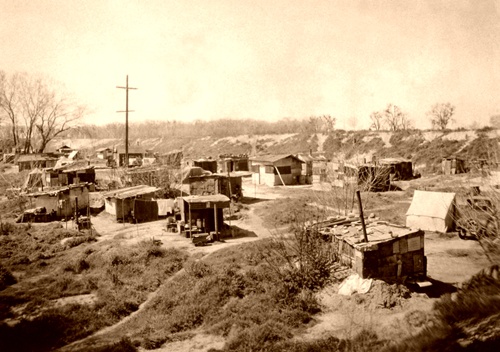
People who could no longer afford their homes were forced to live in cardboard shacks that they built in public parks. What were these shacks called?
a)
Shantyshacks
b)
Town Homes
c)
Tenement Housing
d)
Hoovervilles
5.

Who was most directly affected by the Dust Bowl?

a)

farmers

b)

investors

c)

industrial workers

d)

WWI Veterans

6.

Veterans of this conflict were owed bonus pay for their service.

a)

World War I

b)

World War II

c)

Gulf War

d)

Civil War

7.

Which of the following is NOT a cause of the Great Depression?

a)

Overproduction and underconsumption

b)

High tariffs restricting trade

c)

buying stocks on the margin

d)

high income taxes

8.

What was President Herbert Hoover's response to the Great Depression?

a)

He believed "rugged individualism" would solve the economy

b)

He created mass welfare

c)

He increased infrastructure to create jobs

d)

He violated his policy of laissez-faire

9.

Why did many midwestern farmers migrate from the Great Plains to California?

a)

There was no unemployment on the West Coast

b)

California was experiencing a gold rush

c)

The Dust Bowl pushed farmers out of the Great Plains

d)

The Stock Market crash led farmers to lose their homes on the Great Plains

10.

The reason stock prices rose before the Great Depression

a)

Deficit Spending

b)

Buying on Margin

c)

Federal Reserve System

d)

Hawley-Smoot Tariff

11.

Money loaned to banks, insurance companies & businesses to jumpstart the economy by Hoover

a)

Reconstruction Finance Corporation (RFC)

b)

Civilian Conservation Corps (CCC)

c)

Works Progress Administration (WPA)

d)

Securities & Exchange Commission (SEC)

12.

Migrant farmers from Oklahoma

a)

Hooverville

b)

Okies

c)

Economy

d)

Soup Kitchens

e)

Dust Bowl

13.
Farmers contributed to the problems that led to the Dust Bowl by
a)
putting down new layers of topsoil.
b)
moving off of the plains to find new farmland.
c)
damming western rivers and using irrigation techniques.
d)
using intensive farming practices that removed protective grasses.
14.

Roots of the Depression included overproduction, high tariffs, and

a)

uneven distribution of wealth

b)

inadequate money supply

c)

over-spending by government

d)

excessive reliance on export sales

15.

Which is a reason Americans preferred movies, radio, and entertainment during the Great Depression?

a)

Focused on the homeless and unemployed

b)

Evoked indignation at social injustice

c)

Provided a release from the daily worries

d)

Created thrills with new special effects
16.
Which of the following was a major cause of the Great Depression?
a)
overproduction and underconsumption
b)
a decrease in the supply of consumer goods
c)
an increase in demand for imported products
d)
an increase in the price of wheat on the world market
17.
Who was the President of the United States when the Stock Market crashed?
a)
Franklin D. Roosevelt
b)
Herbert Hoover
c)
Woodrow Wilson
d)
Theodore Roosevelt
18.
How did "bank runs" impact the American people during the Great Depression?
a)
Banks eventually ran out of money to loan, and people's life savings were gone.
b)
Banks made loans throughout the Great Depression, helping people pays bills until they could find work.
c)
Banks were able to people's deposits safe, but they could not loan out any more money.
d)
Banks were not at all involved in the Great Depression because people did not use them.
19.
What was the main reason for the emergence of “Hoovervilles” like the one shown in the photograph?
a)
Many Americans had lost jobs during the Great Depression.
b)
Thousands of homes had been destroyed by the effects of the Dust Bowl.
c)
Housing projects could not keep up with the demand for homes needed by the poor.
d)
Preparations for World War I had created a shortage of building materials.
20.
During the early 1930s, the main goal of the Bonus Army was to pressure the Hoover administration to
a)
strengthen the nation’s defenses
b)
end the military draft
c)
bring American troops home from overseas
d)
support the early payment of money promised to veterans
21.
During the 1930s, poor land management and severe drought conditions across parts of the Midwest resulted in the
a)
formation of the United States Department of Agriculture
b)
creation of wheat surpluses
c)
growth of the Populist movement
d)
development of Dust Bowl conditions on the Great Plains
22.
Which of these statements is true of the 1932 presidential election?
a)
Franklin Roosevelt won in a landslide.
b)
Hoover lost by a narrow margin.
c)
Huey Long ran a strong third-party campaign.
d)
Roosevelt won a third term.
23.
A major difference between the philosophies of President Herbert Hoover and President Franklin D. Roosevelt in responding to the Great Depression is that Roosevelt
a)
wanted to rely on private charities to provide assistance
b)
stressed the need for individual rugged individualism
c)
supported direct relief to people out of work
d)
thought the government should not be involved in economic reform
24.
The __________________  was the longest period of unemployment and low economic activity in the 1900's.
a)
New Deal
b)
Great Depression
c)
Dust Bowl
d)
Civil War
25.
A time when business activity is very slow and people are out of work is known as a _____________.
a)
crash
b)
depression
c)
party
d)
low time
26.
Which of the following is the most valid statement regarding the long-term economic effects of  the Great Depression? 
a)
The government placed fewer restrictions on large corporations
b)
The role of the federal government was expanded
c)
The government reduced its dependence on foreign trade
d)
The American people had greater confidence in the nation’s economic leadership
27.
What effect did the Dust Bowl storms have on the Great Depression?
a)
Many farmers were forced to leave the Great Plains.
b)
Unemployment decreased gradually.
c)
Many homes long the Mississippi River were flooded.
d)
Hoover was re-elected as president.
28.
In the 1930's, people would line up at ____________ to get food.  These were normally run by charities.
a)
churches
b)
businesses
c)
soup kitchens
d)
work
29.
What tool - passed during the Hoover Administration -  designed to protect American manufacturers actually ended up creating a worldwide depression?
a)
Reconstruction Finance Committee
b)
Hawley-Smoot Tariff
c)
New Deal
d)
Second New Deal
30.
October 29th, 1929
a)
Black Monday
b)
Black Tuesday
c)
Black Wednesday
d)
Black Friday
31.
President Hoover's philosophy that Americans must work harder to dig out of the depression.
a)
chicken in every pot
b)
rugged individualism
c)
Square Deal
d)
New Deal
32.
Which of the following was NOT a cause of the Great Depression?
a)
Hawley-Smoot Tariff
b)
Easy Credit
c)
Mistakes of the Federal Reserve
d)
high farm prices
33.
Paying a small % of a stock's price & borrowing the rest is known as what?
a)
buying on margin
b)
speculation
c)
fiat money
d)
price supports
34.
Buying stock without knowing the risks, assuming it will just go up is known as ________.
a)
speculation
b)
buying on margin
c)
market capitalization
d)
hammering the market
35.
Who are these people?
a)
hoboes
b)
immigrants
c)
tourists
d)
carpet baggers
36.
When people went to the bank to withdraw their money and the banks had no money was known as the 
a)
Bank Crisis 
b)
Black Tuesday
c)
Stock Market Crash
d)
New Deal 
37.
The collection of markets and exchange where the issuing and trading of equities, bonds and other sorts of securities takes place.
a)
Margin
b)
New Deal
c)
Deficit Spending 
d)
Stock Market 
38.
What percentage of Americans were unemployed in 1933?
a)
25%
b)
35%
c)
50%
d)
2%
39.
The Bonus Army incident in 1932 best illustrates the idea that
a)
F.D.R.'
s relief programs were unsuccessful.
b)
many felt that Herbert Hoover was not handling the Depression well.
c)
protests by veterans during the Depression were effective.
d)
the U.S. Army had increased in size and power during the Depression.
40.
Which economic factor contributed most directly to the start of the Great Depression?
a)
low worker productivity
b)
high income taxes
c)
decreasing tariff rates
d)
buying stocks on margin
41.
What is a good title for this list?
a)
Culture of the 1920s
b)
The Great Migration
c)
Impact of the Great Depression
d)
Features of the New Deal
42.
Which cause of the Great Depression led to the decrease in the prices of goods and food?
a)
Stock Market Crash
b)
Overproduction
c)
Federal Reserve did not help failing banks
d)
High Tariffs 
43.
All of the following were causes of the Great Depression except - 
a)
Prohibition
b)
Overspeculation on stocks
c)
failing banks
d)
high tariffs
44.
What was the name of the region in the U.S. where topsoil was blown into black blizzards by wind erosion?
a)
Pacific North West
b)
Dust Bowl 
c)
The Sandbox
d)
Eastern Seaboard 
45.
Which of the following was a serious problem during the Great Depression?
a)
low prices
b)
buying on margin
c)
high unemployment 
d)
business consolidation 
46.
Which of the following is a term for buying something now and paying for it later?
a)
Credit 
b)
Debit
c)
Speculation 
d)
Investment 
47.
Which of the following was a cause of the Depression?
a)
Overproduction 
b)
Easy Credit 
c)
Unequal Distribution of Wealth
d)
All of the above 
48.
They support some government involvement in the economy..
a)
Liberal
b)
Conservative
c)
Radical 
49.
They support letting the economy stabilize itself & oppose large govt. efforts to effect change 
a)
Liberal
b)
Conservative 
c)
Radical 
50.
Buying on margin means you are buying _____ with borrowed money. 
a)
Cars
b)
Homes
c)
Stocks
d)
Food
51.
The term for when those who invest in the stock market take great risk, buying stocks and bonds in hopes of earning a quick profit:
a)
Brokers
b)
Speculation 
c)
Bear Market 
d)
Buying on Margin 
52.
 A bull market is a downward trend it stock prices.
a)
True
b)
False 
53.
Which of these pull factors drew Okies to California?
a)
promises of steady farmwork
b)
a mild climate near the ocean
c)
cheap homes on large plots of land
d)
the prospect of plentiful factory jobs
54.
Which of the following was the primary cause of the Dust Bowl?
a)
black blizzards
b)
prolonged drought
c)
crop reduction
d)
dam building
55.
Which of the following European country faced the greatest economic challenges after WW I? 
a)
Austria
b)
Great Britian
c)
France
d)
Germany
56.

How did the Stock Market Crash lead to the beginning of the Great Depression?

a)

16 million stocks were shared in a single day that led to the loss of billions of dollars

b)

banks closed their doors to try to prevent a run on banks

c)

prices for goods increased so much that people couldn't buy basic items

d)

Herbert Hoover blamed the Stock Market Crash for the Great Depression

57.
What happens when tariffs are added to imported products?
a)
The price of the imported product is determined by demand.
b)
The price of the imported product remains the same.
c)
The price of the imported product goes down.
d)
The price of the imported products goes up.
58.
When tariffs are added to imported products, what happens to international trade?
a)
It becomes a new program.
b)
It stays the same.
c)
It grows very well.
d)
It is discouraged.
59.
What were reparations?
a)
Compensation Germany had to pay.
b)
The Dawes Plan
c)
The Treaty of Versailles
d)
The War Guilt Clause
60.
This ideology is associated with government's responsibility to intervene in the economy
a)
liberal
b)
conservative
c)
radical
d)
laissez faire
61.
Why were the people of the United States angry at President Hoover during the Great Depression?
a)
he seemed uncaring, opposing most types of government direct relief
b)
he did not take enough action to help enough during the depression
c)
Americans opposed his handling of the Bonus Army marchers
d)
all of these are reasons
62.
Where did Hoover expect the aid to the poor would come from? 
a)
churches & private charities
b)
state government
c)
federal government
d)
foreign countries
63.

By 1920s, majority of US population live in urban center.

a)

True

b)

False

64.

Purchasing method introduced in the 1920s where people could buy things without having all of the money for it (basically credit, where they would pay back the price of the good with some interest each month)

a)

Credit Cards

b)

Debit Cards

c)

Installment Plans

d)

Debit Plans

65.

What did it mean if you were a "speculator" during the 1920s? You . . .

a)

majorly questioned actions of the government

b)

bought stocks at great risk with the anticipation that prices will rise

c)

watched America's greatest past time of baseball

d)

majorly questioned actions of the banks

66.

People could buy stocks with loans ($ they did not technically have)

a)

True

b)

False

67.

When the stock market "peaked," people frantically _______ their stocks.

a)

Hid

b)

Bought

c)

Paid off

d)

Sold

68.

Who would lose money/their savings if the banks failed in the 1920s/30s?

a)

Speculators

b)

Big Business

c)

Everyone

d)

The working class

69.

Banks had invested/risked depositors' money in the stock market as well.

a)

True

b)

False

70.

Gathering of 10,000-25,000 WWI veterans who demanded immediate (approved) bonus payment for their wartime services to help economic hardships of the Great Depression.

a)

Blue Army

b)

Red Army

c)

Great Depression Corp

d)

Bonus Army

71.

Which amendment is the only amendment to overturn another amendment (prohibition of alcohol)?

a)

13

b)

18

c)

19

d)

21

72.

Who were the "paper millionaires" in Florida?

a)

Rich investors that bought land

b)

Millionaires that moved to Florida

c)

Consumers who made huge buys on credit (property speculation)

d)

Investors that bought land to sell later

73.

How did installment plans make the economy appear healthy during the 1920s

a)

Most people did not experience bankrupcies

b)

Agricultural sales went down

c)

It caused banking closings

d)

Credit allowed people to buy luxury goods

74.

A stock market which is constantly increasing is called a

a)

Cat

b)

Dog

c)

Bull

d)

Bear

75.

Which group did Hoover's goverment blame for social unrest at this time?

a)

Women

b)

African Americans

c)

The Irish

d)

Communists

76.

Who was tasked by President Hoover to remove the Bonus Army from Washington?

a)

General Frank Patton

b)

General Dwight Stevenson

c)

General John Pershing

d)

General Douglas MacAuthur

77.
Ownership in shares of a company or corporation
a)
CEO
b)
Insurance
c)
Stocks
78.

A tax on goods produced in other countries is called a....

a)

tax

b)

amendment

c)

tariff

d)

migrant

79.
The Great Depression began in
a)
1925
b)
1929
c)
1932
d)
1940
80.
This Image is used to describe:
a)
The failure of banks, causing people to lose their life savings
b)
How irresponsible people were with their money in the 20s
c)
How overspending had caused an economic collapse
d)
That buying on credit caused the stock market to crash
81.

When people went to the banks to get out their savings

a)

the banks had loaned the money so they could not give it back.

b)

the banks gave everyone their money.

c)

new money was printed.

82.
Which is NOT  cause of The Great Depression?
a)
Overproduction
b)
Speculation
c)
Shaky Banking
d)
Unrestricted International Trade
83.
Who was Dorothea Lange?
a)
Photographer who took historically important pictures that documented the effects of the time
b)
A famous movie actress who spent time helping those impacted by the Dust Bowl
c)
FDR's wife
d)
A famous business woman who gave jobs to women to help support their family's 
84.
Why are Dorothea Lange's photographs worth seeing?
a)
Her photographs document the struggles of government officials
b)
Her pictures show how weak that generation was
c)
She documents the struggles of white men
d)
Her photographs tell the story of the hardship so many Americans suffered during this time
85.
What was the impact The Great Depression had on Women?
a)
Women's employment increased by 30%
b)
Many states prohibited hiring women whose husbands earned a "living wage" or hiring married women altogether.
c)
Domestic violence reports reduced by 30%
86.
What was the social & psychological impact of the Great Depression?
a)
People became more moral
b)
Suicides increased by 30%
c)
Many states prohibited hiring women 
d)
Women were told to report all domestic violence issues to the police
87.
What was the effects of the targeted resentment of women during this time?
a)
Women were often blamed for "taking" jobs from men particularly if they were married.
b)
The Economy Act of 1932 helped to solve this problem
c)
They were the last hired and the first fired.
d)
By 1930 50% of women were fairly employed and equally paid 
88.

Herbert Hoover __________ the Hoover Dam

a)

Funded

b)

Opposed

c)

Loved (but didn't fund)

d)

Hated
