
Font size
 Worksheets
States of Matter
Total questions: 46
Worksheet time: 24mins
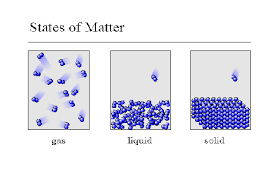
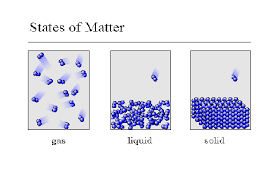
State of matter with a definite shape and definite volume.
solid
liquid
gas
State of matter with a definite volume, but no definite shape.
solid
liquid
gas
State of matter with no definite shape and no definite volume.
solid
liquid
gas
Particles are closely spaced.
solid
liquid
gas
Particles vibrate in place and do not change relative positions.
solid
liquid
gas
Particles move relative to each other, but remain in contact with each other.
solid
liquid
gas
Particles are not so closely spaced and slide past each other.
solid
liquid
gas
Particles are widely spaced except when they collide.
solid
liquid
gas
Basic state of matter with the least amount of energy.
solid
liquid
gas
Basic state of matter with an intermediate (medium) amount of energy.
solid
liquid
gas
Basic state of matter with the greatest amount of energy.
solid
liquid
gas
What happens to particles when their temperature increases?
The particles move slower
The particles move faster
The particles lose mass
The particles gain mass
What happens when the speed of particles decreases?
Their temperature decreases
Their temperature increases
Their mass decreases
Their mass increases
When ice sits out on a counter and melts, it is because the ice has...
gained mass
gained energy
lost mass
lost energy
When water sits in the freezer and freezes into ice, it is because the water has...
gained mass
gained energy
lost mass
lost energy
The AVERAGE kinetic energy of particles in a substance is its...
Mass
Volume
Thermal Energy
Temperature
The TOTAL kinetic energy of particles in a substance is its...
Heat
Volume
Thermal Energy
Temperature
The transfer of thermal energy from a warmer object to a cooler one is...
Heat
Volume
Thermal Energy
Temperature
The energy of MOTION is...
chemical energy
radiant energy
potential energy
kinetic energy

Freezing
Solid to gas
Liquid to solid
Gas to solid

Boiling
liquid to gas
gas to solid
gas to liquid

What is happening when my ice cream changes from a solid to a liquid?
freezing
melting
burning

The state of matter that has no definite size or shape is
Solid
Liquid
Gas

Particles in a ______________________ move quickly and are far apart.
gas
solid
liquid

Particles of a liquid
are tightly packed together and stay in a fixed position.
are free to move around one another but still touch.
Solid to Gas
Deposition
Sublimation
Evaporation
What is condensation?
gas to solid
gas to liquid
liquid to solid
The slower the particles in a substance move,
the colder it is.
the warmer it is.
the more energy it has.

Definite shape and definite volume
Solid
Liquid
Gas

Has a definite volume but not a definite shape
Solid
Liquid
Gas
Liquid to Gas
Condensation
Evaporation
Sublimation
Viscosity can be described as...
a physical property of liquids
a physical property of solids
a chemical property of liquids
High viscosity can be described as...
a liquid that flows quickly
a liquid that flows slowly
Peanut butter is an example of a...
High viscosity liquid
Low viscosity liquid
Isnt a liquid at all! Don't be silly.
What is Viscosity?
A fluids colour.
A fluids temperature.
A fluids resistance to flow.
Which of these factors affects Viscosity?
Temperature
Colour
Taste
Which of the following liquids is viscous?
honey
water
soy sauce
cooking oil
Surface tension is the property of water in which...
water molecules at the surface tend to stick together.
water spills easily.
water tends to be see-through.
water tends to push up into a dome over a container before it finally spills.
Because of surface tension, you can put things into a full glass of water and...
the water will immediately spill.
the water won't spill for quite a while.
the water will never spill.
when the water spills, whatever you put in will also spill.
Surface tension is the property of water in which...
water molecules at the surface tend to stick together.
water spills easily.
water tends to be see-through.
Describe COHESION.
Water molecules attracted to other substances.
Water molecules climbing upwards against the force of gravity.
Water molecules dissolving many substances because of its polarity.
Water molecules attracted to other water molecules.

