
 Worksheets
Unit 4 Lesson 2: Lines of Evidence for Evolution
Total questions: 39
Worksheet time: 2hrs 42mins
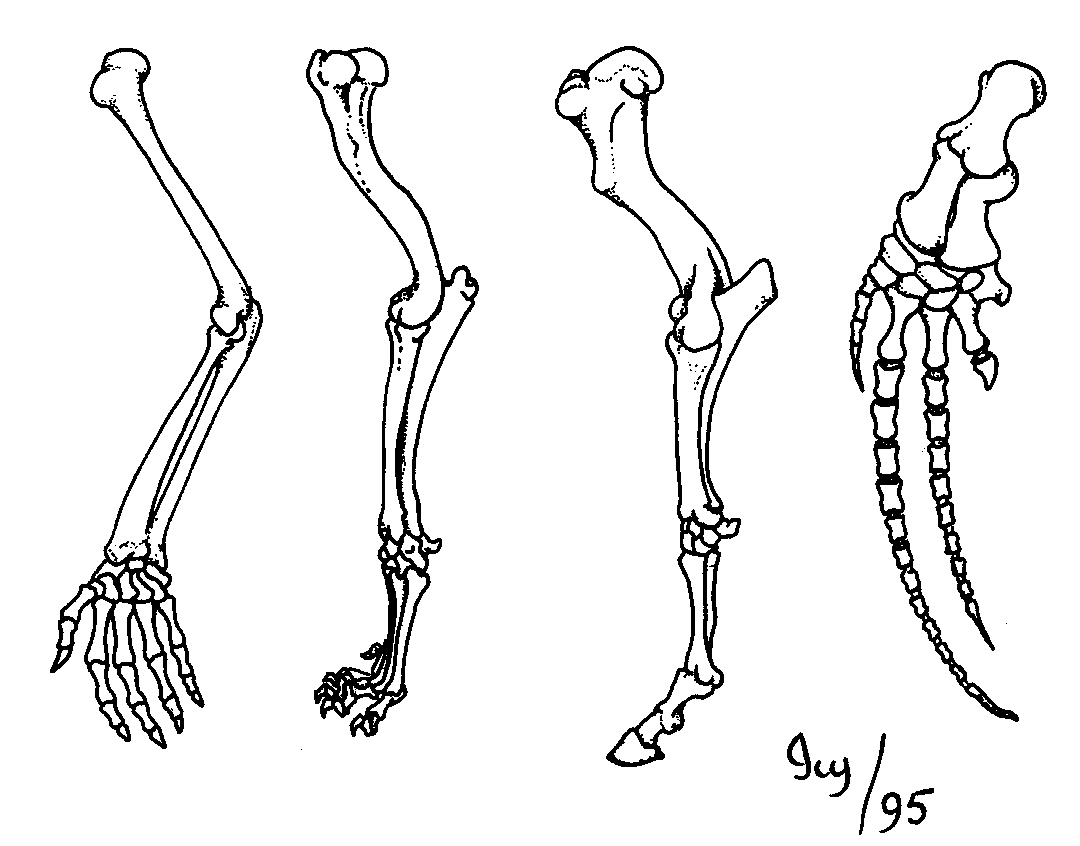



A category of body structures that are formed in similar ways during embryonic development and share similar patterns of bone structure.
Homologous structures
Analogous structures
Vestigial structures
Bone structures
Select the two most important characteristics that distinguish homologous structures.
Similar bone structures
Similar function
Similar embryonic development
Similar species
A category of structures that have a similar function, but are structurally different.
Homologous structures
Analogous structures
Vestigial structures
Common core structures
What are the most important characteristics of analogous structures?
Structures that perform the same function
Structurally different
Structurally the same
Structures that perform different functions
The appendix, tailbone, and wisdom teeth are all examples of what type of structure in humans?
Homologous
Analogous
Vestigial
Modern

Observe the two fish in the image. The cave fish and minnow are genetically related to each other and are similar in many ways. The cave fish lives very deep in the ocean where there is no light. It has only the remnants of eyes and is blind. Minnows live in shallow waters where the water has light. Their eye sight is important for their survival. Which statement below best describes these two fish?
The DNA of the cave fish has changed over time to differ from the minnow. Since there is no light where the cave fish lives, it was not necessary to have working eyes. Over time, mutations occurred which proved to improve the survival of the cave fish, which is why they are now blind and have only physical remnants of eyes.
The DNA has not mutated over time and despite all of the evidence that suggests these two are genetically similar, one has eyes and the other does not so they must not be related.
Cave fish must have been attacked by predators, which is why they only have the remnants of eyes.

Does the presence of homologous structures in genetically different animals suggest common ancestry?
Yes
No


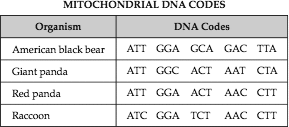
What conclusions can be made based on this table shown?
the American black bear and the giant panda are most closely related
the giant panda and the red panda are most closely related
the red panda and the racoon are the most closely related
the giant panda and the racoon are most closely related


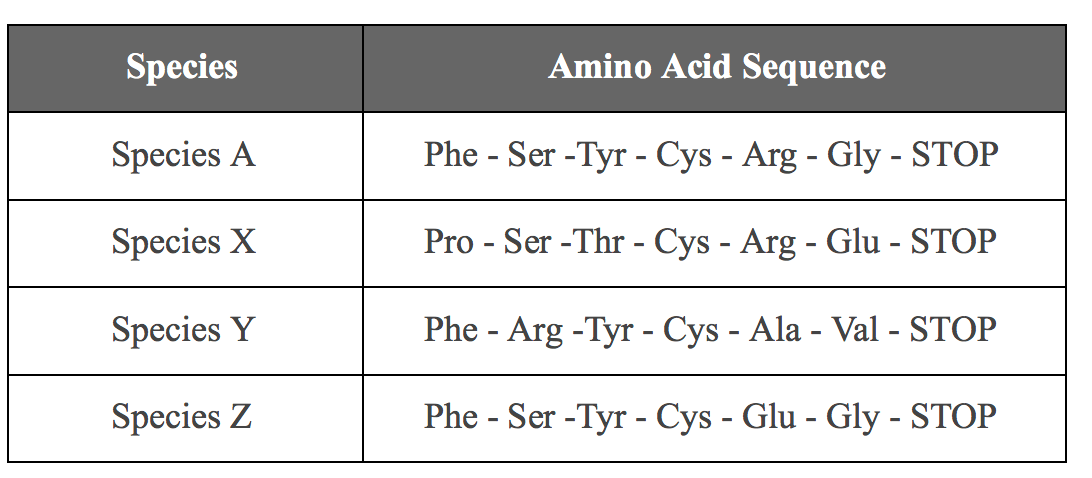
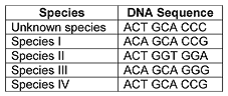
A scientist compares DNA taken from four different living species. Which of the following statements is true?
Species X evolved from Species Y.
Species A and Z share a recent common ancestor.
Species A and Species Y are the same.
Species Y and Species Z can interbreed.

Since their DNA is so similar, evolutionary theory implies that whales descended from land animals that were also the common ancestor to
Ants
Dinosaurs
the Hippopotamus
Fish
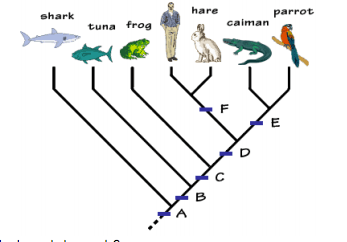
Which of the following provide evidence for evolution? (Select all that apply)
physical features
molecular features, such as DNA
geographical information
fossils
Mutations are important because they bring about --
death in the organisms in which they develop.
benefits for the individual, not the population.
genetic variation needed for a population to evolve.
equilibrium within a population.
Why are advantageous traits more likely to be passed down to offspring?
because they come from recessive alleles.
because they come from dominant alleles
because they help the organism survive and reproduce.
because once a trait is in the gene pool, it cannot go away.

The scientific theory of evolution is supported by different types of evidence. The diagram shows the skeletons of three different animal species. How does comparing the skeletons of these animals provide support for the scientific theory of evolution?
It provides information about the organisms' habitats.
It provides information to determine the organisms' ages.
It shows possible common ancestry between organisms.
It shows possible chromosomal similarities between organisms.

Amino acid sequences can be compared to determine relationships between species. When comparing the sequences provided, which two organisms are humans most closely related to?
horses and gorillas
gorillas and chimpanzees
chimpanzees and zebras
zebras and horses
When scientists compare the amino acid sequences for the red blood cell protein hemoglobin between various species, what can they determine about the evolutionary relationship between the species?
It can be determined how efficient hemoglobin is for different species.
It can determine relatedness between members of the same species.
It can provide evidence about the relatedness of different species.
It can show which species evolved first.

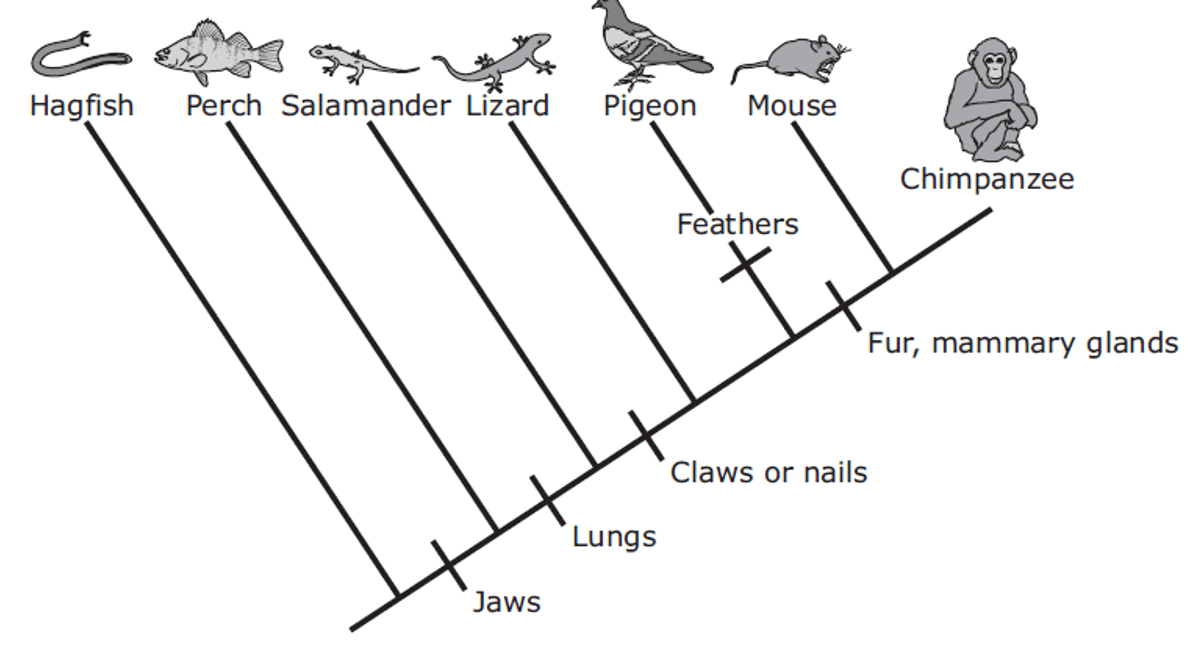
Which animals have amniotic eggs?
Turtle and Tuna
Turtle and Leopard
Lancelet and Lamprey
Tuna and Slaamander

Genome maps provide the DNA sequences of chromosomes. Some scientists have compared the genome maps of a hedgehog and a sloth. What do these genome maps allow the scientists to determine?
The color patterns of the offspring of each species
How much the size ranges of the two species differ
The methods of protein synthesis that each species uses
How closely related the two species are to each other.

