
 Worksheets
4.3 - Biomechanics Review
Total questions: 149
Worksheet time: 1hrs 16mins
Are quantities that are fully described by a magnitude (or numerical value) alone
Vectors
Scalers
Displacement
Velocity
The push or pull applied to an object causing a change in motion or a push or pull between two objects that may or mot not result in motion
Force
Displacement
Impulse
Velocity
Are quantities that are fully described by both a magnitude (numerical value) and a direction
Scalers
Distance
Speed
Vectors
Length of the path the body follows
Displacement
Distance
Speed
Velocity
How far away the body has moved from its starting point
Displacement
Distance
Speed
Velocity
Is a scalar quantity that refers to "how fast an object is moving"
Velocity
Impulse
Speed
Momentum
is a vector quantity that refers to the "rate at which an object changes its position"
Velocity
Impulse
Speed
Momentum
Once a body is moving the momentum of the body is a product of its mass multiplied by its velocity
Velocity
Impulse
Speed
Momentum
Movement that results from a force
Relates to linear motion, velocity, speed, acceleration, momentum
Motion
Impulse
Newton's 3rd Law
Momentum
The rate of change in velocity
Vectors
Displacement
Acceleration
Velocity
What is the relationship between angular momentum (L), moment of inertia (I) & angular velocity (w)
L = I x w
w = L x I
w = L ÷ I
I = L ÷ w
A measure of the force applied for a specific time
Motion
Impulse
Newton's 3rd Law
Momentum
The mathematical point around which the mass of a body is evenly distributed or a point at which the weight of an object is balanced in all directions
Newton's 1st Law
Newton's 2nd Law
Newton's 3rd Law
Centre of Mass
The resultant (or net) force an object experiences is equal to the product of its mass and acceleration
Newton's 1st Law
Newton's 2nd Law
Newton's 3rd Law
Centre of Mass
For every action there is an equal and opposite reaction
Newton's 1st Law
Newton's 2nd Law
Newton's 3rd Law
Centre of Mass
_______ can be described by how difficult it is for a body to rotate about an axis
Impulse
Moment of Inertia
Angular Velocity
Angular Momentum
Angular momentum is affected by which two factors?
Torque
Moment of Inertia
Angular Velocity
Angular Momentum
A force applied outside the centre of mass, resulting in angular motion
Torque
Moment of Inertia
Eccentric Force
Angular Momentum
Moment of Inertia is affected by:
The mass of an object
The shape of the object
The angular velocity of the object
The distance of the object from its axis of rotation
The movement of a body or body part in a circular path about an axis of rotation can be described as:
Angular Motion
Angular Velocity
Moment of Inertia
Torque
The rate of change in angular displacement can be described as:
Angular Motion
Angular Velocity
Moment of Inertia
Torque
The measure of how much turning force has been applied to a body can be described as:
Angular Motion
Angular Velocity
Moment of Inertia
Torque
How difficult it is for a body to rotate about an axis can be described as:
Angular Motion
Angular Velocity
Moment of Inertia
Torque
Angular Velocity and Moment of Inertia are inversely proportional
True
False
Momentum and Moment of Inertia are inversely proportional
True
False
Momentum and Impulse are proportional
True
False
Once an eccentric force has been applied, angular momentum will decrease if moment of inertia decreases
True
False
Once an eccentric force has been applied, angular momentum will increase if moment of inertia increases
True
False
Once an eccentric force has been applied, angular momentum will increase if angular velocity increases
True
False
Once an eccentric force has been applied, angular momentum will decrease if angular velocity decreases
True
False
Once an eccentric force has been applied, if angular velocity increases:
Angular momentum will increase
Angular momentum will decrease
Moment of Inertia will increase
Moment of Inertia will decrease
Once an eccentric force has been applied, angular momentum will remain constant unless acted upon by an unbalanced force
True
False
Once an eccentric force has been applied, if angular velocity decreases:
Angular momentum will increase
Angular momentum will decrease
Moment of Inertia will increase
Moment of Inertia will decrease
Once an eccentric force has been applied, if angular velocity increases:
Angular momentum will increase
Angular momentum will decrease
Moment of Inertia will increase
Moment of Inertia will decrease
Once an eccentric force has been applied, if moment of inertia decreases:
Angular velocity will increase
Angular velocity will decrease
Angular momentum will increase
Angular momentum will decrease
Once an eccentric force has been applied, if moment of inertia increases:
Angular velocity will increase
Angular velocity will decrease
Angular momentum will increase
Angular momentum will decrease

The diver is moving within a frontal plane about a sagittal axis
True
False
The diver is moving within a frontal plane about a transverse axis
True
False
The diver is moving within a sagittal plane about a transverse axis
True
False
At point number 2 the diver has a _______ moment of inertia than at point number 3
Lower
Higher
Equal
At point number 3 the diver has a _______ moment of inertia than at point number 4
Lower
Higher
Equal
At point number 3 the diver has a _______ angular velocity than at point number 4
Lower
Higher
Equal
At point number 2 the diver has a _______ angular velocity than at point number 3
Lower
Higher
Equal
When a gymnast performing a floor routine enters into a tuck position while performing a somersault, their angular velocity will increase because they are moving their body closer to their axis of rotation
True
False

The figure skater is rotating in the frontal plane about a sagittal axis
True
False
The figure skater is rotating in the sagittal plane about a frontal axis
True
False
The figure skater is rotating in the transverse plane about a longitudinal axis
True
False
In position A the figure skater has:
A higher moment of inertia
A lower moment of inertia
A higher angular velocity
A lower angular velocity
In position B the figure skater has:
A higher moment of inertia
A lower moment of inertia
A higher angular velocity
A lower angular velocity
An object at rest stays at rest and an object in motion stays in motion with the same velocity unless acted upon by an unbalanced force.
Newton's 1st Law
Newton's 2nd Law
Newton's 3rd Law
Centre of Mass
Line of gravity
The point at which the mass of a body or object are balanced in all directions
The location of a body or object where most of the weight is supported
An imaginary line which passes through the centre of mass to a point in the base of support
When the centre of mass is outline the line of gravity
Centre of Mass
The point at which the mass of a body or object are balanced in all directions
The location of a body or object where most of the weight is supported
An imaginary line which passes through the centre of mass to a point in the base of support
When the centre of mass is outline the line of gravity
Base of Support
The point at which the mass of a body or object are balanced in all directions
The location of a body or object where most of the weight is supported
An imaginary line which passes through the centre of mass to a point in the base of support
When the centre of mass is outline the line of gravity
Mass and Weight are never used synonymously
True
False
Mass is a vector
True
False
Weight is a vector
True
False
Weight differs from mass in that it takes into account the weight of gravity acting upon the mass of a body/object
True
False
For bodies or objects in which the force of gravity does not vary, the two "centers" are in the same place which is why centre of mass & centre of gravity are often used synonymously
True
False
Mass does not change with location
True
False
Weight will change when:
A pole vaulter reaches the apex of their jump
A high jumper uses the Fosbury Flop technique
When a basketball player has just taken flight when attempting a dunk
When an astronaut is on the moon
When a basketball player raises both of their hands while keeping both feet on the ground as they try to contest a layup, their centre of mass will:
Move up
Move down
Move outside of their body
Remain the same
If a gymnast performing a handstand is stable & stationary we can assume that the gymnast's line of gravity is:
In line with their base of support
Outside their base of support
The centre of mass is always inside the body
True
False
The Fosbury Flop (the common high jumping technique used today) puts the centre of mass:
Outside of the body
Higher within their body
Below the curvature of their back
Above the curvature of their back
The centre of mass is the point at which a body will rotate about its axis when experiencing angular motion
Ex. A diver performing a somersault or a gymnast performing a cartwheel
True
False
When a basketball player enters into a low defensive position, they raise their centre of mass and are therefore more stable
True
False
When a basketball player enters into a low defensive position, they lower their centre of mass and are therefore more stable
True
False
When a sumo wrestler enters into a low position, they lower their centre of mass and are therefore less stable
True
False
When a volleyball player begins to raise their arms above their head while performing a set, they raise their centre of mass and are therefore less stable
True
False
Identify 2 factors that could make the base of support more stable
Increasing an individuals strength
Widening the base of support
Lowering the centre of mass
Raising the centre of mass
Identify 2 factors that could make the base of support more stable
When the base of support falls within the line of gravity
When the base of support is outside the line of gravity
If an athlete is a greater mass
Raising the centre of mass
The Fosbury Flop technique enables high jumpers to clear greater heights because:
The are able to produce a greater force at take-off
They are able to raise their centre of mass higher
Their centre of mass is outside of their body, so they do not need to raise their centre of mass as high
It enables them to decrease their moment of inertia

This is an example of which type of lever?
Third Class
Fourth Class
Second Class
First Class

This is an example of which type of lever?
First Class
Third Class
Fourth Class
Second Class

This is an example of which type of lever?
First Class
Second Class
Third Class
Fourth Class
Which of the following describes a second class lever?
The fulcrum is in the middle of the effort and the load
The load is in the middle between the fulcrum and the effort
The effort is in the middle between the fulcrum and the load
The fulcrum is directly beside the effort
Which of the following describes a third class lever?
The fulcrum is in the middle of the effort and the load
The load is in the middle between the fulcrum and the effort
The effort is in the middle between the fulcrum and the load
The load is greater than the effort
Which of the following describes a first class lever?
The fulcrum is in the middle of the effort and the load
The load is in the middle between the fulcrum and the effort
The effort is in the middle between the fulcrum and the load
The effort is greater than the load

This is an example of what type of lever?
First Class
Second Class
Third Class

This is an example of what type of lever?
First Class
Second Class
Third Class

This is an example of what type of lever?
First Class
Second Class
Third Class

This is an example of what type of lever?
First Class
Second Class
Third Class

This is an example of what type of lever?
First Class
Second Class
Third Class

This is an example of what type of lever?
First Class
Second Class
Third Class

The following image shows the origin & insertion of the triceps brachii. When performing a tricep pushdown, the triceps contracts concentrically moving the elbow from flexion into extension. Why would this be a class 1 lever rather than a class 3 lever like a bicep curl? (select all boxes that apply)
Because the bicep curl occurs on the anterior portion of the body
Because the insertion point of the biceps brachii crosses over the elbow joint (inserts on the radius)
Because the insertion point of the triceps does not cross over the elbow joint (inserts on the olecranon of the ulna)
Because when the triceps contracts concentrically, the elbow moves from flexion into extension rather than extension into flexion
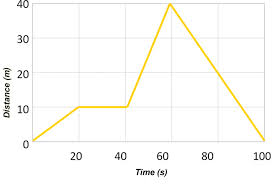


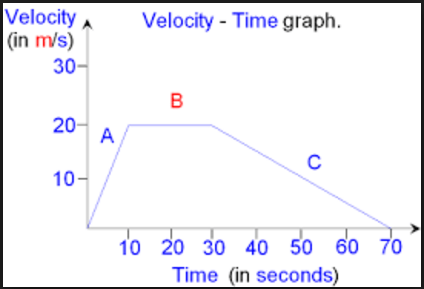
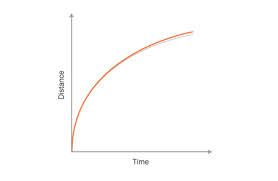


The image displays a force-time graph from a sprinter during a 100m race - describe the net impulse
The net impulse is positive
The net impulse is negative
The net impulse is zero
None of the above
The image displays a force-time graph from a sprinter during a 100m race - describe the motion of the sprinter
The sprinter is accelerating
The sprinter is decelerating
The sprinter is at rest
The sprinter is running at a constant velocity

The image displays a force-time graph from a sprinter during a 100m race - describe the net impulse
The net impulse is positive
The net impulse is negative
The net impulse is zero
None of the above

The image displays a force-time graph from a sprinter during a 100m race - describe the motion of the sprinter
The sprinter is accelerating
The sprinter is decelerating
The sprinter is at rest
The sprinter is running at a constant velocity

The image displays a force-time graph from a sprinter during a 100m race - describe the net impulse
The net impulse is positive
The net impulse is negative
The net impulse is zero
None of the above

The image displays a force-time graph from a sprinter during a 100m race - describe the motion of the sprinter
The sprinter is accelerating
The sprinter is decelerating
The sprinter is at rest
The sprinter is running at a constant velocity
Force is a:
Vector
Scalar
If f = ma and a greater force is being applied to an object - what can we expect in regards to the acceleration of the object?
A greater acceleration
A gradual deceleration
A rapid deceleration
Constant velocity
Which one of these is not a type of drag
Water Resistance
Mass
Air Resistance
Friction
The action force applied by a sprinter exceeds the air resistance they are experiencing as they run towards to finish line - describe their motion
They are at rest
They are running at a constant velocity
They are accelerating
They are decelerating
The action force applied by a sprinter is equal to the air resistance they are experiencing as they sprint between the 30M to 80M mark - describe their motion
They are at rest
They are running at a constant velocity
They are accelerating
They are decelerating
The action force applied by a sprinter is less than the air resistance they are experiencing as they near the finish line - describe their motion
They are at rest
They are running at a constant velocity
They are accelerating
They are decelerating

The diagram shows the changes in horizontal linear velocity experienced by an ice hockey puck after a slapshot that crosses the ice and eventually hits the boards and bounces back - how can the motion of the puck be described at time segment "P"
It is at rest
It is moving at a constant velocity
It is accelerating
It is decelerating
The diagram shows the changes in horizontal linear velocity experienced by an ice hockey puck after a slapshot that crosses the ice and eventually hits the boards and bounces back - how can the motion of the puck be described at time segment "Q"
It is moving at a constant negative velocity
It is moving at a constant velocity
It is accelerating
It is decelerating
The diagram shows the changes in horizontal linear velocity experienced by an ice hockey puck after a slapshot that crosses the ice and eventually hits the boards and bounces back - how can the motion of the puck be described at time segment "R"
It is at rest
It is moving at a constant velocity
It is accelerating
It is decelerating
The diagram shows the changes in horizontal linear velocity experienced by an ice hockey puck after a slapshot that crosses the ice and eventually hits the boards and bounces back - how can the motion of the puck be described at time segment "S"
It is moving at a constant negative velocity
It is moving at a constant velocity
It is accelerating
It is decelerating
The diagram shows the changes in horizontal linear velocity experienced by an ice hockey puck after a slapshot that crosses the ice and eventually hits the boards and bounces back - how can the motion of the puck be described at time segment "T"
It is moving at a constant negative velocity
It is moving at a constant velocity
It is accelerating
It is decelerating
An object or body that is released into the air can be described as which of the following?
Height of Release
Angle of Release
Trajectory
Projectile
All projectiles follow a "parabolic" flight path
True
False
The "trajectory" of a projectile consists of:
A horizontal component
A vertical component
Both a horizontal & vertical component
Neither a horizontal or vertical component
The horizontal component of a projectile gives the projectile height
True
False
The vertical component of a projectile gives the projectile height
True
False
The horizontal component of a projectile gives the projectile length
True
False
Air resistance will act upon the horizontal component of a projectile's trajectory & therefore slow down the projectile
True
False
The effect of air resistance is significant
True
False
As the velocity of a projectile increases, the air resistance will also increase
True
False
Which of the following factors have the most significant impact on the distance covered by a projectile?
Height of Release
Angle of Release
Speed of Release
None of the above
If the take-off and landing points are the same & there is no air resistance, identify the ideal angle of release:
35 degrees
45 degrees
50 degrees
55 degrees
If the angle of release is more or less than 45 degrees the distance covered in flight will be less
True
False
For a shot putter, the ideal angle of release is 45 degrees
True
False
The ideal angle of release (approximately) for a shot putter is:
42 degrees
47 degrees
50 degrees
54 degrees
The reason why the ideal angle of release for a shot putter would be approximately 42 degrees is because:
The shot put is light enough to use a slightly less vertical trajectory
The height of release is different from the landing point of the projectile
The shot put is too heavy to release at an angle of 45 degrees
A higher height of release will result in:
Lesser duration of time that the projectile will travel horizontally
Greater duration of time that the projectile is in the air
Greater distance covered by the projectile
Lesser distance covered by the projectile
A greater height of release would mean that the initial horizontal velocity will be acting on the projectile for longer
True
False
Identify the appropriate relationship for the height of release & angle of relase
If the height of release increases, the angle of release decreases
If the height of release increases, the angle of release increases
If the height of release decreases, the angle of release increases
If the height of release decreases, the angle of release decreases
i
Gravity will:
Limit the height a projectile can reach
Have no effect on the horizontal motion of a projectile
Not effect the vertical motion of a projectile
Not limit the height a projectile can reach
Having a higher initial vertical velocity will:
Increase the height of the projectile
Decrease the duration of flight
Increase the duration of flight
Increase the length of the projectile
Having a higher initial horizontal velocity will:
Increase the height of the projectile
Decrease the duration of flight
Increase the duration of flight
Increase the length of the projectile
What may be a good reason for a shot putter to use a slightly lesser or greater angle of release than 42 degrees?
Due to the force of gravity
If there is a really strong head wind
If they are able to produce a greater speed of release at an alternate angle
Because it may decrease the likelihood of arthritis later in life
All athletic events take place in a fluid environment
True
False
When an object moves through a liquid, the pressure it exerts reduces as its velocity increases
True
False
An object travelling through fluid will always move toward the side with high velocity & low pressure
True
False
If air flow velocity increases, air pressure will also increase
True
False
If air flow velocity decreases, air pressure will increase
True
False
Lift force is _________ to drag
Parallel
Linear
Perpendicular
None of the Above
"The pressure exerted by a fluid is inversely proportional to its velocity" - This statement describes:
Lift
Drag
Magnus Effect
Bernoulli's Principle
What describes the curved path that is observed by a spinning projectile?
Lift
Drag
Magnus Effect
Bernoulli's Principle

According to Bernoulli's Principle, a golf ball hit with backspin will see the ball experience:
Less air pressure below the ball & travel through the air longer
Less air pressure above the ball & travel through the air longer
Less air pressure below the ball & travel through the air for shorter time
Less air pressure above the ball & travel through the air for shorter time

As the golf ball travels with backspin it will experience:
Higher air pressure below the ball and lower air pressure above the ball
Higher air pressure above the ball and lower air pressure below the ball
Higher air pressure above & below the ball
Lower air pressure above & below the ball
The ball is attracted to the area of ________________ which results in lift
Higher air pressure
Lower air pressure
Symmetrical air pressure
As the golf ball travels with backspin it will experience:
Higher air flow velocity below the ball and lower velocity above the ball
Higher air flow velocity above the ball and lower velocity below the ball
Higher air flow velocity above & below the ball
Lower air flow velocity above & below the ball
When the ball is at its apex and the pressure is equal above and below the ball it will travel:
Upward
Downward
Horizontally
The faster the ball spins:
The greater the difference in air pressure & less lift
The greater the difference in air pressure & greater the lift
The lesser the difference in air pressure & less lift
The lesser the difference in air pressure & greater the lift
The dimples in the golf ball causes:
Turbulent air flow
Laminar air flow
The turbulence caused by the dimples in the golf ball result in:
Less drag
More drag
A ball struck (laterally) off centre will spin in the air creating:
Very similar air pressure on both sides, thus keeping the ball straight
Very similar air pressure on both sides, causing the ball to curve
Lower air pressure on one side, causing the ball to keep straight
Lower air pressure on one side, causing the ball to curve

