
 Worksheets
Ohm’s law - simple electrical circuits and problems
Total questions: 27
Worksheet time: 24mins
What is the unit for resistance?
volts
amps
coulombs
ohms
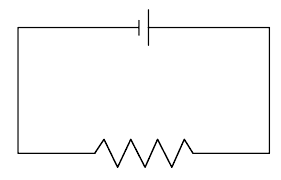
If the battery produced 12.6 Volts and there was a 6 Ohm resistor, what would be the current?
2.1 Amps
2.4 Amps
1.71 Amps
15 Amps
What unit is used to measure voltage?
Ohms
Omega
Volts
Amps
What unit is used to measure current?
Ohms
Omega
Volts
Amps
What unit is used to measure resistance?
Ohms
Omega
Volts
Amps
Which is the right form of Ohm's Law?
V=I/R
V=R/I
I=V/R
I=R/V
What is not needed in order to create a working circuit?
battery (power source)
lightbulb
current
closed circuit
What is the voltage of a circuit with 4 ohms of resistance and 3 amps of current?
12 V
21 V
4/3 V
3/4 V
What is the current in a circuit with 6 ohms of resistance and a battery containing 24 Volts?
1/4 A
144 A
4 A
0.4 A
What is the resistance of a lightbulb that experiences 9 Volts and 3 amps of current?
1/3 ohms
3 ohms
27 ohms
9 ohms
If a circuit had 4 D-Cell batteries (each 1.5 V) and a lightbulb with resistance of 2 ohms, what is the current that flows through the circuit?
2 A
3 A
6 A
8 A
What is voltage?
the amount of push the electrical source supplies to the circuit
how much a given device resists the flow of electric current
flow of electric charge
none of the above
What is current?
the amount of push the electrical source supplies to the circuit
how much a given device resists the flow of electric current
flow of electric charge
none of the above
What is resistance?
the amount of push the electrical source supplies to the circuit
how much a given device resists the flow of electric current
flow of electric charge
none of the above
According to Ohm's Law, current equals the voltage divided by the _________.
Resistance
Inductance
Capacitance
Power
Conductance
If the current in an electrical circuit is constant, what will happen to the voltage if the resistance is increased?
The voltage will decrease
The voltage will increase
The voltage will stay the same

What is the Voltage, V in the circuit shown?
6.5 V
26 V
0.15 V
If there are 40 Volts and 5 Amps running through an electrical circuit, what is the resistance of the circuit?
1 Ohm
2 Ohms
4 Ohms
6 Ohms
8 Ohms

The circuit with higher resistance will allow less charge to flow, meaning the circuit with higher resistance has less current flowing through it.
True
False
10) If you increase the size of the resistor and keep the voltage the same, what will happen to the current?
The current will decrease
The current will increase
The current will stay the same
The potential difference across a 5 kΩ is 12 V. Find the current flowing through the resistor
60 mA
2.4 mA
1.7 mA
0.998 mA

