
 Worksheets
unit 5 electrons in light
Total questions: 50
Worksheet time: 52mins
Electrons in energy levels farther from the nucleus have ________ energy than/as electrons in energy levels closer to the nucleus.
less
depends on the element
greater
the same
There are ___ orbitals in the f sublevel, so the f sublevel can hold ___ electrons.
1, 2
3, 6
5, 10
7, 14
"Electrons will fill empty orbitals of the same energy before electrons begin to pair up in the same orbital” best describes which of the following:
Aufbau Principle
Hund’s Rule
Pauli Exclusion Principle
Heisenberg Uncertainty Principle
"Electrons will fill orbitals requiring lower energy before filling an orbital requiring more energy” best describes which of the following:
Aufbau Principle
Hund’s Rule
Pauli Exclusion Principle
Heisenberg Uncertainty Principle
Why are we able to use Shorthand Electron Notation?
only the lowest energy electrons contribute to chemical reactions and properties
only the highest energy electrons contribute to chemical reactions and properties
it saves time and space
noble gasses give a more accurate model of the electron cloud
An excited atom is an atom that:
has at least one electron occupying an energy level above its ground state
has all of its electrons occupying higher energy levels
is just excited to be here
contains enough energy that the atom becomes unstable
How many energy levels are on the periodic table?
4
5
6
7
What element ends in: 4d8
Pd
Pt
Ni
Ag
T/F: Electrons fill orbitals one at a time until each has one before they start to double up
True
False
How many orbitals (lines/boxes) does the sub level 'p' have?
1
3
5
7
How many electrons in this configuration? 1s2 2s2 2p6 3s2 3p6 4s2 3d10 4p6 5s2 4d10 5p5
53
54
35
85
T/F The s block is located on the left hand side of the table and has two columns
True
False
Cadmium's (Cd) electron configuration ends with____________
4d9
5d10
3d9
4d10
T/F The arrows MUST go in opposite directions in an orbital
True
False
T/F: 4d will fill before 5p
True
False
What is the shape of the p sublevel?
Sphere
Dumbbell
Triangle
Circle
What is the relationship between wavelength and frequency?
Direct
Inverse
What color has the longest wavelength?
red
yellow
green
purple
What is the frequency of light with a wavelength of 6.50 x 10⁻⁷?
1.95 x 10²
4.61514
4.62 x 10¹⁴
2.17 x 10⁻¹⁵
What is the relationship between energy and frequency?
Direct
Inverse
When is visible light given off from an electron?
when it absorbs a quantum of energy
when it returns to the ground state
when it's in the excited state
when it jumps up and down
What is the amount of energy absorbed by an electron called?
a quantum
quirk
charm
photon
Number of wave cycles that pass in an amount of time:
quantum
frequency
atomic emission spectrum
wavelength
What states the impossibility of knowing both the velocity and position of an electron at the same time?
Aufbau Principle
Heisenberg Uncertainty Principle
Hund's Rule
Pauli Exclusion Principle
Each orbital has at most 2 electrons with opposite spins
Aufbau Principle
Heisenberg Uncertainty Principle
Hund's Rule
Pauli Exclusion Principle
Which sublevels are in the 3rd energy level?
s
s, p
s, p, d
s, p, d, f
How many unpaired electrons does Bromine (Br) have?
0
1
2
3
What are the quanta of light called?
photons
excitons
charms
muons
What element is this: [Ar]4s23d104p3?
As
Ge
Sb
Kr
How many electrons should Nitrogen (N) have around its Lewis dot model?
1
3
4
5
How many electrons should Helium (He) have around its Lewis dot model?
1
2
7
8
How many valence electrons does Bismuth (Bi) have?
4
5
6
7
8
Each row on the periodic table represents:
an energy level
a sublevel
an electron
an orbital
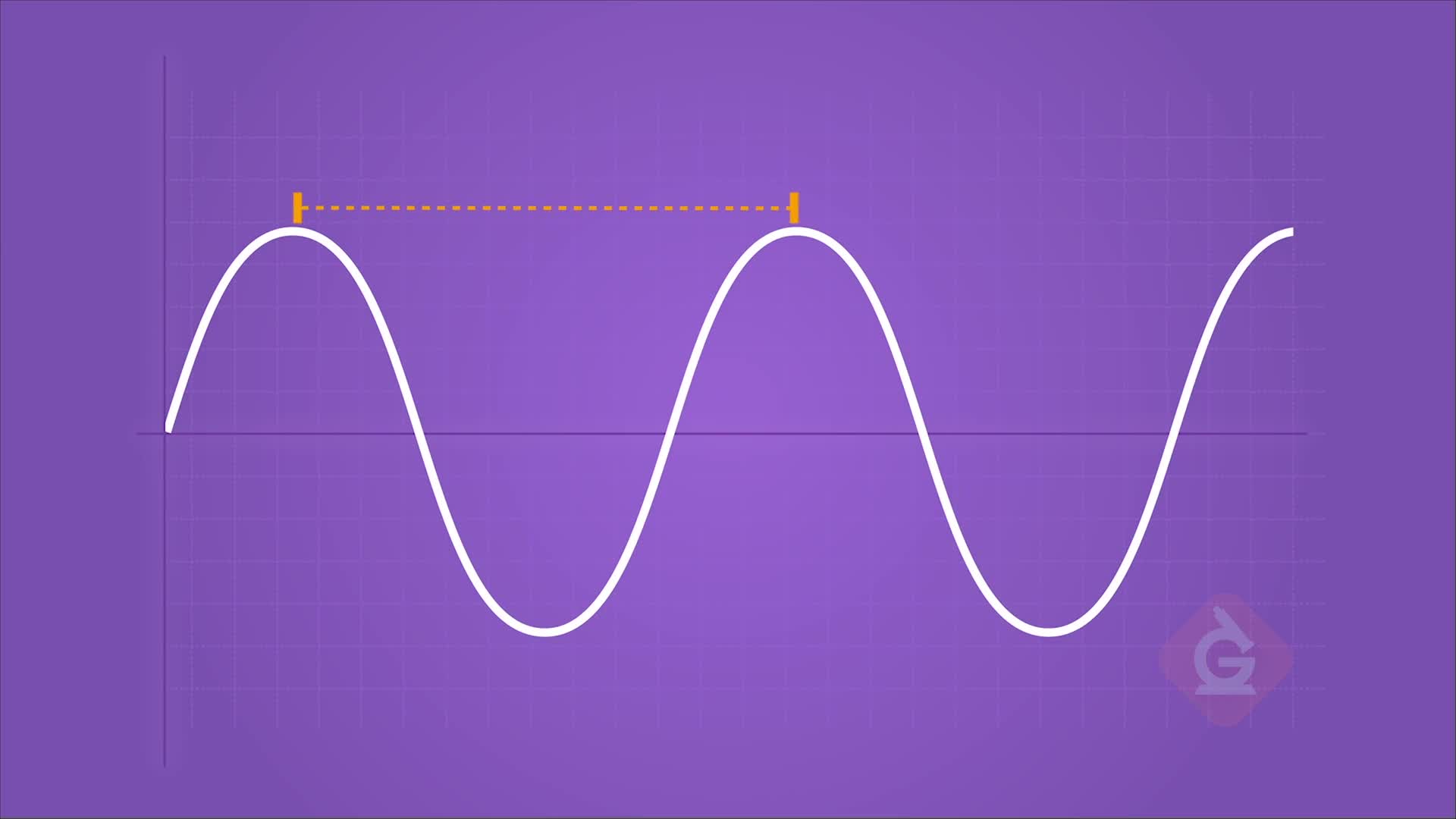

Which of the following has the most energy?
Red
Blue
Green
Violet

Which of the following has the lowest energy?
The color yellow
The color blue
The color indigo
The color orange
How many valence electrons does sodium (Na) have?
1
2
3
4
Which of the following orbitals definitely does not exist as labeled?
1s
2d
3p
6s
1s22s22p63s2

Which element is depicted from this orbital diagram?
Fluorine
Neon
Chlorine
Argon
What noble gas should be used in brackets to write the shorthand configuration for Sb?
Ar
Kr
Xe
Br

The _______________ determines the color of visible light.
wavelength (and frequency)
speed
amplitude
particles of the medium
What must happen for an electron in an atom to change from the ground state to an excited state?
energy must be released
energy must be absorbed
radiation must be emitted
electron must make a transition from a higher level to a lower level
Complete the ending for the exceptional configuration for an atom of copper (Cu): 1s22s22p63s23p6 4s* 3d*
4s13d5
4s13d10
4s23d9
4s23d10

