wayground logo

Free Printable Worksheets

NEW

Font size

S
M
L
XL
Worksheets

Tissues

Total questions: 47

Worksheet time: 2hrs 9mins

Name
Class
Date
1.

Define tissue with regards to anatomy

a)

Multiple sheets of thin paper used to clean your nose

b)

The smallest structural and functional unit of an organism

c)

A series of different cells in the same area

d)

A group of structurally and functionally related cells that come together to perform common functions
2.
What is the function of epithelial cells?
a)
Act as barriers between the external environment, or between organs and fluidfilled cavities
b)
Provide movement by pulling on bones
c)
Provide secretions which help to digest food
d)
Act as the messaging pathway between different areas of the body
3.
What is the general structure of cuboidal cells?
a)
Square with large central nucleus
b)
Flat, 'fried egg' appearance
c)
Rectangular with nucleus towards basal end
d)
Dead apical cells filled with keratin
4.
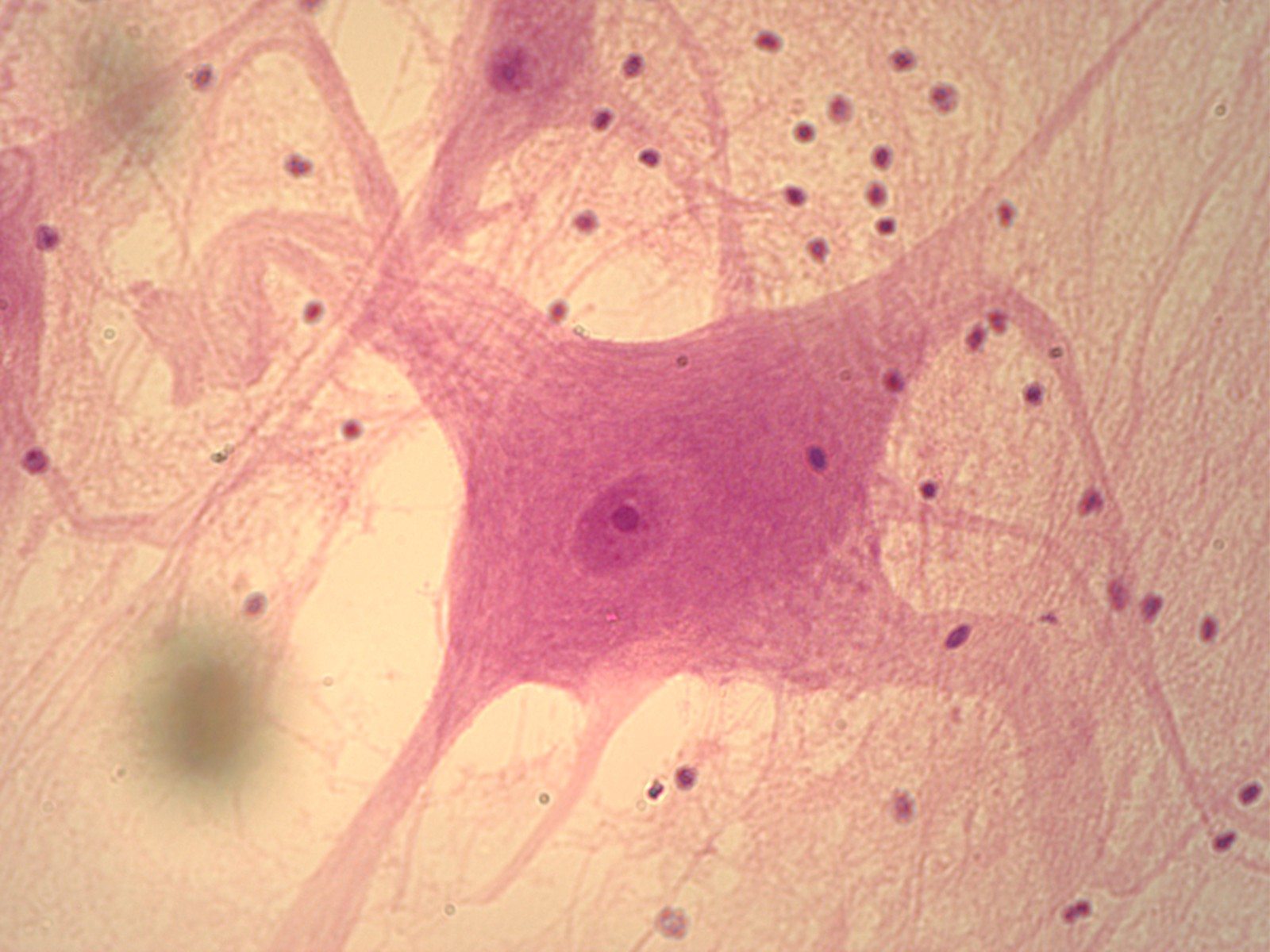
What tissue type is this?
a)
Nervous tissue
b)
Cardiac muscle
c)
Smooth muscle
d)
Connective tissue proper
5.
What type of muscle tissue is VOLUNTARILY controlled
a)
Skeletal Only
b)
Skeletal and Cardiac
c)
Smooth and Cardiac
d)
Cardiac Only
6.
The common term for adipose tissue is
a)
Fat
b)
Blood
c)
Bone
d)
Cartilage
7.
What are the four main tissues found in the body?
a)
Epithelial, Connective, Bone, Blood
b)
Muscle, Connective, Blood, Epithelial
c)
Nervous, Muscle, Connective, Epithelial
d)
Nervous, Muscle, Connective, Bone
8.

Collagen is a protein that is particularly abundant in

a)

covering and lining epithelium

b)

dense regular connective tissue

c)

smooth muscle

d)

adipose tissue

9.
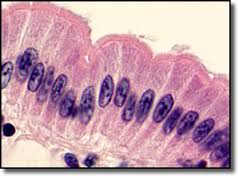
Which tissue is this?
a)
Simple Squamous
b)
Stratified Squamous
c)
Simple cuboidal
d)
Pseudostratified columnar
10.
Which tissue is this?
a)
Simple squamous
b)
simple columnar
c)
transitional
d)
simple cuboidal
11.
which tissue is this?
a)
Pseudostratified columnar
b)
Stratified Squamous
c)
Simple Columnar
d)
Transitional
12.
Which type of epithelial tissue would allow oxygen to quickly pass through it?
a)
Simple Squamous
b)
Simple Cuboidal
c)
Simple Columnar
d)
Transitional
13.
Which type of muscle tissue would line the intestines?
a)
Smooth
b)
Cardiac
c)
Skeletal
d)
Transitional
14.
What type of Connective Tissue are TENDONS and LIGAMENTS
a)
Dense Connective Tissue
b)
Osseous Tissue
c)
Loose connective Tissue
d)
Cartilage
15.
What type of Connective tissue is found at the ends of bones to reduce friction?
a)
Cartilage
b)
Dense connective tissue
c)
Adipose Tissue
d)
Loose connective tissue
16.
What type of tissue SIGNALS the intestines to move food along?
a)
Nervous Tissue
b)
Blood Tissue
c)
Smooth muscle tissue
d)
Skeletal Muscle Tissue
17.
What type of muscle tissue is VOLUNTARILY controlled
a)
Skeletal Only
b)
Skeletal and Cardiac
c)
Smooth and Cardiac
d)
Cardiac Only
18.
Which type of epithelial tissue stretches and is found in the bladder and other urinary organs?
a)
Transitional
b)
Simple Cuboidal
c)
Stratified Squamous
d)
Stratified Columnar
19.
What type of epithelial tissue would make up salivary, sweat, oil, and mammary glands?
a)
Simple cuboidal
b)
Simple columnar
c)
Simple squamous
d)
Transitional
20.
Identify:
a)
Columnar
b)
Cuboidal
c)
Pseudostratified
d)
Transitional
21.
Identify:
a)
Pseudostratified
b)
Smooth Muscle
c)
Transitional
d)
Stratified Squamous
22.
Identify:
a)
Smooth Muscle
b)
Columnar
c)
Transitional
d)
Pseudostratified
23.
Identify:
a)
Columnar
b)
Cuboidal
c)
Transitional
d)
Simple Squamous
24.
Identify:
a)
Pseudostratified
b)
Simple cuboidal
c)
Transitional
d)
Simple Squamous
25.
Identify:
a)
Smooth Muscle
b)
Columnar
c)
Transitional
d)
Pseudostratified
26.
Flattened cells
a)
Squamous
b)
Cuboidal
c)
Columnar
27.

Epithelial tissue regenerate really quickly

a)

True

b)

False

28.
This type of epithelium has only one layer of cells
a)
Stratified epithelium
b)
Simple epithelium
29.
Epithelium with more than one layer of cells
a)
Stratified epithelium
b)
Simple epithelium
30.

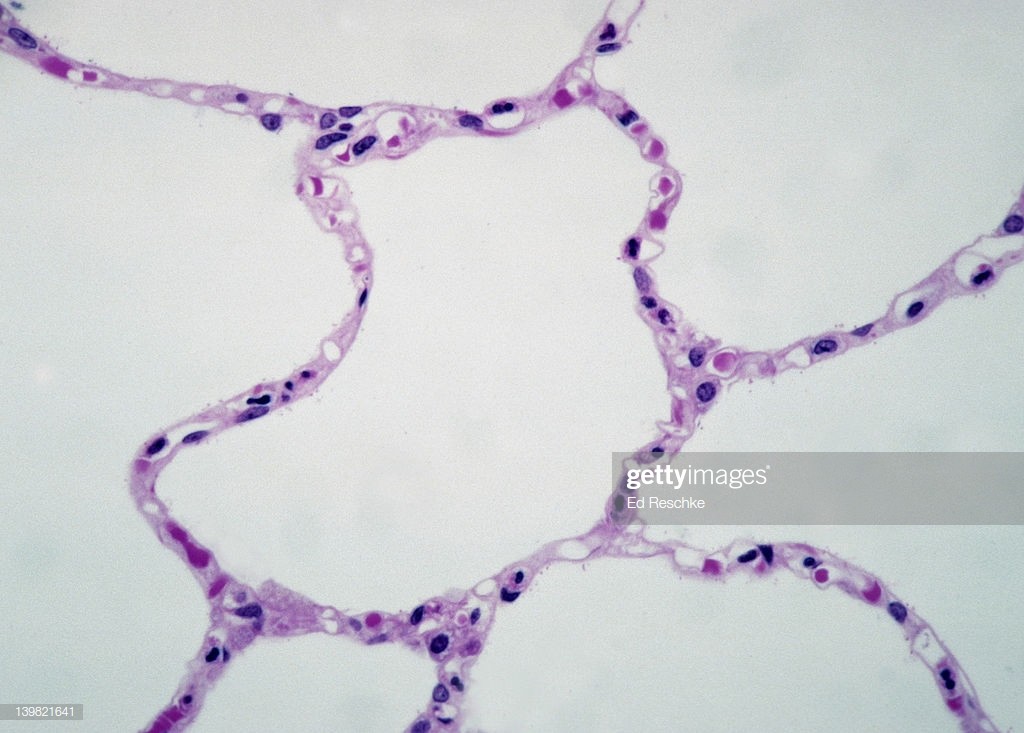
What type of epithelium lines the air sacs in this slide of lung tissue?

a)

simple cuboidal

b)

simple columnar

c)

simple squamous

d)

pseudostratified columnar

31.
Identify:
a)
Pseudostratified
b)
Smooth Muscle
c)
Transitional
d)
Stratified Squamous
32.

Stratified epithelium is typically used for

a)

excretion

b)

secretion

c)

protection

d)

absorption

33.

Simple ____________ epithelial cells are specialized for secretion and are found in pancreas.

a)

columnar

b)

cuboidal

c)

squamous

d)

transitional

34.

Which epithelial cell is best suited for diffusion?

a)

simple squamous

b)

simple columnar

c)

stratified squamous

d)

stratified columnar

35.

Epithelial cells that can stretch from a cuboidal or columnar shape to a squamous shape are called

a)

Transitional epithelium

b)

Simple cuboidal epithelium

c)

Stratified keratinized squamous epithelium

d)

Stratified non-keratinized squamous epithelium

36.

The principal difference between simple and stratified epithelium is in the number of

a)

Microvilli

b)

Cell layers

c)

Free surfaces

d)

Nuclei per cell

37.

the functions of muscle tissue include

a)

binding structures together

b)

forms glands

c)

help move substances and structures in the body

d)

conduct impulses

38.

The function of nervous tissue is to conduct impulses to and from body organs.

a)

True

b)

False

39.

The connective tissues can be loose or dense in form.

a)

True

b)

False

40.

The two ways to classify epithelium cells are

a)

number and size

b)

shape and color

c)

shape and number of layers

d)

color and number

41.

Cardiac muscle is found around the

a)

stomach

b)

lungs

c)

heart

d)

liver

42.

The type of type that includes blood

a)

epithelial

b)

muscle

c)

connective

d)

nervous

43.

Tissues work together and make up

a)

cells

b)

organelles

c)

molecules

d)

organs

44.

Where in the body would you most likely find this type of cell layer?

a)

lungs

b)

heart

c)

small intestine

d)

pancreas

45.

What physiological functions are enhanced by epithlial cells bearing microvilli and cilia?

a)

increased surface area for absorption & capturing debris

b)

decreased surface area for absorption & capturing debris

c)

increased surface area for absorption of oxygen

d)

decreased surface area for absorption of oxygen

46.

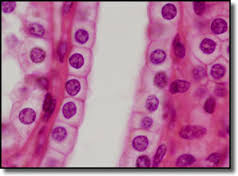
Name the type of epithelium surrounding the lumen (opening)

a)

simple squamous

b)

simple cuboidal

c)

stratified cuboidal

d)

stratified columnar

47.

Which of the following is NOT a main function of epithelial tissues?

a)

covering exposed surfaces

b)

lining internal passageways

c)

producing glandular secretions

d)

contracting to produce movement