Wayground logo

Free Printable Worksheets

Font size

S
M
L
XL
Worksheets

Respiratory and Circulatory

Total questions: 45

Worksheet time: 30mins
Name
Class
Date
1.
When you breathe, your lungs take in ___ and remove ___. 
a)
air/oxygen
b)
oxygen/carbon dioxide 
c)
carbon dioxide/waste 
d)
waste/air 
2.
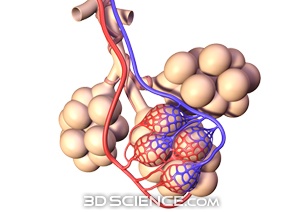
The air sacs that are covered with capillaries where gas exchange takes place
a)
bronchi
b)
lungs
c)
oxygen
d)
alveoli
3.

Flap of tissue that covers the opening to the windpipe during swallowing

a)

Pharynx

b)

Trachea

c)

Epiglottis

d)

Larynx

4.
What is the main function of the respiratory system?
a)
to provide oxygen and remove carbon dioxide from the body
b)
to bring oxygen to the body
c)
to break down food and absorb nutrients
d)
to remove oxygen from the body and deliver carbon dioxide
5.
Given the following structures:
1. larynx
2. nasal cavity
3. pharynx
4. trachea
Which of the following is the correct order that air would flow during inhalation. 
a)
1,2,3,4
b)
2,3,1,4
c)
2,1,3,4
d)
4,2,3,1 
6.
A chamber behind the nose and mouth that leads to the trachea
a)
pharynx
b)
trachea
c)
epiglottis
d)
larynx
7.

The only externally visible part of the respiratory system

a)

Eyes

b)

Nose

c)

Pharynx

d)

Larynx

8.

Which part of the Respiratory System plays a major role in speech?

a)

nose

b)

pharynx

c)

larynx

d)

trachea

9.

It is also known as the windpipe which carries air from the throat into the lungs.

a)

trachea

b)

pharynx

c)

bronchi

d)

larynx

10.

It is a small flip cartilage tissue that covers the trachea to prevent any solid object to pass in the lungs.

a)

larynx

b)

epiglottis

c)

pharynx

d)

nasal cavity

11.

It serves as passage of both air and food.

a)

pharynx

b)

larynx

c)

epiglottis

d)

nasal cavity

12.
Air is filtered, cleaned and warmed in what part of the respiratory system?
a)
nose
b)
mouth
c)
bronchi
d)
alveoli
13.

What are the functions of the respiratory system?


Select ALL that apply.

a)

provides oxygen for your cells

b)

removes CO2 and H2O when you exhale

c)

carries oxygen and nutrients

d)

provides shape and support for muscles

14.

They filter bacteria and viruses entering the body through the mouth.

a)

tonsils

b)

pharynx

c)

epiglottis

d)

larynx

15.

It adjoins the esophagus enabling it to extend anteriorly when we swallow.

a)

trachea

b)

larynx

c)

pharynx

d)

bronchi

16.

It is defined as the act of pulling air into the lungs and eliminating air out of the lungs.

a)

breathing

b)

respiration

c)

oxidation

d)

perspiration

17.

What part of the heart delivers unoxygenated blood to the lungs?

a)

Pulmonary artery

b)

Pulmonary Vein

c)

Aorta

d)

Left Ventricle

18.

The blood enters on the left side of the heart through the ______________ and enters the left atrium. It then passes through the _____________to enter the left ventricle.*

a)

pulmonary artery, mitral valve

b)

pulmonary vein, tricuspid valve

c)

pulmonary artery, aortic valve

d)

. pulmonary vein, bicuspid valve

19.

What part of the heart delivers richly oxygenated blood to the body?

a)

Tricuspid Valve

b)

Superior Vena Cava

c)

Aorta

d)

Pulmonary artery

20.

On the right side of the heart, blood flows from the right ventricle to the?

a)

Tricuspid valve to the pulmonary vein

b)

Pulmonary valve to the pulmonary artery

c)

Tricuspid valve to pulmonary artery

d)

Inferior vena cava to the aorta

21.
Blood is pumped through the systemic circulation by the ___________.
a)
right atrium
b)
right ventricle
c)
left atrium
d)
left ventricle
22.
Blood is pumped through the pulmonary circulation by the _____________.
a)
right atrium
b)
right ventricle
c)
left atrium
d)
left ventricle
23.

Place the pathway of blood through the heart in the correct sequence.

a)

I-J-D-C-F-K-A-H-B-G-E-L

b)

I-J-D-C-F-A-H-B-G-E-K-L

c)

I-J-D-C-F-A-K-H-B-G-E-L

d)

I-J-D-C-F-K-A-H-G-E-B-L

24.

Atrioventricular valves are found in between the _____________.

a)

left atrium and left ventricle

b)

right atrium and right ventricle

c)

pulmonary artery and aorta

d)

atria and ventricles

25.
The tricuspid valve is found in between the _____________.
a)
left atrium and left ventricle
b)
right atrium and right ventricle
c)
pulmonary artery and aorta
26.
The mitral (bicuspid) valve is found in between the _____________.
a)
left atrium and left ventricle
b)
right atrium and right ventricle
c)
pulmonary artery and aorta
27.
Which chamber does oxygenated blood enter the heart first?
a)
Left atrium
b)
Left ventricle
c)
Right atrium
d)
Right ventricle
28.
Which blood vessel carries blood from the heart to the lungs to receive oxygen?
a)
Aorta
b)
Vena cava
c)
Pulmonary artery
d)
Pulmonary vein
29.
It is the liquid part of the blood.
a)
plasma
b)
erythrocytes
c)
leucocytes
d)
thrombocytes
30.
It is another term for red blood cells.
a)
erythrocytes
b)
leucocytes
c)
thrombocytes
d)
plasma
31.
It is another term for white blood cells.
a)
leucocytes
b)
thrombocytes
c)
plasma
d)
erythrocytes
32.
It helps the blood to clot.
a)
thrombocytes
b)
plasma
c)
erythrocytes
d)
leucocytes
33.
These are small, spherical enucleated and biconcave cells that carry oxygen.
a)
erythrocytes
b)
leucocytes
c)
thrombocytes
d)
plasma
34.
These produce certain proteins which act against foreign substances.
a)
leucocytes
b)
thrombocytes
c)
plasma
d)
erythrocytes
35.
The largest vein is called ______.
a)
vena cava
b)
aorta
c)
atrium
d)
ventricle
36.
The smallest arteries are called ______.
a)
arterioles
b)
venules
c)
bronchioles
d)
capilliaries
37.
A blood vessel that brings blood to the heart.
a)
vein
b)
artery
c)
atrium
d)
ventricle
38.
A blood vessel that brings blood to the other parts of the body.
a)
artery
b)
atrium
c)
ventricle
d)
vein
39.
It is referred to as the river of life.
a)
blood
b)
heart
c)
lungs
d)
oxygen
40.
It pumps blood throughout the body by way of involuntary contractions of the cardiac muscle.
a)
heart
b)
lungs
c)
blood
d)
blood vessel
41.
The human heart is located at _______.
a)
the center of your chest slightly tilted to your left
b)
the center of your chest slightly tilted to the right
c)
the left side of your chest
d)
the right side of the chest
42.
These are referred to as the pumping chambers.
a)
ventricles
b)
atria
c)
arteries
d)
veins
43.
These are the receiving chambers of the heart.
a)
atria
b)
ventricles
c)
veins
d)
arteries
44.
These keep the blood moving, efficiently and smoothly, and in the right direction.
a)
valve
b)
septum
c)
heart muscle
d)
blood
45.
The dividing wall between the right and left side of the heart.
a)
septum
b)
valve
c)
heart muscle
d)
blood