wayground logo

Free Printable Worksheets

NEW

Font size

S
M
L
XL
Worksheets

SLO Test

Total questions: 55

Worksheet time: 1hrs 5mins

Name
Class
Date
1.

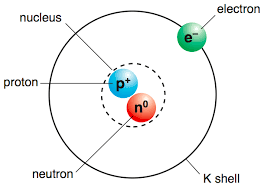
Circling the atom, these parts of an atom hold a negative charge.

a)

Neutron

b)

Electron

c)

Proton

d)

Compound

2.
What does the nucleus of an atom contain?
a)
Electrons and neutrons
b)
Protons and neutrons
c)
Neutrinos and positrons
d)
DNA and RN
3.
Max is hungry and he prepares cereal with milk. This is an example of a: 
a)
Homogeneous mixture
b)
Heterogeneous mixture
4.

Which of these is a compound?

a)

Aluminium (Al)

b)

Carbon Dioxide (CO2)

c)

Nitrogen (N)

d)

Sand

5.

In which mixture can you see all of the parts?

a)

homogeneous

b)

heterogeneous

6.

Volume is _______________________.

a)

the amount of matter an object has.

b)

the amount of space an object occupies.

c)

anything that mass and volume.

7.

How many oxygen atoms are in this chemical formula?

a)

6 oxygen atoms

b)

2 oxygen atoms

c)

3 oxygen atoms

d)

4 oxygen atoms

8.

Which Chemical Equation is Balanced?

a)

Fe4+O2------4FeO2+O2

b)

2H2+O2-----2H2O

c)

3Cr+4O₂-----2Cr₂O₃

9.
Is this equation balanced or unbalanced? 
H2 + O2 --> H2O
a)
balanced
b)
unbalanced
10.

A property that is observed without making changes to the substance.

a)

Chemical Reaction

b)

Chemical Property

c)

Physical Property

d)

Physical Reaction

11.

When baking soda mixes with vinegar, a chemical reaction occurs. This reactivity is an example of a _______________.

a)

Chemical Property

b)

Physical Property

12.

When baking soda mixes with vinegar, a chemical reaction occurs. This reactivity is an example of a _______________.

a)

Chemical Property

b)

Physical Property

13.

Calculate the density if the mass is 2g and the volume is 2cm3.

a)

2 g/mL

b)

1 mL/g

c)

2 mL/g

d)

1 g/cm3

14.
A change in which NEW substances are formed.
a)
Chemical change
b)
Physical change
c)
Casual change
d)
Formal change
15.
Which of the following is NOT an example of chemical change?
a)
sour milk
b)
burning wood
c)
breaking a pencil
d)
rust
16.
Which of the following IS a physical change?
a)
Getting a haircut
b)
Rusty metal
c)
sour milk
d)
A compound
17.
Bubbles form when two or more substances are combined ...
a)
Chemical Change
b)
Physical Change
18.
Evidence of Chemical Change.
a)
New Substance 
b)
Size change
c)
State change
d)
Mixture 
19.
Evidence of a physical change.
a)
New substance
b)
Shape Change
c)
Light produced
d)
Gas released.
20.

Choose which one is a physical property

a)

Flammability

b)

Solubility

c)

Water Reaction

d)

Magic

21.

Choose the one that is a chemical property

a)

Magnetism

b)

Size

c)

Color

d)

Reactivity with water

22.

Flammability is the ability of a substance to _________

a)

Burn

b)

Transfer heat

c)

Transfer electricity

d)

Cook

23.

Choose whether the following is a physical or chemical property: Oxidation

a)

Physical

b)

Chemical

24.
Which of the following pH numbers indicate a strong alkali?
a)
1
b)
5
c)
7
d)
14
25.
When found in food, acids are ________
a)
Sour
b)
Bitter
c)
Salty
d)
Slippery
26.

Reaction between acid and base producing salt and water:

a)

Combustion

b)

Neutralization

c)

Precipitation

d)

Decomposition

27.

Where is the nucleus located in the atom

a)

around the atom

b)

in the center of the atom

c)

the electron shells

d)

where John Dalton lives

28.

The atomic number of an element is determined by the number of

a)

neutrons

b)

protons and neutrons

c)

protons

d)

electrons

29.

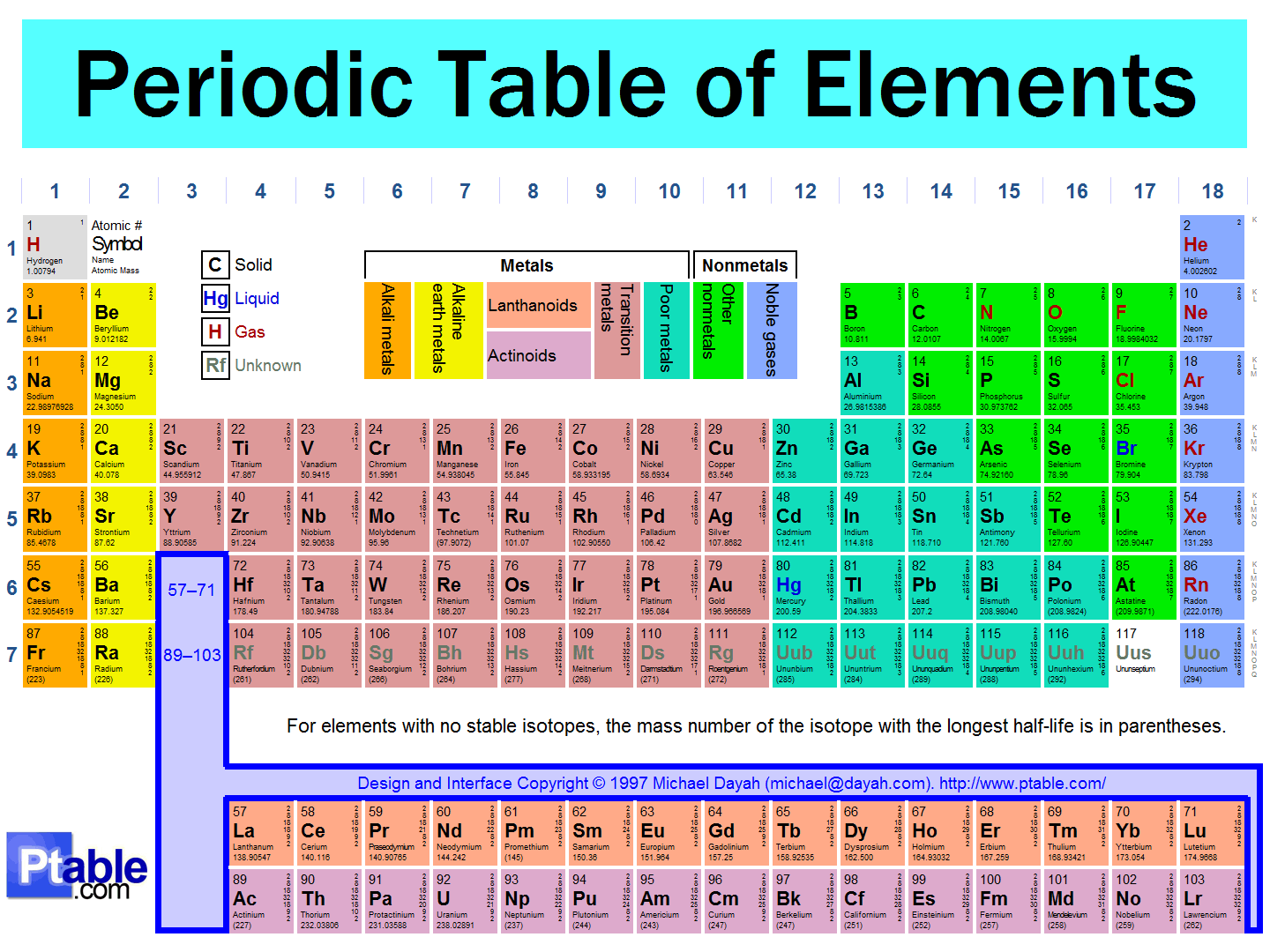
The diagram shows a portion of the periodic table of the elements with nitrogen magnified in size. What is nitrogen's atomic number?

a)

14.0067

b)

N

c)

7

d)

5A

30.
Which subatomic particles contribute the most to the mass of an atom?
a)
Protons, Neutrons, Electrons
b)
Protons only
c)
Protons and Electrons
d)
Protons and Neutrons
31.
The first energy level can hold up to how many electrons?
a)
8
b)
4
c)
2
d)
5
32.
An atom is made up mostly of
a)
protons
b)
gravity
c)
empty space
d)
electricity
33.

the basic structural unit of matter

a)

atom

b)

matter

c)

element

d)

nucleus

34.

a row on the Periodic Table of Elements

a)

family

b)

period

c)

row

d)

isotope

35.

an atom or group of atoms that has gained or lost one or more electrons and is now either positively or negatively charged

a)

isotope

b)

ion

c)

orbital

d)

nucleus

36.

The vertical (up and down) columns in the Periodic Table are called

a)

groups

b)

towers

c)

periods

d)

atomic numbers

37.
The Modern Periodic Table of Elements is arranged by
a)
atomic mass
b)
atomic number
c)
valence electrons
d)
number of isotopes
38.
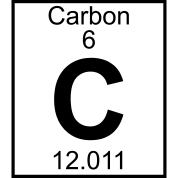
What does 12.011 represent?
a)
atomic mass
b)
atomic number
c)
element name
d)
chemical symbol 
39.
Which group of the periodic table is composed of inert (not reactive)  gases?
a)
alkali metals
b)
alkaline earth metals
c)
halogens
d)
noble gases
40.
Group numbers on the periodic table help us determine 
a)
The number of valence electrons
b)
Color of the elements
41.
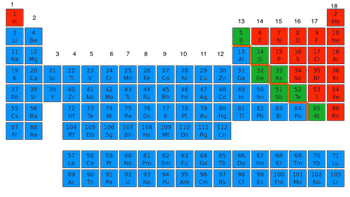
Where are metals located on the periodic table?
a)
Blue
b)
Green
c)
Red
42.
Where are the metalloids located on the periodic table?
a)
Blue
b)
Red
c)
Green
43.
What kind of chemical bond forms between a metal and a nonmetal?
a)
ionic
b)
covalent
c)
fake
d)
metallic
44.
Predict the bond that will form between Be and F.
a)
Ionic
b)
Covalent
45.
Jack has a rock. The rock has a mass of 14g and a volume of 2cm3. What is the density of the rock?
a)
7 mL
b)
7 g/cm3
c)
28 g/cm3
d)
1/7 g/cm3
46.
Calculate the density of the cube.
a)
2 g/cm3
b)
4 g/cm3
c)
6 g/cm3
d)
8 g/cm3
47.
How much water has been displaced in the image shown?
a)
40 mL
b)
65 mL
c)
20 mL
d)
25 mL
48.

A student creates a ramp by stacking four blocks and then leaning a meter stick against it. She releases four different balls from the same position on the ramp and calculates their speeds. Based on the information in the table below, which ball would you predict to have the LEAST kinetic energy when it reaches the end of the ramp?

a)

Golf

b)

Tennis

c)

Baseball

d)

Softball

49.

Which of the following can be concluded from the graph?

a)

When speed increases, kinetic energy decreases.

b)

Kinetic energy does NOT depend upon speed.

c)

Speed has a small effect on the amount of kinetic energy.

d)

Speed has a large effect on kinetic energy.

50.

The image below shows four soccer balls at different locations on an uneven soccer field. Which ball has the greatest amount of KINETIC energy?

a)

Ball A

b)

Ball B

c)

Ball C

d)

Ball D

51.

Where does this roller coaster have the MOST KINETIC energy?

a)

A

b)

B

c)

C

d)

D

52.
This kid is using a slingshot. Does the slingshot have max or min elastic potential energy?
a)
max
b)
min
c)
no elastic potential energy
53.
This spring has been compressed. What happened to its elastic potential energy?
a)
more elastic potential energy
b)
less elastic potential energy
c)
the same amount of elastic potential energy
54.
At which point is potential energy greatest?
a)
W
b)
X
c)
Y
d)
Z
55.
The Law of Conservation of Energy states:
a)
Energy can created or destroyed but not transformed 
b)
Energy cannot be created or destroyed, it can only transformed
c)
Energy can't be created, destroyed or transformed