Wayground logo

Free Printable Worksheets

Font size

S
M
L
XL
Worksheets

T1: Gravity, Air resistance, & Uniform circular motion

Total questions: 52

Worksheet time: 1hrs 13mins
Name
Class
Date
1.
Centripetal acceleration always points
a)
in the direction of the object's motion
b)
in the opposite direction of the object's motion
c)
towards the center of the circle
d)
towards the outside of the circle
2.
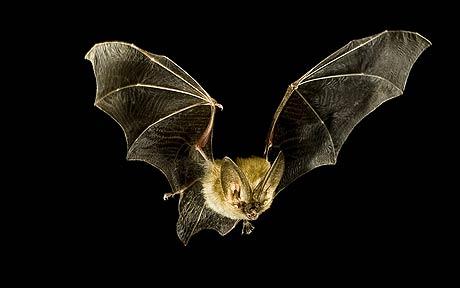
Bruno the bat flies at a speed of 0.5 m/s in circle of radius 1 m. What is his acceleration?
a)
0.25 ms-2
b)
0.5 ms-2
c)
1 ms-2
d)
2 ms-2
3.
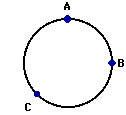
What is the direction of the velocity at point B, if the ball is revolving clockwise?
a)
up
b)
right
c)
down
d)
left
4.
The velocity is always _____ to the line of a circle. 
a)
outwards
b)
towards the center
c)
tangent
d)
faster
5.
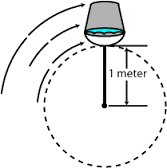
You swing a bucket of water attached to a string in a circle above your head. What keeps the water in the bucket?
a)
Friction
b)
Centripetal Force
c)
Gravity
d)
Inertia
6.
If the radius of the string is .3 meters long and the stopper makes 5 revolutions per second, what is the speed of the stopper? (Hint: C=2πr)
a)
9.4 m/s
b)
6.8 m/s
c)
11.7 m/s
d)
3.5 m/s
7.
Centrifugal force is a ______
a)
force that pushes you to the outside of a circle during uniform circular motion.
b)
fictitious force that is really just the linear momentum of an object in uniform circular motion.  
c)
The force that keeps the planets in orbit
8.

What's the centripetal acceleration of an object traveling 2.3 m/s around a circle of diameter 0.6 m?

a)

5 m/s2

b)

17.63 m/s2

c)

10 m/s2

d)

8.81 m/s2

9.
Calculate the velocity of an object moved around a circle with a radius of 1.65 m and an acceleration of 3.5 m/s2.
a)
2.4 m/s
b)
3.6 m/s
c)
3.9 m/s
d)
4.2 m/s
10.

A bicycle has a period of 0.3s . What is the

speed of its tires if their radius is 30 cm?

a)

6 m/s

b)

3 m/s

c)

60 m/s

d)

30 m/s

11.

The drum of a washing machine rotates 1800 times in 3 minutes. What is the period?

a)

0.1 s

b)

0.2 s

c)

0.3 s

d)

0.5 s

12.

A toy car is following a circular path with a constant speed of v=3 m/s . If the radius of the circular path is 1 m, find The centripetal acceleration of the car

a)

30 m/s2

b)

3 m/s2

c)

9 m/s2

d)

6 m/s2

13.

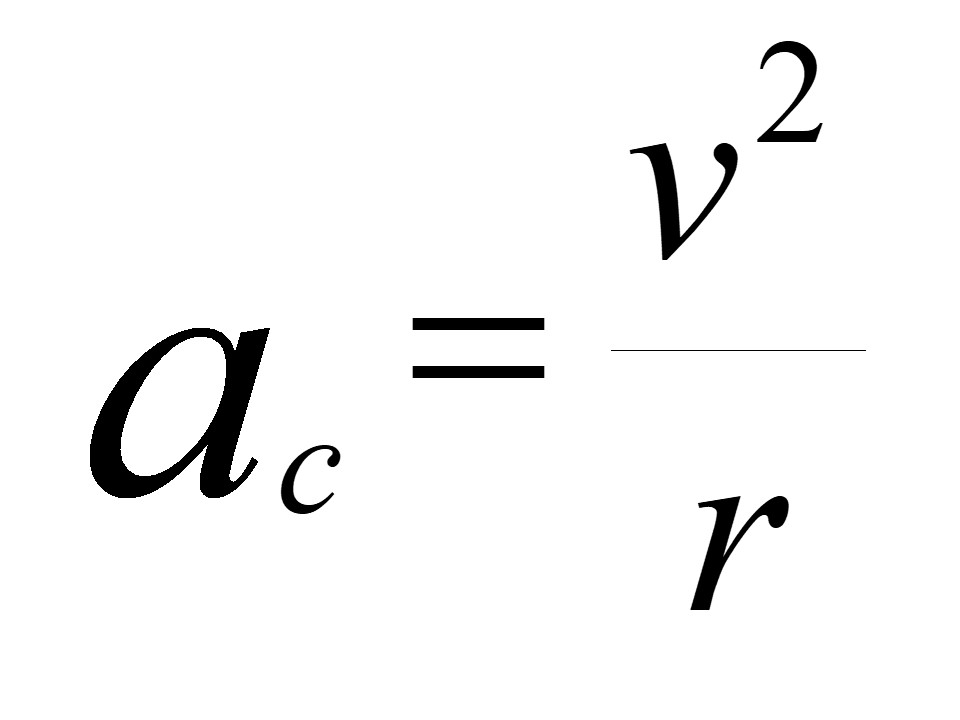
what is the centripetal acceleration formula?

a)
b)
c)
d)
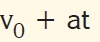
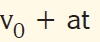
14.

What is the velocity formula for uniform circular motion?

a)
b)
c)
d)
15.
Centripetal acceleration is ...
a)
Acceleration toward the center of a curved or circular path
b)
Acceleration toward the outside of a circle
c)
Vertical motion instead of horizontal motion
16.
Which of the following is the unit for centripetal force?
a)
J
b)
m/s2
c)
kg⋅m/s
d)
N
17.

A 10kg car travels at a constant speed of 20.0 m/s around a horizontal circular track. Which diagram correctly represent the direction of the car's velocity (v) and the direction of the centripetal force (Fc) acting on the car at a particular moment?

a)
b)
c)
d)
18.
Calculate the velocity of an object moved around a circle with a radius of 1.65 m and an acceleration of 3.5 m/s2.
a)
2.4 m/s
b)
3.6 m/s
c)
3.9 m/s
d)
4.2 m/s
19.
A test car moves at a constant speed around a circular track.  If the car is 48.2 m from the track's center and has a centripetal acceleration of 8.05 m/s2, what is the car's tangential speed?
a)
19.7 m/s
b)
5.99 m/s
c)
0.17 m/s
d)
388.01 m/s
20.
The time taken for one complete circuit is called the... 
a)
Period
b)
Frequency 
c)
Angular velocity
21.

A rope attaches a tire to an overhanging tree limb. A girl swinging on the tire has a centripetal acceleration of 3.0 m/s2. If the length of the rope is 2.1 m, what is the girl’s tangential speed?

a)

3.5 m/s

b)

2.5 m/s

c)

8.5 m/s

d)

12.5 m/s

22.

An object is falling downward through Earth's atmosphere. In which direction is the air resistance force?

a)

Down

b)

Up

c)

Around the object

d)

Through the object

23.

The upward force which is exerted against a falling object is

a)

gravity

b)

terminal velocity

c)

air resistance

d)

intertia

24.

A force which causes objects to fall is

a)

weight

b)

gravity

c)

air resistance

d)

absorbency

25.

When a falling object stops accelerating and falls at a constant speed, it is

a)

fluency

b)

constant velocity

c)

acceleration

d)

terminal velocity

26.

A push or a pull.

a)

Gravity

b)

Force

c)

Motion

27.

Complete the sentence.

It is not the difference in gravity that causes objects to fall at different speeds, it’s the difference in the amount of__________________.

a)

Gravity

b)

Mass

c)

Air resistance

28.

The amount of matter in an object is its _____________.

a)

Weight

b)

Mass

c)

Force

29.

If you jump out of an airplane, which two forces are acting on you?

a)

Gravity and friction

b)

Force and gravity

c)

Gravity and Air Resistance

30.

When you drop a hammer and a feather on the moon what will happen? There is no air on the moon.

a)

They will hit at the same time

b)

The hammer will hit first

c)

The feather will hit first

31.

________ acts to slow the rate at which objects fall.

a)

Thrust

b)

Barometer

c)

Air Resistance

d)

Gravity

32.

A push or pull is a

a)

Action

b)

Pull

c)

Force

d)

Gravity

33.

What is a parachute designed to maximize?

a)

Gravity

b)

Air Pressure

c)

Air Resistance

d)

Thrust

34.

What makes objects fall to the earth

a)

Gravity

b)

Wind

c)

Force

d)

Air Pressure

35.

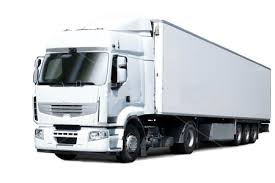
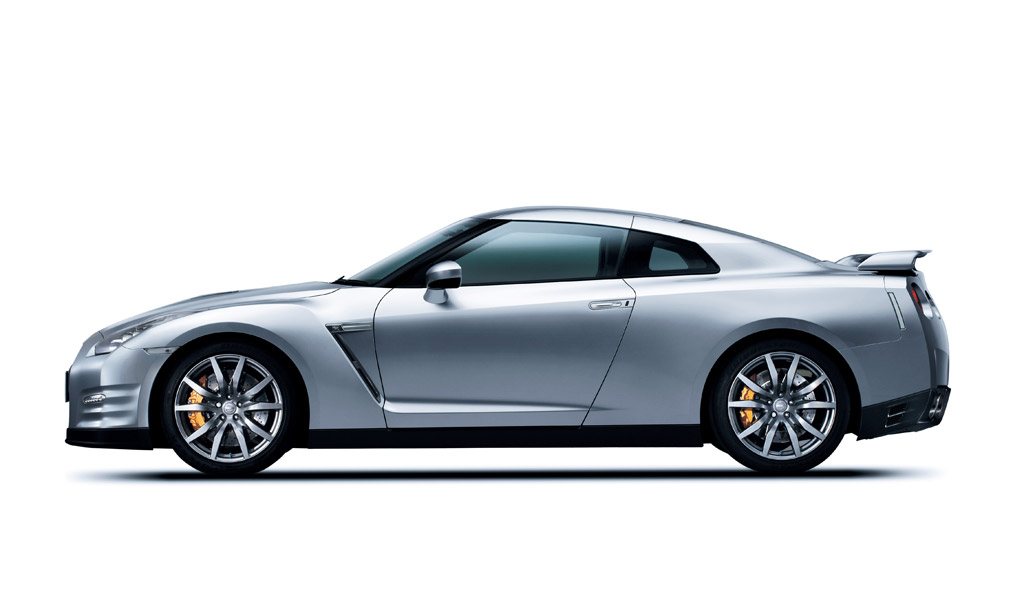
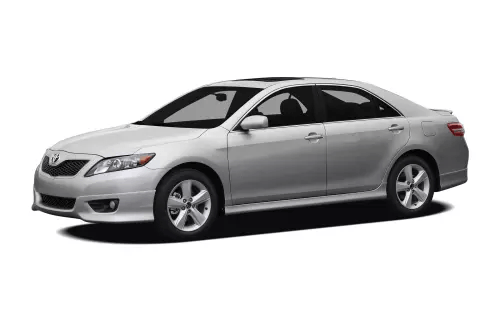
Look at the pictures of the cars. Which car will have the most air resistance force acting upon it? They will be moving at the same speed.
a)
b)
c)
d)

All will have equal air resistance force.

36.

Which best describes why a falling object will reach its terminal velocity?

a)

Gravity force is equal and opposite air resistance force.

b)

Air resistance force is equal and opposite the freefall velocity.

c)

Gravity force is equal and opposite the object's mass.

d)

The object's mass is equal and opposite the gravity force.

37.
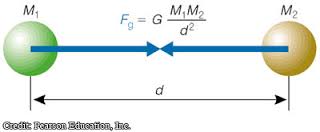
Two asteroids exert a gravitational force, F, on each other. Some time later, the asteroids are now three times as far from each other as before. Which of the following represents the gravitational force at this distance? 
a)
F/3
b)
F/2
c)
F/6
d)
F/9
38.
What states that "every object in the universe attracts every other object"?
a)
Law of Universal Gravitation
b)
Newton's First Law of Motion
c)
My mother
d)
Inertia & gravity
39.
Force of gravity is inversely proportional to
a)
Mass
b)
Weight
c)
Distance
d)
Time
40.
If Earth's mass was cut in half, what would happen to your mass?
a)
increase because gravitational force increases
b)
decrease because gravitational force decreases
c)
decrease because gravitational force increases
d)
nothing, mass is not affected by gravitational force
41.

Calculate the gravitational force between two objects when they are 0.750m apart. Each object has a mass of 5.00kg.

a)

2.96x10⁻⁷N

b)

3.00x10⁻⁹N

c)

2.22x10⁻⁹N

d)

2.23x10⁻⁸N

42.
Two objects are attracted to each other with 36 N of gravitational force.
What would the force between them be if the distance between them were doubled?
a)
9
b)
18
c)
72
d)
144
43.
What is the Universal law of gravitation equation? 
a)
G=F ⋅ m⋅m2/r2
b)
F=G ⋅ m⋅m2/(r)2
c)
F=G ⋅ r2/m⋅m2
d)
G=F ⋅ r2/m⋅m2
44.
The law of universal gravitation is credited to whom?
a)
Einstein
b)
Galileo
c)
Darwin
d)
Newton
45.
Two factors effecting the magnitude of the force of gravity between 2 objects are...
a)
mass and distance 
b)
mass and matter
c)
distance and weight 
d)
weight and mass
46.
Gravity attracts all objects towards one another.
a)
False
b)
True
c)
It depends
47.

What is the gravitational force between two identical 50,000 kg asteroids whose centers of mass are separated by 1000 m?

a)

2500 N

b)

3.3 x 10⁻¹² N

c)

1.67 x 10⁻⁴ N

d)

1.67 x 10⁻⁷ N

48.

Two spherical objects have masses of 8000 kg and 1500 kg. Their centers are separated by a distance of 1.5 m. Find the gravitational attraction between them

a)

5.4 X 10⁻⁴ N

b)

1.2 X 10⁷ N

c)

3.6 X 10⁻⁴ N

d)

5.33 N

49.
Complete the following statement: The farther away two planets are the _______ the gravitational force between them.
a)
more
b)
same
c)
dosen't matter
d)
less
50.
Gravity is the force objects put on each other because of their ______.
a)
Mass
b)
Friendliness
c)
Acceleration
d)
Speed
51.
What happens to the force between two charged objects if you triple the magnitude of one charge? 
a)
1/3X
b)
3X
c)
1/9X
d)
9X
52.

Which configuration will result in the greatest gravitational force?

a)

small masses far apart

b)

large masses far apart

c)

small masses close together

d)

large masses close together