wayground logo

Free Printable Worksheets

Font size

S
M
L
XL
Worksheets

Rational Graphs Quiz

Total questions: 122

Worksheet time: 8hrs 51mins

Name
Class
Date
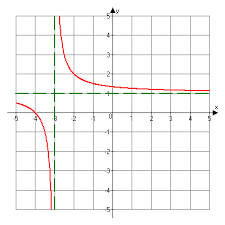
1.
What is the Vertical Asymptotes? 
a)
x= -5
b)
x= 5
c)
x= 6
d)
x= -6
2.
What is the Vertical Asymptotes?
a)
x= -4
b)
x= -4,5
c)
x= -5,5
d)
x= 4
3.
What is/are the vertical asymptote(s)?
a)
x=-2
b)
x=2 and x=3
c)
x=-3
d)
x=3
4.
What are the asymptotes?
a)
x = -3        y = 1  
b)
x = 3         y = 1
c)
x = -3        y = -1
d)
x = 3         y = -1
5.
Find the horizontal asymptote.
a)
None
b)
y=-2
c)
y=2
d)
y=0
6.
What is the horizontal asymptote of the function given?
a)
y = 2
b)
x = 1
c)
x = 2
d)
y = -1
7.
What is the horizontal asymptote to this function?
a)
y=4
b)
y=0
c)
y=-2
d)
y=1
8.
What is the horizontal asymptote?
a)
y = -4
b)
y = 1
c)
x = 1
d)
y = -6
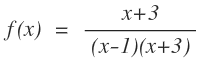
9.

Is there a hole or a vertical asymptote?

a)

A hole when x = 2

b)

A vertical asymptote at x = 2

c)

there is no hole or vertical asymptote

10.

Find the coordinates of the hole.

a)

(-3, -3)

b)

(-3, 3)

c)

(3, -3)

d)

(3, 3)

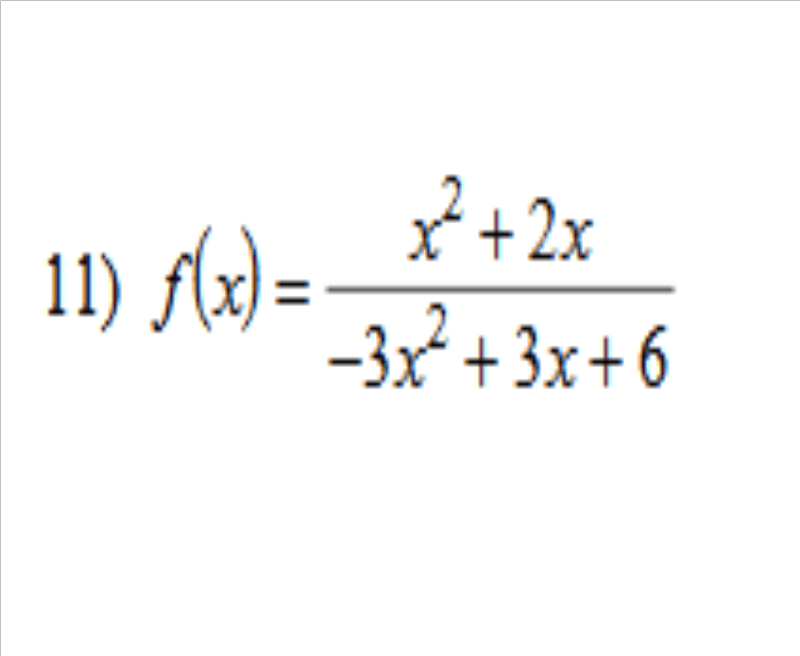
11.

What are the asymptotes?

a)

x=-1 y = -3

b)

x=1 y = -3

c)

x=-1 y =3

d)

x=1, y=3

12.

Find the vertical asymptote(s).

a)

x = 3 and x = -7

b)

x = 3

c)

x = -7

d)

x = -4

13.

Factor and cancel out in order to simplify.

a)

1/(n-7)

b)

n-7

c)

(n-6)/(n-7)

d)

n-6

14.

Factor and cancel out in order to simplify.

a)

9(x+10)

b)

x+10

c)

9

d)

x+9

15.
(x²+11x+24)/(x²+4x-32)
a)
A.(x+7)/(x+4)
b)
B.3/4
c)
C.(x+3)/(x+4)
d)
D.(x+3)/(x-4)
16.

Find the domain of the function. f(x) = -2 / x+3

a)

x cannot equal to 3

b)

x cannot equal to 1

c)

x cannot equal to -3

d)

All real numbers

17.

Find the domain of the function. f(x) = x /2x+4

a)

x cannot equal to 2

b)

x cannot equal to 4

c)

x cannot equal to -2

d)

All real numbers

18.

Find the domain of the function. f(x) = x3 / x+8

a)

x cannot equal to 2

b)

x cannot equal to -2

c)

x cannot equal to -8

d)

All real numbers

19.

What is the X-Intercept?

a)

(0,0)

b)

(4,0)

c)

(0,4)

d)

(-5,0)

20.

What are the x-intercepts?

a)

(2/3, 0)

b)

(4,0) and (-2,0)

c)

(-8,0) and (1,0)

d)

(-4,0) and (2,0)

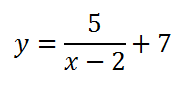
21.
What is the horizontal asymptote? 
a)
x = 2
b)
x = 7
c)
y = 2
d)
y = 7
22.
What is the definition of an ASYMPTOTE?
a)
A curved line. 
b)
A line that only touches the origin. 
c)
A line that only lives on the first quadrant. 
d)
A line that a curve approaches, as it heads towards infinity. 
23.
What is the name of this function?
a)
Parabola
b)
Rational Function 
c)
Ellipse 
d)
Cubic 
24.
What are the asymptotes?
a)
x = -3        y = 1  
b)
x = 3         y = 1
c)
x = -3        y = -1
d)
x = 3         y = -1
25.
How is this function transformed from the parent function?
a)
Translated left and up
b)
Translated right and up
c)
Translated left and down
d)
Translated right and down
26.
What is the horizontal asymptote? 
a)
x = 2
b)
x = 7
c)
y = 2
d)
y = 7
27.

Which is the graph of the rational equation:

a)
b)
c)
d)
28.

Which function matches this graph?

a)

f(x)=1x1+2f\left(x\right)=\frac{1}{x-1}+2

b)

f(x)=1x+21f\left(x\right)=\frac{1}{x+2}-1

c)

f(x)=1x+1+2f\left(x\right)=\frac{1}{x+1}+2

d)

f(x)=1x2+1f\left(x\right)=\frac{1}{x-2}+1

29.

Which function matches this graph?

a)

f(x)=4x2f\left(x\right)=\frac{-4}{x}-2

b)

f(x)=4x+2f\left(x\right)=\frac{-4}{x}+2

c)

f(x)=4x2f\left(x\right)=\frac{-4}{x-2}

d)

f(x)=4x+2f\left(x\right)=\frac{-4}{x+2}

30.

Which functions match this graph?

a)

f(x)=4x+1f\left(x\right)=\frac{4}{x}+1

b)

f(x)=4x1f\left(x\right)=\frac{4}{x}-1

c)

f(x)=4x+4f\left(x\right)=\frac{4}{x+4}

d)

f(x)=4x4f\left(x\right)=\frac{4}{x-4}

31.

Write the equation for the graph.

a)

y=xy=x

b)

y=x2y=x^2

c)

y=1xy=\frac{1}{x}

d)

y=xy=\left|x\right|

32.

Write the equation for the graph.

a)

y=1x+3y=\frac{1}{x+3}

b)

y=x+3y=x+3

c)

y=3xy=\frac{3}{x}

d)

y=1x3y=\frac{1}{x-3}

33.

Write the equation for the graph.

a)

y=1x12y=\frac{1}{x-1}-2

b)

y=1x+1+2y=\frac{1}{x+1}+2

c)

y=1x+12y=\frac{1}{x+1}-2

d)

y=1x2+1y=\frac{1}{x-2}+1

34.

Write the equation for the graph.

a)

y=1xy=\frac{1}{x}

b)

y=1xy=-\frac{1}{x}

35.

What is the range of the function?

a)

x=1x=-1

b)

x1x\ne-1

c)

y=2y=-2

d)

y2y\ne-2

36.

What is the domain of the function?

a)

x=1x=-1

b)

x1x\ne-1

c)

y=2y=-2

d)

y2y\ne-2

37.

Write the equation for the graph.

a)

y=1x+3y=\frac{1}{x+3}

b)

y=1x3y=\frac{1}{x-3}

c)

y=1x+3y=\frac{1}{x}+3

d)

y=1x3y=\frac{1}{x}-3

38.

What is the domain of the function?
y=1x+3y=\frac{1}{x}+3  

a)

y3y\ne3

b)

y=3y=3  

c)

x=0x=0  

d)

x0x\ne0  

39.

What is the range of the function?
y=1x+3y=\frac{1}{x}+3  

a)

y3y\ne3

b)

y=3y=3  

c)

x=0x=0  

d)

x0x\ne0  

40.

Write the equation for the graph.

a)

y=1x+2+1y=\frac{1}{x+2}+1

b)

y=1x+21y=\frac{1}{x+2}-1

c)

y=1x2+1y=\frac{1}{x-2}+1

d)

y=1x21y=\frac{1}{x-2}-1

41.

Find the equation of the graph

a)
b)
c)
d)
42.

How many discontinuities does f(x) have?

a)

None

b)

1

c)

2

d)

3

43.

How many vertical asymptotes does f(x) have?

a)

None

b)

1

c)

2

d)

3

44.

Find the horizontal asymptote of f(x)

a)

None

b)

y=6

c)

y=1/3

d)

y=3

45.

Select all the functions that have a slanted asymptote?

a)
b)
c)
d)
46.
Which asymptotes are determined by looking at the denominator of a function? 
a)
vertical
b)
horizontal
c)
slant
d)
none
47.
Choose the correct graph that matches with the equation.
a)
A
b)
B
c)
C
d)
D
48.

Which is the graph of the rational equation:

a)
b)
c)
d)
49.
Write an equation for a rational function with an x-intercept of (–1, 0), a hole at x = 3, and a VA at   x = 4. 
a)
y= (x-1)(x+3) / (x+4)(x+3)
b)
y= (x-4)(x-3) / (x+1)(x-3)
c)
y= (x+1)(x-3) / (x-4)(x-3)
d)
y= (x+4)(x+3) / (x+1)(x+3)
50.

Select all the following statements that are true.

a)

Vertical asymptote at x=1

b)

Vertical asymptote at x=0

c)

No vertical asymptote

d)

Hole at (-1, 0)

e)

Hole at (1, -1)

51.
What is the Vertical Asymptotes? 
a)
x= -5
b)
x= 5
c)
x= 6
d)
x= -6
52.
What is the hole?
a)
x= 4
b)
x= -4
c)
x= 5
d)
x= -5
53.
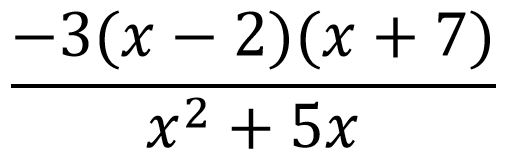
Find the hole of the function.
x2- 9x+20
___________
4x2 - 12x- 40
a)
x =5
b)
x=0
c)
x=4
d)
x=-2
54.
Which asymptote(s) are determined by looking at the denominator?
a)
vertical
b)
horizontal
c)
slant
d)
none
55.
What is the Vertical Asymptotes? 
a)
x= -5
b)
x= 5
c)
x= 2
d)
x= -2
56.
Name any holes of the function.
a)
x=0
b)
none
c)
x=1
57.
What are the Vertical Asymptotes of...
a)
x = 0, -5
b)
x=0, 5
c)
x = 2, -7
d)
x = -2, 7
58.

Where is the hole?

a)

x= 4

b)

x= -4

c)

x= 5

d)

x= -5

59.

Where is there a hole on the graph of the function?

a)

x = 2

b)

x = -2

c)

There are no holes.

d)

x = 5

60.

How many vertical asymptotes does the function have?

a)

None

b)

1

c)

2

d)

3

61.

Find the vertical asymptotes and holes of the function.

a)

Holes: None;

VA: x = 1, -3

b)

Holes: x = -3;

VA: x = 1

c)

Holes: x = -3, 1

VA: None

d)

Holes: x = 1

VA: x = -3

62.

State the vertical asymptote.

a)

x = -2/5

b)

x = -5/2

c)

x = -5

d)

x = 2

63.

Find the coordinates of the hole.

a)

(-3, -3)

b)

(-3, 3)

c)

(3, -3)

d)

(3, 3)

64.
A hole occurs when....
a)
You wear pants that are too tight.
b)
A factor from the numerator cancels with a factor in the denominator.
c)
The degree of the numerator is one more than the degree of the denominator.
d)
The denominator cannot be factored.
65.

Find the vertical asymptotes and holes of the function.

a)

Holes: None;

VA: x = 1, -3

b)

Holes: x = -3;

VA: x = 1

c)

Holes: x = -3, 1

VA: None

d)

Holes: x = 1

VA: x = -3

66.
What is the Vertical Asymptotes? 
a)
x= -5
b)
x= 5
c)
x= 6
d)
x= -6
67.
What is the hole?
a)
x= 4
b)
x= -4
c)
x= 5
d)
x= -5
68.
Find the horizontal asymptote.
a)
None
b)
y = 0
c)
y = -1/3
d)
y = -3
69.
a)
None
b)
x = 2
c)
x = 3
d)
x = 4
70.
What is the Horizontal Asymptote?
a)
None
b)
y= 0
c)
y= 1
d)
y= 5/4
71.
What is the horizontal asymptote? 
a)
x = 2
b)
x = 7
c)
y = 2
d)
y = 7
72.
Which asymptote(s) are determined by looking at the denominator?
a)
vertical
b)
horizontal
c)
slant
d)
none
73.
What is/are the vertical asymptote(s)?
a)
There are no vertical asymptotes
b)
x=5
c)
x=-5
d)
x=-1/2
74.
What are the asymptotes?
a)
x = -3        y = 1  
b)
x = 3         y = 1
c)
x = -3        y = -1
d)
x = 3         y = -1
75.
what is the equation that best matches the graph?
a)
A
b)
B
c)
C
d)
D
76.
What is the domain and range?
a)
D : All real number x ≠ -3
R: All real number y≠ 1
b)
D : All real number x ≠ 1
R: All real number y≠ -3
c)
D : All real number x ≠ 3
R: All real number y≠ 1
d)
D : All real number x ≠ -1
R: All real number y≠ 3
77.
What is the horizontal asymptote of the function given?
a)
y = 2
b)
x = 1
c)
x = 2
d)
y = 1
78.
What is/are the x-intercepts of this graph?
a)
(-2,0) and (2,0)
b)
(-2,0)
c)
(3,0)
d)
(2,0) and (3,0
79.
Where is the hole in this graph?
a)
x = -3
b)
x = 3
c)
x = 5
d)
None
80.
What are the Vertical Asymptotes of...
a)
x = 0, -5
b)
x=0, 5
c)
x = 2, -7
d)
x = -2, 7
81.

Determine whether the graph of the function has a vertical asymptote or a removeable discontinuity at x = -1.

a)

Vertical Asymptote

b)

Discontinuity

c)

Hump Day

d)

Infinite

82.

How many discontinuities does f(x) have?

a)

None

b)

1

c)

2

d)

3

83.

What creates a hole in the graph of a rational function?

a)

Crossing the x-axis

b)

An absence of dirt.

c)

Crossing a vertical asymptote.

d)

A factor that cancels out.

84.
Which of the following is determined by just looking at the denominator?
a)
vertical asymptote
b)
horizontal asymptote
c)
holes
d)
slant asymptote
85.
The holes of a rational function occur when :
a)
my pencil pokes a hole in the paper I'm working on
b)
there is something left in the denominator
c)
the value of f(0)
d)
a factor in the denominator cancels with a factor in the numerator
86.
What is the definition of an ASYMPTOTE?
a)
A curved line. 
b)
A line that only touches the origin. 
c)
A line that only lives on the first quadrant. 
d)
A line that a curve approaches, as it heads towards infinity. 
87.

Does this function have any vertical asymptotes? If so, what are their equations? y=(x+3)(x4)(x+7)(x4)y=\frac{\left(x+3\right)\left(x-4\right)\left(x+7\right)}{\left(x-4\right)}  

a)

No vertical asymptotes.

b)

One vertical asymptote: x = 4

c)

Two vertical asymptotes: x = -3 and x = -7

d)

Three vertical asymptotes:  x = -3, x = 4, and x = -7

88.

Find the vertical asymptote.

g(x)=(x+3)(x2)(x+5)(2x1)g\left(x\right)=\frac{\left(x+3\right)\left(x-2\right)}{\left(x+5\right)\left(2x-1\right)}  

a)

x=-5

b)

x=1/2

c)

x=-1/2

d)

x=-3

e)

x=2

89.

State the range:

g(x)=(x+2)(2x+3)g\left(x\right)=\frac{\left(x+2\right)}{\left(2x+3\right)}  

a)

(, 12 )(12 , )\left(-\infty,\ \frac{1}{2\ }\right)\cup\left(\frac{1}{2}\ ,\ \infty\right)  

b)


c)


d)

e)

(, 12 )(12 , )\left(-\infty,\ -\frac{1}{2\ }\right)\cup\left(\frac{1}{2}\ ,\ \infty\right)  

90.

State the vertical asymptote: 

g(x)=(x+2)(2x+3)g\left(x\right)=\frac{\left(x+2\right)}{\left(2x+3\right)}  

a)

x=2

b)

x=23x=\frac{2}{3}  

c)

x=23x=-\frac{2}{3}  

d)

x=-2

e)

x=32x=-\frac{3}{2}  

91.

What is the x-value of the hole? g(x)=(x2)(x+6)(x+2)(x2)g\left(x\right)=\frac{\left(x-2\right)\left(x+6\right)}{\left(x+2\right)\left(x-2\right)}  

a)

2

b)

-2

c)

-6

d)

6

92.

f(x)=(x+7)(x3)(x+1)(x3)(x5)f\left(x\right)=\frac{\left(x+7\right)\left(x-3\right)\left(x+1\right)}{\left(x-3\right)\left(x-5\right)}  

Select all of the true statements.

a)

A hole occurs where x=3

b)

vertical asymptote at x=3

c)

vertical asymptote at x=5

d)

A hole occurs where x=5

93.

The equation of a vertical asymptote is written in the form:

a)

x=

b)

y=

c)

none of the above

94.

h(x)=x(x3)(x6)(x+3)3x(x+3)(x6)(x+7)h\left(x\right)=\frac{x\left(x-3\right)\left(x-6\right)\left(x+3\right)}{3x\left(x+3\right)\left(x-6\right)\left(x+7\right)}  

Identify the x-value of the hole(s).

a)

x=0

b)

x=-3

c)

x=6

d)

x=-7

e)

x=3

95.
What is the Vertical Asymptotes? 
a)
x= -5
b)
x= 5
c)
x= 6
d)
x= -6
96.
What is the hole?
a)

( 4 , 9/8 )

b)

( -5, 0)

c)

( 5 , 10/9 )

d)

( 5 , 0 )

97.

Where are the discontinuities?

a)

holes: x=-3

asymptotes: x=-1

b)

holes: none

asymptotes: x=-1

c)

holes: x=-1

asymptotes: x=-3

d)

holes: x=-1

asymptotes: none

98.

Where are the discontinuities?

a)

holes: x=5

asymptotes: x=49

b)

holes: none

asymptotes: x=49

c)

holes: none

asymptotes: x=-7,7

d)

holes: x=5

asymptotes: x=-7,7

99.

Where are the discontinuities?

a)

holes: none

asymptotes: x=6

b)

holes: x=-3

asymptotes: x=6

c)

holes: none

asymptotes: x=-1

d)

holes: x=-3

asymptotes: x=-1

100.

Where are the discontinuities?

a)

holes: none

asymptotes: x=1/8

b)

holes: x=-1

asymptotes: x=1/8

c)

holes: none

asymptotes: x=0

d)

holes: x=-1

asymptotes: x=0

101.

Where are the discontinuities?

a)

holes: x=-1

asymptotes: x=5/3

b)

holes: x=-1

asymptotes: x=2/3

c)

holes: x=1

asymptotes: x=5/3

d)

holes: x=1

asymptotes: x=2/3

102.

Select all the following statements that are true.

a)

Vertical asymptote at x=1

b)

Vertical asymptote at x=0

c)

No vertical asymptote

d)

Hole at (-1, 2)

e)

Hole at (1, -2)

103.

What's the horizontal asymptote of the function?

a)

y = 0

b)

No horizontal asymptote

c)

y = 1

d)

y = 9

104.

Select the graph that show the corresponding vertical & horizontal asymptotes to this function

a)
b)
c)
d)
105.

The domain are the ______ values.

a)

y

b)

x

c)

Both x and y

106.

The range are the _____ values.

a)

y

b)

x

c)

Both x and y

107.

g(x), h(x), and f(x) all mean

a)

x=

b)

y=

108.

Find the domain for the function. f(x)= 2x -1 / 3x + 6

a)

x cannot equal to 2

b)

x cannot equal to -2

c)

x cannot equal to 3

d)

All real numbers

109.

Find the domain of the function. f(x) = -2 / x+3

a)

x cannot equal to 3

b)

x cannot equal to 1

c)

x cannot equal to -3

d)

All real numbers

110.

Find the domain of the function. f(x) = 3x2/ x4 - 1

a)

x cannot equal to 3

b)

x cannot equal to -1

c)

x cannot equal to 1

d)

All real numbers

111.

Find the domain of the function. f(x) = x3 / x+8

a)

x cannot equal to 2

b)

x cannot equal to -2

c)

x cannot equal to -8

d)

All real numbers

112.

What is the equation of the vertical asymptote?

a)

x = 0

b)

x = 4

c)

x = -1, x = 4

d)

x = -1

113.

What are the coordinates of the hole, if one exists.

a)

(-1, -2)

b)

(-1, ½)

c)

(-1, -½)

d)

there isn't one

114.

What is the equation of the slant asymptote?

a)

y = x + 1

b)

y = x + 2

c)

y = x + 3

d)

y = x

115.

What is the equation of the horizontal asymptote?

a)

y = 0

b)

y = -2

c)

y = 2

d)

There isn't one

116.

Find the x-intercept(s), if one exists.

a)

(1, 0)

b)

(-1, 0)

c)

(1, 0), (-1, 0)

d)

(0, 0), (1, 0)

117.

Graph the function.

f(x)=x+1x4f\left(x\right)=\frac{-x+1}{x-4}  

a)
b)
c)
d)
118.

 Graph the function.

f(x)=2x2+2x+24x3x212xf\left(x\right)=\frac{-2x^2+2x+24}{x^3-x^2-12x}

a)
b)
c)
d)
119.

Select ALL the information that applies to the given rational function.
f(x)=x32x2+8x6f\left(x\right)=\frac{x-3}{-2x^2+8x-6}  

a)

Vertical Asymptote. at x = 1

b)

No Holes

c)

Horizontal Asymptote. at y = 0

d)

y-intercept at (0, 1/2)

120.

Select ALL the information that applies to the given rational function. f(x)=2x22x24x+3f\left(x\right)=\frac{2x^2-2}{x^2-4x+3}  

a)

Vertical Asymptote. at x = -3 and x = 1

b)

Hole at (1, 0)

c)

Horizontal Asymptote at y = 2

d)

x-intercepts at (3,0) and (1, 0)

121.

Which of the following is considered as removable discontinuities?

a)

intercepts

b)

holes

c)

asymptotes

d)

domains

122.

Find the x-intercept(s), if one exists.

a)

(1, 0)

b)

(-1, 0)

c)

(1, 0), (-1, 0)

d)

(0, 0), (1, 0)