
NEW
Font size
 Worksheets
Chapter 7 & 8 Review
Total questions: 42
Worksheet time: 32mins
Which of the following would be the Lewis Dot Diagram for an ION of Aluminum?


Which diagram shows an ATOM from group 17?


Element X could be which of the following?
Oxygen
Beryllium
Neon
Carbon
Which of the following shows an accurate diagram for an ion of Rubidium?


What is the correct Lewis Dot Structure for ammonia NH3


Which Lewis Dot Model drawing correctly shows an O2 molecule?


Which type of bond is being formed in this diagram?
covalent bond
energy bond
ionic bond
Which of the following is the correct Lewis dot between Rb and O?


When Calcium (Ca) loses 2 electrons, what charge does it have?
+2
+1
0
-1

When Oxygen (O) gains 2 electrons, what charge does it have?
+2
+1
-1
-2
Which is the correct way to draw the Lewis dot structure for Calcium Chloride (CaCl2)?


Is the following compound ionic or covalent?
A material with a high melting point
Ionic
Covalent
Is the following compound ionic or covalent?
A material that has a low boiling point
Ionic
Covalent
Is the following compound ionic or covalent?
A material that contains a metal and a nonmetal
Ionic
Covalent
Is the following compound ionic or covalent?
A material that contains two nonmetals
Ionic
Covalent

Properties of metallic compounds include:
brittle, conducts electricity (aqueous state), high melting points
usually gas or liquid, relatively low melting points, does not conduct electricity
shiny, malleable, ductile, conducts electricity, usually a solid
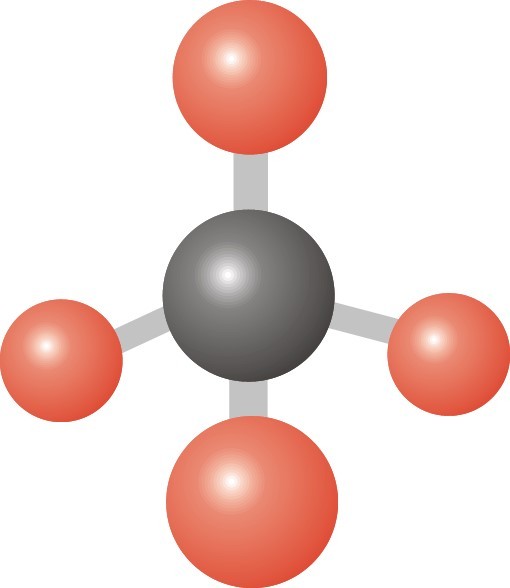
What could this molecule be?
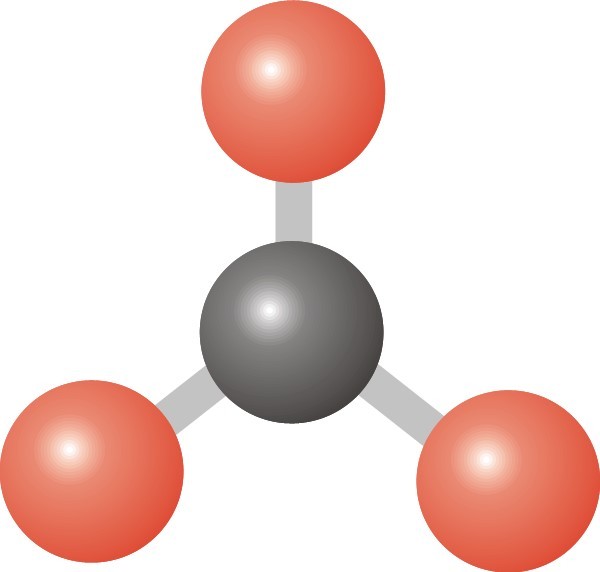


The electrons in a polar covalent molecule are shared...
Evenly
Unevenly
Electrons are not shared
None of the Above
In a polar covalent bond, the electrons gather around...
The atom with the Greatest Electronegativity
The atom with the Lowest Electronegativity
Each atom Equally
None of the Above
The polarity of a bond is determined by...
The sum of the electronegativities of the two atoms
The difference in the electronegativities of the two atoms
The charges of the atoms
None of the Above
Partial charges are present in which type of bond?
Ionic
Nonpolar Covalent
Polar Covalent
Both Polar Covalent and Ionic
What must the difference in electronegativity between two atoms be in order for the bond between them to be polar covalent?
less than 0.4
greater than 2.0
between 0.4 and 2.0
exactly 0
What must the difference in electronegativity between two atoms be in order for the bond between them to be nonpolar covalent?
less than 0.4
greater than 2.0
between 0.4 and 2.0
exactly 0
A diatomic molecule like O2 is always _____ because electrons are shared _____
nonpolar; unequally
polar; equally
nonpolar; equally
polar; unequally

When you have Zn-F, what is the bond type?
nonpolar
polar
ionic
When you have C-H, what is the bond type?
nonpolar
polar
ionic
When you have F-F, what is the bond type?
nonpolar
polar
ionic
When you have Si-O, what is the bond type?
nonpolar
polar
ionic
When you have Be-F, what is the bond type?
nonpolar
polar
ionic
What must the difference in electronegativity between two atoms be in order for the bond between them to be ionic?
less than 0.4
greater than 2.0
between 0.4 and 2.0
exactly 0
When you have Ga-Se, what is the bond type?
nonpolar
polar
ionic

