
NEW
Font size
 Worksheets
Axial Skeleton
Total questions: 58
Worksheet time: 28mins


Contains 22 bones; rests on the top of vertebral column
sutures
cranial bones
skull (cranium)
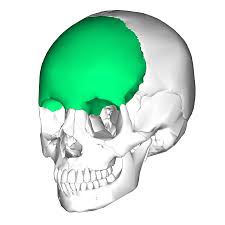
frontal bone
14 bones that form the face
cranial bones
foramina
frontal bone
facial bones
forms cranial cavity; protects brain
facial bones
frontal bone
cranial bones
temporal bones
forms cranial cavity; protects brain
facial bones
frontal bone
cranial bones
temporal bones
form the sides and roof of the cranial cavity
parietal bones
temporal bones
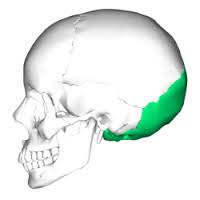
occipital bone
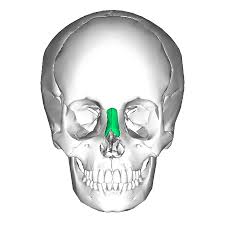
nasal bones
found in the middle part of the base of the skull
ethmoid
sphenoid
occipital bone
nasal bones
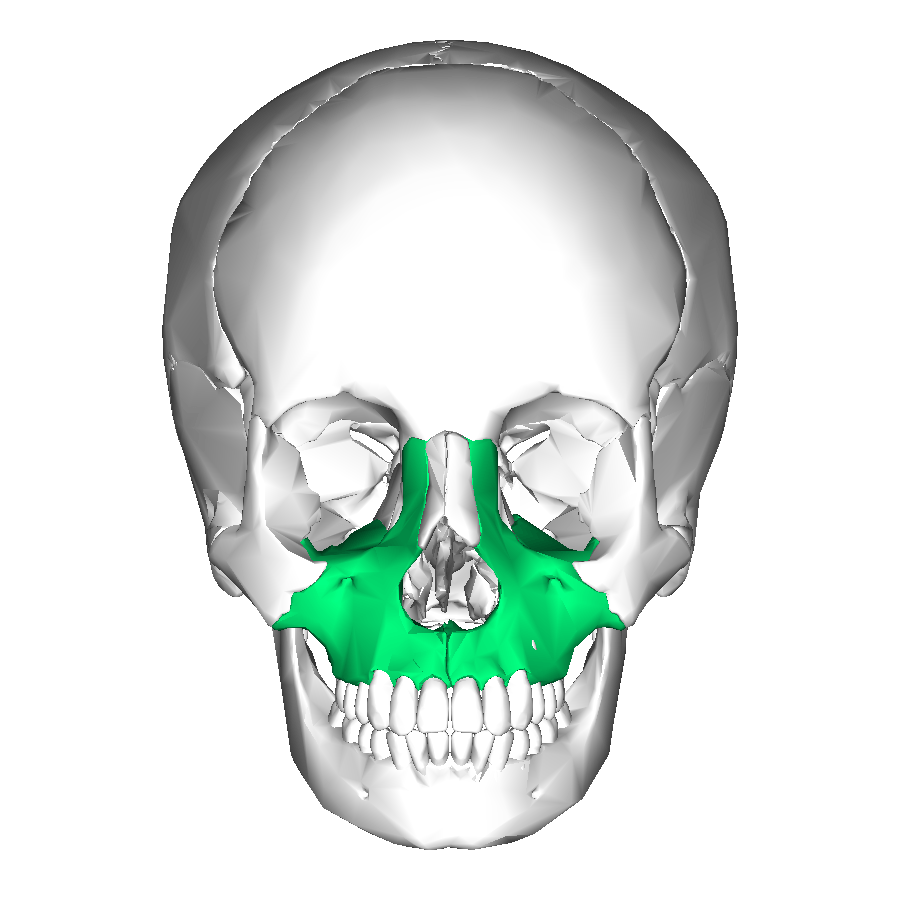
pair of bones that form the upper jawbone
maxillae
mandible
zygomatic
lacrimal
two bones known as the "cheek" bones
maxillae
zygomatic
lacrimal
palatine
smallest bones of the face; found at the medial wall of the orbits
maxillae
zygomatic
palatine
lacrimal
two "L" shaped bones found on the back of the hard palate
inferior nasal conchae
vomer
palatine
lacrimal
lower jaw bone
maxillae
mandible
nasal septum
orbits
holds the eyes; there are seven bones that form these depressions
nasal septum
foramina
vomer
orbits
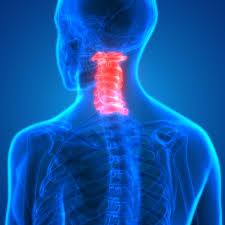
Which section of the vertebrae is highlighted
thoracic
cervical
lumbar
sacral
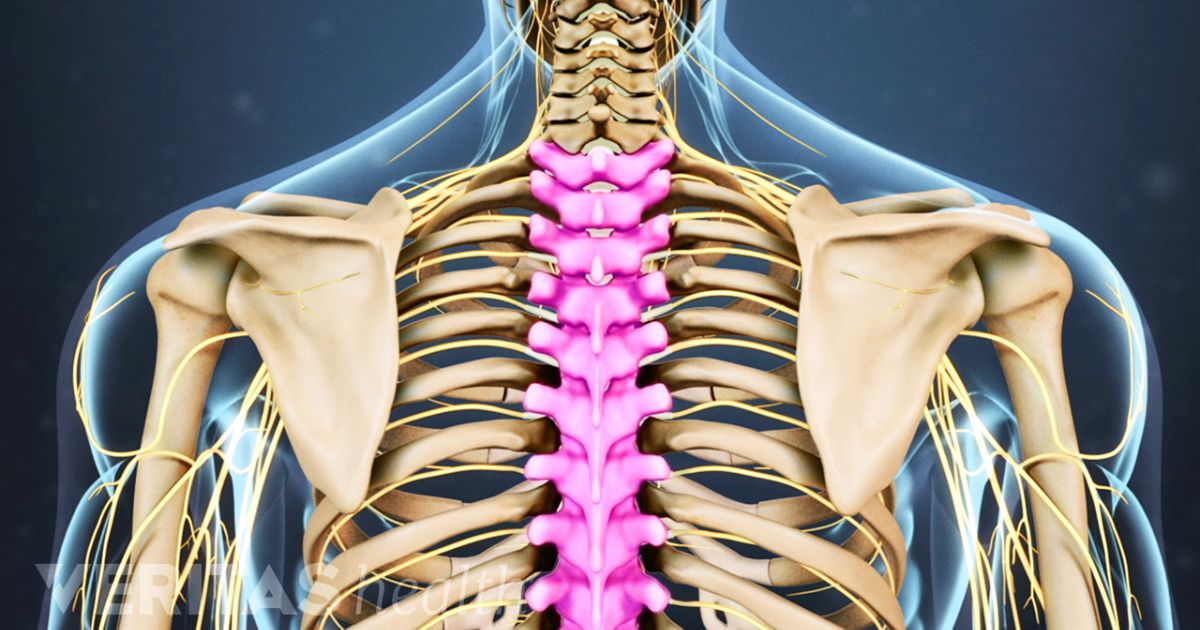
Which section of the vertebral column is highlighted
cervical
lumbar
thoracic
coccyx
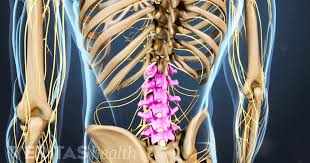
Which section of the vertebral column is shown?
cervical
lumbar
thoracic
sacral
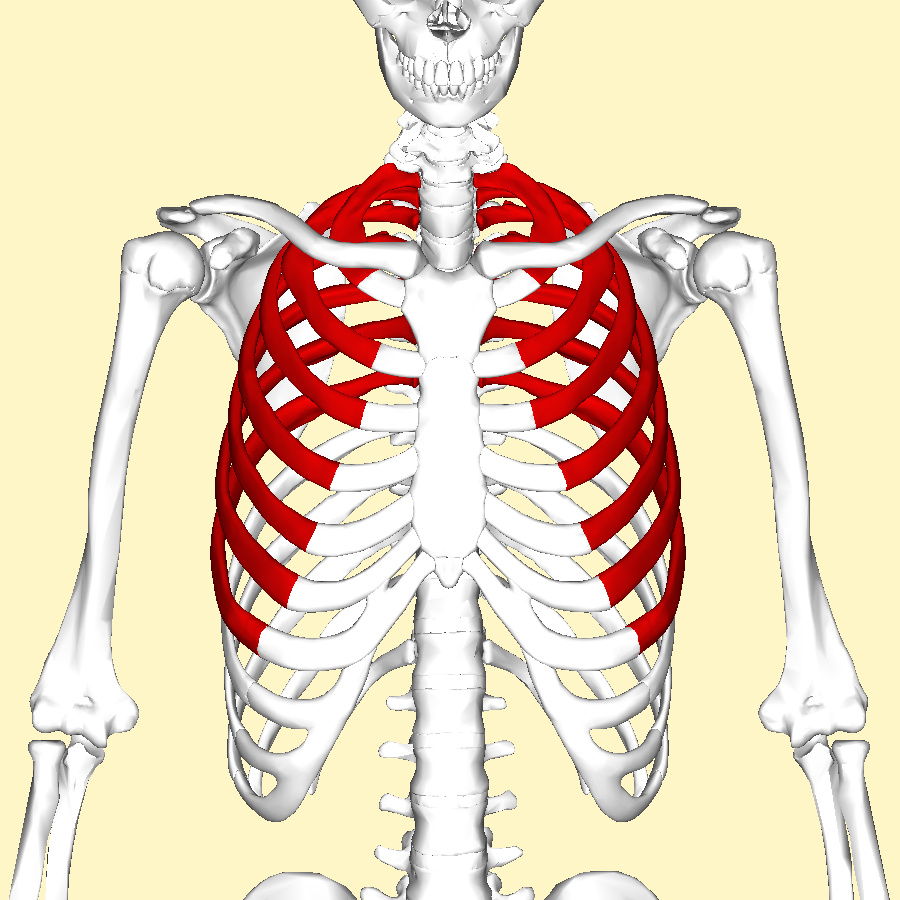
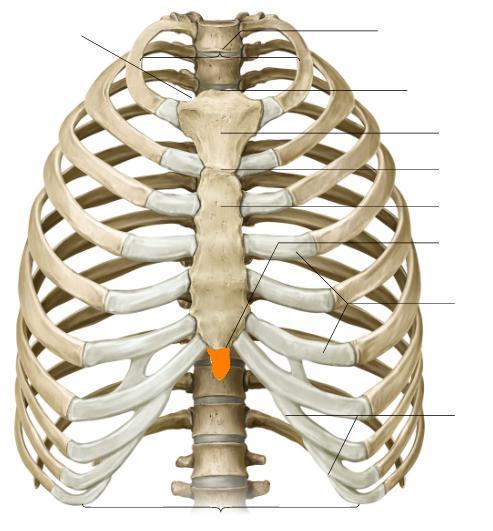
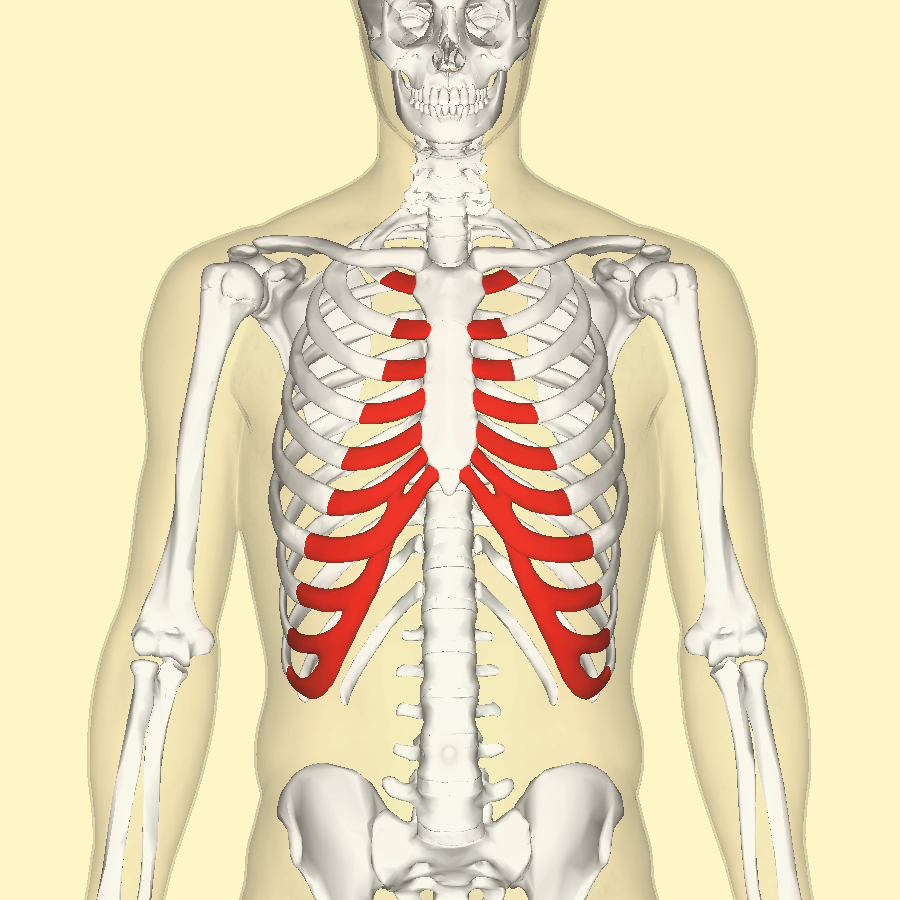
Which ribs are highlighted
true ribs
false ribs
floating ribs
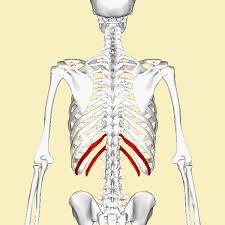
Which section of the rib cage is highlighted
true ribs
false ribs
floating ribs

Looking at the diagram how do true ribs differ from false ribs?
True ribs are attached directly to the sternum but the false ribs are not directly attached.
True ribs are not directly attached to the sternum but the false ribs are attached directly to the sternum
True ribs are not directly attached to the sternum but the false ribs are completely detached.
C1, (1st cervical vertebra) articulates with the head
Axis
Atlas

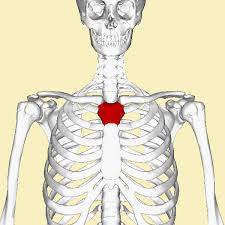
What bone is highlighted in red?
cranium
mandible
scapula
clavicle
C2, (2nd cervical vertebra) acts as pivot point for C1
Atlas
Axis

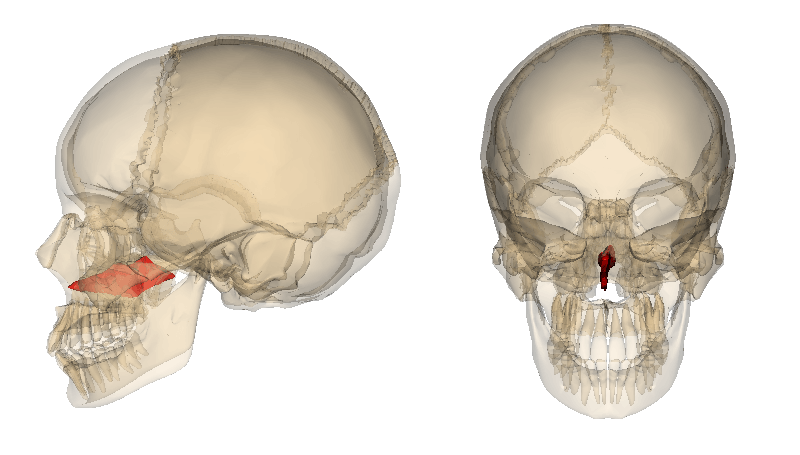
Identify the facial bone shown from different angles & highlighted in yellow.
Sphenoid
Ethmoid
Palatine
Vomer
When you see the word "articulate" with bones of the skeletal system what does that mean?
They join together.
They are on opposite sides of the body.
They are always made of sutures.
They are always only on the axial skeleton
What is the name of the connections between skull bones?
xiphoids
processes
sutures
synovials
Where do we find sinuses in the body?
skull/cranium
sternum
femur
mandible

What bone term is the yellowish areas on these skulls?
foramen
Fossas
Fontanels
Meatus's
Your ear canal is a sinus.
true
false
Where do fontanels occur?
Skulls of teens
Vertebra of adults
skull of infants
vertebra of infants

The largest hole seen on this inferior skull is a or an
fossa
fontanel
foramen
anchor

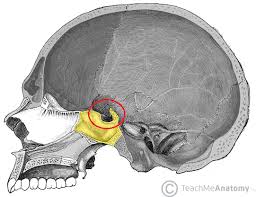
What is the structure in the picture?
foramen magnum
occipital condyles
external auditory meatus
zygomatic process
sella turcica
What is the cranium?
spine
skull
thigh
arm
The axial skeleton is
the head and trunk
the limbs
the whole skeleton
just the head
What is a cavity within a bone, filled with air and lined with mucous membrane?
whole
foramen
sinus
fontanel

