wayground logo

Free Printable Worksheets

NEW

Font size

S
M
L
XL
Worksheets

Photosynthesis, Cellular Respiration and Water Cycle Review

Total questions: 35

Worksheet time: 27mins

Name
Class
Date
1.
Which statement about photosynthesis is correct?
a)
Plants get the energy they need for photosynthesis from water.
b)
Plants get the energy they need for photosynthesis from soil.
c)
Plants get the energy they need for photosynthesis from sunlight.
d)
Plants do not require energy to perform photosynthesis.
2.
Which gas is removed from the atmosphere during photosynthesis?
a)
hydrogen
b)
oxygen
c)
nitrogen
d)
carbon dioxide
3.
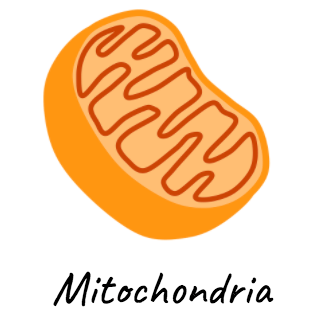
Which of the following structure is where cellular respiration occurs in the cell?
a)
nucleus
b)

chloroplast

c)
mitochondria
d)
vacuoles
4.
Cellular Respiration's goal is to
a)
make water
b)
make ATP
c)
make glucose
d)
make  oxygen
5.

In photosynthesis ...

a)

water is chlorinated

b)

light energy is changed to glucose

c)

osmosis happens

d)

ATP is made

6.

What is cellular respiration?

a)

the breakdown of glucose to release ATP

b)

the breakdown of glucose to release oxygen

c)

the breakdown of water to release sucrose

d)

the breakdown of carbon dioxide to release oxygen

7.

What are the products (output) of photosynthesis?

a)

sugar and glucose

b)

carbon dioxide

c)

sugar and Oxygen

d)

water and energy

8.

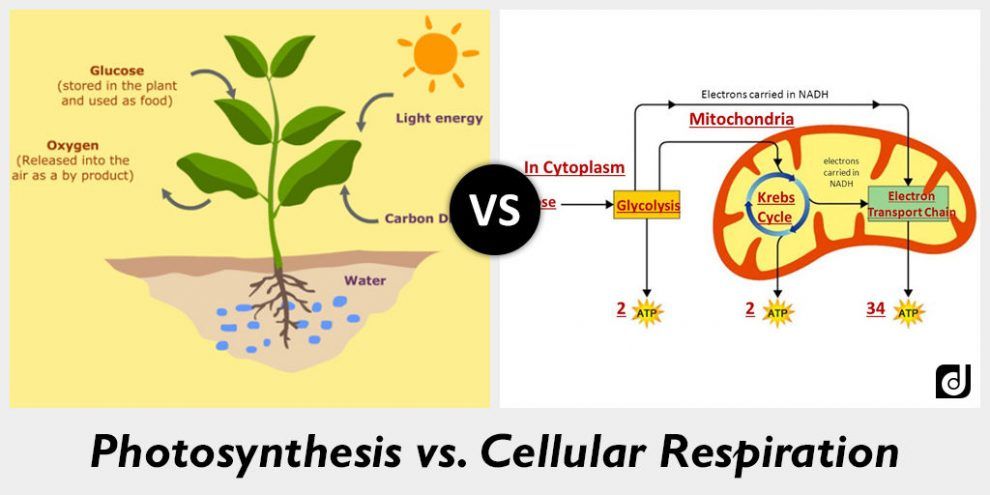
What is the correct equation for cellular respiration?

a)

O2 + C6H12O6 -> CO2 + H2O + ATP Energy

b)

O2 + C6H12O6 + Energy -> CO2 + H2O

c)

CO2 + H2O -> O2 + C6H12O6 + ATP Energy

d)

CO2 + H2O + Energy -> O2 + C6H12O6

9.

The mitochondria is the part of the cell that is responsible for ...

a)

photosynthesis

b)

anaerobic respiration

c)

cellular respiration

d)

fermentation

10.

A plant is releasing a gas. What is most likely the gas?

a)

CO2 (carbon dioxide)

b)

methane

c)

water vapor

d)

oxygen

11.

What is one of the reactants (input) of cellular respiration?

a)

energy

b)

glucose

c)

carbon dioxide

d)

water

12.

Both plants and animals do which of the following?

a)

Chemosynthesis

b)

Respiration

c)

Photosynthesis

d)

all of the answers

13.

You breathe in oxygen for

a)

photosynthesis

b)

anaerobic respiration

c)

fermentation

d)

cellular respiration

14.

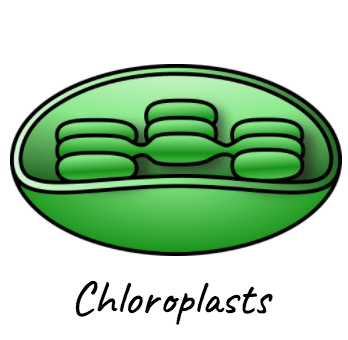
In which organelles (cell parts) does photosynthesis occur?

a)

mitochondria

b)

stomata

c)

nucleus

d)

chloroplast

15.

The energy carrier that the cell uses to power its day to day activities is

a)

ATP

b)

hemoglobin

c)

oxygen

d)

glucose

16.
Chloroplasts are...
a)
A type of pigment used for photosynthesis
b)
The location inside a plant cell where photosynthesis happens
c)
The location where cellular respiration happens
d)
Green beans
17.
Mitochondria are...
a)
The location in cells where photosynthesis happens
b)
Kidney beans
c)
The location in cells where cellular respiration happens
d)
A type of pigment used for cellular respiration
18.
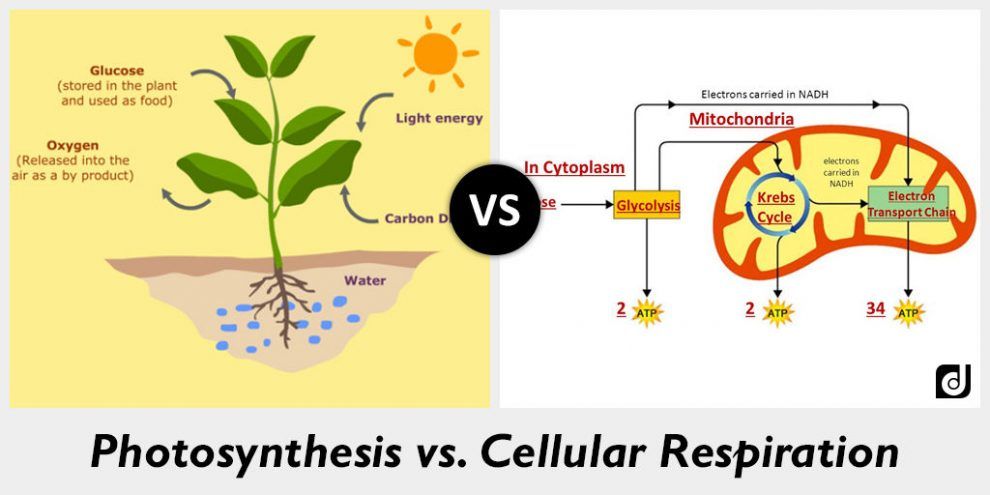
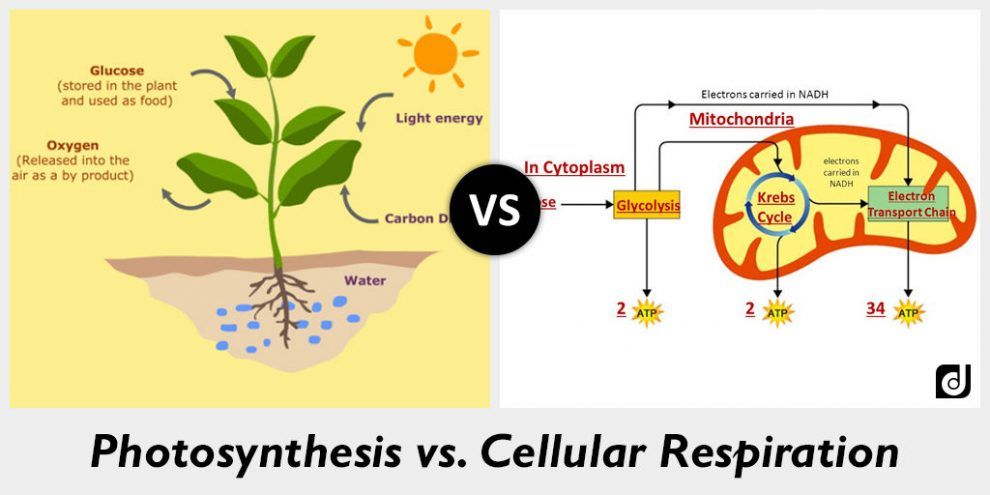
What is the purpose of cellular respiration?
a)
To turn energy from the sun into glucose
b)
To turn oxygen into glucose
c)
To turn ATP into glucose
d)
To turn glucose into energy in the form of ATP
19.
What is the purpose of photosynthesis?
a)
To use glucose to produce energy in the form of ATP
b)
To use energy from sunlight to produce glucose
c)
To use oxygen to produce glucose
d)
To produce energy for all cells in an animal's body
20.
Glucose is...
a)
A product of photosynthesis and cellular respiration
b)
A reactant of photosynthesis and cellular respiration
c)
A product of photosynthesis and a reactant of cellular respiration
d)
A reactant of photosynthesis and a product of cellular respiration
21.
Oxygen is...
a)
A product of photosynthesis and cellular respiration
b)
A reactant of photosynthesis and cellular respiration
c)
A product of photosynthesis and a reactant of cellular respiration
d)
A reactant of photosynthesis and a product of cellular respiration
22.
Carbon dioxide is...
a)
A product of photosynthesis and cellular respiration
b)
A reactant of photosynthesis and cellular respiration
c)
A product of photosynthesis and a reactant of cellular respiration
d)
A reactant of photosynthesis and a product of cellular respiration
23.
Water is...
a)
A product of photosynthesis and cellular respiration
b)
A reactant of photosynthesis and cellular respiration
c)
A product of photosynthesis and a reactant of cellular respiration
d)
A reactant of photosynthesis and a product of cellular respiration
24.
ATP is...
a)
A form of energy the cell can use that is produced by cellular respiration
b)
A kind of sugar produced in photosynthesis
c)
A battery
25.
Sunlight is...
a)
Needed for photosynthesis and cellular respiration
b)
Needed for photosynthesis to provide energy
c)
Needed for cellular respiration to provide oxygen
26.
Plants can...
a)
Only use photosynthesis
b)
Only use cellular respiration
c)
Use photosynthesis and cellular respiration
27.
Animals can...
a)
Only use photosynthesis
b)
Only use cellular respiration
c)
Use photosynthesis and cellular respiration
28.
Reactants are...
a)
Substances present at the beginning of a chemical reaction
b)
substances present at the end of a chemical reaction
29.
Products are...
a)
Substances present at the beginning of a chemical reaction
b)
substances present at the end of a chemical reaction
30.
Cellular respiration and photosynthesis are related because...
a)
They both make glucose
b)
They both require oxygen
c)
The products of one reaction are the reactants of the other reaction
d)
They both make carbon dioxide
31.

What is the role of the sun in the water cycle?

a)

provide heat energy for evaporation

b)

provide heat energy for condensation

c)

dry out the soil for runoff to occur

d)

provide thermal energy for accumulation

32.

What process is shown by letter B in the diagram?

a)

condensation

b)

transpiration

c)

evaporation

d)

precipitation

33.

What process is shown by letter A in the diagram?

a)

condensation

b)

evaporation

c)

accumulation

d)

precipitation

34.

What is it called when plants release water vapor through their leaves?

a)

sublimation

b)

respiration

c)

transpiration

d)

precipitation

35.

Water that is constantly moving and recycled above, on, and under the Earth is called ___.

a)

evaporation

b)

infiltration

c)

run off

d)

water cycle