wayground logo

Free Printable Worksheets

Font size

S
M
L
XL
Worksheets

Welcome to Science

Total questions: 45

Worksheet time: 45mins

Name
Class
Date
1.
Which of these is NOT a practice of science?
a)
asking questions
b)
analyzing data
c)
making claims without evidence
d)
carrying out investigations
2.
Scientists study the natural world through observation and ___________.
a)
studying
b)
experimentation
c)
reading
d)
listening
3.

Scientists make ___________________ about the world around them.

a)

observations

b)

opinions

4.

Scientists use knowledge to _________ the world around us.

a)

write papers about

b)

to target certain groups in

c)

understand and explain

d)

express opinions about

5.

_______________ is using evidence to learn about the world around us.

a)

English

b)

History

c)

Math

d)

Science

6.

What does Biology mean?

a)

The study of rocks

b)

The study of life

c)

The study of stars

d)

The study of fire

7.

If you were to study how to cook foods, what type of science would that be?

a)

Biology

b)

Physics

c)

Earth Science

d)

Chemistry

8.

If I told you that "Marine" meant "ocean" - what would you think Marine Biology means?

a)

The study of fish in rivers

b)

The study of water

c)

The study of ocean water

d)

The study of plant and animal life in the ocean

9.

If you were studying the volcano on Hawaii, what type of science is that?

a)

Biology

b)

Marine Biology

c)

Mountain Biology

d)

Earth Science

10.

What famous scientist discovered the equation E = MC2 ?

a)

Tesla

b)

Edison

c)

Einstein

d)

Newton

11.

Which of these can be studied through science?

a)

unicorns

b)

mind-reading

c)

ghosts

d)

butterflies

12.

What do you call the science of studying space?

a)

astrology

b)

astronomy

c)

physics

d)

chemistry

13.

Good scientists do all of the following, EXCEPT:

a)

Make observations

b)

Ask critical questions

c)

Give up when they don't get their expected results

d)

Adjust failed attempts and keep trying

14.

A characteristic that describes a scientist is:

a)

Curious

b)

Boring

c)

gives up easily

d)

sad

15.

Scientists use their 5 senses to make what?

a)

experiments

b)

data tables

c)

results

d)

observations

16.

All scientists wear white lab coats and safety goggles.

a)

True

b)

False

17.

In which branch of science would you learn about the weather?

a)

Biology

b)

Physics

c)

Meteorology

d)

Pseudoscience

18.

Which of the following studies animals?

a)

zoologist

b)

meteorologist

c)

chemist

d)

geologist

19.

Technology is the the use of ---------------to invent tools and new ways of doing things .

(a)  

20.

people need technology to -------------their problems and improve their lives.

(a)  

21.
Coined the term radioactivity.
a)
Richard Feynman
b)
Marcello Malpighi
c)
Neils Bohr
d)
Marie Curie
22.

My inventions made it possible for people to enjoy the benefits of electricity. My most famous invention is the lightbulb.

a)

Alessandro Volta

b)

Thomas Edison

c)

Nikola Tesla

d)

Albert Einstein

23.

Who is the first person to receive two Nobel prizes?

a)

Albert Einstein

b)

Sir Alexander Fleming

c)

Mother Theresa

d)

Marie Curie

24.
In the event of any lab emergency, who do you notify?
a)
nurse
b)
instructor
c)
friends
d)
principal
25.
When you are in the lab, you should wear:
a)
bulky sweatshirts
b)
dangling jewelry
c)
open toe shoes
d)
closed toe shoes
26.
The correct way to move about the lab is to:
a)
run
b)
hurry
c)
walk
d)
skin
27.
When is it OK to eat or drink in the lab?
a)
Always
b)
Never
28.

why do we use goggles/eye protection?

a)

to stop our eyes from hurting

b)

to help you see the board

c)

to look cool

d)

to protect your eyes from chemicals, heat, or broken glassware

29.

after completing an experiment, all chemical waste should be

a)

left at your lab station for the next class

b)

disposed of according to your teacher's instructions

c)

dumped in the sink

d)

taken home

30.

( Fill in the blank) Long hair should be ____________ in the laboratory.

a)

tied back

b)

cut

c)

down

d)

curled

31.
You have accidentally broken a test tube and spilled a chemical on the table. Which of the following best explains what you should do?
a)
Quickly dispose of the glass, wipe up the spill with the nearest cloth, and hope nobody notices.
b)
Throw the glass into the nearest trash bin and let the spill air-dry.
c)
Use water and paper towels to clean up the spill; place the broken test tube in the disposal container specified for sharp objects.
d)
Caution your lab partners to avoid the area while you inform the teacher of the small accident.
32.
When you finish working with chemicals, biological specimens, and other lab substances, always 
a)
wipe your hands on your clothes
b)
wipe your hands on a towel
c)
wash your hands thoroughly with soap and water
d)
treat your hands with skin lotion
33.
If you get something in your eyes, how long do you need to use the eyewash station?
a)
15 - 20 seconds
b)
5 minutes
c)
15 - 20 minutes
d)
Don't use the eyewash.
34.

Eating, drinking, or chewing gum in the experimental work area is...

a)

okay, as long as you share

b)

allowed once you've cleaned up

c)

encouraged

d)

forbidden

35.

Never leave ___ unattended.

a)

a dissected pig

b)

a test tube

c)

an active heat source

d)

a freshman

36.
Keeping your work area neat and clean is important because:
a)
My teacher is a neat-freak
b)
I won't lose my supplies in the clutter.
c)
It keeps the room from looking messy.
d)
It helps prevent accidents.
37.
Which of the following IS considered safety equipment in our classroom?
a)
Eyewash Station
b)
Emergency Shower
c)
Fire Extinguisher
d)
All of the Above.
38.
Bob and Lizzy are working in the lab.  They are goofing off and break a glass test tube.   Which rule did the break?
a)
Know the location of the safety equipment. 
b)
Do not eat or drink in the lab. 
c)
Read instructions. 
d)
No playing around!
39.
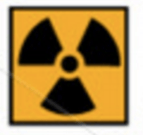
What safety symbol is this? 
a)
biohazard
b)
radiation
c)
toxic
d)
corrosive
40.
What does this symbol indicate?
a)
Corrosive substances are present; protect your hands.
b)
Wash your hands.
c)
Extreme temperatures are present; wear appropriate gloves.
d)
Bacteria are present.
41.
What safety symbol is this?
a)
Flammable 
b)
Oxidizing Agent
c)
No Open Flame
d)
Explosion
42.
What safety Symbol is this?
a)
Flamable
b)
Oxidizing Agent
c)
No Open Flame
d)
Explosion
43.
a)
Poison/Toxic
b)
Bio Hazard
c)
Radioactive
d)
Corrosive
44.
a)
Very Toxic
b)
Bio hazard
c)
Recycle
d)
Electric 
45.
a)
Oxidizing Agent
b)
Flamable
c)
Fire Extinguisher
d)
No Open Flame