
 Worksheets
State, Structure, Heat, Temperature... the works
Total questions: 60
Worksheet time: 36mins
Matter with a definite shape and a definite volume is known as
gas
solid
liquid

Which type of motion in the figure best represents the movement of gas particles?
Motion 1
Motion 2
Motion 3
Motion 4
What happens to matter as its temperature increases?
The average kinetic energy of its particles decreases
The average thermal energy of its particles decreases
The particles gain kinetic energy
The particles lose potential energy
The more energy that particles have, the ___ they move.
slower
faster
What must happen for molecules to move slower?
Kinetic energy is not changing. Temperature decreases.
Kinetic energy and temperature depend on the molecules.
Kinetic energy is decreasing and temperature is decreasing.
Kinetic energy is decreasing and temperature is increasing.
Anything that has mass and volume is called ___
energy
temperature
heat
matter
The hotness or coldness of an object is called ___
thermal energy
kinetic energy
temperature
heat
This is the smallest unit of matter
molecules
atoms
particles
The energy of movement is ___.
potential energy
kinetic energy
mechanical energy
A liquid has _______________ . (Pick 3)
A lot of space between particles.
Very little space between particles.
Particles that have have no definite pattern.
Particles hold that a very definite pattern.
Particles that freely flow past each other.

Observe the diagram. Which statement is true about the kinetic energy of the molecules in the containers?
The molecules are moving faster in Diagram A
The molecules are moving slower in Diagram A
The molecules are moving at the same rate in both diagrams

Observe this picture. These diagrams support the fact that heat always moves:
from something hot/warm toward something cold/cool
from something cold/cool toward something hot/warm.

A gas has _______________ . (Pick 3)
A lot of space between particles
Very little space between particles
Particles with no definite pattern.
Particles that hold a very definite pattern.
Particle that bounce all over the place.

The molecules in this state of matter are showing what phase?
solid
liquid
gas
Volume is _______________________.
the amount of matter an object has.
the amount of space an object occupies.
anything that mass and volume.

A solid has _______________ . (Pick 3)
A lot of space between particles
Very little space between particles
Particles with no definite pattern.
Particles that hold a very definite pattern.
Particles that only vibrate in place.
Walking outside on a hot day and having your solid popsicle turn into a liquid is an example of ______________ .
deposition
evaporation
freezing
melting

The state of matter being demonstrated in this phase is a...
solid
liquid
gas
When you see drops of liquid water on your cold soda can caused by cooling of the water vapor in the air, ______________ has occurred.
freezing
condensation
sublimation
melting
Which of the following phase changes is a result of removing heat energy?
melting
evaporation
freezing
sublimation

The molecules in this state of matter are showing what phase?
solid
liquid
gas
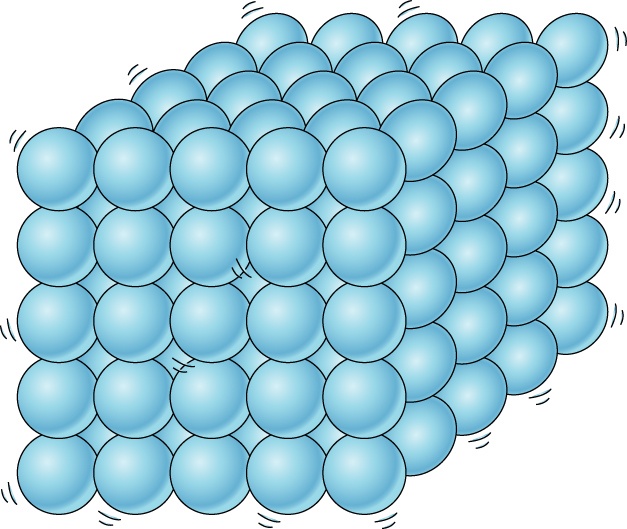
What state of matter?
Solid
Liquid
Gas
Plasma!!!
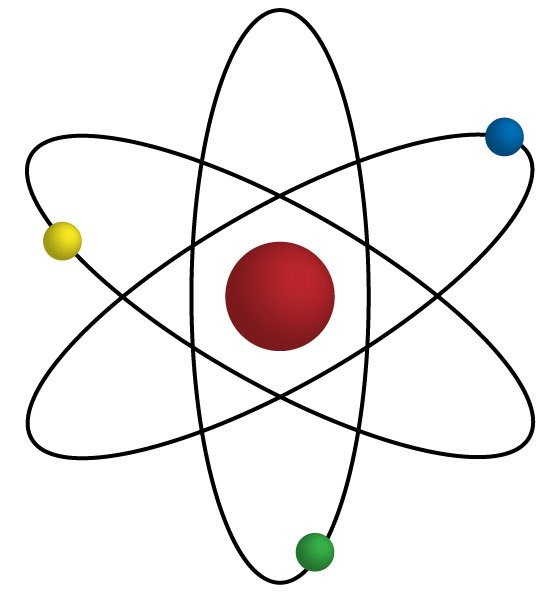
What are the 3 parts of an atom?
protons, neutrons, and positives
neutrons, negatives, and electrons
positives, negatives, and electrons
protons, neutrons, and electrons


How many hydrogen atoms are in a molecule of sugar? C12H22O11
12
22
11
45
How many hydrogen atoms are in a molecule of sugar? C12H22O11
12
22
11
45
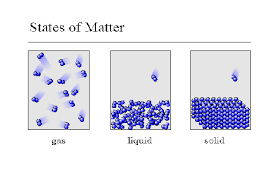

Boiling
liquid to gas
gas to solid
gas to liquid

Particles in a ______________________ move quickly and are far apart.
gas
solid
liquid
The slower the particles in a substance move,
the colder it is.
the warmer it is.
the more energy it has.

What is the total number of atoms in an ammonia (NH3) molecule?
1
2
3
4
Basic state of matter with the least amount of energy.
solid
liquid
gas

What is happening when my ice cream changes from a solid to a liquid?
freezing
melting
burning
Basic state of matter with an intermediate (medium) amount of energy.
solid
liquid
gas
The energy of MOTION is...
chemical energy
radiant energy
potential energy
kinetic energy
Basic state of matter with the greatest amount of energy.
solid
liquid
gas

