
 Worksheets
Lively Landforms
Total questions: 53
Worksheet time: 34mins

What landform do you see in the photo?
Mountains
Volcano
Plateau
Delta
Which type of landscape would you find in Australia?
Mountain
Human
Coastal
All of the above

What type of boundary is shown in the diagram?
Divergent
Convergent
Transform

What type of boundary is shown in the diagram?
Divergent
Convergent
Slide/Transform


What is Pangea?
the name of a German scientist
the name of a supercontinent that existed millions of years ago
another name for continental drift
the name of an ancient fossil
What is Wegener's idea that continents are slowly moving over Earth's surface called?
divergence
faults
plates
continental drift
Boundary between 2 plates that are sliding past one another
Transform fault boundary
Convergent boundary
Divergent boundary
Reverse fault
Which layer of Earth flows slowly and causes the crust to move?
Crust
Mantle
Inner Core
Outer core
________________ currents drive Earth's plate movement.
ocean
atmosphere
wind
convection
What is the motion of Earth's plates like?
fast and in stages
slow and in stages
fast and constant
slow and constant
Once magma reaches the Earth's surface it is called.......
Silica
Lava
Rock
Molten
Which is the correct order of the Earths layers?
inner core, outer core, mantle, crust
crust, inner core, outer core, mantle
crust, mantle, inner core, outercore
crust, mantle, outer core, inner core
An instrument used to detect and record earthquakes is called (a) .
_______________is a measure of the “size,” or amplitude, of the seismic waves generated by an earthquake source and recorded by seismographs.
magnitude
intensity
(a) is a measure of the strength of earthquakes, developed by Charles F. Richter and presented in his landmark 1935 paper, where he called it the "magnitude scale".
What is the shaking of the Earth’s crust caused by a release of energy?
Earthquake
Epicenter
Fault
Plate
Tsunamis are caused by
underwater disturbances such as earthquakes, landslides, and volcanoes.
wind and the gravitational pull of the moon.
Regular waves are caused by
underwater disturbances such as earthquakes, landslides, and volcanoes.
wind and the gravitational pull of the moon.
Tsunamis can be
as high as 100 feet.
as high as 2 feet.
as high as 1,000 feet.
as high as 10,000 feet.
Experts tell people to evacuate before a tsunami occurs. What does evacuate mean?
to stay where you are
to leave the area
to take a vacation
to gather food and supplies
If a tsunami is head to your area which of the following should you do?
Climb a tall tree
Go underground to a basement
Go to higher ground like a hill or mountain
Just stay and don't move from your area
The huge broken pieces or the outer crust of the earth.
mantle
core
plates
asthenosphere
Which tectonic plate is located at the center of the ring of fire?
African
North American
Eurasian
Pacific

Mid-oceanic ridges form where two plates are separating and new ocean floor is being made. What type of tectonic boundary is found in this area?
Divergent Boundary
Strike-Slip Boundary
Transform Boundary
Convergent Boundary

In the diagram representing Earth’s tectonic plates, which plate is labeled as B?
North American plate
Eurasian Plate
Australian plate
African Plate
Match the following words to their definitions:
Lava
Magma that has reached the surface of the earth
Landform
Naturally formed feature on earth's surface, eg: a mountain
Plateau
A large, raised area of land that is flat on top
Crust
Outer layer of the earth
Landslide
Large-scale movement of soil, mud, rocks or snow carried by the force of gravity downhill
Rearrange the layers of the earth starting with the centre:
Inner Core
Crust
Asthenosphere
Mantle
Outer Core
What is Wegener's idea that continents are slowly moving over Earth's surface called?
divergence
faults
plates
continental drift
(a) currents drive Earth's plate movement.
In the diagram representing Earth’s tectonic plates, which plate is labeled as B?
North American plate
Eurasian Plate
Australian plate
African Plate
Tectonic plates consist of
continental crust
mesospheric crust
both continental and oceanic crust
oceanic crust
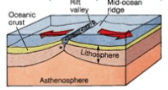
divergent
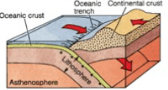
convergent
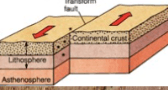
transform
Which type of mountain is Mt. Everest?
Block mountain
Fold mountain
Voilcanic mountain
Which mountain is the tallest in Australia?
Mt. Bogong
Mt. Buller
Mt. Kosciuszcko
Mt. Cannibal
Volcanoes can only form at the edge/margins of tectonic plates.
True
False
Label the parts of the volcano.


Where is the Ring of Fire located?
Atlantic Plate
Pacific Plate
Japanese Plate
North American Plate

