wayground logo

Free Printable Worksheets

Font size

S
M
L
XL
Worksheets

Review

Total questions: 123

Worksheet time: 1hrs 20mins
Name
Class
Date
1.
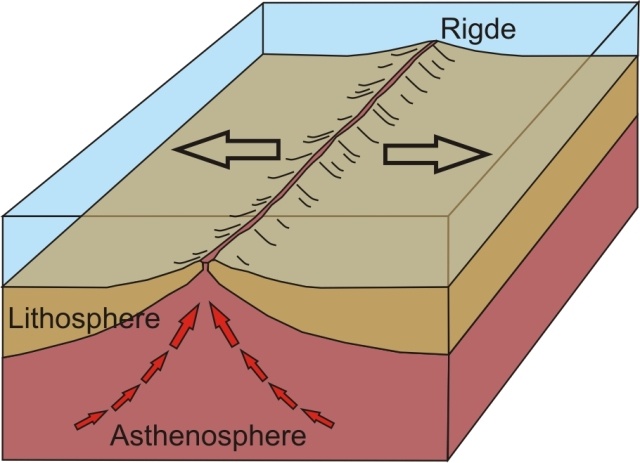
What kind of plate boundary is shown here?
a)
divergent
b)
convergent
c)
transform
d)
subducting
2.
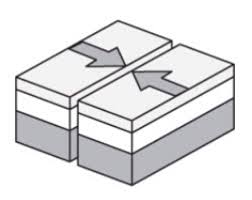
What kind of plate boundary is shown here?
a)
divergent
b)
convergent
c)
transform
d)
submergent
3.
What kind of plate boundary is shown here?
a)
divergent
b)
convergent
c)
transform
d)
strike slip
4.
What geologic feature/event you be most likely to find at a transform boundary?
a)
Earthquakes
b)
Volcanoes
c)
Mountains
d)
Rift Valleys
5.
What geologic feature/event would you most likely to find at a divergent boundary between two pieces of oceanic crust?
a)
Rift Valley
b)
Mid-Ocean Ridge
c)
Island Arc
d)
Flat land
6.
What geologic feature/event would you most likely to find at a convergent boundary between two pieces of continental crust?
a)
Volcano
b)
Mountain
c)
Rift
d)
Island Arc
7.
A subduction zone is formed...
a)
when one tectonic plate sinks below another
b)
at every type of convergent plate boundary
c)
at every type of divergent plate boundary
d)
at transform boundaries
8.
Name the boundary
a)
convergent boundary
b)
divergent boundary
c)
transform boundary
d)
sergent boundary
9.
The area where two or more plates meet is called a __________________.
a)
fault
b)
plate boundary
c)
plate edge
d)
ring of fire
10.

What type of landform occurs at a divergent boundary between two continental plates?

a)

seafloor spreading

b)

rift valley

c)

earthquake

d)

mountain range

11.

What occurs between two oceanic plates at a divergent boundary?

a)

rift valley

b)

sea floor spreading

c)

volcanic mountain range

12.

___________, meaning "all land," is the name of the great landmass that existed millions of years ago.

a)

lithosphere

b)

Pangaea

c)

subduction zone

d)

tectonic

e)

Wegener

13.

A __________ plate is a large slab of crust and upper mantle that moves over the earth's surface.

a)

lithosphere

b)

Pangaea

c)

subduction zone

d)

tectonic

e)

Wegener

14.

____________ is the scientist credited with the theory of continental drift (which led to the theory of plate tectonics).

a)

lithosphere

b)

Pangaea

c)

subduction zone

d)

tectonic

e)

Wegener

15.

The diagram shows a landform on Earth. How did the movement of Earth’s plates form the landform?

a)

Two oceanic plates slid past each other.

b)

Two continental plates collided.

c)

One continental plate slid past an oceanic plate.

d)

One continental plate subducted beneath an oceanic plate.

16.

These are NOT plate boundary features. They are areas where hot mantle plumes push up through the lithospheric plates to create volcanic islands such as Hawaii.

a)

Hotspots

b)

Convergent Boundary

c)

Divergent Boundary

d)

Transform Boundary

17.
What is the shaking of the Earth’s crust caused by a release of energy?
a)
Earthquake
b)
Epicenter
c)
Fault
d)
Plate
18.
Which of these boundaries/stresses/faults all correctly go together?  Choose all that apply.
a)
normal, divergent, tension
b)
reverse, convergent, shearing
c)
strike-slip, transform, compression
19.
Where is the point at which the first movement occurs during an earthquake?
a)
Epicenter
b)
Focus
c)
Fault
d)
Plate
20.
Where is the point on the Earth’s surface directly above the focus of an earthquake?
a)
Epicenter
b)
Fault
c)
Hypocenter
d)
Tremor
21.

Type of fold: downfolds or troughs

a)

anticlines

b)

synclines

c)

monoclines

d)

benchmarks

22.
The major force that forms folded mountains.
a)
compressional force
b)
impression force 
c)
depressions force
d)
plateau
23.

An upward fold in the rock that makes an arch

a)

anticline

b)

syncline

c)

folded mountain

d)

fault block

24.

What is the correct order of Earth's Layers based on Composition?

a)

Crust - Outer core - Inner Core - Mantle

b)

Mantle - Outer core - Inner core - Crust

c)

Crust - Mantle - Outer Core - Inner Core

d)

Crust - Mantle - Core

25.

Earth's Inner core is?

a)

A layer of rock that forms Earth's outer surface

b)

A layer of molten (liquid) iron and nickle

c)

A layer of solid iron and nickel

d)

A solid/plastic layer of Peridotite that flows over time?

26.

As you move from the surface of the Earth to the center, pressure ......

a)

decreases

b)

increases

27.
What are the puzzle pieces of the Earth's surface called?
a)
Tectonic plates
b)
Puzzles
c)
Earthquakes
28.
This is a picture of the rock cycle.  In the upper right hand, Northeast, corner the blank should be filled with the term _____________________ because this comes after erosion and before cementation
a)
sediments
b)
magma
c)
igneous rock
d)
metamorphic rock
29.
This is a picture of the rock cycle.  In the upper left-hand, Northwest, corner the blank should be filled with the term _____________________ because this comes after cementation and before heat and pressure
a)
sediments
b)
sedimentary rock
c)
igneous rock
d)
metamorphic rock
30.
This is a picture of the rock cycle.  In the lower left-hand, Southwest, corner the blank should be filled with the term _____________________ because this comes after heat and pressure and before melting.
a)
sediments
b)
sedimentary rock
c)
igneous rock
d)
metamorphic rock
31.
This is a picture of the rock cycle. At the bottom in the cardinal direction of  South,  the blank should be filled with the term _____________________ because this comes after melting and before solidification.
a)
magma
b)
sedimentary rock
c)
igneous rock
d)
metamorphic rock
32.

These volcanic features are formed underground but may be exposed millions of years later if the rocks at the surface are eroded

a)

Dome Volcanoes

b)

Composite Cones

c)

Intrusive Volcanic Features

d)

Extrusive Volcanic Features

33.

This intrusive feature is much larger than the other intrusive volcanic features and is formed when a giant underground reservoir of magma cools and hardens to form granite

a)

Dyke

b)

Sill

c)

Laccolith

d)

Batholith

34.

This intrusive feature is a vertical column of volcanic rock which is formed in the vent of a volcano when the magma present cools and hardens

a)

Dyke

b)

Sill

c)

Plug

d)

Laccolith

35.

This intrusive volcanic feature is formed when magma moving upward toward the surface cools and solidifies

a)

Dyke

b)

Sill

c)

Laccolith

d)

Batholith

36.

A volcanic eruption may be so explosive that the whole top of the volcano sinks into the magma below. A huge crater is left which may be many kilometers in diameter.

a)

Lava (basalt) plateaus

b)

Composite Cones

c)

Dome Volcanoes

d)

Calderas

37.

Sometimes large quantities of lava ooze out slowly onto the surface from fissures (surface cracks). These fissures eruptions can cause lava to spread out over a very wide area.

a)

Ash and cinder cones

b)

Composite cones

c)

Lava (basalt) plateaus

d)

Calderas

38.

This type of rock if formed by accumulation of material derived from erosion and weathering of other rocks

a)

Igneous

b)

Sedimentary

c)

Metamorphic

39.

This type of rock is formed from crystallization and solidification of magma

a)

Igneous

b)

Sedimentary

c)

Metamorphic

40.

This rock type is altered from original state by intense heat and pressure

a)

Igneous

b)

Sedimentary

c)

Metamorphic

41.

Which of the following volcanoes is another name for the stratovolcano?

a)

Caldera

b)

Ash and Cinder cone

c)

Composite

d)

Shield

42.

Which volcano has gentle sloping sides and a broad base?

a)

Composite

b)

Shield

c)

Ash and Cinder cone

d)

Caldera

43.
Weathering is...
a)
the breaking apart, wearing away, or dissolving of rock. 
b)
the scraping away of materials
c)
material that comes from the weathering of rock
d)
the moving of sediment and rock from one place to another. 
44.
Erosion is...
a)
the breaking apart, wearing away, or dissolving of rock. 
b)
the scraping away of materials
c)
material that comes from the weathering of rock
d)
the moving of sediment and rock from one place to another. 
45.
Which is an example of Erosion?
a)
Sand being pulled away from a beach by waves.
b)
Roots of a tree breaking apart a rock
c)
water in a river smoothing down rocks.
46.
What does physical weathering involve?
a)
water
b)
wind
c)
tempurature
d)
All of the Above
47.
Which of these is an example of erosion?
a)
light shining onto a mountain
b)
wind blowing away sediment
c)
rain breaking down rock
d)
All of the above
48.
What is the process called when a glacier deposits rocks in oceans and lakes?
a)
Weathering
b)
Erosion
c)
Minerals
d)
Deposition 
49.

What is an example of mechanical weathering ?

a)

Carbonation

b)

Freeze-thaw action

c)

The Burren

d)

Scree

50.

What are the rocks that break off and fall to the bottom of a mountain called?

a)

Screech

b)

Tree

c)

Free

d)

Scree

51.

What gas has to be present to form a weak carbonic acid?

a)

oxygen

b)

carbon minoxide

c)

carbon dioxide

d)

nitrogen

52.

Where does the water and carbon dioxide mix together to form a weak carbonic acid?

a)

In the ground

b)

In the atmosphere

c)

At the sun

d)

In the rocks

53.

True or False, Limestone contains calcium carbonate

a)

False

b)

True

54.

Which of the following is NOT an agent of denudation?

a)

weathering

b)

folding

c)

mass movement

d)

erosion

55.

_________________happens when gravity moves loose material downhill.

a)

Weathering only

b)

Mass movement

c)

Erosion only

d)

Gravity

56.

Statue of Liberty has changed colors over time because oxygen has caused the surface of the copper it is made of to change into a new chemical (just like copper pennies turn green). What kind of weathering is this?

a)

chemical weathering

b)

physical weathering

57.

Acid rain has worn away the features on this statue. What type of weathering is this?

a)

chemical weathering

b)

physical weathering

58.

The rocks in this stream have gradually worn down from the water and particles in the water rubbing on them over time (abrasion). What kind of weathering is this?

a)

chemical weathering

b)

physical weathering

59.

This freezing water is expanding, causing the crack in the rock to widen (frost action). What kind of weathering is this?

a)

chemical weathering

b)

physical weathering

60.

These plant roots are widening cracks in the rock. What kind of weathering is this?

a)

chemical weathering

b)

physical weathering

61.

This arch was formed by wind and particles carried by the wind rubbing on the rock over time (abrasion). What type of weathering is this?

a)

chemical weathering

b)

physical weathering

62.

Does this show signs of physical or chemical weathering?

a)

Physical Weathering

b)

Chemical Weathering

63.
Deltas are built up by -
a)
deposition
b)
leaching
c)
abrasion
d)
erosion
64.
A hot wet climate causes weathering to take place -
a)
slowly
b)
rapidly
c)
unevenly
d)
at the same rate as when the climate is dry and cool
65.
The most important factors in determining the rate of weathering are - 
a)
carbon dioxide and acid rain
b)
abrasion and acids from plant roots
c)
animal actions and oxygen
d)
rock type and climate
66.
 Chemical weathering occurs more rapidly in a ____________ climate.
a)
Mild
b)
Cold
c)
Dry
d)
Hot
67.
Which is NOT a method of transportation?
a)
Abrasion
b)
Saltation
c)
Traction
d)
Suspension
68.
Where would you find a waterfall?
a)
Upper course
b)
Middle Course
c)
Lower Course
69.
What landform can you see in the picture?
a)
Floodplain
b)
Delta
c)
Waterfall
d)
Oxbow lake
70.
"Rocks rolled along the river bed" is what type of transportation?
a)
Saltation
b)
Suspension
c)
Traction
d)
Solution
71.
"When rocks scrape along the river bank and bed" is what type of erosion?
a)
Attrition
b)
Abrasion
c)
Solution
d)
Hydraulic Action
72.
"This is where plants, trees, or buildings collect the precipitation" What am I?
a)
Interception
b)
Infiltration
c)
Percolation
d)
Surface runoff
73.
"Where the water filters into the ground and into the tiny pores in the soil" What am I?
a)
Infiltration
b)
Percolation
c)
Precipitation
d)
Interception
74.
"I am the movement of water sideways through the soil" What am I?
a)
Throughflow
b)
Rock flow
c)
Soil flow
d)
Groundwater flow
75.
"I am a smaller river joining a larger river" What am I?
a)
Confluence
b)
Tributary 
c)
Drainage Basin
d)
Watershed
76.
I am the land that gets flooded when the river overflows. What am I?
a)
Levee
b)
Delta
c)
Floodplain
d)
Meander
77.

A river's ________________ is the starting point of the river.

a)

source

b)

triutaries

c)

mouth

d)

drainage basin

78.

The place where the river end in the sea or large lake is called the ___________.

a)

source

b)

tributaries

c)

mouth

d)

drainage basin

79.

The area of land DRAINED by a river system is called the _____________

a)

drainage basin

b)

mouth

c)

tributaries

d)

source

80.
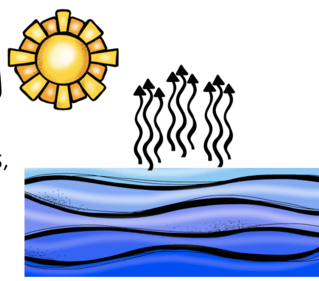
What part of the water cycle does this picture show?
a)
condensation
b)
precipitation
c)
evaporation
d)
transpiration
81.
Evaporation happens when the sun ___________ water and turns it into vapor.
a)
cools
b)
heats up
c)
freezes
d)
lights up
82.
What are three things that rivers do naturally?
a)
a.erode, transport, and deposit
b)
b. dissolve, precipitate, sublime
c)
c. evaporate, percolate, infiltrate
d)
d.none of these
83.

What landform can you see in the picture?

a)

U shaped valley

b)

V Shaped Valley

c)

Floodplain

d)

Waterfall

84.
 Deposition is a process that
a)
Dissolves sediment
b)
Breaks down rock to form sediment
c)
Removes sediment from land forms
d)
Drops sediment to form landforms
85.

Which landform can be seen in the photo?

a)

Waterfall

b)

Estuary

c)

Inter-locking Spur

d)

Meander

86.

What is the deep water called beneath a waterfall?

a)

Plunge bath

b)

Mermaids retreat

c)

Plunge pool

d)

Pool

87.

What landform can you see in the picture?

a)

Meanders

b)

Rapids

c)

Estuary

d)

V shaped valleys

88.
What helps create Waterfalls?
a)
Abrasion
b)
Solution
c)
Silting
d)
Hydraulic Action
89.
The high ground around a river where rain seldom falls is called the ...
a)
Mountains
b)
Watershed
c)
Drainage Basin
d)
Valley
90.
Attrition is when ..
a)
large rocks smash against each other.
b)
small rocks rub against each other.
c)
sand and other fine particles float.
d)
water flows into the rocks.
91.
Which best explains why runoff is important?
a)
It returns water to other locations on Earth
b)
It increases the chance of flooding
c)
It makes evaporation occur faster
d)
It increases condensation
92.
Snow, sleet, hail, and rain are all examples of  ________________. 
a)
evaporation
b)
condensation
c)
accumulation
d)
precipitation
93.
What is it called when plants give off water vapor as a waste product?
a)
condensation
b)
evaporation
c)
sublimation
d)
transpiration
94.
What is the energy source for the water cycle?
a)
the sun
b)
the earth
c)
water
d)
the moon
95.
What is a layer of rock or sediment that holds water?
a)
glacier
b)
well
c)
aquifer
d)
natural spring
96.

As a part of the water cycle, water from Earth's surface enters the clouds and finally falls back to the ground in the form of rain. What is the correct sequence of processes water undergoes?

a)

Evaporation, Condensation, Precipitation

b)

Precipitation, Condensation, Evaporation

c)

Condensation, Evaporation, Precipitation

d)

Evaporation, Precipitation, Condensation

97.

What is another name or synonym for the water cycle?

a)

Geologic cycle

b)

Hydrologic cycle

c)

Geosphere

d)

Carbon cycle

98.

The _________ is an area of land that separates water flowing into different drainage basins.

a)

Watershed

b)

Source

c)

Confluence

d)

Tributary

99.

The valley walls of a river are the steepest at which river course?

a)

Upper

b)

Middle

c)

Lower

100.

Where does deposition mostly occur?

a)

Upper Course

b)

Middle Course

c)

Lower Course

101.

What do we call the point where one river joins another?

a)

confluence

b)

tributary

c)

delta

d)

erosion

102.

Sediment deposits that form where a river flows into still water. Shaped like a triangle.

a)

confluence

b)

valley

c)

delta

d)

tributary

103.

The force of the moving water and air wears away the banks and bed of the river. Water forces air to be trapped in the banks and the pressure eventually cracks and breaks the banks.

a)

attrition

b)

abration

c)

solution

d)

hydraulic action

104.

Which one of these processes is the movement of particles 'leap frogging' along the river bed?

a)

traction

b)

suspension

c)

saltation

d)

solution

105.

Which one of these processes is the movement of material that is carried within the water flow?

a)

traction

b)

suspension

c)

saltation

d)

solution

106.

Which one of these river processes is the movement of material that is dissolved in water?

a)

traction

b)

suspension

c)

saltation

d)

solution

107.
Particles in a river will get bigger as we move downstream.
a)
True
b)
False
108.
The steepness or vertical drop of a stream or river
a)
discharge
b)
runoff
c)
gradient
d)
channel
109.

Which term best describes the general flow of water over land?

a)

runoff

b)

precipitation

c)

transpiration

d)

condensation

110.

What are the 2 macro scale types of erosion?

a)

Lateral and vertical

b)

Horizontal and diagonal

c)

Dendritic and radial

d)

Zig-zag and random

111.

Match the verb to the correct process: Rolling

a)

Traction

b)

Suspension

c)

Saltation

d)

Solution

112.

Which process does the following link to : Sandpaper effect

a)

Attrition

b)

Abrasion

c)

Hydraulic action

d)

Saltation

113.

Match the verb to the correct process: bouncing

a)

Traction

b)

Saltation

c)

Solution

d)

Suspension

114.

The river discharge is greater in the...

a)

Upper course

b)

Lower course

115.

The occupied channel width is greater in the...

a)

upper course

b)

lower course

116.

What do we call a chart of a river from source to mouth?

a)

long profile

b)

length profile

c)

extent profile

d)

elongated profile

117.

The load particle size is greater in the...

a)

Upper course

b)

Lower course

118.

The channel depth is greater in the...

a)

Upper course

b)

Lower course

119.

Channel bed roughness is greater in the...

a)

Upper course

b)

Lower course

120.

The slope angle (gradient) is greater in the...

a)

Upper course

b)

Lower course

121.

Average velocity is greater in the...

a)

Upper course

b)

Lower course

122.

Load quantity is greater in the...

a)

Upper course

b)

Lower course

123.

A diagram that pretends to slice a river like a cake, so you can see sideways bank-to-bank is called a...

a)

Cross profile

b)

Width profile

c)

Side profile

d)

Intersect profile