wayground logo

Free Printable Worksheets

Font size

S
M
L
XL
Worksheets

Interactions with the Environment Test (Grade 7)

Total questions: 46

Worksheet time: 1hrs 25mins

Name
Class
Date
1.

What organism starts the flow of energy in a food web or food chain?

a)

tertiary producer

b)

primary consumer

c)

producer

d)

herbivore

2.

Which of the follow shows the flow of energy in a ecosystem?

a)

food chain

b)

organism path

c)

the sun

d)

producers

3.

Which of the follow are responsible for returning nutrients to the soil?

a)

scavengers

b)

decomposers

c)

producers

d)

carnivores

4.

Which of the following is an example of a decomposer?

a)

fungi

b)

buzzard

c)

hyena

d)

none of these

5.

Which of the following is a producer?

a)

fungi

b)

algae

c)

animals

d)

buzzards

6.

If an owl eats a rat and the rat eats seeds, what is the owl in the energy pyramid?

a)

scavenger

b)

1st level consumer

c)

2nd level consumer

d)

tertiary consumer

7.

How does the energy available change from one level to the next as you move up in an energy pyramid?

a)

it stays the same

b)

90% is passed on

c)

10% is passed on

d)

not enough information

8.
A garden was cleared out, but had to be left alone for a month. What would you expect to see?
a)
lichens and mosses
b)
grasses and weeds
c)
a fully blossomed garden
d)
bushes and small trees
9.

The three roles of biotic elements in an ecosystem are:

a)

predator, prey, consumer

b)

producer, consumer, decomposer

c)

mother, father, decomposer

d)

none of the above

10.

What behavioural adapation do cold-blooded animals, such as crocodiles, have to keep warm?

a)

thin, moist skin

b)

basking/lying in the sun

c)

eating a lot

d)

swimming endlessly

11.
Overlapping food chains in an ecosystem make up....
a)
food web
b)
food chain
c)
niche
d)
symbiosis
12.
An animal that eats other animals is a....
a)
carnivore
b)
omnivore
c)
herbivore
d)
decomposer
13.
The arrows in a food chain or web represents what?
a)
They point to the organism that is being eaten.
b)
It shows how sunlight flows within an ecosystem.
c)
They show what direction the energy is flowing between organisms. 
d)
They represent how water is transferred within a habitat.
14.
How much energy is available to be passed on to the next trophic level in an ecosystem?
a)
100%
b)
10%
c)
50%
d)
75%
15.
In the energy pyramid here, which organisms have the most energy available?
a)
Producers
b)
Carnivores
c)
Herbivores
d)
Top Predator
16.
In the energy pyramid here, how much of the energy in each level gets lost as heat or used by the organism for survival?
a)
80%
b)
90%
c)
10%
d)
20%
17.
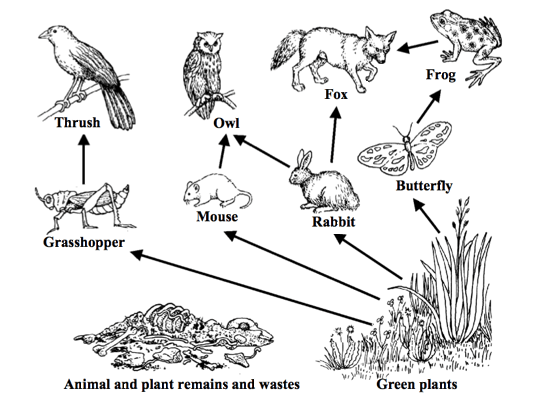
The owl receives energy from which organisms?
a)
grasshopper and mouse
b)
mouse and rabbit
c)
rabbit and butterfly
d)
butterfly and frog
18.
The krill is eaten by which consumer?
a)
blue whale
b)
phytoplankton
c)
leopard seal
d)
penguin
19.
In the energy pyramid here, how much of the energy in the producers gets passed to the herbivores?
a)
10%
b)
20%
c)
80%
d)
90%
20.
Which organism recieves the least amount of energy from the producer?
a)
Owl
b)
Grasshopper
c)
Lilypad
d)
Mouse
21.

What would happen to the bird if the green fish died out?

a)

the bird population would grow

b)

the bird population would die out

c)

the smaller fish will die out

22.
An organism's _________ is defined as the environment in which it lives.
a)
habitat
b)
niche
c)
social structure
d)
ecosystem
23.

A niche ________________.

a)

is the function that an organism performs in the food web of that community.

b)

includes everything else the organism does and needs in its environment.

c)

is specific to each individual animal and plant.

d)

All of the above.

24.

An organism’s habitat provides _____________________.

a)

food, water, shelter, and space.

b)

food, water, and clothes.

c)

only food.

d)

video games, ninjas, and baked beans.

25.

A squirrels niche would be _________________.

a)

hunting prey and providing meat for other squirrels.

b)

searching for fish to eat in the ocean.

c)

staying busy storing nuts and seeds for winter.

d)

help decompose other animals and plants.

26.
What is the pigment in chloroplasts that performs photosynthesis?
a)
Chlorosynthesis
b)
Chlorophyll
c)
ADP
d)
Electron Transport
27.
What gas is being released during photosynthesis
a)
sulfur
b)
carbon dioxide
c)
oxygen
d)
hydrogen
28.
What are the products of photosynthesis?
a)
Glucose and Chlorophyll
b)
Glucose and Oxygen
c)
Water and Light energy
d)
Carbon Dioxide and Light energy
29.
What gas goes into the plant before photosynthesis?
a)
Carbon Dioxide
b)
Carbon Monoxide
c)
Oxygen
d)
Nitrogen
30.
What three things are needed for a plant to do photosynthesis?
a)
Glucose, Oxygen, Sunlight
b)
CO2, Oxygen, Sunlight
c)
CO2, Water, Sunlight
d)
Oxygen, Water, Sunlight
31.
1. What makes a species invasive?
a)
Moving to a new ecosystem and taking resources from natives 
b)
Not having papers
c)
Species that can't adapt
d)
Plants that take up too much space
32.
If a blue catfish is introduced and eats the large fish who eat the smaller fish, what will happen to the population of the smaller fish?
a)
Increase
b)
Decrease
c)
Stay the same
d)
No affect on smaller fish
33.
What is a native specie?
a)
A specie that is local and has lived in the same place
b)
A specie who has come from another state or country
c)
A specie that has no "home" and travels for its whole life
d)
None of the above
34.
Cattle egrets forage (feed) in fields among cattle. The egret gets easy access to flying insects stirred up by the cattle, and the cattle don't care if they are there or not.
a)
mutualism
b)
commensalism
c)
competition
d)
parasitism
35.
A relationship between two organisms in which one organism benefits and the other is unharmed...
a)
Mutualism 
b)
Competition
c)
Parasitsm 
d)
Commensalism 
36.
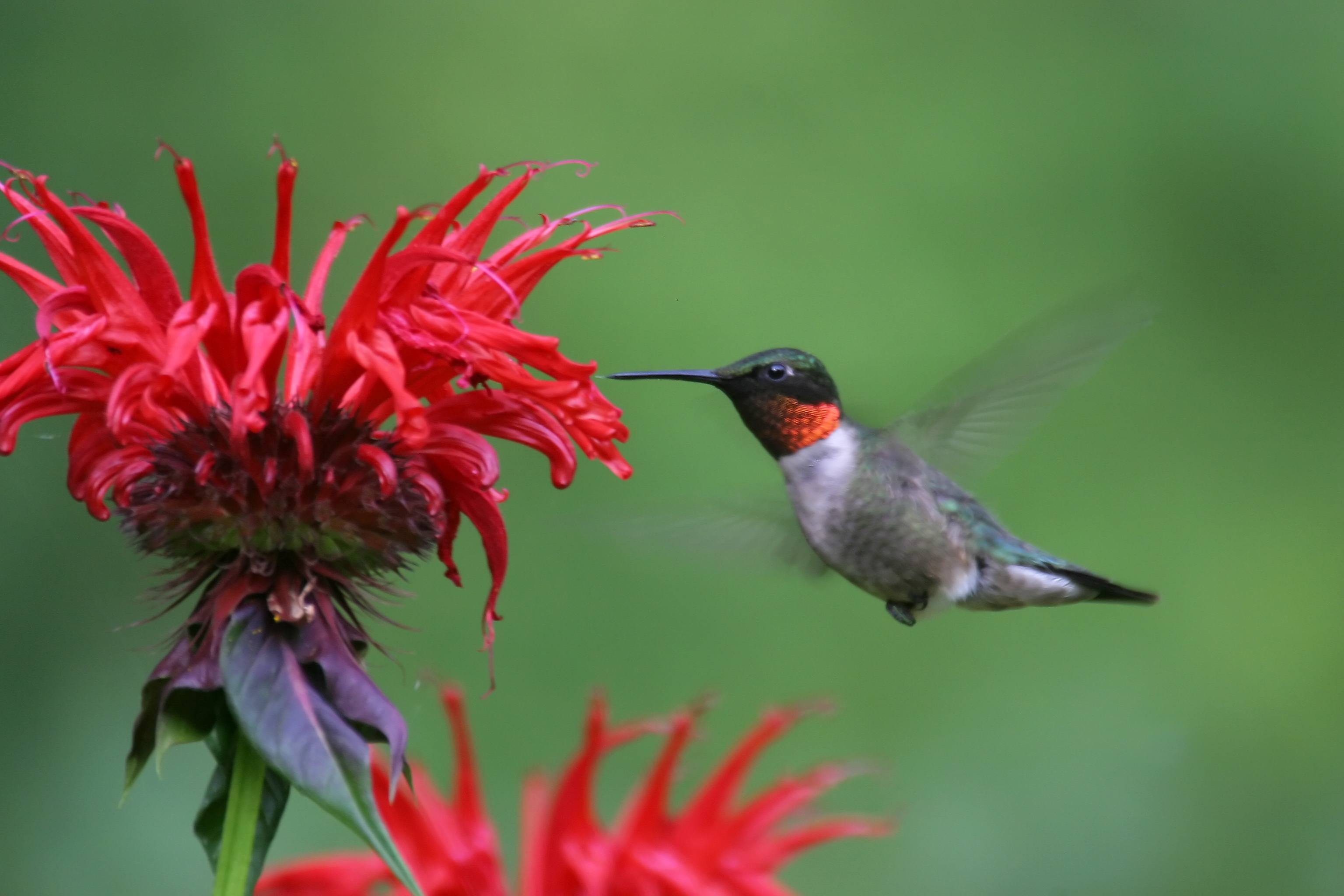
What type of symbiosis?  Hummingbirds feed on nectar from flowers.  The flowers are pollinated by hummingbirds as they move from flower to flower.
a)
commensalism
b)
mutualism
c)
parasitism
d)
predation
37.
Which symbols best describe parasitism?
a)
+,+
b)
+,-
c)
+,0
d)
-,0
38.
A relationship between two organisms in which both organisms benefit. 
a)
Mutualism 
b)
Competition
c)
Parasitsm 
d)
Commensalism 
39.

Aphids are tiny insects that live on and eat the leaves of plants, removing vital nutrients from the plants.

a)

Predation

b)

Parasitism

c)

Commensalism

d)

Mutualism

40.

Lichens are close associations of fungi and algae. The fungi hold the water supply and the algae perform photosynthesis to manufacture carbohydrates for both organisms.

a)

mutualism

b)

commensalism

c)

parasitism

41.

True or False: Soil takes very little time to form.

a)

True

b)

False

42.
This type of soil is best for plant growth. 
a)
rock
b)
sand
c)
loam
d)
clay
43.
Soil is made of
a)
weathered rocks and minerals
b)
dead plants and animals
c)
air and water
d)
all of the above
44.
Which of the following describes how well soil can grow plants?
a)
soil texture
b)
soil fertility
c)
soil structure
d)
soil arrangement
45.
The picture shows desert soil. This forms in dry regions, so which of the following characteristics seems to fit best? The soil is...
a)
Deep and contains much organic matter
b)
Deep and contains little organic matter
c)
Shallow and contains much organic matter
d)
Shallow and contains little organic matter
46.
There is an unlimited supply of fertile soil.
a)
True
b)
False