
 Worksheets
Cycles of Matter
Total questions: 40
Worksheet time: 20mins
Greenhouse gases __________.
Where is free nitrogen "fixed"?
on the roots of plants
in the stems of plants
Rain, sleet, snow, and hail are all forms of __________.
evaporation
condensation
precipitation
Nitrogen in the atmosphere is unusable to plants and animals.
Nitrogen must be returned to the atmosphere.
Animals must breathe in nitrogen.
To use energy from the sun to produce food for the plant.
To use energy from the sun to produce oxygen for animals to breathe.
To break down food in order to produce carbon dioxide.
How do animals get the nitrogen they need to build muscle?
__________ are organisms that break down organic matter and release nitrogen back into atmosphere.
Bacteria
Plants
Animals
When nitrogen gas is turned in to a form that plants and animals can use is called __________.
photosynthesis
decomposition
nitrogen fixation
Which describes the relationship between plants and animals in the carbon cycle?
Plants produce and release oxygen that animals need.
Plants produce and release carbon dioxide that animals need.
Animals produce and release oxygen that plants need.
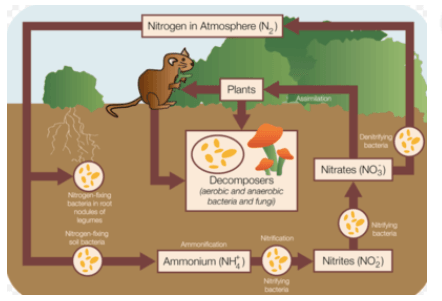
A correct path that nitrogen could take would be
air -> animals -> plants -> bacteria
animals -> air -> bacteria -> plants
air -> bacteria -> plants -> animals
After plants and animals contain nitrogen, what puts it back into atmosphere and soil?
decomposition
precipitation
condensation

In the carbon cycle, producers take in the gas __________.
Organisms that do not decompose can be buried and become __________.
Animals releasing water into the Earth system through liquid and solid waste.
Excretion
Perspiration
Transpiration
Animals releasing water into the Earth system through sweat.
Excretion
Perspiration
Condensation
Plants taking up water through their roots.
Transpiration
Osmosis
Evaporation

What step of the water cycle does this picture show?
Condensation
Precipitation
Evaporation

precipitation


diagram?


Number 5 in this picture is showing
Precipitation
Condensation
Collection
Evaporation


How does carbon get from the atmosphere into organisms?
Decomposition
Respirataion
Photosynthesis

What cycle is this?
Carbon Cycle
Nitrogen Cycle
Water Cycle
OXygen leaving a plant through the stomata and entering the atmosphere.
osmosis
active transport
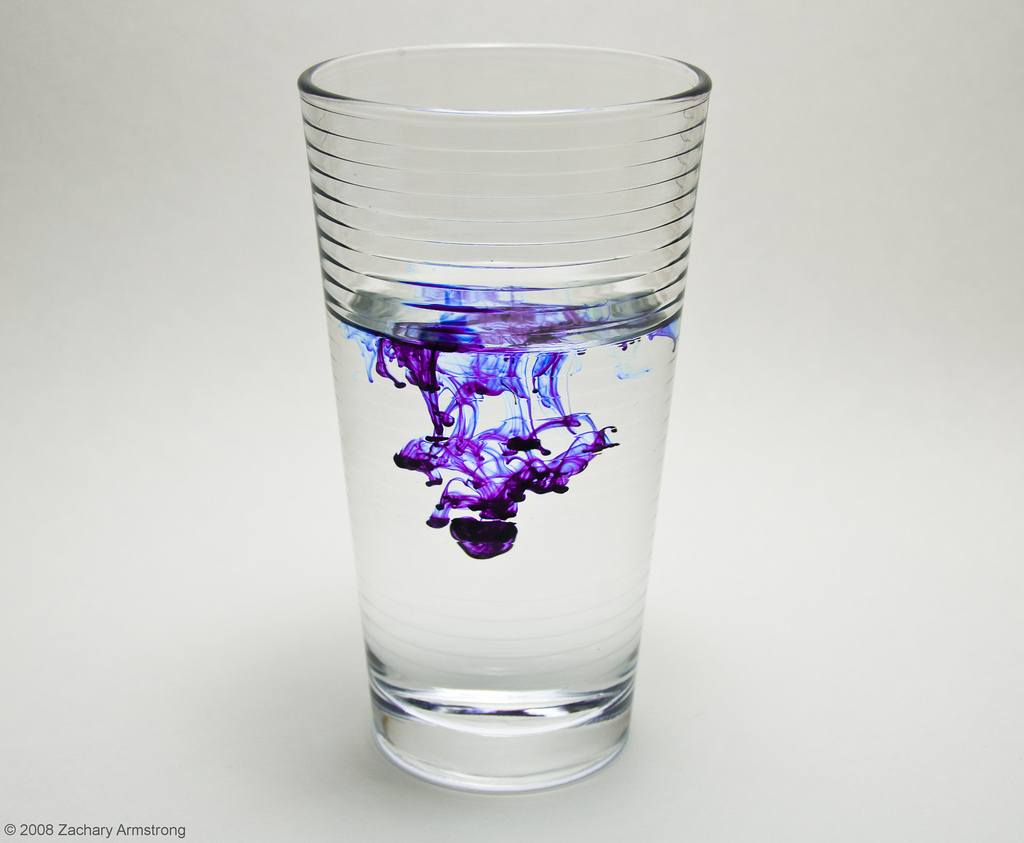

The part of the cell that regulates what enters and exits it.
cell membrane
chloroplast
mitochondria
Osmosis is the diffusion of which molecule?
Water
Sugar
Carbon dioxide
Diffusion mean to...
...come together.
...make groups.
...spread out.
What two things are needed for cellular respiration to happen in a cell?
glucose & oxygen
water & carbon dioxide
glucose & water
The primary purpose of cellular respiration is to produce ___.
ATP
glucose
heat

Identify the cellular organelle that the process of cellular respiration occurs in:
mitochondria
chloroplast
nucleus
Getting glucose into cells requires __________.
osmosis
diffusion
active transport
Water moving through the inner layers of a leaf during photosynthesis.
osmosis
diffusion
active transport

