
 Worksheets
All about Cells
Total questions: 84
Worksheet time: 1hrs 19mins

Why do very active cells have lots of mitochondria?
Mitochondria release energy to power cells
Mitochondria help cells to divide in two
Mitochondria help give the cell their shape
Mitochondria make hormones

What is the structure that contains DNA and directs the cell?
endoplasmic reticulum
central vacuole
cell wall
nucleus

Identify the structure that is indicated by the arrow in the image.
cell wall
central vacuole
chloroplast
nucleus
The most important difference between prokaryotic and eukaryotic cells is that eukaryotic cells contain:
Membrane-bound organelles
DNA
Ribosomes
Cytoplasm
The nucleus is a membrane-bound organelle. Does a prokaryotic cell contain a membrane-bound organelles?
Yes
No
Plant and animal cells are types of ____ cells.
Eukaryotic
Prokaryotic
Bacteria are:
Unicellular eukaryotes
Multicellular eukaryotes
Unicellular prokaryotes
Multicellular prokaryotes
Which cell type was the first to evolve?
Prokaryote
Eukaryote
Animal
Plant
Which cell structure is responsible for maintaining homeostasis by allowing materials in and out of the cell?
Mitochondria
Plasma membrane
Ribosomes
Lysosomes
Golgi apparatus
What structure, found in both animal and plant cells, is responsible for storage of water, food, and waste?
Mitochondria
Ribosomes
Nucleus
Vacuole
Golgi apparatus
Which cell structure is responsible for producing ATP energy?
Mitochondria
Ribosomes
Nucleus
Golgi apparatus
Cell membrane
Which cell structure is responsible for directing protein synthesis?
Ribosomes
Mitochondria
Nucleus
Plasma membrane
Lysosomes
Which cell structure produces spindle fibers and aids in cell division?
Mitochondria
Nucleus
Centrioles
Cytoplasm
Ribosomes

Shown in purple, what is this cell structure?
Mitochondria
Cell membrane
Ribosomes
Nucleus
Golgi apparatus

What is this cell structure?
Mitochondria
Ribosome
Chloroplast
Nucleus
Vacuole

What are the folds in this cell structure called?
Granum
Pores
Cristae
Thylakoids

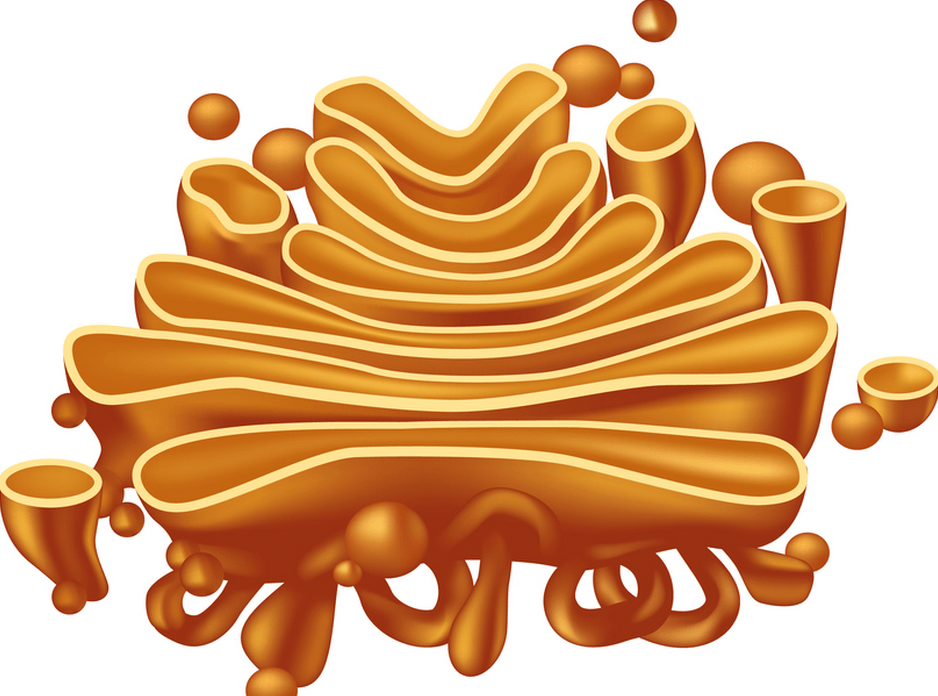
What is this cell structure?
Nucleus
Ribosome
Vacuole
Golgi apparatus
Plasma membrane

What is this cell structure?
Chloroplast
Cytoplasm
Chlorophyll
Centriole


A human body cell has 46 chromosomes. Which diagram represents mitosis in a human body cell?


An animal’s somatic cells contain 2n chromosomes. What happens to the number of chromosomes in the animal’s gametes?
The number is reduced to n by mitosis.
The number is reduced to n by meiosis
The number is increased to 4n by mitosis.
The number is increased to 4n by meiosis.
A cell that starts out with a diploid number of 46 chromosomes and ends up with a haploid number of 23 chromosomes. What process did this cell go through?
Binary Fission
Conjugation
Meiosis
Mitosis
Passive transport moves materials along the concentration gradient from:
High to low concentration
Low to high concentration
If a cell shrinks in a solution, the solution is said to be:
Hypertonic
Hypotonic
Isotonic
If there are more solutes inside a cell in a solution, the solution is said to be:
Hypertonic
Hypotonic
Isotonic

Beaker B demonstrates a ______________ solution.
Hypertonic
Hypotonic
Isotonic

Beaker A represents a ______________ solution.
Hypertonic
Hypotonic
Isotonic

In beaker C, water will _______ the cell.
Enter
Exit
Both exit and enter
In active transport, materials are moved from:
High to low concentration
Low to high concentration
The plasma membrane has a double layer of:
Proteins
Phospholipids
Cellulose
Starches

Enzymes work best at an optimal temperature.
The surface area/volume ratio is an important factor for one celled organisms. As a cell's volume grows, its surface area/volume ratio decreases, making it harder and harder to acquire enough nutrients via diffusion. Because of this, cells stop growing after reaching a certain size. After reaching this state, a one celled organism is likely to...
enter into a spore state.
continue to grow until it is so big it bursts.
use mitosis to divide and create daughter cells.
stop eating so that it shrinks and its surface area/volume ratio grows.
Which process describes the ATP-requiring movement of extremely large substances out of a cell in pockets called vesicles?
exocytosis
endocytosis
phagocytosis
passive transport
Shaquan placed a potato slice in salt water. After some time he noticed that the slice of potato became limp. Why did this happen to the potato slice?
The potato was getting old.
The potato cells lost water to the surroundings.
The potato cells gained water from the surroundings.
The potato cells had no exchange of materials with the environment.

Water's unique properties result from the fact that water...
has such a small molecular mass.
is a polar covalent molecule.
is a small ionic compound.
has a neutral pH.
A plant has been removed from its natural environment and placed into a body of water that contains a higher concentration of salt than the inside of each plant cell. The plant promptly wilts. This situation is most similar to which event?
seaweed put into fresh water
a land plant put into tap water
a freshwater plant put into seawater
a freshwater plant put into distilled water
Some molecules are too big to pass through the phospholipid bilayer of the cell membrane. These molecules need to pass through ________________ that are embedded in the cell membrane.
proteins
ribosome
cell wall
carbohydrates

In nerve cells the sodium-potassium pump is used to generate gradients of both sodium and potassium ions to propagate electrical signals that travel along nerves. This is a(n)...
example of phagocytosis.
active transport mechanism.
passive transport mechanism.
example of movement with the concentration gradient.
Algal cells are placed in an isotonic solution. Additional amounts of solutes are slowly added to the solution. What happens to the cells?
They will begin to swell.
They will burst.
They will stay the same.
They will shrink.
A patient has had a serious accident and loses a lot of blood. In an attempt to replenish body fluids, distilled water, equal to the volume of blood lost, is transferred directly into one of his veins. What will be the most probable result of this transfusion?
The patient's red blood cells will shrivel up because the blood fluid is hypotonic compared to the cells.
The patient's red blood cells will swell because the blood fluid is hypotonic compared to the cells.
The patient's red blood cells will shrivel up because the blood fluid is hypertonic compared to the cells.
The patient's red blood cells will burst because the blood fluid is hypertonic compared to the cells.

Cell theory was first proposed in 1838. Evidence obtained through additional scientific investigations resulted in the current cell theory. Which statement describes a component of the original cell theory that was removed because of the new scientific knowledge?
All living things are made of cells.
All cells come from other preexisting cells.
Cells form through spontaneous generation.
Cells are the basic structural and functional units of life.


Mitosis in animals creates which kind of cells
Diploid
Haploid
Gametes
Somatic
An animal's sperm has 100 chromosomes. Its body cells have
50 chromosomes
100 chromosomes
200 chromosomes
1000 chromosomes

If a cell has 20 chromosomes and under goes mitosis twelve times how many chromosomes will the daughter cell have?I
20
40
240
10

The hydrophilic head of the phospholipid ___ to interact with water and is said to be ____.
Loves, polar
Loves, nonpolar
Hates, polar
Hates, nonpolar

