
 Worksheets
Mid-Term Review
Total questions: 107
Worksheet time: 2hrs 34mins


What are enumerated powers of Congress?
new powers of the Constitution
specific powers listed in the Constitution
optional powers of the Constitution
Which of the following are the four types of committees?
Standing, Bipartisan, Mixed, Federal
Standing, Joint, Bipartisan, Conference
Standing, Joint, Select, Conference
Standing, Federal, Joint, Conference
A bill could fail to become a law by?
Fail in committee
Be voted down by either house
Veto
All of these can Kill a Bill

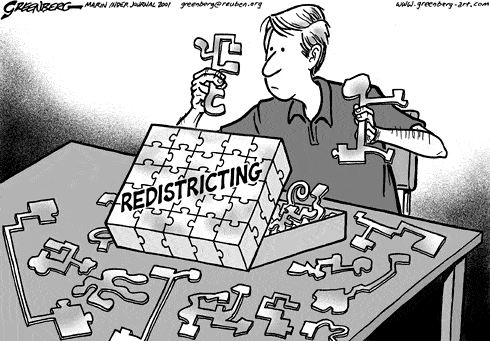

Reapportionment is:
When district boundaries are drawn in order to benefit the party in power and help it stay in power
When seats in the House of Representatives are redistributed among states because of changes in population
When district boundaries are redrawn to reflect changes in population.
A measurement of the US population that occurs every ten years
Gerrymandering affects:
The House of Representatives
The Senate
The Presidency
Congress as a whole
In most states (but not all), who usually draws district boundaries?
The House of Representatives
The Senate
The Supreme Court
State legislatures
What do we call the official count of the population?
Reapportionment
Census
Century
Redistricting
How often does the census occur?
Every 4 years
Every 8 years
Every 10 years
Every 25 years
Only the ____ is reapportioned based on population changes.
Senate
House of Representatives
Which type of gerrymandering concentrates voting power of the opposition into a few districts?
stacking
packing
blocking
wasting
Which type of gerrymandering dilutes voting power of the opposition across many districts.
diluting
blocking
packing
cracking
Who can draft (write or come up with) a bill?
President
Interest Groups
Constituents
All of the above
who may introduce a bill?
Only members of Congress
The President and members of Congress
Only the House Speaker and the Senate Majority Leader
Only the President, Speaker of the House, and Senate Majority Leader
What happens to most bills in committee
the die
they pass with amendments
they are filibustered
they are sent to the floor for a vote
All bills except for ______bills can start in either house of Congress.
military
jobs
tax
Immigration
If the House and the Senate pass different versions of the same bill, where is it sent for a compromise?
Conference committee
Speaker of the House
Rules Committee
President
Bills must pass with a ________vote of both houses to become law
3/4s
3/5s
2/3s
51% majority
How can Congress override a presidential veto?
Majority vote of both houses
The Speaker of the House and Senate Majority leader can override it
3/4 vote of both Houses
2/3 vote of both houses
What happens if the House votes yes to the bill?
It goes to the President to sign
It goes to the full House for a vote
It goes to a House committee to study
The bill dies
What did William help write on the Mayflower
Mayflower Contact
Mayflower Essay
Mayflower Document
Mayflower Compact

Who was the governor of the Plymouth Colony?
John Lennon
Greg Abbott
William Bradford
William Penn

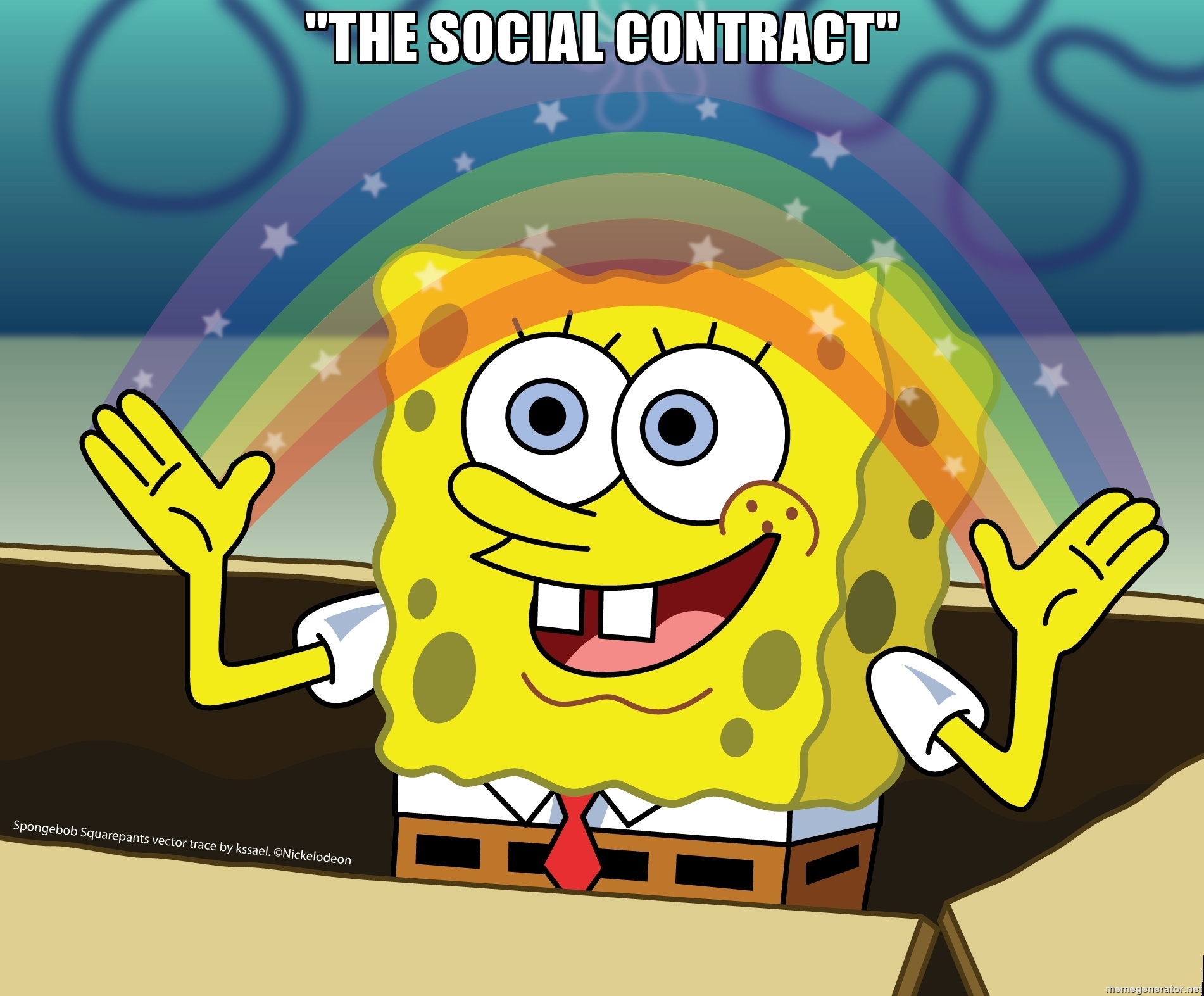

What is a social contract?
an agreement among the members of a society
book written by Montesquieu
Taylor Swift's next album title
test given to citizens every two years
To him, what was the best form of government?
where each powers (legislative, executive, and judicial) were separate and kept each other in check to prevent any branch from becoming too powerful
democracy
absolute monarchy
every man for himself
What country later adopted Montesquieu's theory of government?
France
China
England
America
Why did Montesquieu believe the powers of the government should be separated?
It would keep government leaders from becoming too powerful
Because of divine right, government should be separated into more than one branch
Because Locke's social contract stated that government by one ruler went against natural law
Because running a government was too much for one person to handle
Separation of powers was the idea of which enlightenment thinker?
Montesquieu
John Locke
Isaac Newton
Thomas Paine
4. Separation of Powers influenced the US Government by providing?
a. Checks & Balances
b. Natural Rights
c. Natural Law
d. The Social Contract
5. Enlightenment thinker John Locke thought that rights come from?
a. The government
b. The Declaration of Independence
c. God or nature
d. The king

Those opposed to ratifying the U.S. Constitution were called...
Federalist
Anti-Federalist

Wanted to add a Bill of Rights to the U.S. Constitution.
Federalist
Anti-Federalist

"The Constitution does not adequatly protect individuals from possible government abuse."
Federalist
Ant-Federalist
"The existing national government lacks the power to perform essential functions"
Federalist
Ant-Federalist

"Power will be divided between the federal government and state government."
Federalist
Ant-Federalist

"Father of the U.S. Constititution"
George Washington
Alexander Hamilton
Patrick Henry
James Madison

Federalist wrote essays called the Federalist Papers. What might they have supported?
Bill of Rights
Strong central government
Three-fifths compromise
Women's Suffrage (voting)

Anti-Federlalist want to add a bill of rights to protect...
Individual freedoms
State rights
Women's suffrage
Direct democracy
Communism
Government owns all businesses and farms and provides its people healthcare, education, and welfare. Political and Economic theory derived from the ideas of Karl Marx.
The government is elected by the people. Everyone who is eligible to vote, which is a majority of the population, has a chance to have their say over who runs the country.
Government owns many of the larger industries and provide education, health and welfare services while allowing citizens some economic choices.
Ruled by Kings and Queens.
Direct Democracy
Ruled by Kings and Queens.
The government is elected by the people. Everyone who is eligible to vote, which is a majority of the population, has a chance to have their say over who runs the country.
Rule by a single leader who has not been elected and may use force to keep control.
A system of government by one person with absolute power.
Representative Democracy
Led by representatives of the voters. Each is individually chosen for a set period of time.
Government owns many of the larger industries and provide education, health and welfare services while allowing citizens some economic choices.
Government owns all businesses and farms and provides its people healthcare, education, and welfare. Political and Economic theory derived from the ideas of Karl Marx.
The government is elected by the people. Everyone who is eligible to vote, which is a majority of the population, has a chance to have their say over who runs the country.
Socialism
Led by representatives of the voters. Each is individually chosen for a set period of time.
A system of government by one person with absolute power.
Rule by a single leader who has not been elected and may use force to keep control.
Government owns many of the larger industries and provide education, health and welfare services while allowing citizens some economic choices.
Monarchy
Ruled by Kings and Queens.
A form of government which consists of rule by an elite group who rule in their own interests. Especially the accumulation of wealth and privilege.
A system of government by one person with absolute power.
Rule by a single leader who has not been elected and may use force to keep control.
Oligarchy
A form of government which consists of rule by an elite group who rule in their own interests. Especially the accumulation of wealth and privilege.
A system of government by one person with absolute power.
Rule by a single leader who has not been elected and may use force to keep control.
Government owns all businesses and farms and provides its people healthcare, education, and welfare. Political and Economic theory derived from the ideas of Karl Marx.
Dictatorship
Government owns all businesses and farms and provides its people healthcare, education, and welfare. Political and Economic theory derived from the ideas of Karl Marx.
Rule by a single leader who has not been elected and may use force to keep control.
A form of government which consists of rule by an elite group who rule in their own interests. Especially the accumulation of wealth and privilege.
A system of government by one person with absolute power.
In this type of democracy, the people elect representatives who make decisions on their behalf.
Representative Democracy
Direct Democracy
The two types of this form of government are "direct" and "representative".
Democracy
Monarchy
Dictatorship
Oligarchy
In this type of government, a small group of people (such as a single family or social class) are in charge.
Theocracy
Monarchy
Oligarchy
Democracy

Which amendment is represented in the picture?
15th
19th
23rd
26th

Which amendment is represented in the picture?
19th
24th
26th
15th
Gave citizens the right to vote regardless of race, color, or previous conditions of servitude.
23rd Amendment
24th Amendment
15th Amendment
19th Amendment
Gave women the right to vote
19th Amendment
15th Amendment
23rd Amendment
26th Amendment
16th Amendment
Abolished Slavery
Prohibited Alcohol
Grants Citizenship to African Americans
Collecting taxes on income
A committee from both houses is formed to investigate raising the minimum wage to $15 an hour. This would most likely be in which type of committee?
Standing
Special
Joint
Conference
What created the Bicameral legislature?
The Articles of Confederation
The Book of Mormon
The 3/5 Compromise
The Great Compromise

Other committees are___________________, which are created to reconcile a bill when the House and Senate write different versions of it.
conference committees
joint committees
resolution committees
Which leader in Congress is considered the go-between with the majority and minority party members in both the House of Representatives and Senate?
majority and minority whip
majority and minority leader
committee chairmen
seniority system
What committee is established temporarily for a special purpose and is used by each house of Congress separately?
standing
select
joint
conference

