
Font size
 Worksheets
First Semester Exam Review Honors
Total questions: 224
Worksheet time: 2hrs 23mins

When you compress a spring, you are storing __________ energy.
sound
elastic
light
chemical


Which passenger has the most potential energy?
A
B
C
D

At which point is potential energy greatest?
W
X
Y
Z

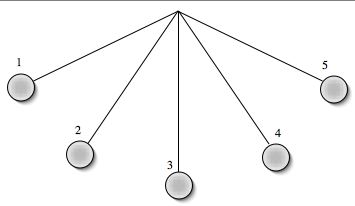
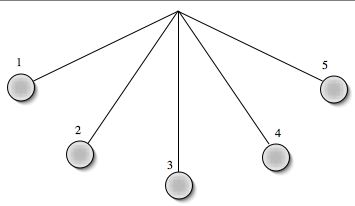

The picture is an example of _____ .

The picture is demonstrating an example of ______ .

Which point has the most potential energy?
G
F
B
A
The faster an object moves, the ________ kinetic energy it has.
more
less
__________ is stored energy.
Potential
Kinetic
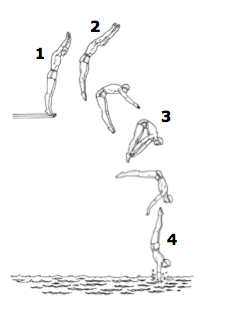

How does a windmill change forms of energy?
Mechanical to electrical
Electrical to mechanical
Mechanical to light
It is unable to change forms
If you have a battery in a device, what is the first energy transformation that must happen?
Chemical to light
Chemical to electrical
Electrical to chemical
Electrical to light

Where is energy converted from light energy to chemical energy
rabbits
snakes
eagle
grass
Complex interactions must occur before solar energy is converted to energy humans can use for movement and heat. What is the correct energy flow from sun to animal
heat to electrical to mechanical
chemical to radiant to electrical
radiant to chemical to mechanical
mechanical to heat to electrical
Choose the sequence that best shows this path of energy from the sun to a plant eating animal.
radiant energy >mechanical energy > chemical energy
radiant energy >chemical energy > mechanical energy
chemical energy >mechanical energy > radiant energy
chemical energy >radiant energy > mechanical energy
An amoeba is a single cellular organism. It uses a sugar molecule to make energy and it releases heat to the environment. This is an example of what type of energy transformation?
electrical to mechanical
chemical to thermal
electrical to kinetic
mechanical to electrical

Which energy transformation is shown in this picture?
chemical -----> light
light -----> mechanical
mechanical -----> chemical
chemical -----> mechanical
What type of potential energy does a match have?
thermal energy
light energy
chemical energy
electrical energy
What type of energy is made by vibrations and does not travel through empty space?
sound energy
light energy
electrical energy
chemical energy
Which is an example of kinetic energy?
A soccer ball is lying on the ground.
A person is standing in line.
A roller coaster is sitting at the top of a hill.
Water is flowing over a dam.
Which is an example of potential energy?
A child is hopping down the sidewalk.
A horse is galloping in a field.
A person is sitting on a horse.
A car is driving on the street.
Which transformation best explains what happens in a glow stick when you shake it to make it glow?
chemical to mechanical
mechanical to chemical
light to chemical
chemical to light

What is the energy transformation that occurs in an electric pencil sharpener?
mechanical energy to electrical energy
electrical energy to mechanical energy
radiant energy to sound energy
chemical energy to mechanical energy
Food
radiant
chemical
potential
kinetic
sound
Batteries
radiant
chemical
potential
kinetic
sound


If a mineral can SCRATCH another one, it is -
harder than the mineral
weaker than the mineral
the same mineral

Calcite can scratch -
Apatite
Fluorite
Talc

Diamond is the hardest mineral.
True
False

What type of property test is a mineralogist conducting when she rubs a mineral over a mirror, tile, or hard surface?
Streak Test
Luster Test
Appearance Test
Cracking Test
Rocks formed by heat and pressure beneath the Earth's surface are...
igneous
metamorphic
sedimentary
magma
Two types of igneous rocks are:
Interior and exterior
Intrusive and extrusive
Inside and outside
Enter and exit

What causes igneous rocks to form
pressure
cooling magma and lava
compaction
cementation
A rock made of magma that cools inside the Earth and contains large crystals?
Igneous
Sedimentary
Metamorphic
Magma
How can a Metamorphic rock become an Igneous rock?
Weathering and Erosion
Compaction and Cementation
Heat and Pressurew
Melting and cooling
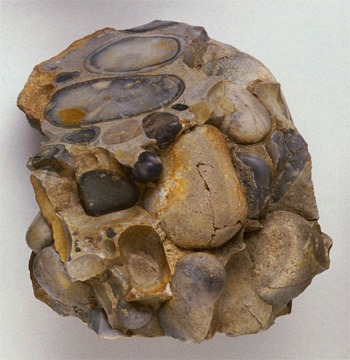
A student wanted to conduct a series of tests to identify different minerals. Which list below shows the tests that the student should conduct on each of the different minerals?
color, taste, shape, and size
hardness, color, luster, and streak
taste, hardness, color, and size
streak, size, taste, and shape
In a comparative investigation, students had to identify different mineral specimens. Which physical property is the LEAST reliable for identifying one mineral from another because it cannot be measured?
streak
hardness
cleavage
color
Minerals can be identified using the physical properties hardness, streak, and cleavage because
crystal structure is too hard to determine.
minerals have different recognizable properties.
crystal size is determined by the environment.
minerals are inorganic.
Students have a rock sample that may contain the mineral hematite. They know that hematite has a red or rusty streak. How can the students determine the color of the streak in the rock sample?
use a rock with the known mineral to strike the sample
rub the sample on a piece of porcelain tile
use a file to break off a piece of the sample
scratch the sample with an iron nail
A metamorphic rock becomes an igneous rock by...
melting completely, then cooling
weathering into sediments, then eroding
compacting under pressure and cementing
changing shape under heat and pressure
The process of weathering creates ___________ rock.
metamorphic
igneous
sedimentary
all rock types

What process happens at X
cooling
melting
weathering
heat and pressure

What process occurs at Z
melting
cooling
weathering
heat and pressure

What process occurs at Y?
cooling and melting
heat and pressure
weathering
erosion
If a sedimentary rock like sandstone gets put under heat and pressure, what does it become?
it stays as sedimentary sandstone
it becomes metamorphic quartzite
it melts completely to igneous basalt
it becomes a different type of sedimentary rock
Most of the ocean floor is a type of rock called basalt. At the edge of continents, this basalt erodes and becomes small particles. Over time, the particles are cemented and compacted together and form what type of rock?
igneous
sedimentary
metamorphic
Rocks that contain fossils are usually...
igneous
metamorphic
sedimentary
Rocks that can be found in the area of a volcano and have been cooled from a liquid state should be classified as —
igneous
sedimentary
metamorphic
What are the three type of rocks?
hardness, streak, color
igneous, metamorphic, sedimentary
minerals, rocks, metals
Igneous rocks are made from...
cooling magma and lava
weathering and erosion
heat and pressure
In the rock cycle, sedimentary rock forms when rock is ______
crystallized into natural glass.
exposed to great temperature.
melted into liquid magma.
broken down by weathering.
What do all rocks have in common?
Rocks are made of two or more minerals.
Rocks are made of two or more elements.
Rocks are made of magma and sediments.
Rocks are made of sand changed by pressure.
Which processes change magma into igneous rock?
compaction and cementation
heat and pressure
cooling and crystallization
weathering and erosion
Small pieces of weathered rock become sedimentary rock by from ...
heat and pressure
compaction and cementation
melting and cooling
weathering and erosion

Which mineral from the table can scratch all of the other minerals?
Olivine
Pyrite
Calcite
Quartz
Which word best describes the lithosphere?
liquid
rigid
bendable
metal
The lithosphere includes the _____ and part of the _____.
core, crust
mantle, core
crust, core
crust, mantle

Which physical layer is represented by the yellow layer?
lithosphere
mesosphere
core
inner core

Which is the correct order of the Earth's layers?
Outer most layer first.
Crust, Outer Core, Mantle, Inner Core
Crust, Mantle, Outer Core, Inner Core
Inner core, Outer core, Mantle, Crust
The Earth's crust is made of ______________ that "float" on top of the __________.
Fill in the blanks.
mantle, cups
plates, mantle
mantle, inner core

True or false.
Lithosphere is just another term for the rock that makes up the crust and some of the mantle, forming tectonic plates.
True
False
What are the two types of crust?
Continental and Landforms
Oceanic and Mountains
Mountains and Landforms
Oceanic and Continental

Which compositional layer is represented by the yellow layer?
inner core
outer core
mantle
crust
The mantle "flows" because of large differences in temperature from the bottom to the top, which create convection currents.
True
False

The diagram below shows a boat moving north in a river at 3m/s while the current in the river moves south at 1 m/s.
How will the boat be affected if it enters a part of the river where the current is moving south at 3 m/s?
The boat will move slower
The boat will move faster
The boat will stop
The boat will move to the west

Some students measure the acceleration of a wheeled cart being acted on by varying forces. The students recorded their data in the table shown above. According to the data table, how much force is acting on the cart when the students measure an acceleration of 2.6 m/s2?
13 N
7 N
8 N
12 N

For an investigation, a student measures the speed of a art as it rolls down a ramp. The student then records data in the table below.
Which of these best explains the student's data?
the speed of the cart decreases as the cart rolls down the ramp because of friction between the cart and the ramp
the speed of the cart increases as the cart rolls down the ramp because the force acting on the cart is greater than the force of gravity
the speed of the cart increases as the cart rolls down the ramp because the forces acting on the cart are unbalanced
the speed of the cart decreases as the cart rolls down the ramp because the forces acting on the cart are balanced
A push or a pull
speed
acceleration
force
balanced

In the picture shown, the forces are ______.
unbalanced
accelerating
changing
balanced

In the diagram shown, the forces are _____.
unbalanced
balanced
accelerating
stable

What is the net force and direction of the figure shown?
2 N left
2 N right
3 N left
3 N right

What is the direction and net force of the box in the figure shown?
2 N left
2 N right
0 N
1 N right
A car is slowing down before it reaches a stoplight. This is an example of ....
acceleration
distance
constant velocity
balanced force
A planet orbits the Sun at a constant speed while making a circular arc around the star. This is an example of ...
acceleration
unbalanced forces
constant velocity
net force

The diagram below shows a sled moving along a smooth, frictionless track.
In which sections of the track will the sled experience an unbalanced force?
Sections 1 and 3
Sections 2 and 3
Sections 2 and 4
Sections 3 and 4
When a space shuttle was launched, the astronauts on board experienced an acceleration of 29.0 m/s2. If one of the astronauts had a mass of 60.0 kg, what net force in Newtons did the astronaut experience?
2.07 N
31 N
69 N
1740 N

A student used a video camera to record another student dropping a marble through water in a graduated cylinder. The students watched the video in slow motion and made the observations shown below.
During which part or parts of the marble's fall did the marble experience unbalanced forces?
Part 1 only
Parts 1 and 2 only
Part 3 only
Parts 2 and 3 only
A science book is sitting on a table. Which statement best explains why the book remains motionless?
there are no forces acting on the book
the only force acting on the book is directed to the table
the forces acting on the book are all balanced
the table exerts an unbalanced force on the book
The tendency for an object to keep doing what it is already doing is called....
balanced force
unbalanced force
inertia
friction
Someone swerved in front of your mom's car on the freeway. Your mom hit the brakes and you were thrown forward until stopped by the seatbelt. The reason you moved forward when the car was slowing down is due to ...
balanced forces
speed
velocity
inertia
A large truck weighing 8000 kg takes longer to accelerate than a small car weighing 1000 kg. This is due to ...
Newton's 2nd law F=ma
Newton's 1st law Inertia
Newton's 3rd law action/reaction
friction
To throw a basket ball and a bowling ball at the same speed, you would need to use ______
less force on the bowling ball
more force on the bowling ball
the same force for both balls
none of these answers are correct
A hockey player shoots the puck into the goal. As the puck hits the net ...
the puck is stopped by an outside force
the puck was stopped by friction
the puck did not stop
the puck experienced friction on the ice

Which law of motion is demonstrated in this picture?
first
second
third
gravity

What law of motion is demonstrated in this picture?
first
second
third
gravity

Which law of motion is demonstrated by the picture shown?
first
second
third
balanced

Sometimes tectonic plates do not move easily past one another, and the plates become stuck. Forces build up, and when the plates finally move, tension is released, as shown below.
The sudden movement of the plates is caused by -
the mass of the plates
the weight of the plates
unbalanced forces
gravitational force
The distance an object travels per unit of time
inertia
speed
friction
velocity
Speed in a given direction
acceleration
velocity
friction
gravity
The rate at which velocity changes
change
speed
acceleration
balanced
A force that opposes motion between two surfaces that are in contact
balanced
unbalanced
forces
friction
A force of attraction between objects that is due to their masses.
inertia
gravity
net force
friction
A 1,100 kg car comes uniformly to a stop. If the vehicle is accelerating at -1.2 m/s2, which force is closest to the net force acting on the vehicle [F=ma].
-9,600 N
-1,300 N
-900 N
-94 N
While skateboarding, you push back on the sidewalk with your right foot and move forward on the skateboard with your left foot. This is due to...
Newton's first law - inertia
Newton's second law - F=ma
Newton's third law - action/reaction
gravity


Which law states that the acceleration of an object depends on the force exerted on it and its mass?
1st Law
2nd Law
3rd Law
Which law states that for every action there is an equal and opposite reaction?
1st Law
2nd Law
3rd Law
Which law states that an object at rest stays at rest and an object in motion stays in motion unless an unbalanced force acts on it?
1st Law
2nd Law
3rd Law
Which activity would BEST demonstrate Newton's law of Inertia?
A plate sits on a table top.
A lady pushes a grocery cart.
A child jumps on a trampoline.
A boy swings a baseball bat.
Which activity would BEST demonstrate the Law of Action/Reaction?
A car traveling down the road.
A rocket launching to space.
A soccer ball sitting on the ground.
A lady pushing a grocery cart.
Which activity would BEST demonstrate the Law of Force and Acceleration?
A lady pushes a grocery cart.
A boy swings a baseball bat.
A soccer ball sits on the ground.
A rocket launches into space.
What is the name of Newton's 1st Law of Motion?
Law of Force and Acceleration
Law of Action / Reaction
Law of Inertia
What is the name of Newton's 2nd Law of Motion?
Law of Force and Acceleration
Law of Inertia
Law of Action / Reaction
What is the name of Newton's 3rd Law of Motion?
Law of Force and Acceleration
Law of Inertia
Law of Action / Reaction
A force that opposes motion between objects that are touching is called...
motion
friction
velocity
acceleration
When there is an INCREASE in MASS of an object you will have a DECREASE in ______________.
friction
acceleration
force
gravity
Mary is riding in a car when the driver suddenly slams on the brakes. Mary is jerked forward out of her seat. This is an example of which law of motion?
2nd Law
1st Law
3rd Law
A jellyfish swims through the water by pulling in water and then pushing the water back out in the opposite direction. This is an example of which law of motion?
1st Law
2nd Law
3rd Law
Billy pushes his little brother on a sled through the snow. He then tries to push his father on the the same sled. He noticed that it was much harder to push his father. Which law is this an example of?
1st Law
2nd Law
3rd Law

Which law is this picture an example of?
Law of Inertia
Law of Force and Acceleration
Law of Action / Reaction
Beth's bike remains stopped at the intersection until she begins pedaling again. Which law is this an example of?
1st Law
2nd Law
3rd Law

Speed formula
S=S X T
S=TX S
S=D/T
S=T/D
Distance formula
S X T
T X S
T/D
D/T
Time formula
T= D/S
T= S X T
T = D/ T
T= T/ T


Hint: Greatest distance shortest time




In four minutes, about how far did the car travel?
2.1 km
3.3 km
4.1 km
5.4 km

During what time was the car moving fastest?
from 0 to 2 minutes
from 2 to 4 minutes
from 4 to 6 minutes
from 6 to 8 minutes

What might be happening between 8 to 10 minutes?
The car is stopped.
The car is driving on a city street.
The car is going up a steep hill.
The car is driving on the highway.
Ms. Longino had a snail in her kitchen which traveled 50 cm in 8 minutes. What was the speed of the snail?
7 cm/min
9 cm/min
5.50 cm/min
6/25 cm/min

What is the average speed of this trip?
5 m/s
6 m/s
30 m/s
150 m/s

What is the speed at 15 seconds?
5 m/s
30 m/s
150 m/s
6 m/s

Students were doing a lab with HotWheels. The group made this graph. How do the speeds of the cars compare?
Car 1 was slower than Car 2
The cars went the same speed
Car 1 was faster than car 2
The cars were stopped
Race cars are driving around a track during a Nascar event. Cars on the curves are changing velocity because ___?
A change in direction is a change in velocity
A change in speed is a change in velocity
What is the difference between
the velocity and the speed of an
object?
Velocity is the change in distance
over time, while speed is the
change in velocity over time.
Velocity includes a direction (like
N or S), while speed has no
specific direction.
Velocity has no direction, while
speed has a specific direction.
Velocity is the change in speed
over time, while speed is the
change in distance over time.
This occurs when an object speeds up, slows down, or changes direction.
Speed
Velocity
Acceleration
Another way to explain the speed and direction of a object would be to describe it’s ________
Speed
Velocity
Acceleration
Velocity = _______________
Speed – direction
Speed + direction
Speed x direction
Speed / direction


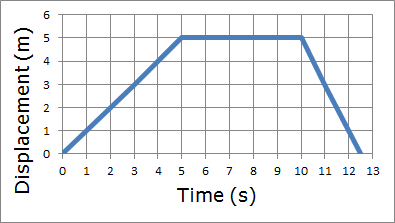
How long did it take this object to travel back to its reference/starting point from 40 m?
40 s
60 s

