
 Worksheets
Electromagnetic Spectrum, Light and Optics Review
Total questions: 64
Worksheet time: 1hrs 4mins


What is Light?
Energy carried by electricity
Energy transferred by magnets
Energy carried by electromagnetic waves
Energy carried by electromagnetic waves
What type of electromagnetic radiation or light can we see?
Infrared
Visible Light
Ultraviolet light
All of the Above
True or False: Light waves CANNOT travel in a vacuum, like space
True
False
What type of matter allows ALL light to pass through?
transparent material
translucent material
opaque material
What type of matter allows SOME light to pass through?
transparent material
translucent material
opaque material
What type of material blocks light and creates a shadow?
transparent material
translucent material
opaque material

The material used in these lights is ___.
translucent
transparent
opaque
How are we able to see the color white?
All colors except red are absorbed
All colors are absorbed
All colors are reflected
All colors except red are reflected

Which type of electromagnetic waves can be used turn look at a broken bone in your body?
microwaves
x-rays
ultravoilet light
radio waves
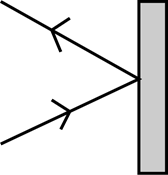
In the illustration, the light ray striking the object is-


What is the visible spectrum?
a. The part of light waves we can see
b. The part of light waves we cannot see
c. the whole electromagnetic spectrum
d. the energy spectrum

which type of lens
concave
convex
opaque
plano

which type of lens
concave
convex
opaque
plano
In order to see a picture it must
produce light
reflect light
absorb light
Longest Wavelengths and Lowest Frequencies?
Visible Light
Microwaves
X-Rays
Radio Waves

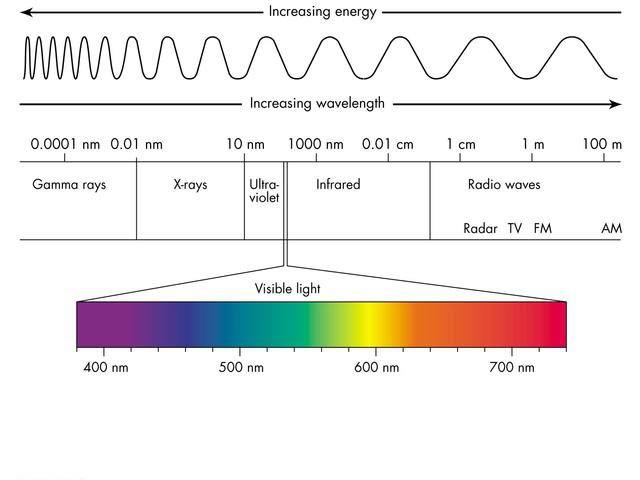
What is the correct order of the visible light spectrum starting with the longer wavelength?
Red, yellow, orange, blue, violet, indigo
Violet, indigo, blue, green, yellow, orange, red
Green, yellow, blue, indigo, red, orange
Red, orange, yellow, green, blue, indigo, violet

The frequency of an x-ray is --
1.41 x 10⁻¹⁰ Hz
1.41 x 10¹⁸ Hz
1.41 x 10¹⁰ Hz
1.41 x 10⁻¹⁸ Hz

Which type of wave is shown in the above picture?
Sound
Longitudinal
Electromagnetic
when light is stored inside of an object and turns into heat energy
absorbtion
refraction
reflection

How is white light able to separate through a prism?
the light is being absorbed
the light is being refracted
the light is being reflected

What color is being reflected?
green
blue and yellow
red, orange, yellow, blue, indigo, violet

What colors are being absorbed?
red, orange, yellow
green, blue, indigo, violet

What colors are being reflected?
all of the colors in the color spectrum
none of the colors in the color spectrum
The color that absorbs visible light waves is:
Black
White
Red
Violet

Light waves bouncing off of this lake is an example of:
Reflection
Refraction
Absorption

What happens when light hits a shiny or smooth surface?
It disappears.
It is refracted.
It is absorbed.
It is reflected.

What is it called when light bends as it moves from one substance to another?
Absorption
Reflection
Refraction
Incidence
White light is a combination of
All of the colors of the rainbow
All of the different portions of the EM Spectrum
Nothing, just white light.
Red and green light only
In the Electromagnetic Spectrum, the waves with higher frequencies have __________ energy.
more
less
the same
no relation to
Which type of waves in the Electromagnetic Spectrum are used to send to and from cell phones?
Radio Waves
Microwaves
Infrared Waves
Cellular Waves
Which wave below has the highest energy?


Which color of light has the shortest wavelength?
Red
Orange
Yellow
Green
Blue
Which color of light has the longest wavelength?
Red
Orange
Yellow
Green
Blue

Based on the chart above, which has the largest wavelength?
U.V. Rays
Gamma Ray Waves
Visible Waves
Microwaves
Which of the following describes absorption?
Light bounces off an object
Light stops at the object, creating a shadow
Light bends
Which of the following photo would best demonstrate refraction?


Which of the following is a translucent object?
An object where light can travel completely through
An object where light stops and cannot travel through
An object where light can partially travel through
Which of the following is a transparent object?
An object where light can partially travel through
An object where light can completely travel through
An object where light stops and cannot travel through
Which of the following photos demonstrates opaque objects?


Based on your knowledge of the electromagnetic spectrum, why are radio waves considered harmless while ultraviolet waves and x-rays considered harmful?
Radio waves have longer wavelengths, lower frequency, and lower energy than ultraviolet waves and x-rays.
Lower energy and higher frequency ultraviolet waves and x-rays is enough to break bonds and damage cells.
High frequency and energy of radio waves mean that they penetrate much farther through matter than uv or x-rays.
The energy of the lower frequency ultraviolet waves and x-rays is high enough to be considered ionizing radiation.

Why does light behave as shown in the image when it passes from air to glass?
Light is scattered on the surface of the glass.
Light slows down when it passes into a denser medium.
Light is partially reflected on the surface of the glass.
Light splits into its constituent colors when it passes through glass.

