Worksheets
Semester Exam Review 1
Total questions: 11
Worksheet time: 9mins
The Law of Superposition helps scientists to determine what?
The absolute age of rock layers
The age of fossils
The relative age of rock layers
the super powers of squirrels

According to the diagram, what process is shown by letter B?
compaction & cementation
weather & erosion
heat & pressure
melting

Fossils of trees were discovered in a sedimentary rock layer, and in a rock layer below were fossils of clams. Based on this evidence, what conclusion can be made about the sequence of climates in the past in the area where the fossils were discovered?
Based on the evidence, it can be assumed that this area was an underwater forest.
Based on the evidence, it can be assumed that this area was a forest before it was a beach or ocean.
Based on the evidence, it can be assumed that this area was an ocean or beach before it was a forest.
The change over time in the populations of the related organisms proposed by Charles Darwin is called ________.
biological evolution
chemical evolution
technology evolution
all are correct
Which of the following is NOT an explanation as to why the dinosaurs went extinction?
Volcanic eruption
Meteorite strike
Massive earthquakes
All of the options explain why dinosaurs went extinct
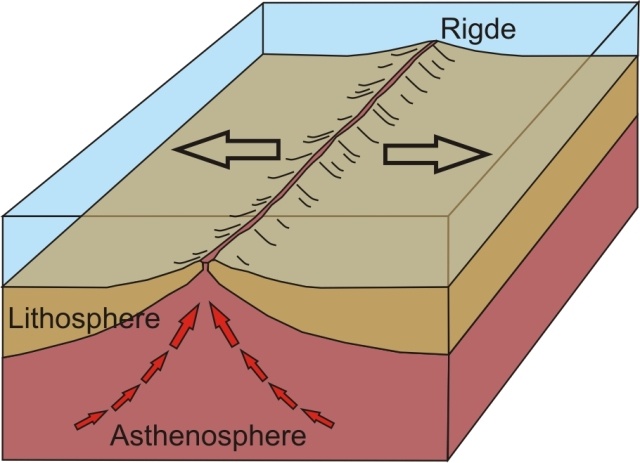
Which of the following is one reason Earth's tectonic plates to move?
energy from the Sun
magnetic Pole Reversal
convection currents in the mantle
faults in Mountain Ranges
Earth's crust is made of large, solid pieces that move around on convection currents.
Plate Tectonic Theory
Continental Drift Theory
Survival of the Fittest Theory
Gene Theory
The continents were once all together but have slowly moved apart over time.
Continental Drift Theory
Plate Tectonic Theory
Seafloor Spreading
Convection Current
Over long periods of time, one plate slips underneath another plate, which created a trench. As the one plates slips deeper into the mantle, it begins to melt. Does this scenario describe constructive forces, destructive forces, or both?
Destructive: When seafloor spreading occurs, part of the ocean floor is destroyed.
Constructive: When subduction occurs, new crust can be made.
Both: Seafloor spreading occurs, where old crust is destroyed and new crust is created.
Destructive: When subduction occurs, the bottom plate melts, which destroys the crust.