wayground logo

Free Printable Worksheets

NEW

Font size

S
M
L
XL
Worksheets

Unit 3: Ionic and Covalent Compounds

Total questions: 38

Worksheet time: 36mins

Name
Class
Date
1.

Nonmetals tend to

a)

gain electrons

b)

lose electrons

2.

Metals tend to

a)

gain electrons

b)

lose electrons

3.
If my charge becomes 2+ what does that say about me?
a)
I am stealing 2 electrons
b)
I am losing 2 electrons
c)
I am in period 2
d)
I have an atomic # of 2
4.
If I gain electrons I become
a)
Positive because I've added to my atom
b)
negative because I've added electrons
c)
same because i'm balanced
d)
equal because now I have electrons
5.
When metals bond with non-metals they form what type of bonds
a)
covalent
b)
ionic
c)
cooperative
d)
lewis
6.
How do the following two elements bond together?
Na1+  F1-         
a)
NaF
b)
NaF3
c)
Na3F
d)
Na1F2
7.
How do the following two elements bond together?
Cr3+  O2-         
a)
CrO
b)
Cr3O2
c)
Cr2O3
d)
CrO3
8.
How do the following two elements bond together?
K1+  S2- 
a)
KS
b)
K8S
c)
K6S3
d)
K2S
9.
How do the following two elements bond together?
Al3+  O2-         
a)
AlO
b)
Al2O3
c)
Al3O6
d)
Al3O2
10.
AgF
a)
silver fluoride
b)
silver fluorine
c)
monosilver monofluoride
d)
silver monofluorine
11.

When a nonmetal gains electrons, it becomes this type of ion.

a)

Anion

b)

Cation

12.

When a metal loses electrons, it becomes this type of ion.

a)

anion

b)

cation

13.
When an ionic compound is formed, its charge is 
a)
negative
b)
neutral (no charge)
c)
positive
14.
Which is the correct formula for sodium chloride?
a)
SoCl
b)
SdCl
c)
NaCl
d)
NaCl2
15.
Nonmetals form ____ by ____ electrons.
a)
Cations, gaining
b)
Cations, losing
c)
Anions, gaining
d)
Anions, losing
16.

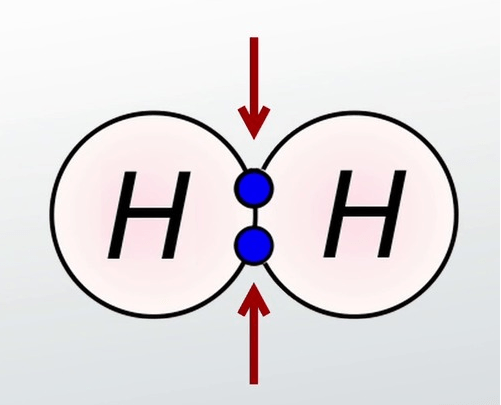
Is this compound ionic or covalent?

a)

Ionic

b)

Covalent

17.

Is this compound ionic or covalent?

a)

ionic

b)

covalent

18.

Is this compound ionic or covalent?

a)

ionic

b)

covalent

19.
How many valence electrons does a bromine atom have?
a)
1
b)
2
c)
6
d)
7
20.

Name the type of bonding in which the electrons are shared.

a)

Ionic bonding

b)

Covalent bonding

c)

Metallic bonding

21.

The covalent bond forms between

a)

a metal and nonmetal

b)

a nonmetal and nonmetal

c)

a metal and metal

22.
Which of the following is NOT formed by a covalent bond?
a)
K2S
b)
H2O
c)
I2
d)
CO2
23.
Which of the following is NOT considered a diatomic element?
a)
Carbon
b)
Nitrogen
c)
Chlorine
d)
Iodine
24.
What is the name of N2O3
a)
Nitrogen trioxide
b)
Dinitrogen oxide
c)
Dinitrogen trioxide
d)
Nitrogen oxide
25.
What is the chemical formula for Tetrasulfur pentoxide?
a)
SO
b)
S4O
c)
S4O5
d)
S5O4
26.
What is the name of C3Cl?
a)
Carbon octachloride
b)
Tricarbon octachloride
c)
Carbon trichloride
d)
Octacarbon trichloride
27.
What is the chemical formula for Nitrogen triiodide?
a)
NI
b)
N3I
c)
NI3
d)
None of these
28.
phosphorus trichloride
a)
KCl3
b)
PCl3
c)
K3Cl
d)
P3Cl
29.
The chemical formula of tetraphosphorus heptaoxide is
a)
F₄O₁₀
b)
P₄O7
c)
PO
d)
P₁₀O₄
30.

The name of FeCl₂ is

a)

iron chloride

b)

iron (II) chloride

c)

iron (I) chloride

d)

iron dichloride

31.

LiBr is called

a)

lithium bromine

b)

lithium (I) bromine

c)

lithium bromide

d)

lithuim (I) bromide

32.

Name the ionic compound SnSe2

a)

Tin diselenide

b)

Tin (IV) Selenide

c)

Tin selenide

d)

Tin (II) triselenide

33.

What is the name of the compound Na2(SO4)?

a)

Sodium sulfate

b)

Sodium sulfide

c)

Sodium sulfite

d)

Sodium sulfuroxide

34.

What is the name of the following compound: NaCl

a)

sodium chloride

b)

sodium (I) chloride

c)

sodium chlorine

d)

sodium (I) chlorine

35.

What is the name of the following compound: CuBr2

a)

copper bromine

b)

copper bromide

c)

copper (I) bromide

d)

copper (II) bromide

36.

Which is the correct formula for the compound: Barium Hydroxide

a)

BaOH

b)

Ba(OH)2

c)

BaOH2

d)

Ba2OH

37.

Which is the correct formula for the compound: lead (II) fluoride

a)

Pb2F

b)

PbF2

c)

PbF

d)

PbF7

38.

What is the name of the following compound: K2SO4

a)

potassium sulfur

b)

potassium sulfate

c)

potassium (I) sulfate

d)

potassium (II) sulfide