wayground logo

Free Printable Worksheets

NEW

Font size

S
M
L
XL
Worksheets

1st Semester Review

Total questions: 69

Worksheet time: 1hrs 12mins

Name
Class
Date
1.

What is the definition of matter?

a)

The smallest particle in a substance

b)

Something that has mass and takes up space

c)

How much something weighs

d)

Something that only goes through a chemical change

2.

A mixture....

a)

always has a uniform composition

b)

has different types of matter which retain their properties

3.

What does an elements ATOMIC NUMBER represent?

a)

number of atoms in its nucleus

b)

number of protons in its nucleus

4.

What is the formula for lithium sulfide?

a)

LiS

b)

Li2S

c)

LiS2

d)

Li3S

5.
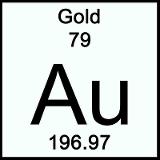
Which number is the atomic mass?
a)
79
b)
196.97
6.

An atom's nucleus contains what particles?

a)

protons and positrons

b)

protons and neutrinos

c)

quarks and quasars

d)

protons and neutrons

7.
Element is a
a)
pure substance
b)
compound
c)
mixture
d)
molecule
8.
What are the 3 subatomic particles?
a)
Protons, Electrons, Neurons
b)
Neutrons, Protons, Electrons
c)
Solids, Liquids, Gases
d)
Quarks, Bosons, Positrons
9.
Particles in an atom that are negative 
a)
molecules 
b)
electrons 
c)
neutrons 
d)
protons 
10.
Solids have a....
a)
Definite volume, indefinite shape
b)
Indefinite volume, indefinite shape
c)
Definite volume, definite shape
d)
Indefinite volume, definite shape
11.
Liquids have a...
a)
Definite volume, indefinite shape
b)
Indefinite volume, indefinite shape
c)
Definite volume, definite shape
d)
Indefinite volume, definite shape
12.
all matter is made of what 
a)
energy 
b)
atoms 
c)
electrons 
d)
compounds 
13.
The positive particles of an atom are 
a)
electrons 
b)
positrons 
c)
neutrons 
d)
protons 
14.
an atom with atomic number 6 would have how many protons 
a)
6
b)
12
c)
3
d)
cannot be determined 
15.
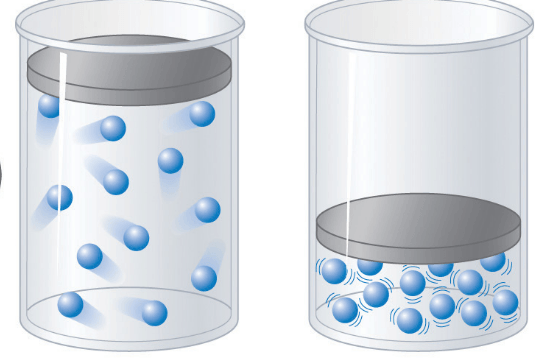
Which state of matter do the particles in this picture represent?
a)
solid
b)
liquid
c)
gas
d)
plasma
16.
When a liquid becomes a gas (vapor, steam) 
a)
evaportation
b)
balance
c)
physical property
d)
condensation
17.

Metals tend to

a)

gain electrons

b)

lose electrons

18.
Which of the following BEST describes ionic bonds?
a)
Bond held together by a sea of electrons
b)
Bond of two ions of opposite charges held together by electrostatic forces
c)
Bond held together by the sharing of electrons
d)
Bond between hydrogen and an anion or polyatomic ion.
19.

If 2g of one substance is reacted with 4g of the other substance, the product is expected to have a mass of

a)

8g

b)

2g

c)

4g

d)

6g

20.

The mass number is equal to

a)

electrons + neutrons

b)

protons

c)

neutrons

d)

protons + neutrons

21.

The number of ____________ changes in isotopes.

a)

protons

b)

electrons

c)

neutrons

d)

atoms

22.

The number of ____________ changes in ions.

a)

protons

b)

electrons

c)

neutrons

d)

atoms

23.

Which isotope has 13 protons and 14 neutrons?

a)

aluminum-13

b)

silicon-14

c)

silicon-27

d)

aluminum-27

24.

Which of the following is the product of alpha decay of thorium-232?

a)

radium-228

b)

uranium-228

c)

protactinium-232

d)

actinium-232

25.
How is the modern periodic table organized? 
a)
number of neutrons
b)
atomic number
c)
mass number
d)
alphabetically
26.
A row on the periodic table is referred to as...  (Left to Right)
a)
a Period
b)
a Group
c)
valence electrons
d)
shielding electrons
27.
What period is Bromine located in?
a)
3
b)
2
c)
4
d)
7
28.
What is a valence electron?
a)
An electron in the highest occupied energy level of an atom
b)
An electron that has properties similar to a transition metal
c)
Electrons with high reactivity
d)
Noble gases
29.
How many Valance electrons does Iodine Have?
a)
6
b)
16
c)
7
d)
17
30.
What is the name of the group that never reacts--ever ever they are stable with a full outermost energy ring!
a)
noble gases
b)
transition
c)
halogens
d)
borons
31.
What color is the non metals?
a)
pink
b)
yellow
c)
blue
d)
all of the above
32.
I am a substance containing atoms of two or more different elements chemically bonded together
a)
element
b)
compound
c)
solution
d)
mixture
33.

What type of heat transfer takes place in liquids and gasses?

a)

Conduction

b)

Convection

c)

Radiation

d)

Thermal Equilibrium

34.
Heat transfer always goes from-
a)
Cold to Hot
b)
Hot to Cold
c)
Heat doesn't transfer
d)
Freezing to Cold
35.
The sun warming your skin is an example of heat transfer through 
a)
conduction
b)
convection
c)
radiation
d)
thermal electricity
36.
Water (H2O) is an example of:
a)
Element
b)
Compound
c)
Solution
37.
What is gold (Au)?
a)
element
b)
compound
c)
mixture
38.
Based on the model for carbon dioxide, what would be the correct formula?
a)
C2O
b)
CO2
c)
C2O2
d)
CO
39.
What is the mass of an atom that contains 12 protons, 8 neutrons, and 12 electrons?
a)
12 amu
b)
24 amu
c)
20 amu
d)
32 amu
40.
What element is represented in this Bohr Model? 
a)
Carbon
b)
Hydrogen
c)
Aluminum
d)
Lithium
41.
In this image, the symbols to the right of the arrow (in black) are called the_______.
a)
Products
b)
Reactants
c)
Subscripts
d)
Coefficients
42.
In this image, what are the symbols in red are called the_______.
a)
Products
b)
Reactants
c)
Subscripts
d)
Coefficients
43.
How do we know if an element is not reactive?
a)
It has a full outer shell
b)
It has fewer valence electrons
c)
It has a high atomic mass
d)
We can never tell
44.
If an atom has 24 protons, 25 neutrons, and 28 electrons, what is it's overall charge?
a)
-4
b)
+4
c)
-3
d)
+3
45.
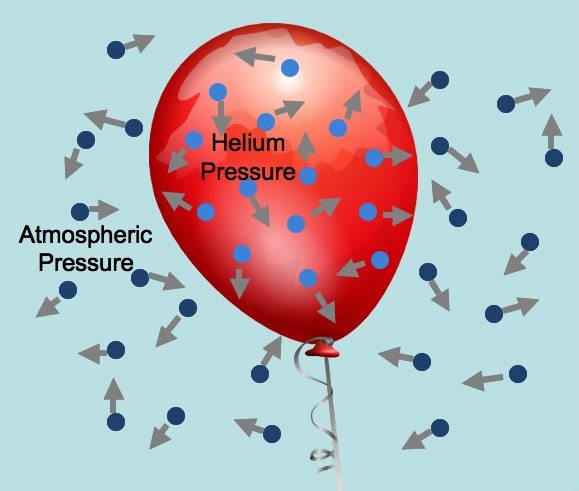
What causes pressure?
a)
The walls of the container
b)
The vacuum in the container
c)
The collisions of the particles
d)
Atmospheric pressure acting on the outside walls
46.
Which container will have a lower pressure?
a)
left
b)
right
c)
they both have the same pressure
d)
I don't know
47.
If a balloon is cooled what will happen to the volume?
a)
Volume will increase
b)
Volume will decrease
c)
Volume will not change
48.

A gas with a volume of 4.0 L at a pressure of 205 kPa is allowed to expand to a volume of 12.0 L. What is the pressure in the container if the temperature remains constant?

a)

68.3

b)

0.0146

c)

615

d)

0.00163

49.

Calculate the new temperature when a container of gas has a pressure of 795 mm Hg at 273 K and the pressure is lowered to 358 mm Hg.

a)

123

b)

606

c)

0.00165

d)

246

50.
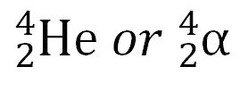
What do these symbols represent?
a)
alpha particle
b)
beta particle
c)
neutron
d)
gamma ray
51.

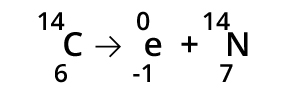
What type of nuclear equation is this?

a)

fusion

b)

fission

c)

alpha decay

d)

beta decay

52.
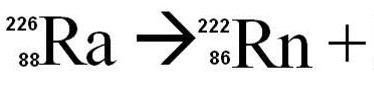
Complete the nuclear equation and determine the type of decay that is occurring in this reaction. 
a)
alpha
b)
beta
c)
gamma
d)
none
53.
A barefoot student steps on a hot concrete surface. Most of the heat transferred to the student’s skin by this contact is by the process of—
a)
convection
b)
conduction
c)
vaporization
d)
radiation
54.
Why is there more thermal energy in an iceberg than in a pot of boiling water?    
a)
a.  The pot insulates the heated molecules
b)
b.  Most icebergs are fairly warm to the touch
c)
  c.  Icebergs contain many more molecules than pots of water
d)
  d.  Water does not hold heat very well
55.
How do nuclear power-plants work?
a)
Fusion
b)
Half-life
c)
Fission
d)
Fusion or fission
56.
The number of atoms of oxygen in 
Cu(NO3)2 is ...
a)
2
b)
5
c)
6
d)
zero 
57.

What type of reaction is this?

2 C6H14 + 19 O2 → 12 CO2 + 14 H2O

a)

Single Replacement

b)

Double Replacement

c)

Combustion

d)

Decomposition

58.

Predict the products for the this Double Replacement reaction:

AgNO3 + KCl →

a)

AgCl + KNO3

b)

AgK + ClNO3

c)

KAg + NO3Cl

d)

AgCl + 3 KNO

59.

Predict the products for the this Single Replacement reaction:

K + HCl →

a)

KCl + H2

b)

KHCl

c)

KH + Cl2

d)

HCl + K2

60.

Name the following ionic compound: Cs2S

a)

cesium sulfide

b)

cesium sulfate

c)

cesium II sulfate

d)

cesium II sulfide

61.
The covalent compound N2O5 would be named
a)
nitrogen oxide.
b)
dinitrogen oxide.
c)
nitrogen pentoxide.
d)
dinitrogen pentoxide.
62.
_AgNO3 + _Cu _Cu(NO3)2 + _Ag
a)
2 AgNO3 + 2 Cu → 3 Cu(NO3)2 + 1 Ag
b)
2 AgNO3 + 1 Cu → 1 Cu(NO3)2 + 2 Ag
c)
1 AgNO3 + 2 Cu → 2 Cu(NO3)2 + 1 Ag
d)
3 AgNO3 + 2 Cu → 3 Cu(NO3)2 + 2 Ag
63.
Balance this equation,            Al2O3 ---> Al + O2 
a)
Cannot be balanced
b)
2Al2O3 ---> 2Al + 3O2 
c)
2Al2O3 ---> 4Al + 3O2 
d)
3Al2O3 ---> 2Al + O2 
64.
Is the following equation balanced or unbalanced?
Fe + S --> FeS
a)
balanced
b)
unbalanced
65.
A + B → AB : is the general form for which reaction type?
a)
Double Replacement
b)
Synthesis
c)
Combustion
d)
Decomposition
66.

Balance this reaction:

____ Na3PO4 + ____ KOH ---> ____ NaOH + ____ K3PO4

a)

1,3,3,1

b)

1,3,2,1

c)

2,3,3,1

d)

1,1,3,1

67.
__NaClO--> __NaCl + __O2
a)
2,2,2
b)
2,2,3
c)
3,2,2
d)
1,2,3
68.
Which chemical reaction breaks down into 2 substances?
a)
Double Replacement
b)
Single Replacement
c)
Synthesis
d)
Decomposition
69.
Which chemical reaction forms Carbon Dioxide and Water?
a)
Double Replacement
b)
Single Replacement
c)
Combustion
d)
Decomposition